
Antique Green Pedestal
An antique green pedestal brings rich colour and steady presence to a room, uniting functional writing surfaces and display columns with distinctive tinted leather and painted surfaces.
Antique Green Pedestal
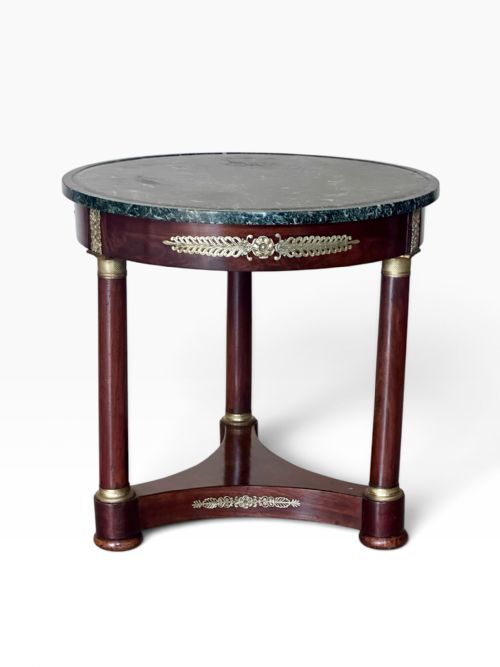
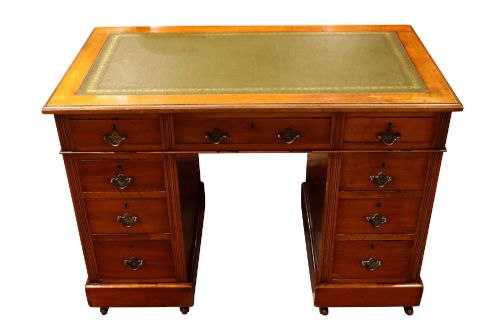
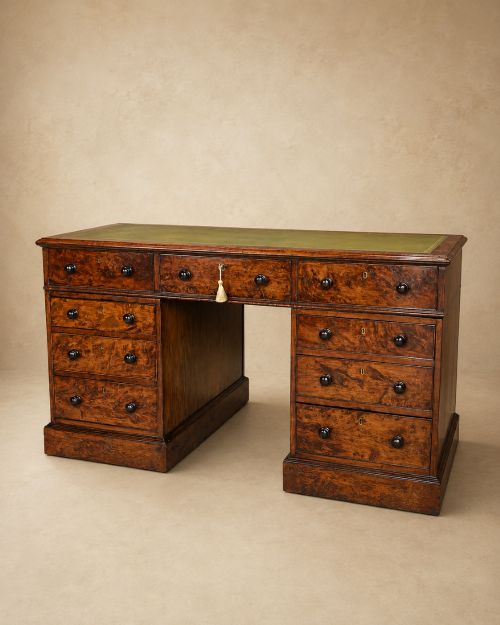
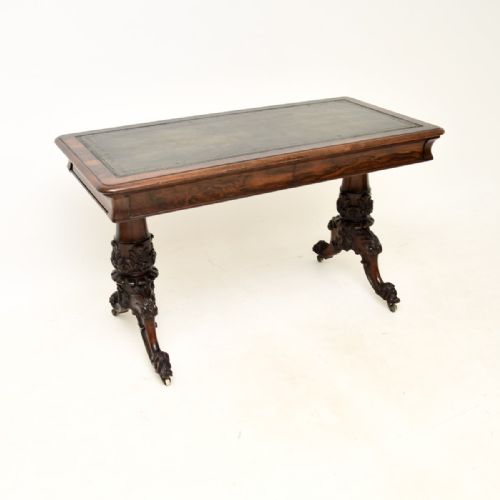
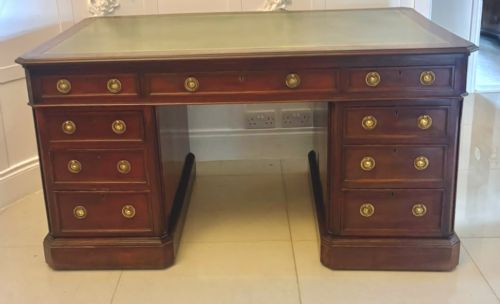
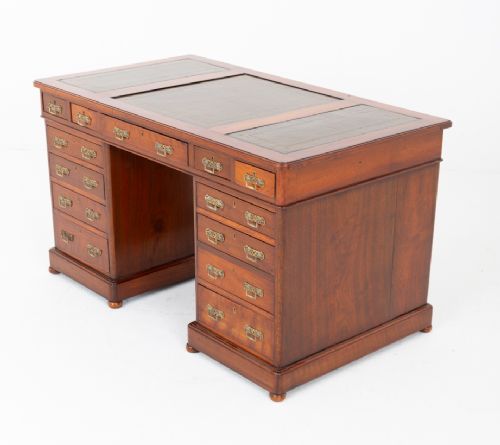
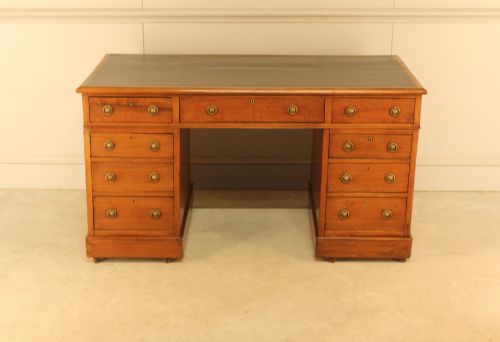
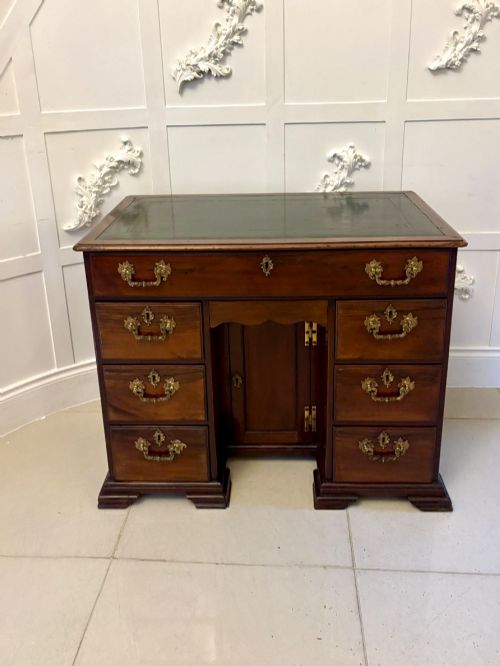
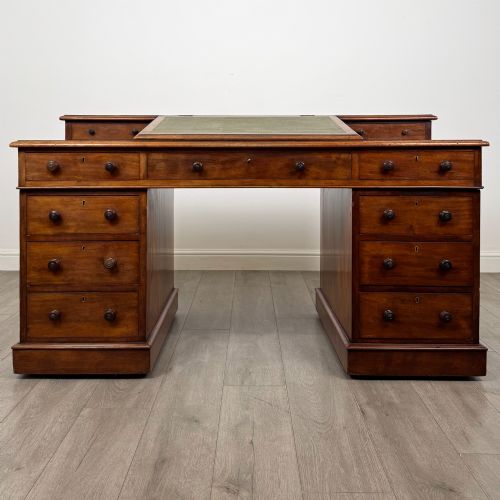
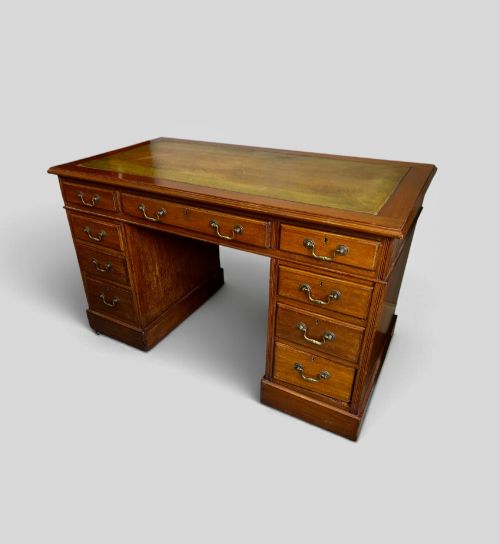
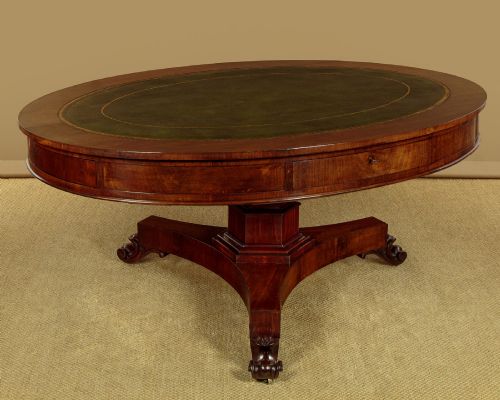
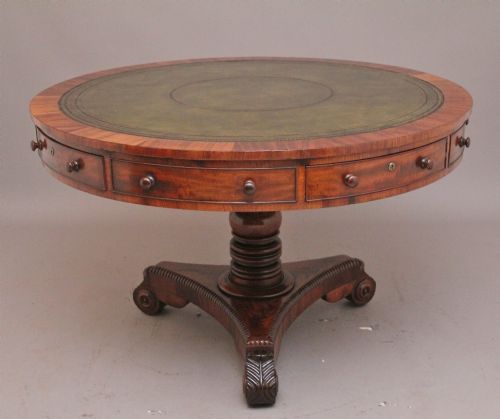
When you search for an antique green pedestal, you encounter furnishings united by verdant surfaces, primarily expressed through olive or traditional green tooled leather inserts on nineteenth-century desks and tables. These pieces span Victorian, Edwardian, and earlier eras, taking the form of twin pedestal desks, kneehole desks, partners desks, and occasional plant stands or marble columns.
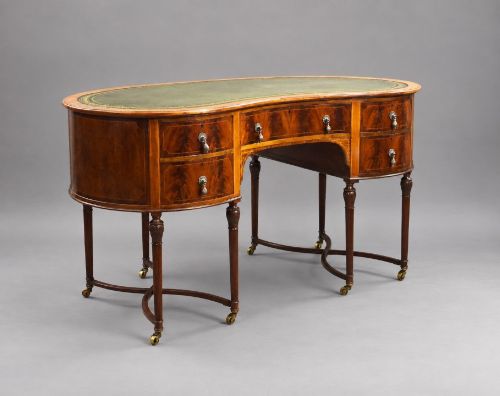
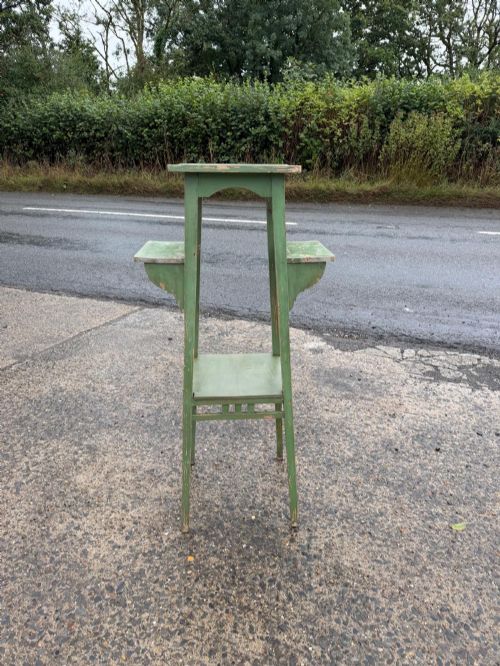
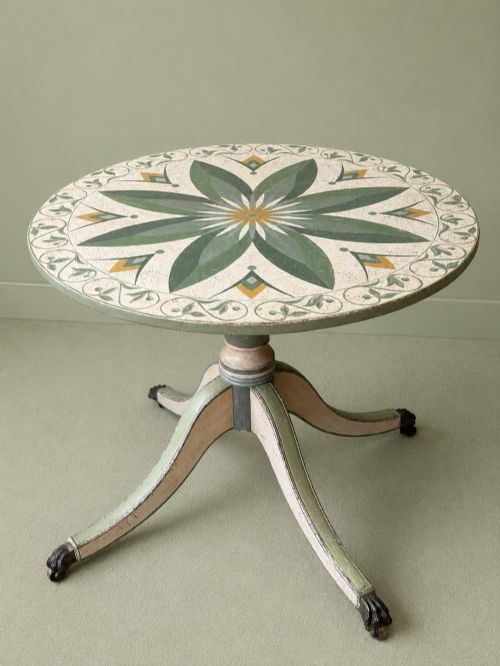
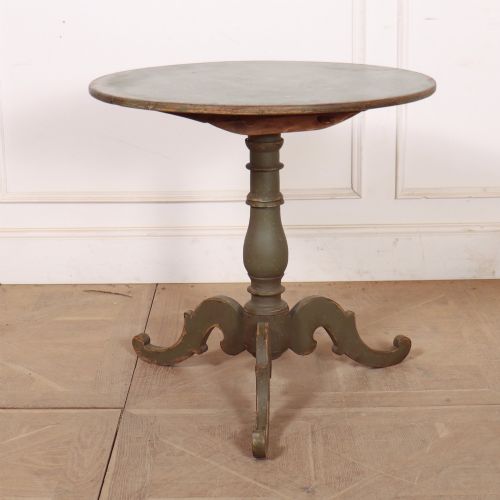
The desks you meet most frequently on this page combine mahogany, walnut, or oak carcases with inset green leather writing surfaces, often featuring fitted stationery drawers and writing slides. Alongside these working pieces, the selection includes decorative painted plant stands, torchières, and Grand Tour scagliola marble columns showcasing natural green tones.
Materials and construction methods
Cabinet makers built these pieces using solid timbers and veneers of mahogany, walnut, oak, and burr walnut, joined with traditional framing techniques to ensure structural stability across large pedestal desks and tables. Writing surfaces received durable inserts of cow leather, which artisans pared down, laid into recessed wooden channels, and decorated with delicate gold tooling around the perimeter.
Decorative pieces achieved their distinct hue through original paint layers applied directly to wood surfaces or via the natural mineral composition of Verde Antico scagliola marble columns. Artisans shaped these materials using hand tools, carving details into oak and walnut carcases while retaining the tool marks characteristic of nineteenth-century workshop production.
A cold-painted bronze figure of a curtsying dancer shares space here with heavy partners desks and grand marble columns.
Factors that define quality
The standard of a piece rests on the selection of timber, such as highly figured burr walnut or dense mahogany, and the crispness of hand-carved details on the pedestals and drawer fronts. Superior examples retain their original tooled leather writing surfaces, intact brass hardware, and secondary softwood drawer linings that show honest age without replacement parts.
Construction integrity separates fine items from lesser examples, observable in the smooth operation of multiple drawer banks, close-fitting joints, and freestanding finished backs on desks designed to sit in the middle of a room. Original paint finishes on stands and columns demonstrate higher craftsmanship when they display undisturbed patination and subtle craquelure rather than modern repainting.
Mercier Frères·Josef Lorenzl
The Antique Green Pedestal Glossary
- Pedestal desk
- A heavy furniture form comprising a desktop resting upon two separate banks of drawers or cupboards. These units provide substantial storage and a commanding presence in a study or library.
- Partners desk
- A large double-sided desk designed for two people to work opposite one another, featuring drawers and cupboards accessible from both sides. They typically incorporate generous leather writing surfaces.
- Scagliola
- A composite material made from selenite, glue, and pigments, embedded to imitate marble and other fine stones. It was heavily utilised during the Grand Tour period for decorative columns and table tops.
- Torchiere
- A tall ornamental stand or floor candelabrum designed to hold a light source or display an object such as a vase or plant. Antique examples often feature hand-painted wooden surfaces.
- Tooled leather
- Leather decorated by pressing heated brass tools into the surface, frequently applying gold leaf into the resulting impressions. This technique creates decorative borders around desk writing areas.
Antique Green Pedestal: Frequently Asked Questions
What is an antique green pedestal desk?
An antique green pedestal desk is a nineteenth or early twentieth-century wooden writing table featuring two supporting banks of drawers and an inset writing surface made of green leather. These pieces were standard in period offices and libraries.
They offer extensive storage alongside a durable workspace, combining heavy timber construction in mahogany, walnut, or oak with practical compartmentalised drawers.
How do I care for a leather desk top?
Protect the green leather insert by avoiding direct sunlight, excessive moisture, and writing directly on single sheets of paper without a blotter. Regular dusting and occasional application of appropriate leather wax maintain the suppleness.
Keep the surrounding wooden frame clean with mild polish, ensuring that liquids are kept away from the leather borders and the gold tooled decorative edges.
Are these desks freestanding?
Many pedestal desks and partners desks on this page are finished on all four sides, meaning the backs feature matching panels and drawers rather than plain timber. This allows them to sit openly in the middle of a room.
Check the listing details to confirm whether a specific model is freestanding or intended to stand flush against a wall.
How do I distinguish Victorian from Edwardian pieces?
Victorian pieces, dating from the mid to late nineteenth century, generally display heavier proportions, darker timbers like solid mahogany or walnut, and deep hand-carved details. Their construction prioritises robust utility.
Edwardian items from the early twentieth century often present lighter forms, such as kidney-shaped writing desks, brighter flame mahogany veneers, and more delicate inlay work reflecting changing interior tastes.