

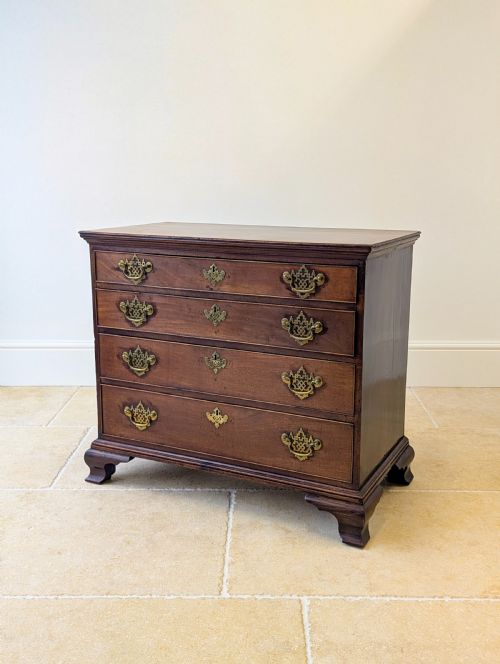


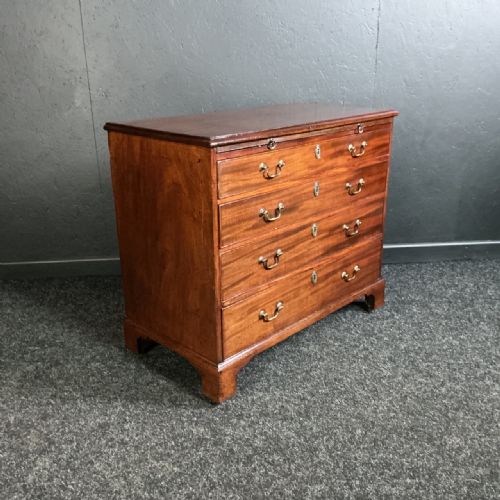


Antique Graduated Chest
An antique graduated chest brings timeless proportion into a room, offering descending drawer depths that naturally catch the eye.
Antique Graduated Chest
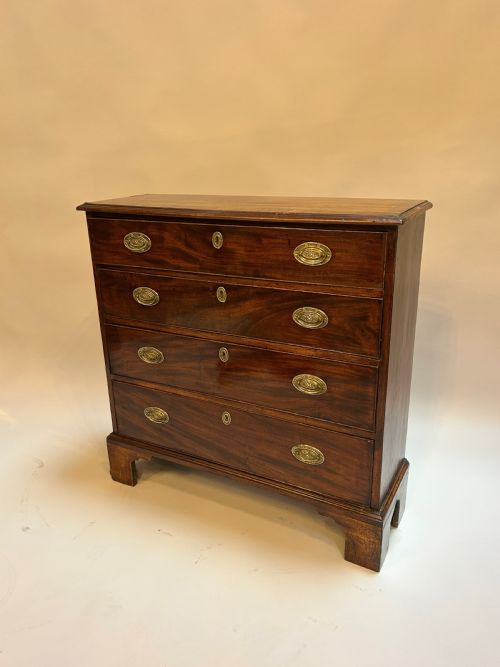
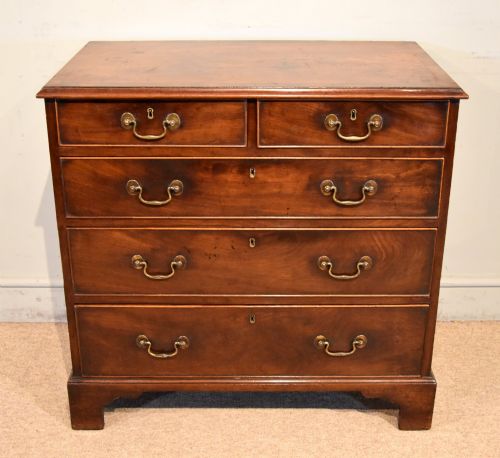
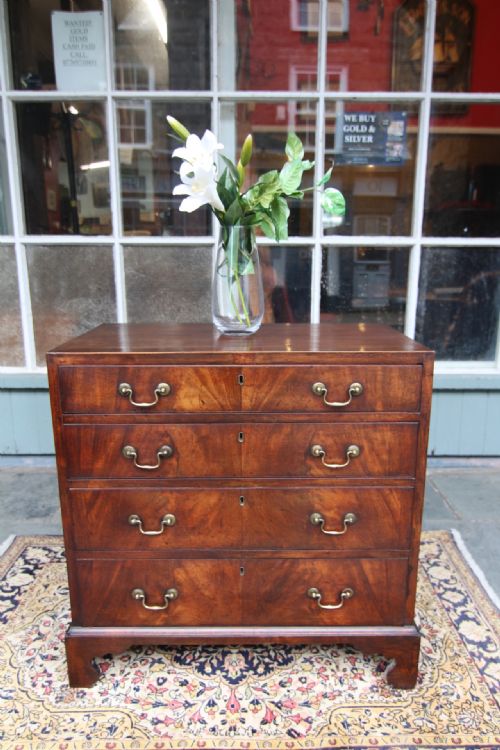
An antique graduated chest presents a sequence of drawers diminishing in depth from bottom to top. These pieces appear primarily in Georgian and Victorian forms, spanning the eighteenth and nineteenth centuries.
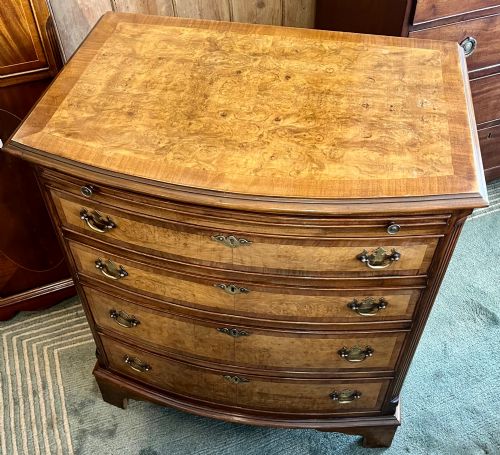
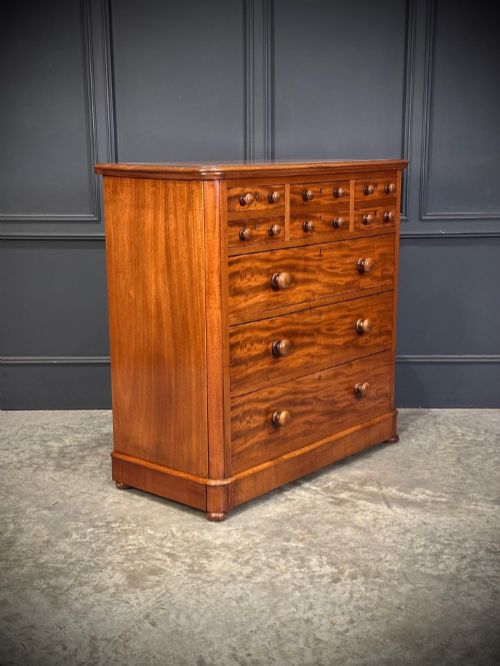
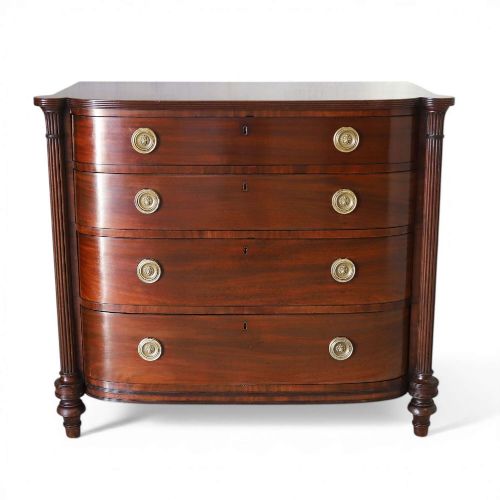
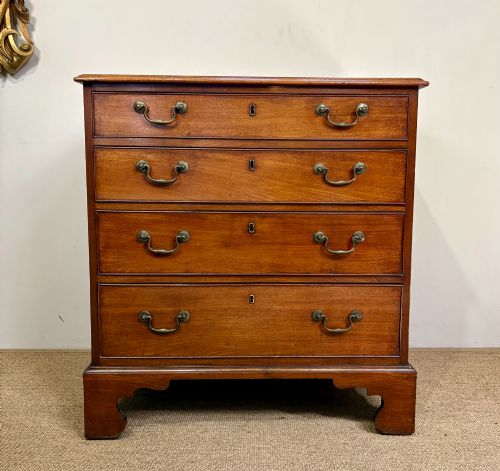
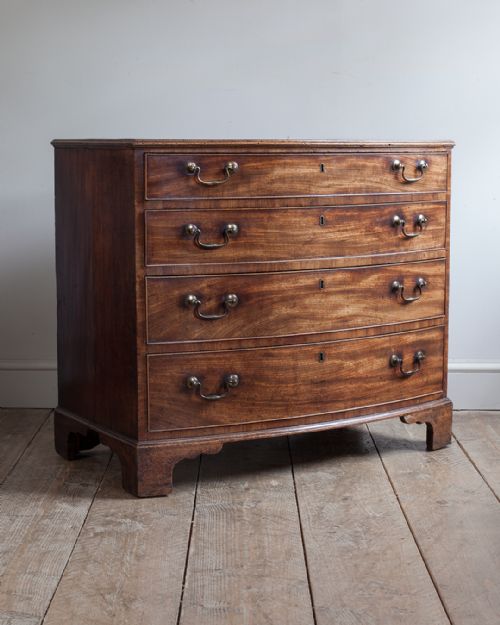
Most examples on this page are chest of drawers configurations in mahogany, walnut, and oak. Formats range from small proportions and bow-fronts to tall narrow constructions and chest on chest designs.
Originating as practical storage, these items serve modern interiors as functional focal points. The visual rhythm of the descending drawer sizes defines the character of each piece.
Materials and construction
Cabinet makers utilised dense hardwoods such as mahogany, walnut, and oak to build the carcasses and drawer frames. Burr walnut and flame mahogany veneers provided richly figured surfaces on select pieces.
Brass handles and escutcheons secured the drawer fronts while pine or secondary timbers formed the internal drawer linings. Joinery relied on traditional dovetailed construction to withstand daily use.
Some nineteenth-century specimen chests served dedicated collectors, holding tiny treasures in micro-drawers designed for endless sorting.
Assessing quality and proportion
The finesse of the timber selection dictates the visual standing of an antique graduated chest. Highly figured veneers and uniform grain patterns separate standard examples from superior ones.
Proportion and the rhythm of the drawer graduation govern the aesthetic success of the piece. Crispness in the mouldings and retention of original brass hardware elevate the standing of the work.
The Antique Graduated Chest Glossary
- Graduated drawers
- A series of drawers decreasing in depth from the lowest to the highest. This arrangement creates a balanced visual progression up the face of the furniture.
- Bow-front
- A convex curved front facade popular in Georgian and Regency cabinet making. This shape softens the profile of the chest.
- Dovetail
- A joint formed by interlocking wedge-shaped fingers used to secure drawer corners. It provides exceptional tensile strength for heavy storage.
- Escutcheon
- A protective plate surrounding the keyhole of a drawer or door. These brass fittings often complement the handles.
- Chest on chest
- A tall case furniture piece featuring one chest stacked directly upon a larger base chest. This form maximises vertical storage capacity.
Antique Graduated Chest: Frequently Asked Questions
How were graduated chests used originally?
These chests functioned primarily for storing garments, linens, and personal valuables in bedrooms and dressing rooms. Deeper lower drawers held bulky items while shallower top drawers kept smaller accessories.
Wealth households also utilised specialised dressing chests or tall specimen cabinets for organised personal belongings.
How do I fit one into a modern room?
An antique graduated chest works well as a bedroom focal point or a hallway storage unit. The varied drawer depths accommodate modern organisational needs while adding historical character.
Pair the piece with minimal surrounding decor to let the wood grain and proportion stand out in the space.
How do I tell Georgian from Victorian chests?
Georgian chests, dating from the eighteenth and early nineteenth centuries, often display restrained classical mouldings and bracket feet. Timbers like figured mahogany and oak dominate this era.
Victorian pieces from the later nineteenth century frequently feature darker walnut finishes, plinth bases, and bolder carved details reflecting industrial-era production methods.