


Antique Gold Star Brooch
An antique gold star brooch brings celestial symmetry and sparkle, combining gold, silver, and precious stones in a versatile clasp ornament.
Antique Gold Star Brooch
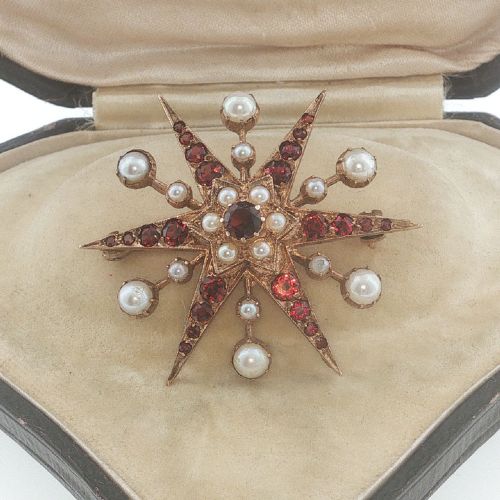
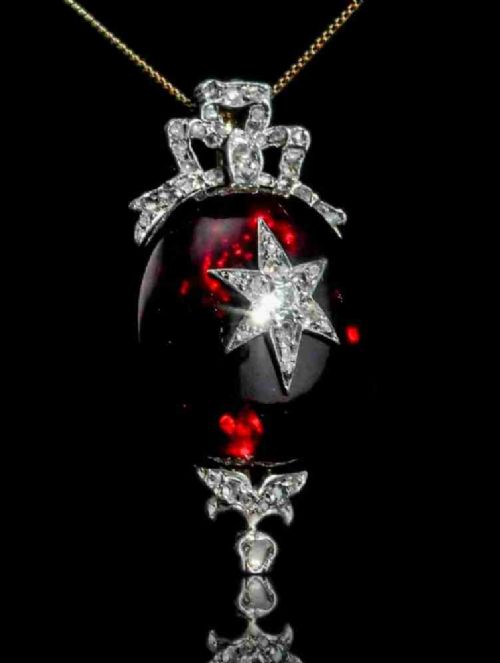
An antique gold star brooch takes the form of a celestial starburst, sunburst, or multi-pointed star designed to pin to garments or convert into a pendant. When searching for an antique gold star brooch, buyers encounter pieces spanning the Victorian and Edwardian eras, alongside later mid-century examples.
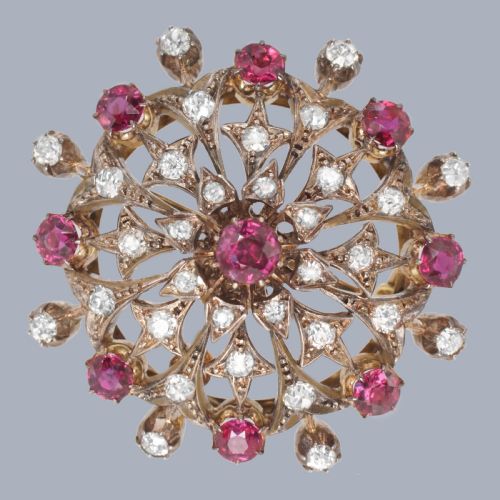
The selections on this page predominantly feature configurations mounted in yellow gold or silver-set gold, frequently incorporating central cabochons, diamonds, pearls, or coloured gemstones. Many items serve dual functions as both brooches and pendants, reflecting the convertible jewellery practices of the nineteenth and early twentieth centuries.
Materials and construction techniques
Craftsmen built these pieces using varied carats of yellow gold, such as 9ct, 14ct, 15ct, and 18ct, often combining silver settings on the face to enhance the brilliance of old-cut diamonds. Metalwork ranges from delicate wirework starbursts to substantial cast and chased frames.
Gemstones including diamonds, seed pearls, turquoise, rubies, garnets, opals, peridots, and emeralds are flush-set, claw-set, or foil-backed within the gold and silver structures. Convertible elements, such as detachable bails or threaded pins, allow the star motif to transition between a brooch and a pendant.
Celestial motifs soared in popularity after Halley's Comet zipped past in 1910, giving Victorian and Edwardian stargazers an excuse to wear the cosmos.
Distinctions in execution and material selection
The upper tier of these pieces displays meticulous gemstone matching, particularly in graduated diamond starbursts and uniform pearl arrangements where individual stones are hand-selected for symmetry and brilliance. Lower tiers often utilise simpler single-stone settings or lesser quantities of supporting gems.
Execution of the metalwork reveals artisan skill through the crispness of the star points, the delicacy of the openwork framing, and the integration of convertible mechanisms that function smoothly without compromising the silhouette.
The Antique Gold Star Brooch Glossary
- Starburst
- A radiating design resembling an exploding star, frequently utilised as the primary motif for these brooches.
- Old European Cut
- An early form of brilliant-cut diamond characterised by a small table, high crown, and open culet, commonly found in Victorian and Edwardian pieces.
- Seed Pearl
- A tiny, naturally small pearl used in clusters or borders to accent gold star settings.
- Cabochon
- A gemstone shaped and polished with a smooth, rounded surface rather than faceted facets.
- Convertible Brooch
- An item engineered with hidden loops or screw fittings allowing the piece to be worn interchangeably as a pendant or a brooch.
Antique Gold Star Brooch: Frequently Asked Questions
How do I wear a convertible star brooch?
These pieces often include a hidden loop or a detachable pin mechanism that lets you thread a chain through the top or secure the piece directly to fabric.
When wearing the star as a pendant, remove or fold down the pin so the piece hangs flat against the chest.
Are these brooches made of solid gold?
The listings show items constructed from various purities of yellow gold, including 9ct, 14ct, 15ct, and 18ct, alongside pieces that combine silver on the face with gold backs.
This silver-on-gold technique was standard practice during the nineteenth century to provide a bright, white metal surface for diamond settings while maintaining the structural warmth of gold.
How can I tell a Victorian star brooch from an Edwardian one?
Victorian examples tend to feature heavy gold work, rose-cut or old-cut diamonds, and rich coloured stones like garnets, rubies, and turquoise set against dark or textured backdrops.
Edwardian pieces often showcase lighter, more airy platinum or white-metal settings paired with pearls and diamonds, emphasising delicate openwork lace patterns.
What gemstones are most common in these pieces?
Diamonds and pearls appear most frequently, often paired together or accented with turquoise, garnets, rubies, opals, and emeralds.
These stones reflect the prevailing tastes of the nineteenth and early twentieth centuries for sentimental and symbolic jewellery.