
Antique Gold Link Necklace
When you search for an antique gold link necklace, you find historic neck chains adapted from pocket watch usage or designed for layering during the Victorian and Edwardian eras.
Antique Gold Link Necklace
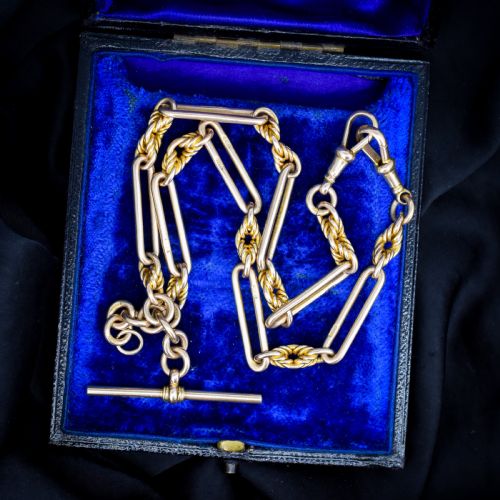
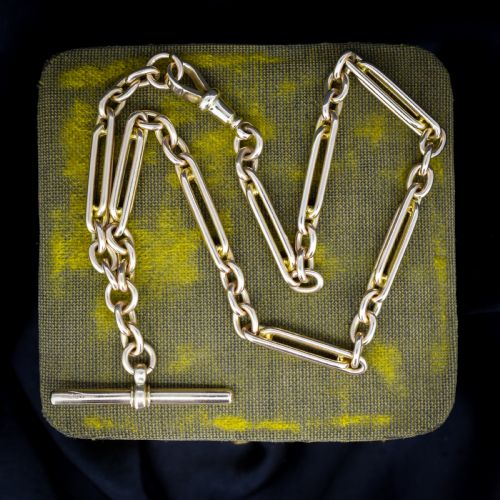
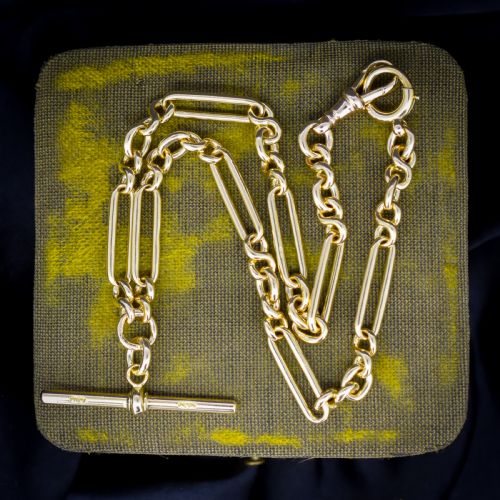
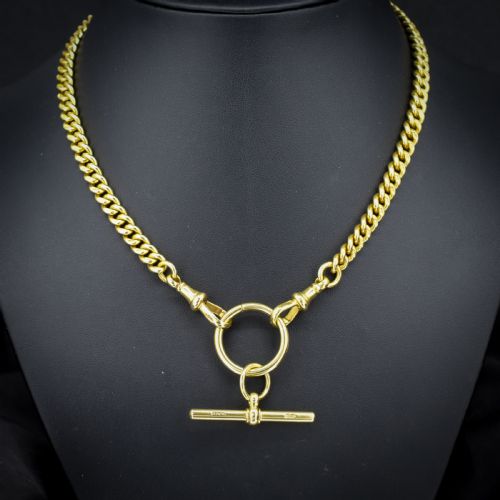
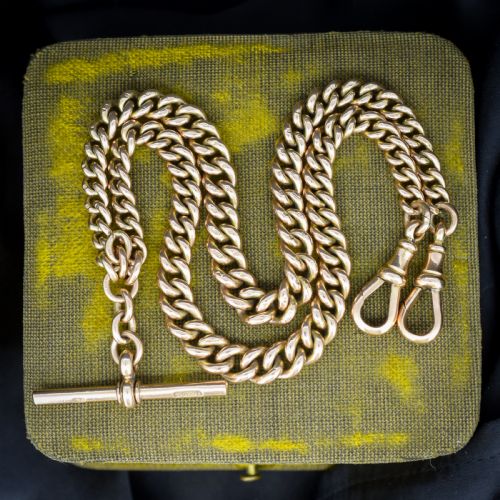
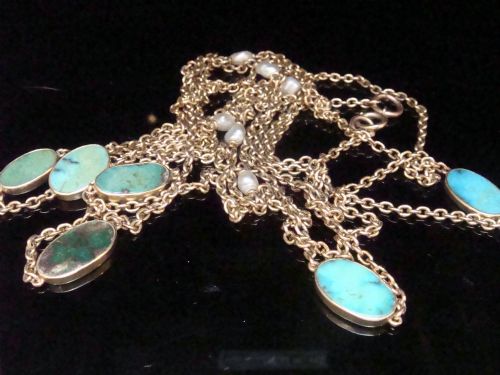
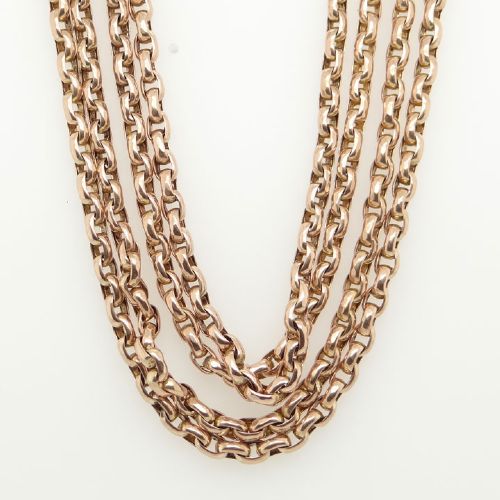
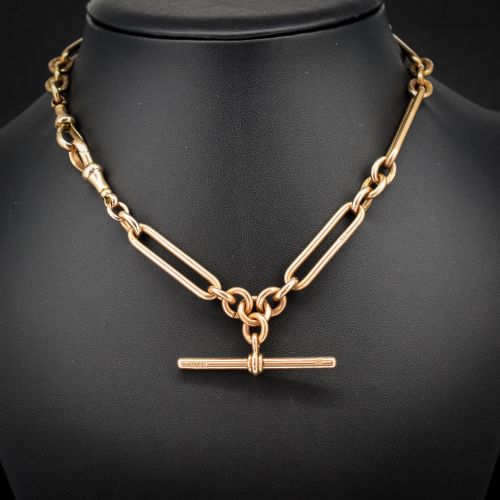
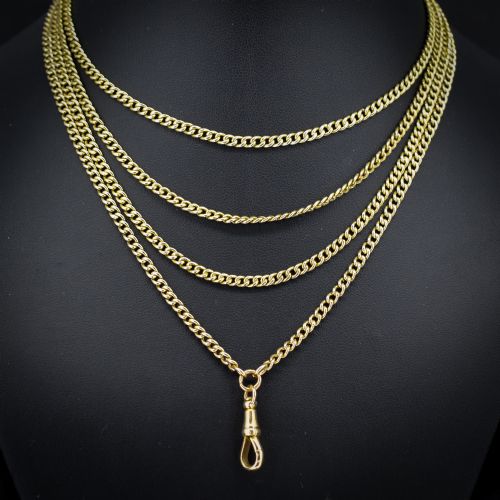
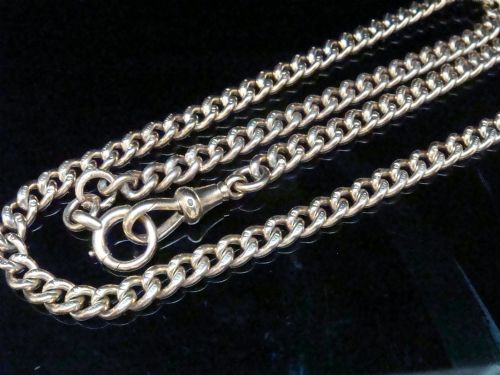
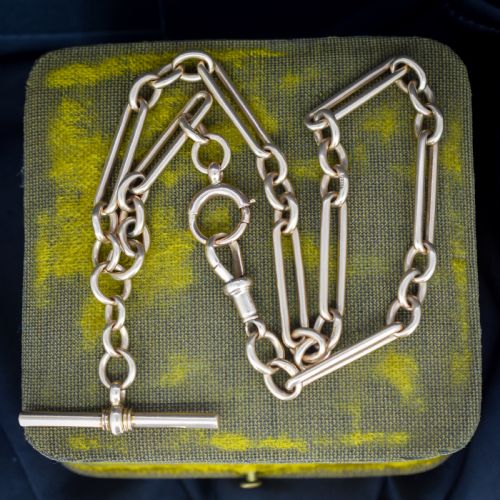
An antique gold link necklace encompasses sturdy watch chains, long guard chains, and refined necklets originating from the nineteenth and early twentieth centuries. When searching for an antique gold link necklace, buyers most frequently encounter pieces derived from pocket watch albert chains, often complete with original dog clips and t-bars.
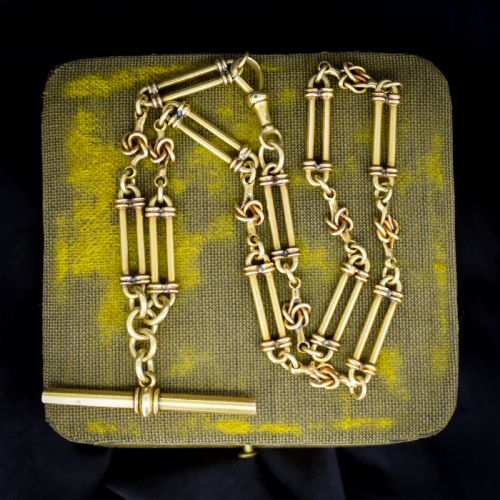
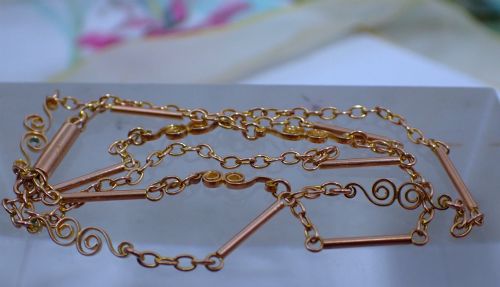
The inventory spans substantial Victorian heavy curb and trombone chains alongside Edwardian and mid-century iterations featuring fancy, paper, or love knot configurations. Many examples retain functional clasps designed to suspend pocket watches, lockets, or pendants, though contemporary wearers typically utilise them purely as neck ornaments.
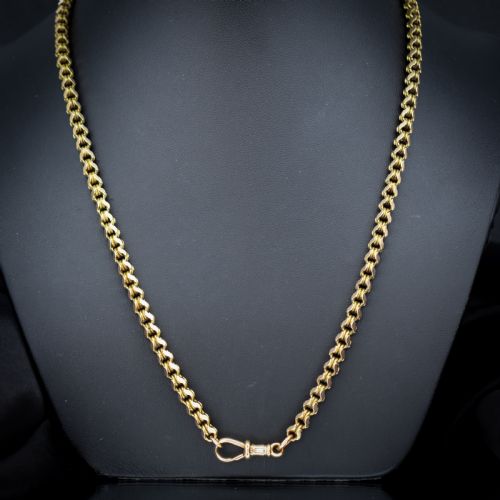
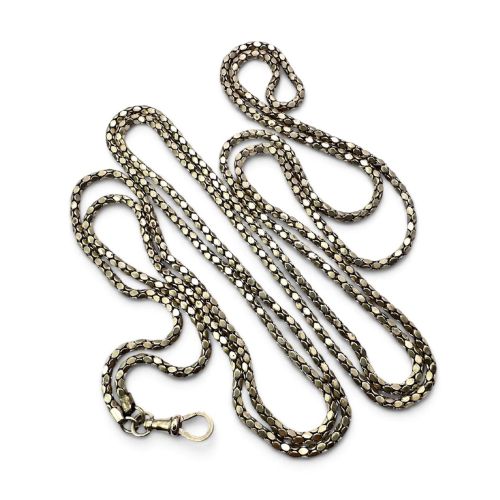
Lengths vary significantly across the selection, ranging from shorter fourteen-inch lengths to continuous guard chains exceeding sixty inches that can be doubled or tripled around the neck. The heritage of these pieces links directly to period gentlemen's pocket watch accessories and ladies' muff chains adapted for modern jewellery display.
What varies in quality
The structural integrity of the link joints and the wear on individual loops dictate the longevity and overall grade of a chain. Solid gold construction commands higher regard than rolled or filled alternatives, while substantial metal weight provides tangible proof of robust manufacturing.
Completeness of original components, including matching dog clips, t-bars, and legible hallmarking across the links or clasps, elevates the desirability of a piece. The uniformity of the link pattern and precision in hand-assembled joints separate standard production items from finer workshop output.
The inventory records traditional forms including curb, trombone, fancy, and longuard chain configurations fitted with antique dog clips and t-bars.
The Antique Gold Link Necklace Glossary
- Albert chain
- A pocket watch chain designed to pass through a waistcoat buttonhole, featuring a t-bar at one end and a dog clip at the other. These chains are frequently worn today as necklaces.
- Dog clip
- A spring-loaded swivel clasp attached to the end of a watch chain. It allowed secure fastening to a pocket watch or fob.
- T-bar
- A short transverse bar attached to the centre of an albert chain. It secured the chain through a buttonhole on gentleman's attire.
- Trombone link
- A jewellery link shaped like a rectangular baton or rod, alternating with smaller circular or oval connecting rings. This pattern is characteristic of late nineteenth and early twentieth-century watch chains.
- Longuard chain
- An exceptionally long chain designed to be worn doubled around the neck or draped to the waist. They often held lorgnettes, watches, or small purses.
Antique Gold Link Necklace: Frequently Asked Questions
How do I wear a long guard chain?
Guard chains exceeding fifty inches in length are typically doubled or tripled around the neck to create a layered effect. You can also wear them as a single long strand or attach the dog clip to the terminal ring to form a continuous loop.
Many period examples include swivel dog clips that allow you to suspend pendants, lockets, or pocket watch fobs from the front or side of the drape.
Can I attach a pendant to an albert chain?
Albert chains were originally made to secure pocket watches using a spring-loaded dog clip and a t-bar. You can easily attach pendants or charms directly to the dog clip or utilise the t-bar as a decorative toggle feature at the front.
Ensure the suspension bail of your pendant fits securely through the opening gate of the antique dog clip without forcing the mechanism.
What does nine carat gold mean on antique chains?
Nine carat gold indicates an alloy containing thirty-seven point five percent pure gold by mass, combined with base metals for added durability. This alloy was widely permitted and hallmarked by British assay offices during the Victorian and Edwardian periods for everyday jewellery.
Chains marked with this purity often display warm yellow or rosy tones depending on the specific ratio of copper and silver alloyed with the gold.
How do I date an antique gold chain?
Dating relies primarily on official hallmarks stamped onto the links, dog clips, or t-bars, which correspond to specific British assay office date letters and maker's marks. Stylistic clues such as trombone links, love knots, or faceted geometric designs also help assign pieces to specific decades like the Victorian or Edwardian eras.
Consulting the accompanying descriptions for documented assay years, such as Chester or Birmingham hallmarks from nineteen hundred to nineteen twenty-two, provides precise chronological reference points.