
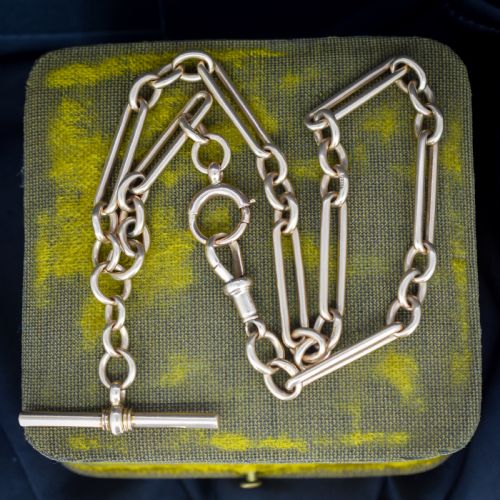

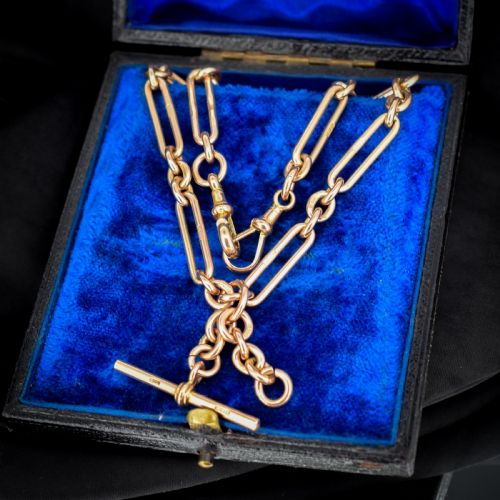


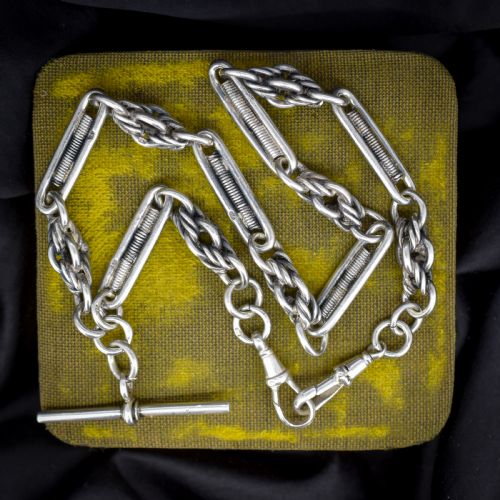
Edwardian Trombone Link Necklace
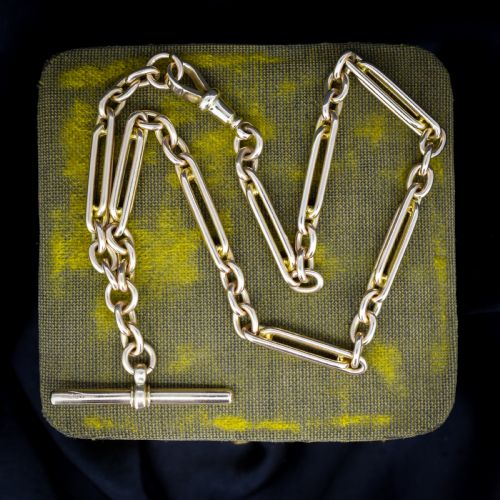
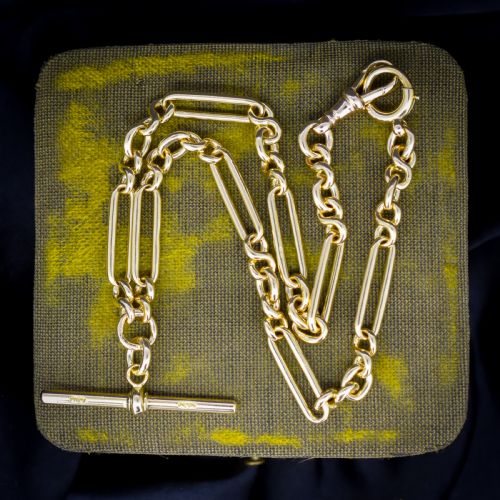
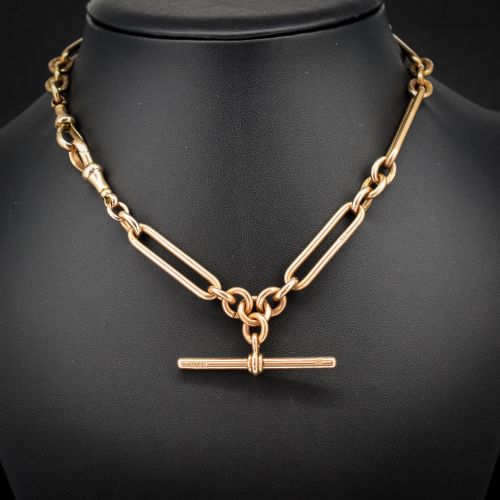
An Edwardian trombone link necklace combines substantial metalwork with flat, elongated links that sit flat against the collar.
Edwardian Trombone Link Necklace
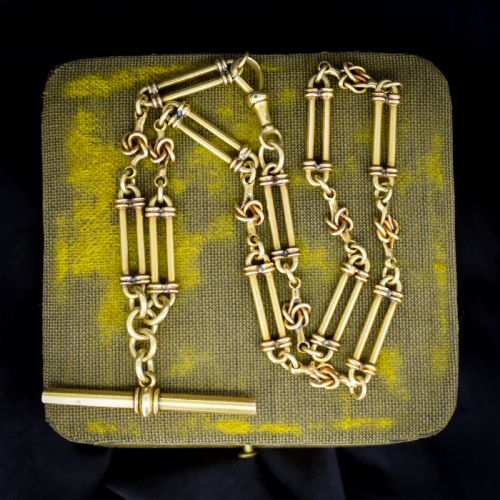
An Edwardian trombone link necklace takes its name from the distinctive shape of its elongated rectangular links, which resemble the slides of a musical instrument. These pieces frequently appear in the form of converted watch chains and Albert chains, adapted from their original pocket watch use into wearable necklaces.
Most examples found within these listings date from the Edwardian era and the late nineteenth century, stretching into the early 1920s. Buyers will regularly encounter variations that incorporate alternative link styles, such as love knots, oval links, and fetter and knot patterns, alongside traditional fasteners like dog clips and T-bars.
The lengths tend to be on the shorter side, reflecting their origins as pocket watch chains rather than long modern neckwear. These chains span multiple decades of production, carrying the distinct aesthetic sensibilities of both late Victorian and Edwardian makers.
Materials and construction
Makers fashioned these necklaces using a variety of precious metals, predominantly 9ct gold, 18ct yellow gold, and sterling silver, with occasional touches of platinum. Yellow gold and rose gold predominate, providing a warm foundation for the intricate link geometry.
Construction relies on hand-assembled individual links connected securely by rings and swivels. Functional elements such as dog clips and bolt rings were integrated to hold pendants or pocket watches securely.
Every time you fasten a dog clip, you are securing a link that once kept a gentleman's timepiece safe from tumbling onto the pavement.
Assessing quality and craftsmanship
Quality in a trombone link necklace depends on the crispness of the link shaping and the weight of the metal used in construction. Substantial gauge wire ensures the individual trombone links resist bending and maintain their sharp rectangular profiles.
Original hardware such as fully functioning dog clips, T-bars, and legible hallmarks elevate a piece. Finer examples maintain tight connections between the links without excessive wear at the pivot points.
The Edwardian Trombone Link Necklace Glossary
- Trombone link
- A flat, elongated rectangular metal link used in watch chains and necklaces. It provides the defining visual characteristic of these chains.
- Albert chain
- A short pocket watch chain designed to be secured through a waistcoat buttonhole. Many survive today as shortened necklaces.
- Dog clip
- A spring-loaded swivel clasp attached to the end of a watch chain. It allowed the wearer to secure a pocket watch or fob easily.
- T-bar
- A short transverse bar attached to a centre drop on a watch chain. It secured the chain through a buttonhole.
- Love knot
- An intricate decorative knot formed from intertwined metal wire. It frequently alternates with trombone links in these pieces.
Edwardian Trombone Link Necklace: Frequently Asked Questions
What is a trombone link necklace?
A trombone link necklace is a piece of jewellery featuring flat, elongated rectangular links that resemble musical instrument slides. These items are often repurposed from Victorian and Edwardian pocket watch chains.
They sit flat against the neckline and usually include original fasteners such as dog clips and T-bars.
How do I wear an antique watch chain as a necklace?
Many of these chains were originally designed to be worn across a waistcoat or attached to a pocket watch rather than draped around the neck. Their shorter lengths mean they sit high on the chest, often acting as choker-style necklaces.
You can attach the existing dog clip directly to any loop or link to adjust the fit depending on the total length of the piece.
What metals were used in Edwardian chains?
Makers of this period primarily utilised 9ct gold, 18ct yellow gold, rose gold, and sterling silver. Platinum also appears occasionally in combination with gold for decorative contrast.
The metal purity is often stamped directly onto the individual links, the T-bar, or the dog clip.
How can I date an antique chain?
Dating relies on hallmarks, maker marks, and stylistic clues within the construction of the links and hardware. Pieces from the Edwardian era often feature lighter, airier designs compared to heavy late Victorian work.
Assay office marks and date letters stamped onto the metal provide a precise year of manufacture for many pieces.