


Antique Gold Hinged Bracelet
An antique gold hinged bracelet secures the wrist with a seamless snap, combining daily practicality with the enduring lustre of past centuries.
Antique Gold Hinged Bracelet
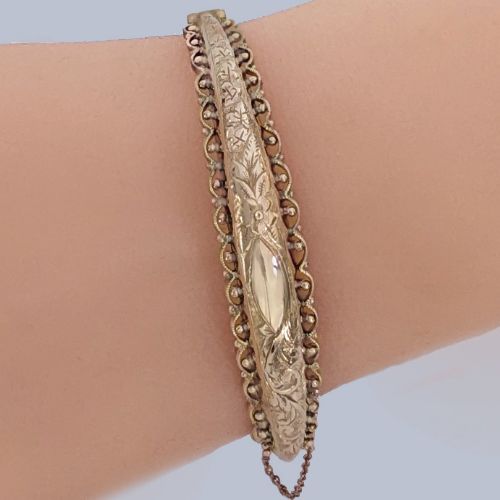
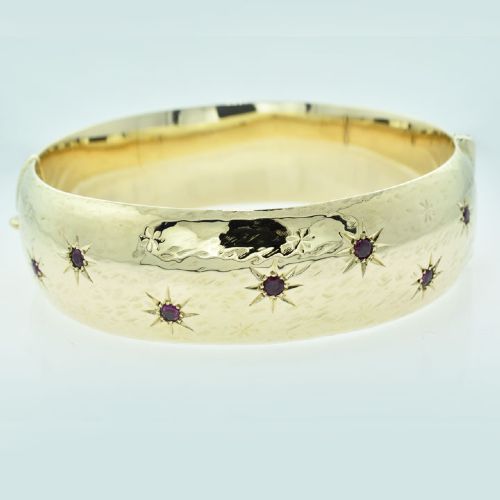
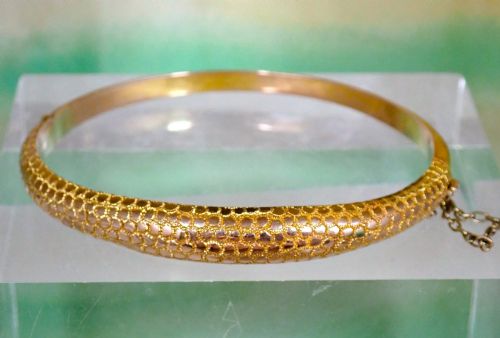
When you search for an antique gold hinged bracelet, you encounter rigid wrist ornaments that open on a concealed pin or spring mechanism, fastening securely around the wrist. The pieces gathered here predominantly originate from the Victorian and Edwardian eras, spanning the nineteenth and early twentieth centuries.
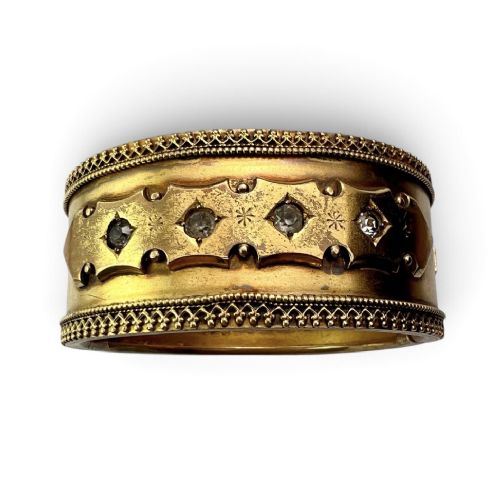
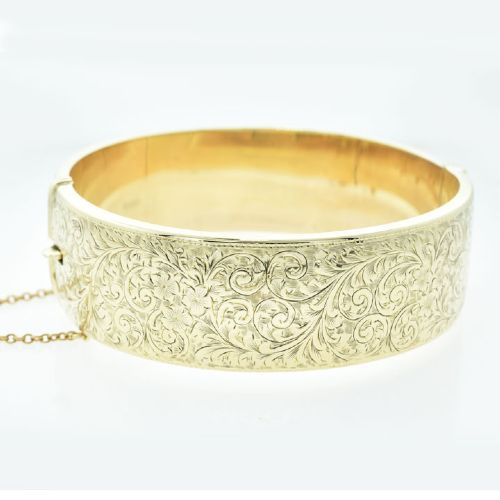
You find substantial cuffs alongside slimmer bangles, some taking the form of hollow tubes while others present solid plates or hinged halves. Styles range from the heavy ornamentation of the Victorian Aesthetic Movement to the clean geometry of the Art Deco period.
Makers utilised various gold purities, including 9ct, 12ct, 15ct, and 18ct varieties, alongside yellow, rose, and white gold tones. These items served as both personal adornments and secure keepsakes, frequently incorporating clasps designed for daily wear.
Materials and Construction
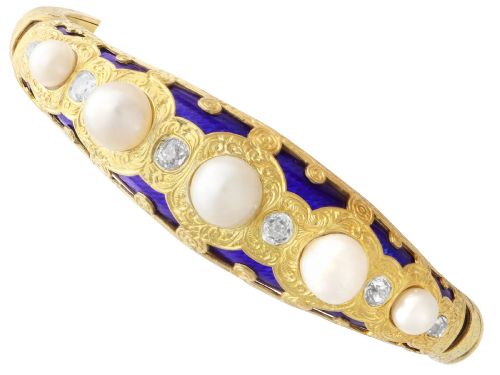
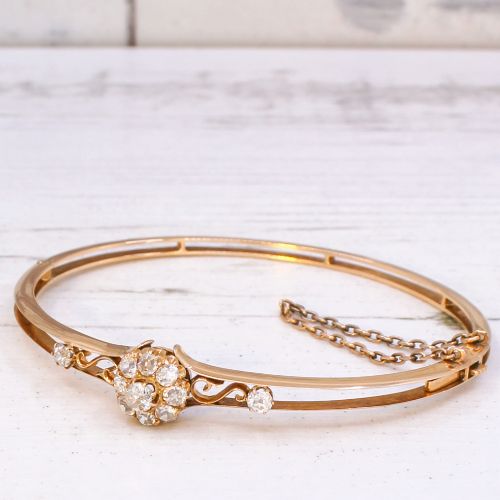
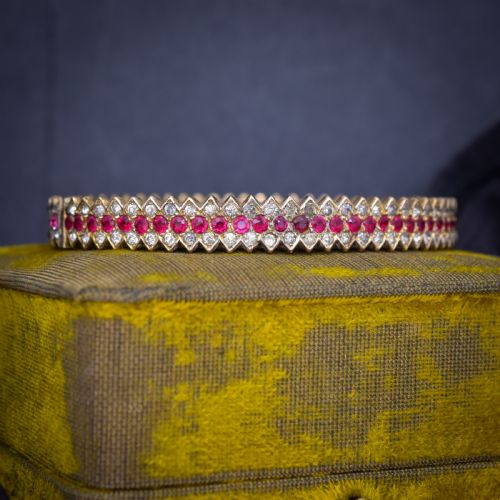
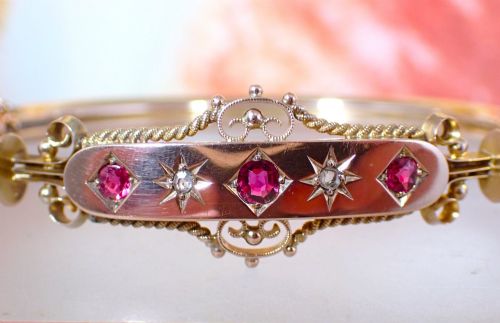
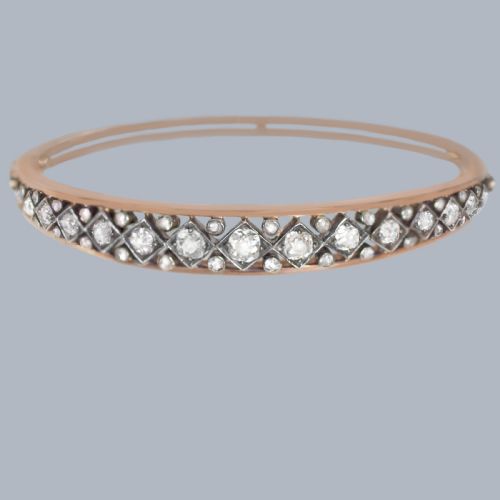
Goldsmiths constructed these bracelets using graded gold alloys shaped into rigid hoops, incorporating internal brass or steel springs where necessary to maintain tension in the hinge. Gemstones such as diamonds, rubies, sapphires, amethysts, and opals are flush-set, bezel-set, or mounted in claw settings directly upon the gold surface.
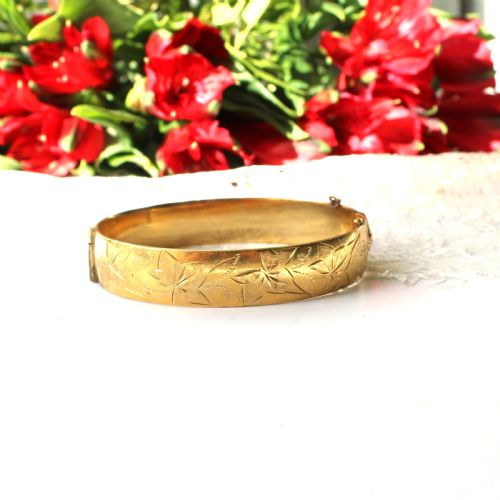
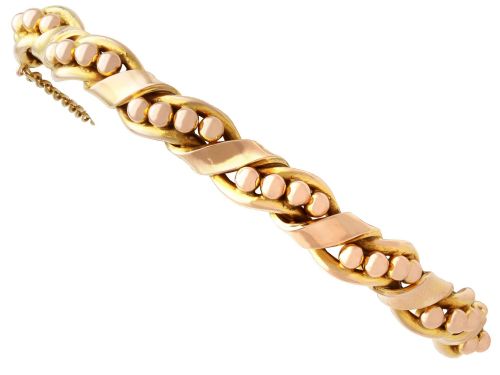
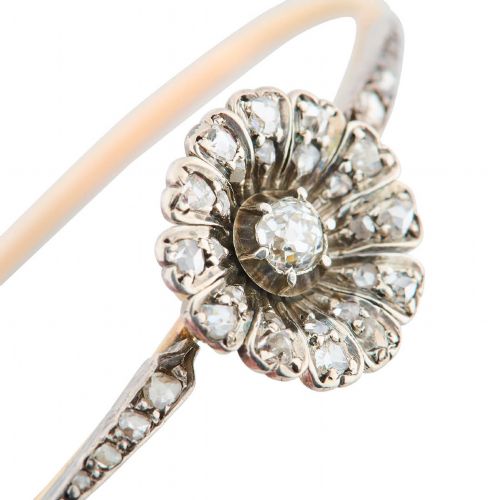
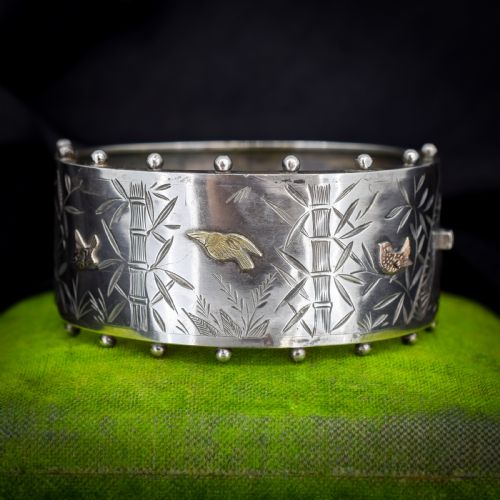
Surface decoration involved hand engraving, chasing, and applied wirework, often combining yellow and rose gold sections to create contrasting floral or geometric motifs. Certain cuffs pair silver settings with gold shanks to enhance the brilliance of old cut diamonds.
Hinges were engineered with precise pins that allowed the two halves to swing open smoothly without straining the surrounding metal structure. Pearls and seed pearls were frequently hand-threaded or glued onto central pins and clusters, while glass paste stones were foiled and secured in closed-back settings.
Listings feature items from the Victorian and Edwardian periods, utilising 9ct, 15ct, and 18ct gold alongside silver, diamonds, rubies, and seed pearls.
Distinctions in Quality
The integrity of the central hinge and the original security of the clasp determine the primary tier of craftsmanship in these bracelets. Pieces constructed from higher gold purities with heavy, solid walls demonstrate greater durability than hollow rolled gold or filled alternatives.
The selection and hand-cutting quality of inset gems, from old mine cut diamonds to matched rubies and seed pearls, dictate the refinement of the piece. Superior examples exhibit intact original settings with minimal metal fatigue around the claw work and engraving.
The Antique Gold Hinged Bracelet Glossary
- Bangle
- A rigid bracelet that slips over the hand or opens via a hinge to encircle the wrist. These items sit firmly on the arm rather than hanging loosely.
- Hinge
- The pivoting joint connecting the two halves of a rigid bracelet, allowing it to open and close. This mechanism relies on a concealed metal pin.
- Old Mine Cut
- An early diamond cut characterised by a cushion shape, a high crown, and a small table. This facet arrangement reflects candlelight distinctively.
- Seed Pearl
- A tiny natural or cultured pearl used in clusters or floral motifs. These small pearls are typical of Victorian and Edwardian jewellerry.
- Rolled Gold
- A manufacturing method where a thin layer of gold is mechanically bonded to a base metal core. This technique provided the appearance of solid gold at a lower weight.
Antique Gold Hinged Bracelet: Frequently Asked Questions
How do I open the hinge safely?
Locate the small box clasp or tongue mechanism opposite the hinge pin and press gently while pulling the two halves apart. Avoid forcing the bracelet open beyond its natural stop angle to prevent bending the metal.
Inspect the catch for a safety chain, which many Victorian pieces retain to prevent accidental loss if the clasp releases during wear.
Were these worn alone or stacked?
Victorian and Edwardian wearers often paired these rigid bands with matching brooches or wore multiple bangles together on the same wrist. The varying widths of rose and yellow gold allowed different textures to sit side by side.
Today, wearing them singly highlights the individual engraving and gemstone clusters without risking surface abrasion between adjacent pieces.
Can I wear my antique bracelet daily?
Solid gold pieces with robust hinges tolerate regular wear provided you remove them during heavy manual tasks or sports. Items containing seed pearls or hollow rolled gold require greater care to avoid moisture damage and denting.
Store the bracelet flat in a lined box when not in use to protect the hinge alignment and prevent gemstone settings from catching on fabrics.
How do I distinguish Victorian from Edwardian styles?
Victorian pieces from the nineteenth century frequently display heavier gold weights, naturalistic motifs like birds and floral clusters, and warm rose gold tones. They often incorporate old mine cut diamonds and rich coloured gems.
Edwardian items from the early twentieth century lean towards lighter, airier designs in yellow gold and platinum, featuring intricate millegrain work and delicate seed pearl arrangements.