

Antique Gold Candelabrum
An antique gold candelabrum brings commanding height and gilded brilliance to a room, offering the warmth of multi-branched candle illumination through centuries of European design.
Antique Gold Candelabrum
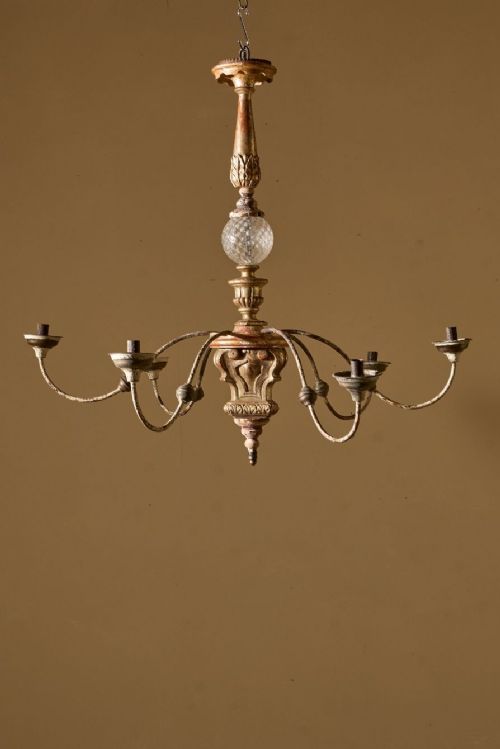
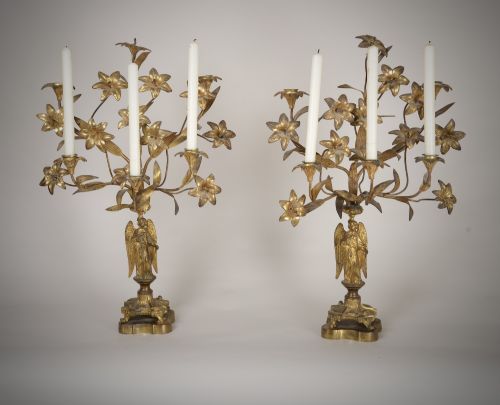
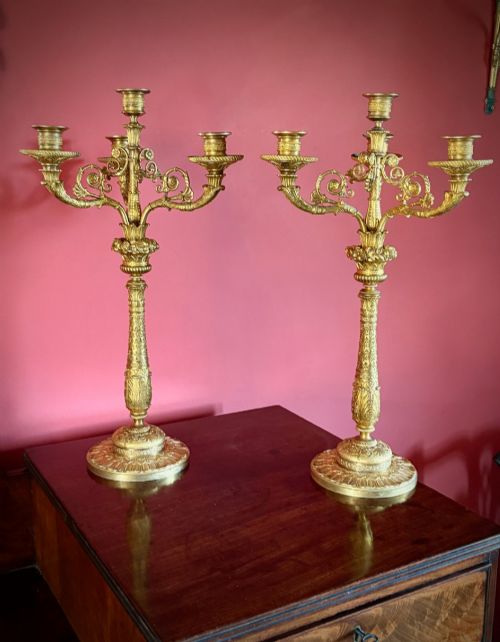
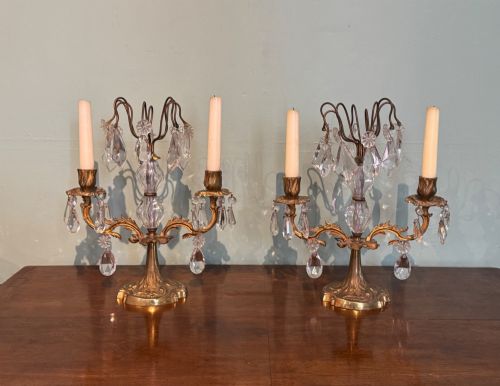
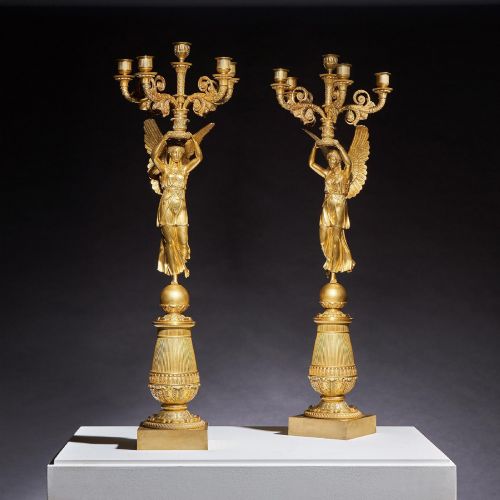
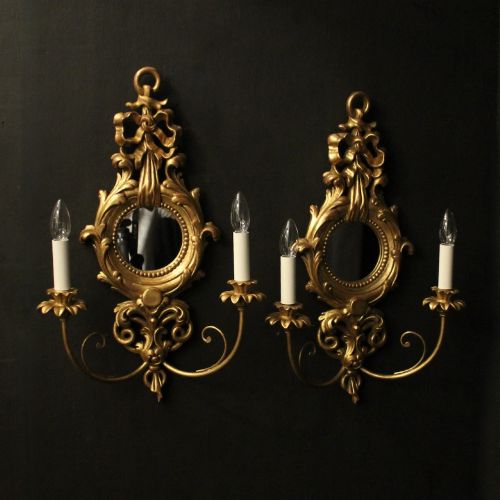
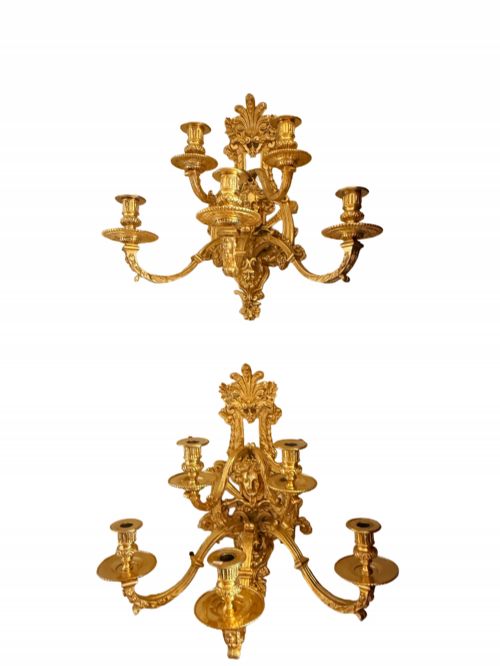
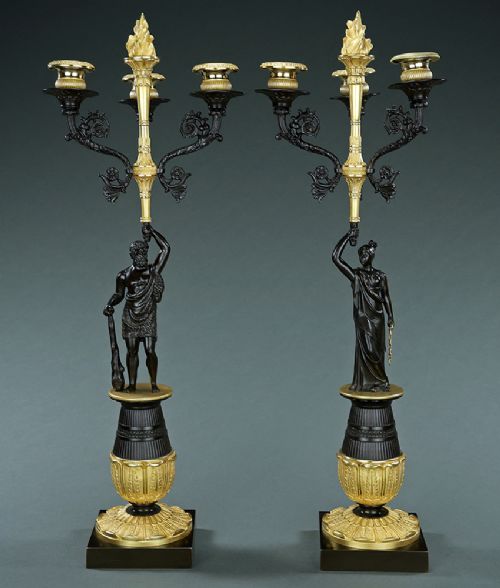
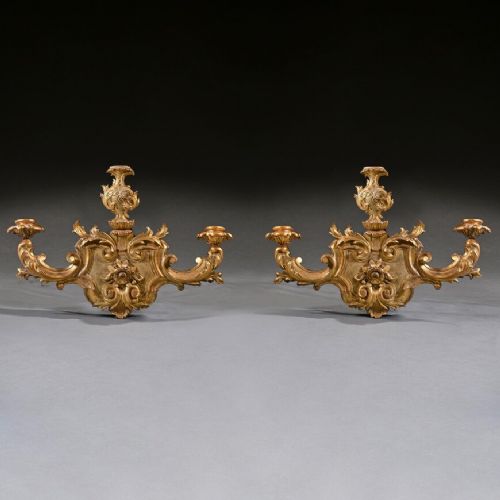
When searching for an antique gold candelabrum, you encounter branch-bearing candleholders rooted in the eighteenth and nineteenth centuries, rendered in gleaming metallic finishes across French, English, and Italian workshops. The listings here contain matched pairs and grand single pieces spanning French Empire, Rococo Revival, and Victorian Gothic styles, frequently configured with multiple arms for dining tables, mantelpieces, or wall mounting.
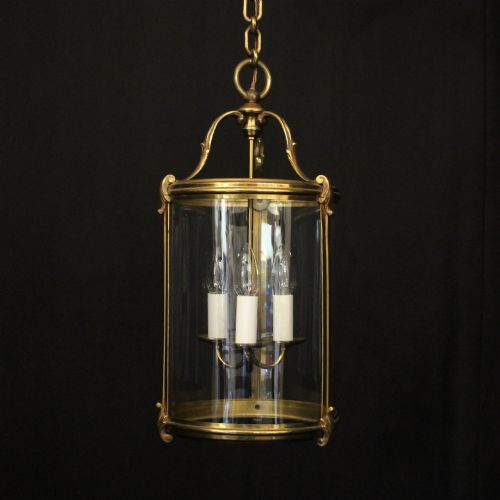
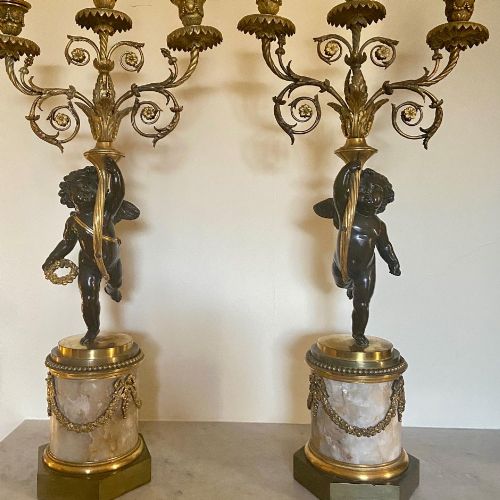
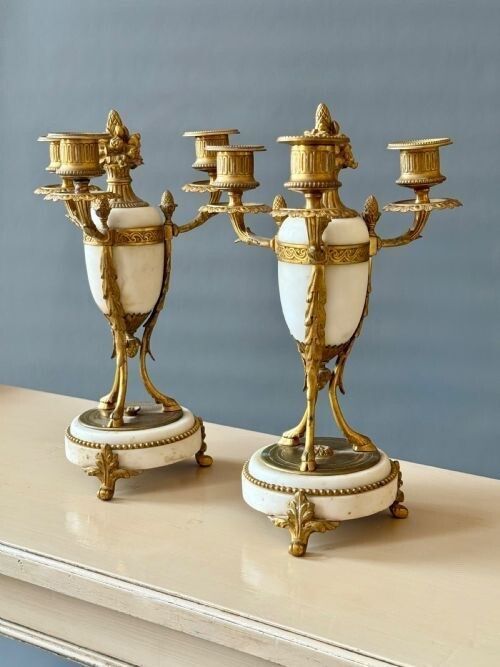
The materials that yield the characteristic golden surface include ormolu, gilt bronze, lacquered brass, and carved giltwood, sometimes paired with white marble bases or contrasting patinated bronze figures. While floor-standing examples remain scarce, table candelabra, wall sconces, and girandoles dominate the selection, reflecting the domestic lighting requirements of grand period interiors.
Most pieces date from the nineteenth century, though eighteenth-century Venetian and French specimens appear alongside later twentieth-century interpretations adhering to classical Louis XVI and Adam revival vocabularies. These objects range from restrained two-branch domestic candlesticks to massive multi-branch garniture sets accompanied by matching clocks.
Materials and construction methods
Gilt bronze and ormolu pieces rely on the mercury gilding process or electroplating applied to cast bronze bases, creating a durable golden sheen that captures flickering candlelight. Foundries chased the cast metal surfaces by hand to sharpen details on acanthus leaves, figures, and scrollwork before assembly.
Giltwood candelabra and wall lights use carved timber substrates coated in a thin layer of gold leaf over gesso, while combination pieces integrate turned white marble, cut glass pendants, or patinated bronze figures.
Many structural components use threaded rods and bolts to secure the bobeches, drip pans, and branch arms to central pedestals, allowing for dismantling during cleaning or historical conversion to electricity.
Distinctions in execution and design
Quality rests heavily on the crispness of the bronze chasing and the depth of the gilding, where superior examples exhibit sharp relief and rich, warm tones rather than flat, brassy plating. Master founders invested time in hand-finishing hidden areas and ensuring that the structural arms align symmetrically around the central axis.
The integration of secondary materials defines the upper tier of the range, such as solid white marble socles, finely carved patinated bronze putti, or cast figures attributed to notable Parisian workshops. Weight, structural rigidity, and the presence of signed markers or foundry stamps further distinguish high-end sculptural pieces from standard production items.
Pierre Philippe Thomire·Francois Redmond·Rabiat·Thomas Hope
The Antique Gold Candelabrum Glossary
- Ormolu
- Finely chopped gold amalgamated with mercury and applied to a bronze base through heat gilding, prevalent in eighteenth and nineteenth-century French metalwork. This technique produces a deep, durable golden lustre that resists tarnishing.
- Bobeche
- A removable collar or small dish placed below the candle nozzle to catch melting wax. It protects the main arms of the candelabrum from drips.
- Girandole
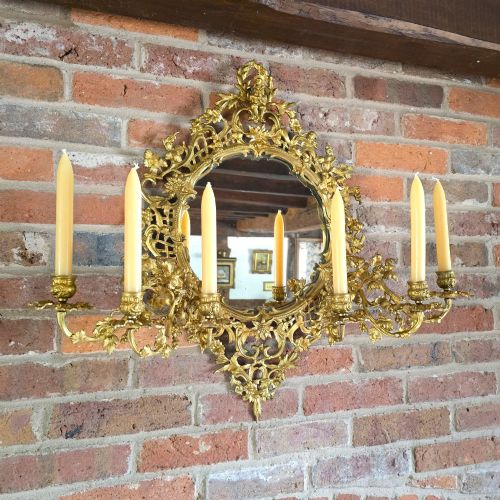
- An ornamental branched candlestick or candelabrum mounted on a wall, frequently backed by a mirror to amplify the ambient light. These fixtures became popular during the eighteenth and nineteenth centuries.
- Garniture set
- A coordinated arrangement of decorative objects, typically consisting of a central clock flanked by a pair of matching candelabra or vases. They were designed to sit symmetrically on a mantelpiece.
- Pricket
- A sharp metal spike upon which a large candle is impaled, rather than dropped into a socket. This medieval and ecclesiastical form occasionally appears in later Gothic revival designs.
Antique Gold Candelabrum: Frequently Asked Questions
How do I clean an antique gold candelabrum?
Dust the gilded surfaces gently with a soft, dry artist brush or microfiber cloth to prevent the accumulation of grit in recessed chasing. Avoid commercial metal polishes, water, and chemical solvents, as these abrasive agents strip fragile gold leaf and historical ormolu.
For stubborn grime, consult a professional conservator rather than attempting aggressive cleaning at home. Preserving the original surface patina maintains both the visual depth and the historical integrity of the piece.
Were these pieces converted to electricity?
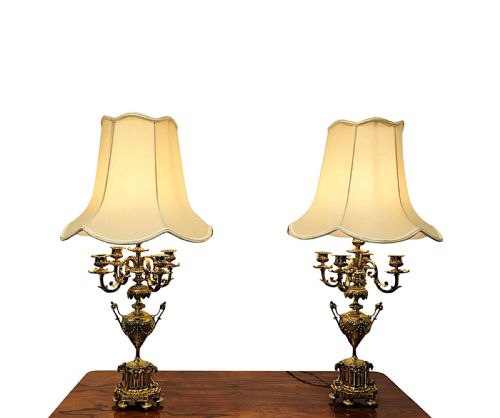
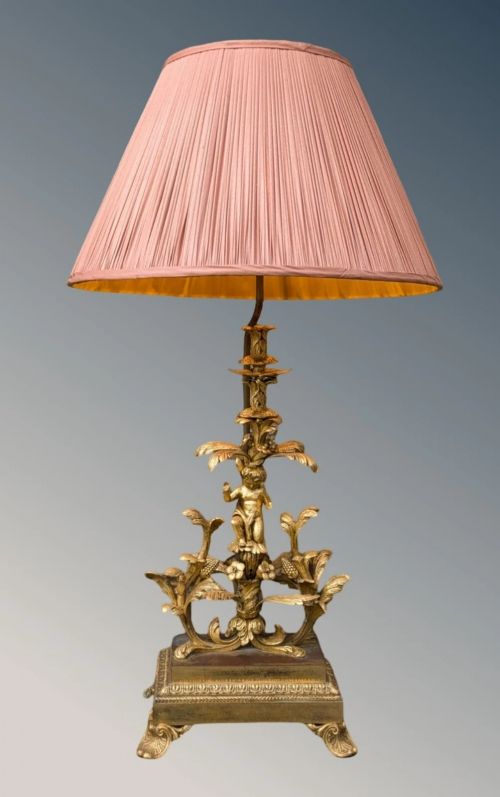
Many nineteenth-century candelabra found in modern homes have undergone conversion to table lamps or wired wall lights to suit contemporary domestic lighting needs. These alterations often involve running a cord through the central axis or concealing wiring behind the branch mounts.
Buyers should examine the base and candle nozzles to determine whether the original wax-catching bobeches remain intact or if they were drilled out during electrification. Unconverted examples retain their original function for taper candles but require careful stability checks if used.
How can I tell French styles apart?
French Empire pieces feature martial motifs, classical drapery, sphinxes, and patinated bronze figures reflecting Napoleonic neoclassical taste. Louis XVI and Rococo revival designs rely on asymmetric scrollwork, organic floral garlands, acanthus leaves, and playful cherubs.
Examining the casting weight, base geometry, and secondary decorative elements helps align an object with its specific historical design period. Regional variations in English and Italian pieces often display heavier cast brass or carved wooden structures compared to French ormolu.
Where should I place a candelabrum?
Candelabra function effectively as centrepieces on large dining tables, heavy sideboards, or centered upon mantelpieces beneath wall mirrors. Wall-mounted sconces and girandoles require secure fixing to solid wall studs to support the weight of heavy bronze or marble arms.
Keep pieces away from direct heat sources, strong sunlight, and high-traffic household areas where accidental bumps might dislodge tall, balanced branches. Using proper candle adapters ensures modern tapers sit securely without tilting.