



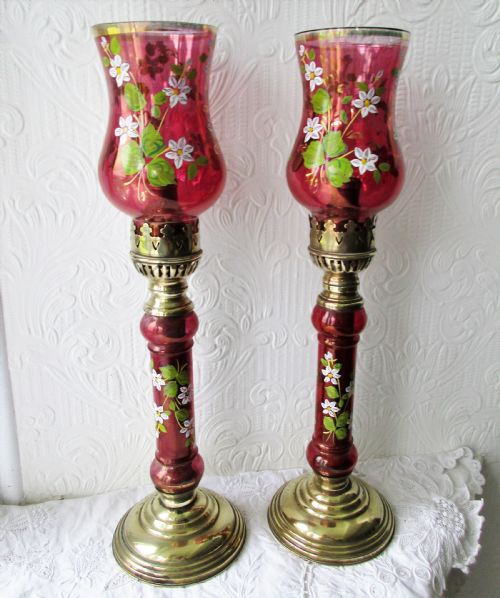


Antique Glass Luster Pair
These antique glass lustre pair examples bring brilliant reflective prisms and rich ruby or green tones straight to a mantelpiece.
Antique Glass Luster Pair
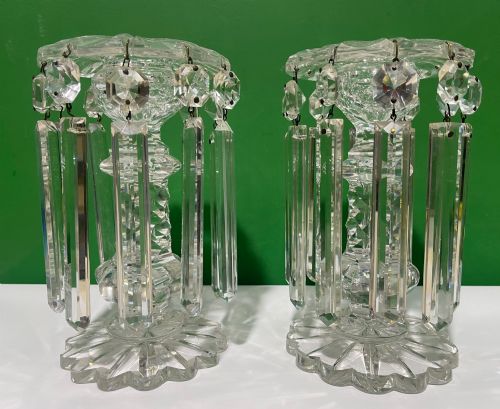
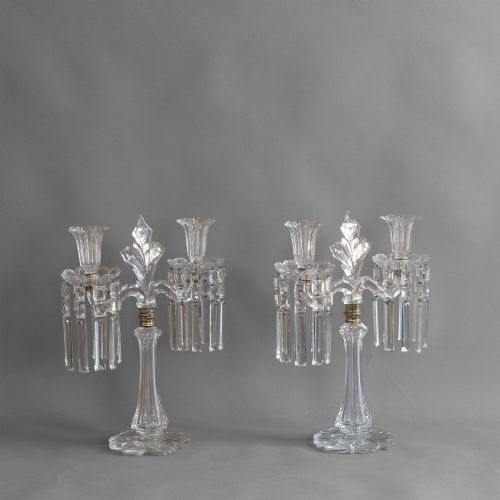
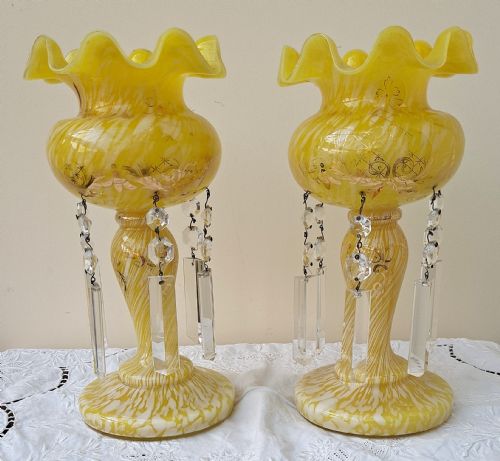
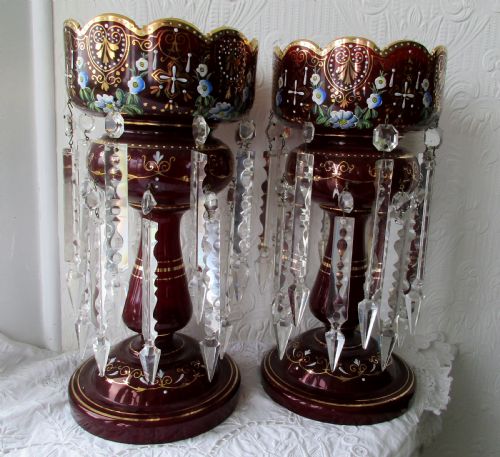
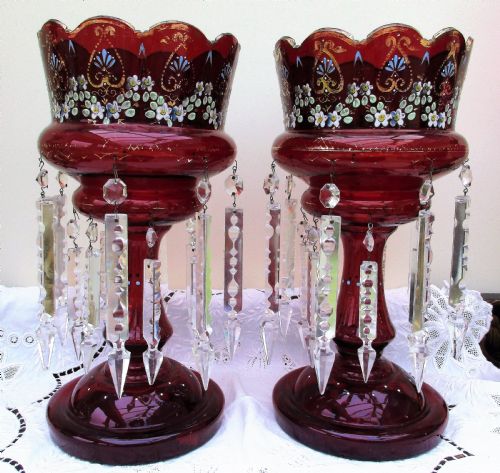
When you search for an antique glass lustre pair, you are looking at decorative mantel garnitures designed to catch and reflect candlelight through hanging crystal pendants. The version you are most likely to meet on this page is the Victorian coloured glass mantel lustre, featuring hand-painted enamel highlights and cut crystal drops suspended from a central flared bowl.
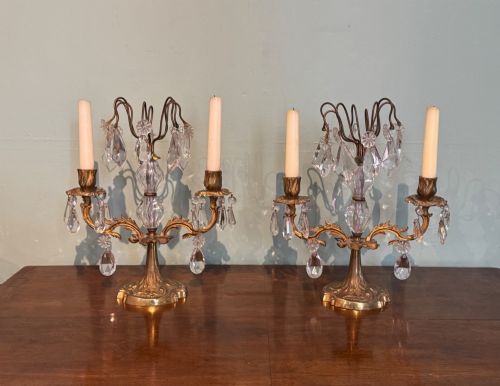
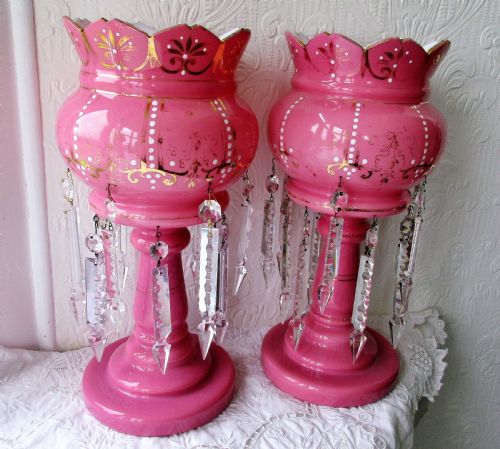
Originating primarily from English, French, and Bohemian workshops during the nineteenth century, these objects served both a practical lighting purpose and a purely decorative role in formal reception rooms. Makers combined brass stems, gilt bronze mounts, or opaline glass bodies to create symmetrical pairs meant to flank clocks or candelabra on the drawing room chimneypiece.
Materials and construction methods
Glassmakers utilised lead crystal, ruby flash glass, and opaline to form the bodies, often applying gold leaf and polychrome enamel decoration by hand before firing. The distinctive prisms, known as drops or spears, were hand-cut and polished to maximise light refraction before being wired to the rim with brass or metal pins.
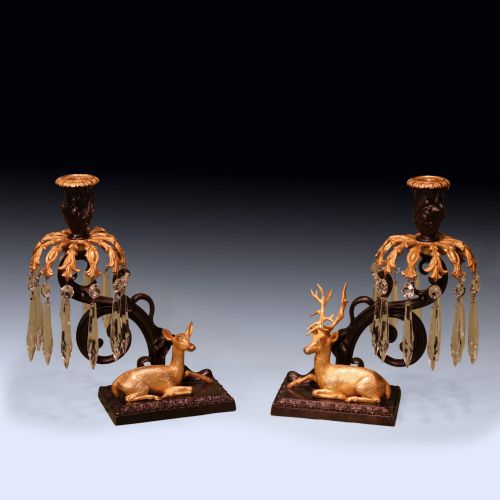
Many examples integrate mixed media such as cast brass bases, gilt metal, or bronze and ormolu mounts, combining heavy metal casting with blown glass components. Flash glass techniques involved casing a layer of coloured glass over a clear core, which artisans then cut through to reveal the contrasting transparent metal beneath.
Antique Glass Luster Pair Retail Price Guide 2026
Typical asking prices for glass luster pair among the pieces listed under this phrase on Sellingantiques today, from the lower quarter to the upper quarter. They describe what is for sale here now, not the wider market.
Some Victorian lustres were designed with hidden candle sockets so they could double as functional lighting when the prisms stopped dancing.
What separates the best examples
Quality rests heavily on the depth and saturation of the coloured glass, the precision of the hand-cut facets on the crystal drops, and the crispness of any gilt or enamel work. Finer specimens display heavier lead crystal content that rings clearly when struck and bears complex hand-painted botanical or geometric motifs rather than simple stencilled lines.
The completeness and originality of the hanging prism cascade dictate value, as missing or mismatched crystal drops disrupt the balanced play of light. Superior pairs also feature substantial cast bronze or heavy brass bases with refined chasing, distinguishing them from lighter, more utilitarian mantel furniture.
Clarkes
The Antique Glass Luster Pair Glossary
- Lustre
- A decorative table or mantel vase fitted with a ring of hanging crystal pendants that catch and reflect light. They were widely produced in the nineteenth century across Britain and Europe.
- Flash glass
- A vessel made from a thin layer of coloured glass fused over a clear or contrasting body. Artisans cut through the outer coloured layer to create clear patterns.
- Opaline glass
- An opaque, pastel-toned glass developed in France that mimics the appearance of natural opal. It provides a smooth surface for gilt and enamel decoration.
- Prism
- A cut glass pendant suspended from the rim of a lustre to refract candlelight. These drops are typically attached using small brass wire loops.
- Garniture
- A set of ornamental objects designed to be displayed together on a mantelpiece or sideboard. They usually consist of a central clock flanked by a pair of lustres or vases.
Antique Glass Luster Pair: Frequently Asked Questions
What is an antique glass lustre pair?
An antique glass lustre pair consists of two matching decorative mantel ornaments featuring hanging crystal drops designed to reflect candlelight.
Originating largely in the nineteenth century, these pieces combine coloured glass bodies with cut crystal prisms to brighten formal Victorian and Regency rooms.
How were glass lustres used?
They were placed on mantelpieces, tables, or sideboards, frequently flanking clocks or candlesticks to enhance the illumination of a room.
While some versions held candles in a central socket, others functioned primarily as decorative vases meant to catch the ambient light.
How can you tell Victorian lustres from later copies?
Victorian examples typically exhibit hand-cut crystal drops with small attachment loops, heavy glass bases, and hand-painted enamel details with slight irregularities.
Later reproductions often feature machine-pressed glass, uniform machine-cut prisms, and modern hardware that lacks nineteenth-century construction marks.