



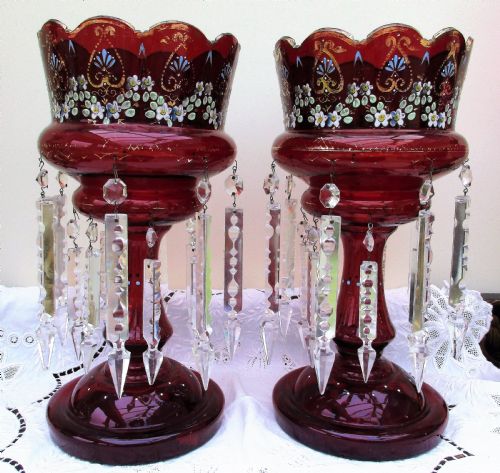
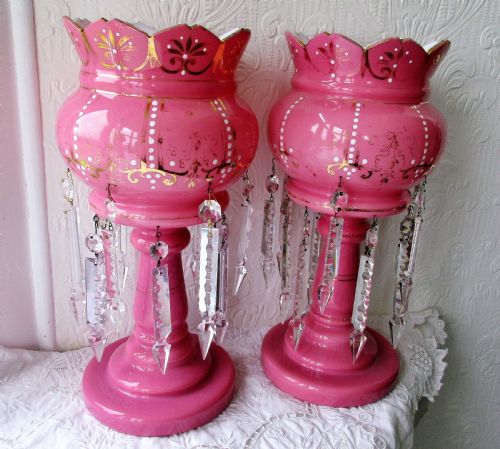


Antique Glass Drop Lustres
Antique glass drop lustres bring dramatic refractive brilliance and colour to mantelpieces and tables across several historical periods.
Antique Glass Drop Lustres
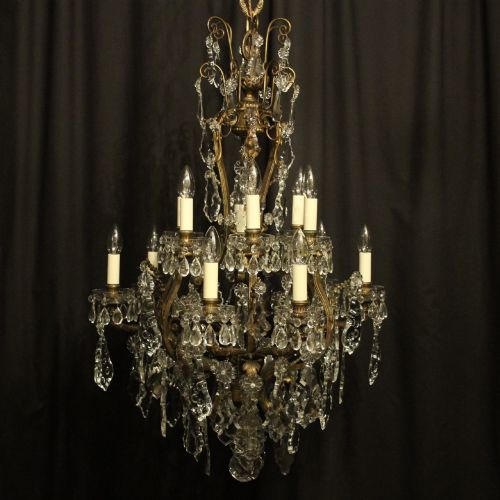
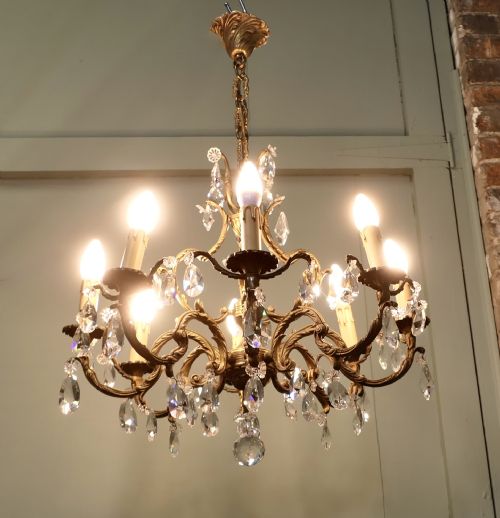
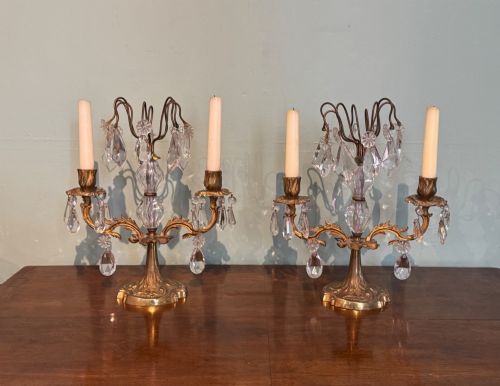
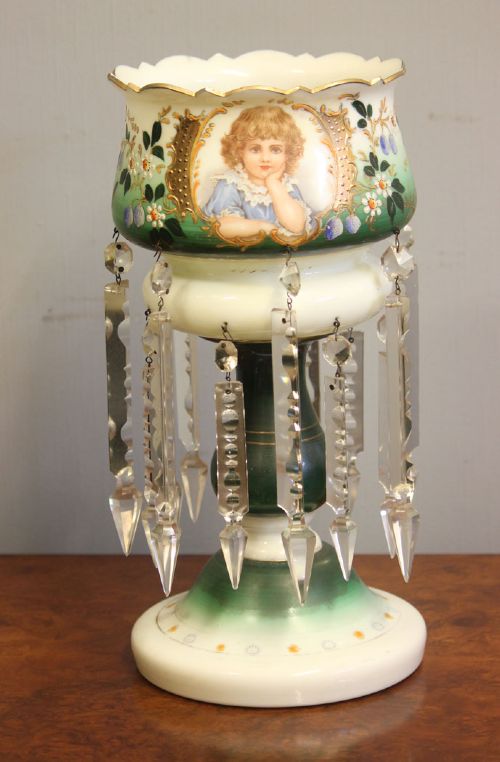
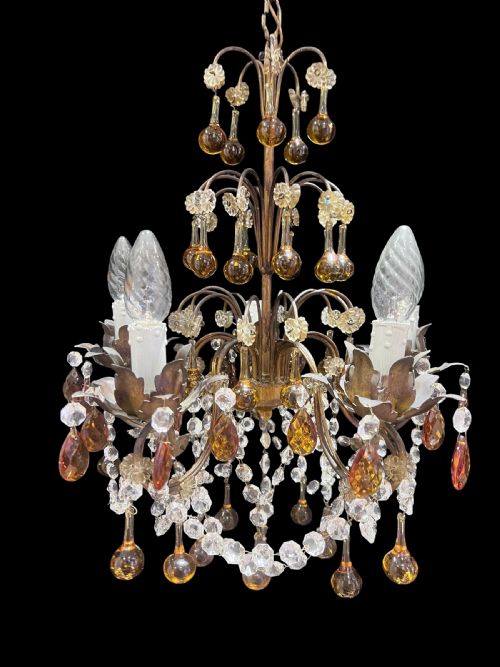
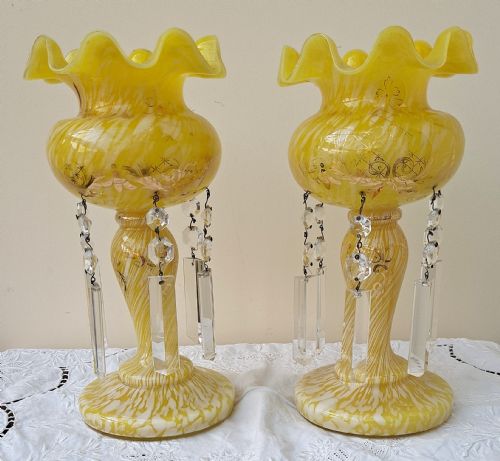
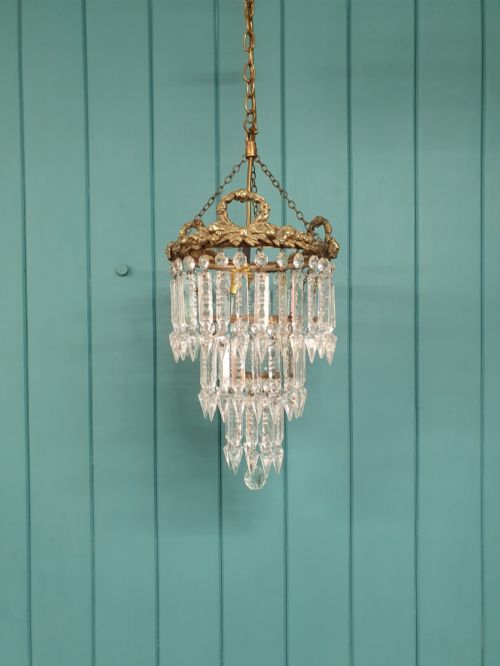
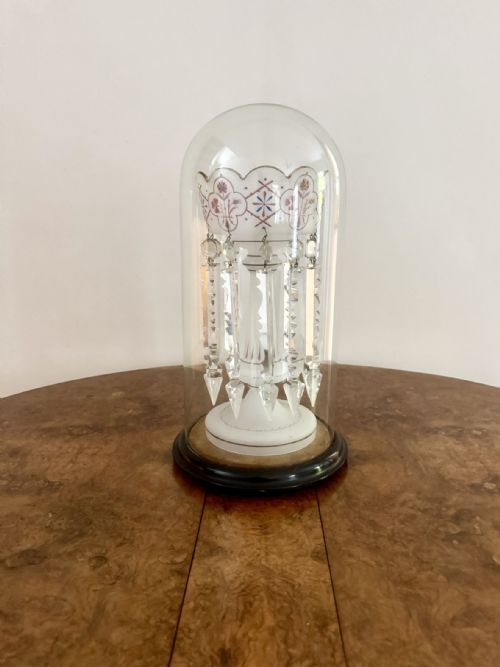
When searching for antique glass drop lustres, a buyer encounters decorative ornamental pieces designed for mantelpieces, side tables and larger lighting fixtures. The most frequent discoveries on this page are pairs of mantel lustres and table lustres from the nineteenth century, alongside matching candlesticks and elaborate chandeliers.
These items originate across various eras including the Regency, Victorian and Edwardian periods, with styles drawing from French Rococo, French Chateau and Italian traditions. Forms range from single shelf ornaments to grand multi-light candelabra hung with crystal pendants.
The primary function of these objects involves catching and refracting ambient light through coloured or clear glass bodies and dangling crystal drops. They serve as decorative centrepieces rather than primary illumination sources.
How they were made
Makers utilised clear and coloured glass, often applying flash glass techniques in ruby, cranberry, green, pink, yellow, uranium and milk glass variants. Metal components incorporate brass, gilt-brass, ormolu, gilt metal, bronze and silver-gilded bronze to support the glass bodies.
Crystal and cut glass elements undergo meticulous cutting and facet polishing to maximise light refraction from the dangling drops. Enamel and gold leaf embellishments frequently adorn the glass bodies, adding layered decorative detail to the finished pieces.
Antique Glass Drop Lustres Retail Price Guide 2026
Typical asking prices for glass drop lustres among the pieces listed under this phrase on Sellingantiques today, from the lower quarter to the upper quarter. They describe what is for sale here now, not the wider market.
Listings feature ruby, cranberry, green, pink, yellow, uranium and milk glass alongside clear crystal and cut glass.
What varies in quality
The standard of cutting on the crystal drops and the glass body creates the primary distinction between ordinary and superior examples. Crisp, deep facets catch the light sharply, whereas softer or blurred edges produce a duller reflection.
The richness and depth of the coloured glass, combined with the delicacy of any hand-painted enamel or gold leaf decoration, separates standard production from exceptional work. Heavier, more substantial metal mountings in brass or bronze also indicate a higher grade of manufacture.
The Antique Glass Drop Lustres Glossary
- Lustre
- An ornamental mantel vase or candlestick fitted with hanging glass drops. These drops catch and reflect candle or daylight.
- Flash glass
- A thin layer of coloured glass applied over a colourless glass base before being cut away to reveal the clear glass beneath. This technique creates high-contrast patterns.
- Candelabra
- A branched candlestick holding multiple lights. Many examples in this category incorporate hanging crystal drops around the stems.
- Ormolu
- Finely ground high-carat gold applied to a bronze base using a mercury-gilding process. This material provides a rich metallic lustre on period mounts.
- Uranium glass
- Glass containing trace amounts of uranium oxide, which glows bright green under ultraviolet light. It appears in various yellow and green decorative items from the nineteenth century.
Antique Glass Drop Lustres: Frequently Asked Questions
What are glass drop lustres?
Glass drop lustres are decorative ornamental vessels or candlesticks adorned with hanging crystal pendants designed to reflect light.
They sit primarily on mantelpieces and tables, functioning as decorative centerpieces rather than functional lighting.
How do I tell Victorian lustres apart?
Victorian lustres frequently feature bold colours like ruby, cranberry and green, often decorated with enamel and gold leaf.
Earlier Regency examples tend toward clear cut glass and bronze mounts, while Edwardian pieces often show lighter proportions.
Where were lustres placed?
Victorian households placed mantel lustres centrally on fireplace mantelpieces to catch the flickering light from fires and candles.
Table lustres and candelabra also stood on sideboards and dining tables as decorative display objects.
Are the crystal drops original?
Many surviving lustres retain their original cut crystal drops, though replacements occur frequently due to accidental breakage over time.
Matching the cut, weight and glass tone of the drops helps determine whether they belong to the original piece.