
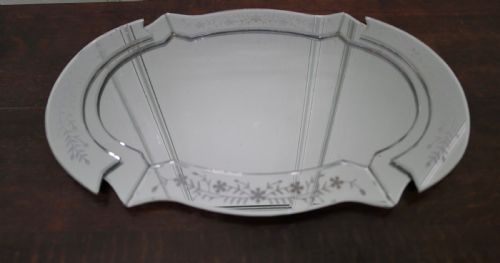
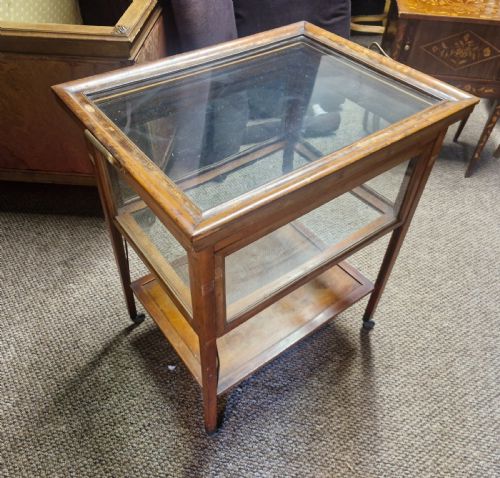


Antique Glass Display Tray
An antique glass display tray serves as both a practical server and a reflective surface, bringing period elegance to any room.
Antique Glass Display Tray
An antique glass display tray combines timber frames with mirrored or transparent bases, designed to hold drinks, cosmetics, or decorative objects. These pieces appear across several periods, notably the Edwardian era and the 1930s Art Deco movement, alongside earlier Georgian and 19th-century interpretations.
The form frequently overlaps with related items such as tray-top occasional tables, etageres, and drinks cabinets featuring removable glass sections. A buyer searching for an antique glass display tray will encounter various configurations, from simple mahogany serving pieces to elaborate mirrored plateaus.
Materials and construction
Craftsmen built the frames using dense hardwoods like mahogany, walnut, satinwood, and kingwood, often enhancing them with brass handles and galleries. The glass elements include bevelled mirror plates, cut glass, and occasionally specialised decorative inclusions such as butterfly wings sealed beneath the surface.
Joinery techniques reflect the prevailing style of each era, ranging from Georgian cabinet-making standards to early twentieth-century production methods. Frames are structured to securely hold heavy glass inserts, utilising raised rims or brass rails to prevent items from sliding.
Some trays preserve the delicate ghosts of Edwardian insects, sealing iridescent butterfly wings beneath protective glass for eternal display.
Judging quality and execution
Quality rests in the crispness of the timber carving, the choice of veneer figurations like satinwood, and the depth of hand-cut work on the glass panels. Pieces exhibiting refined brass fittings and solid wood construction sit firmly above utilitarian equivalents.
The integrity of the glass or mirror plate dictates much of the appeal, with original bevelled edges and minimal silvering degradation indicating superior preservation. Cohesion between the frame style and the glass insert marks the distinction between standard production and finer examples.
The Antique Glass Display Tray Glossary
- Etagere
- A set of open shelves for displaying small objects, often incorporating a removable glass tray on the top tier. This French form gained popularity in various nineteenth-century revival styles.
- Plateau
- A mirrored tray placed on a table or sideboard to reflect candlelight and display glassware or silver. Jeweller's versions were historically utilised for showcasing small luxury goods.
- Bevelled
- Glass edges cut and polished at an angle to create a framed, light-catching border. This technique distinguishes finer antique mirrors and display trays from plain plate glass.
- Gallery
- A raised pierced metal or wooden rail fitted around the edge of a tray to secure contents. Brass galleries are frequently found on Edwardian and Art Deco serving pieces.
- Coquilles
- A specific moulded glass pattern featuring shell motifs, commonly associated with early twentieth-century French production. These pieces demonstrate the sculptural quality of decorative glass from the period.
Antique Glass Display Tray: Frequently Asked Questions
How were these trays used?
These pieces served multiple domestic functions, from carrying tea and wine to displaying decorative glassware and precious objects in drawing rooms. Mirrored versions often sat on side tables to amplify light.
Over time, their role shifted toward static display, functioning as decorative centerpieces or Jeweller's plateaus for organising small personal accessories.
What periods do they come from?
The available selection spans from the 18th century through the Edwardian era and into the 1930s Art Deco period. Each era brings distinct timber choices and decorative motifs.
Earlier pieces show Georgian influences, while 20th-century examples embrace geometric lines, opalescent glass, and exotic wood veneers.
How do I care for antique glass?
Cleaning requires mild, non-ammonia glass cleaner applied to a cloth rather than directly onto the surface, preventing moisture from seeping behind old mirror silvering. Timber frames need occasional waxing with a suitable polish.
Avoid placing heavy impact objects directly onto antique glass inserts to prevent scratching or cracking fragile historical material.
Are the glass inserts original?
Determining originality involves examining the fit, thickness, and signs of age within the glass, such as minor surface abrasions or uneven silvering on mirrors. Replacements are common due to the fragile nature of glass.
Matching the bevel style and edge wear to the estimated period of the wooden frame helps confirm whether the insert belongs to the piece.