



Antique Glass Desk Timepiece
An antique glass desk timepiece brings a sharp, sculptural presence to a study, combining heavy bevelled panes with precise mechanical movement.
Antique Glass Desk Timepiece
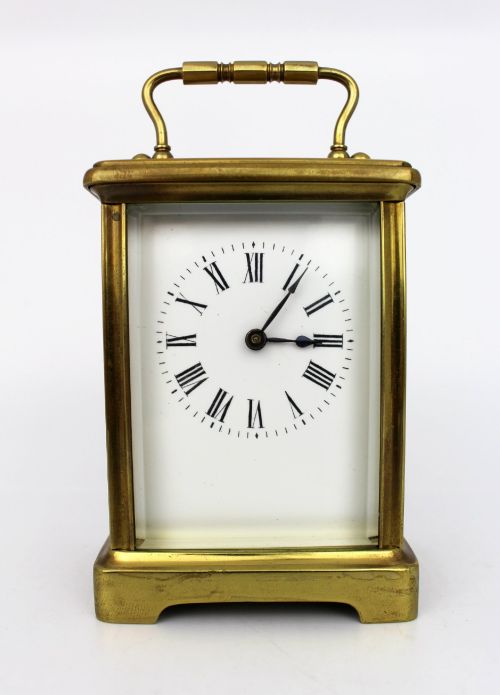
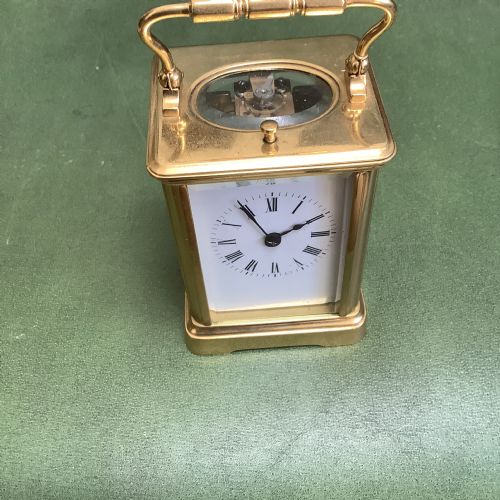
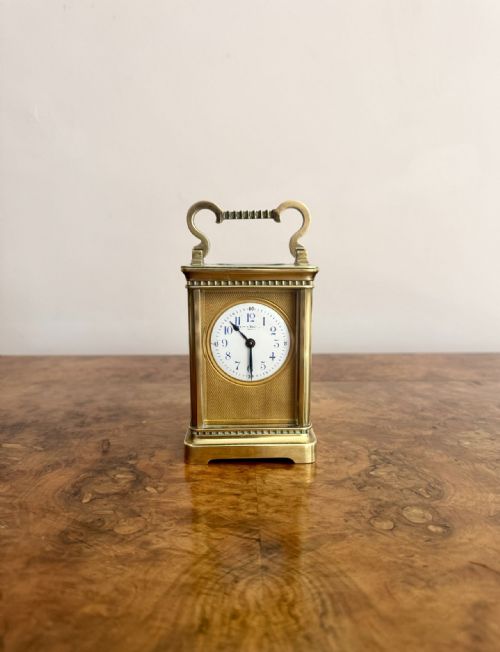
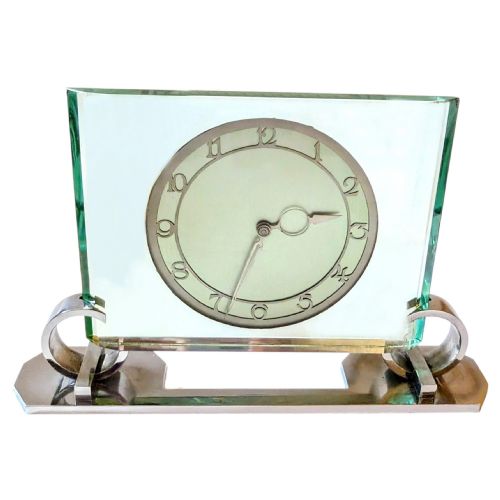
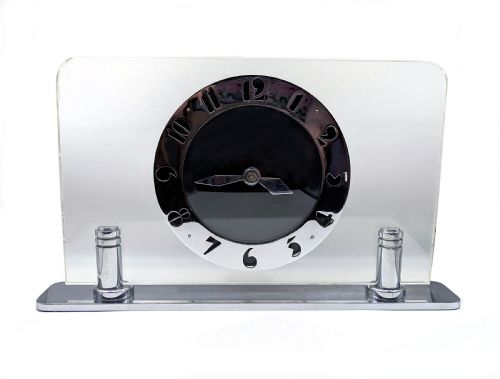
An antique glass desk timepiece brings together timekeeping and transparent housing, most frequently seen here in the form of French four-glass mantel clocks, crystal regulators, and striking Art Deco glass designs. These objects range from nineteenth-century brass-framed carriage pieces to twentieth-century opaline and uranium glass desk clocks.
The materials span clear and coloured glass panels held in brass or chrome frames, often enclosing enamelled dials and intricate brass gear trains. Pieces emerge from Victorian, Edwardian, and Art Deco periods, encompassing French ateliers and English makers alike.
How They Were Made
Maker workshops combined heavy plate glass with cast or machined brass, chrome, and gilt mountings to build rigid housings that protected delicate escapements while offering all-round visibility. Dials were commonly enamelled with Roman or Arabic numerals, paired with finely pierced steel hands.
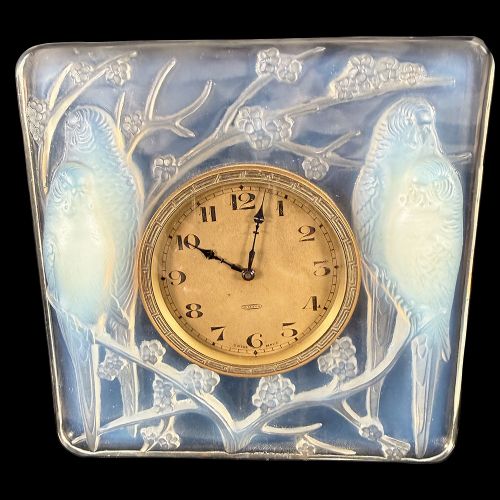
Moulded opaline, blue, and opalescent glass featured strongly in twentieth-century modernist production, where glassmakers pressed elaborate motifs like love birds or parakeets directly into the body of the mantel clock.
Listings span periods from Victorian and Edwardian to Art Deco, utilising brass, chrome, mahogany, and opaline glass.
What Varies in Quality
The calibre of the movement separates standard production from exceptional examples, with platform escapements, jewelled bearings, and repeat striking complications commanding greater attention. The weight and clarity of the glass panels, alongside the crispness of chased brass or chrome frames, dictate overall refinement.
Signed dials and movements carrying the names of established makers or retailers elevate an item, reflecting superior workshop standards in both mechanical execution and decorative harmony.
R Lalique·Smiths Clockmakers·Richard Winter of Chieveley·Maurice and Marcel Moulin Favre Bulle·John Morley·Duverdrey and Bloquel·Tiffany·Mappin and Webb·L Epee·P M Favre·Drocourt·Clerke Royal Exchange London·A Delepine
The Antique Glass Desk Timepiece Glossary
- Crystal regulator
- A mantel clock housed in bevelled glass panels with a visible pendulum, popular in late nineteenth-century France. These pieces allow light to pass completely through the movement.
- Carriage clock
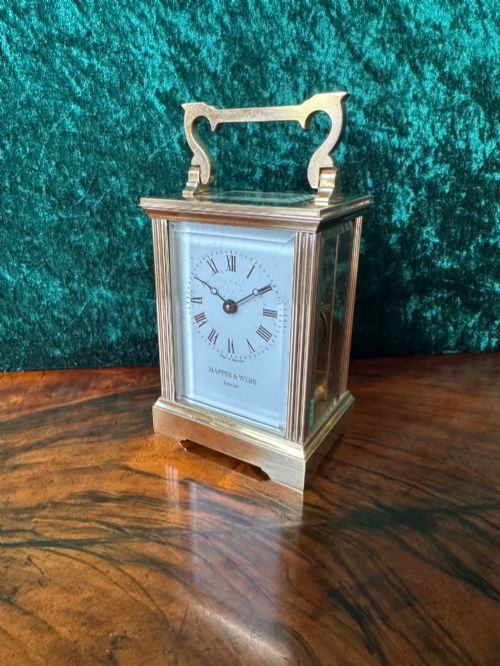
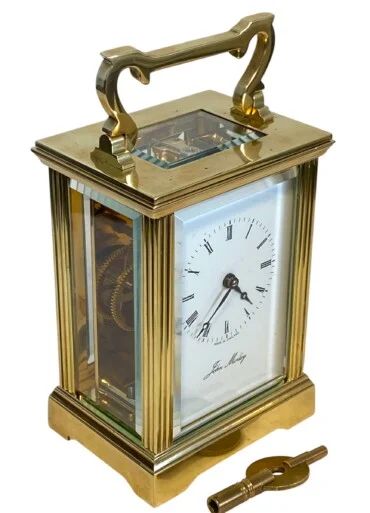
- A portable spring-driven timepiece originally designed for officers travelling during the nineteenth century. They typically feature a brass case with glass panels and a folding handle.
- Skeleton clock
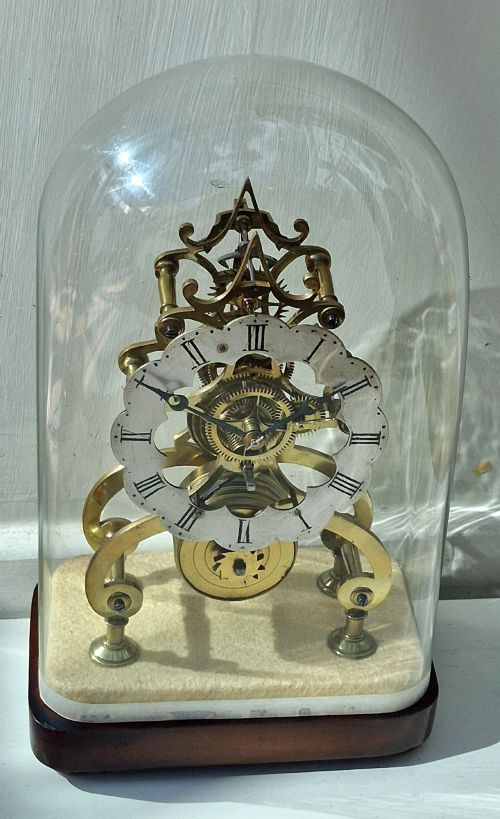
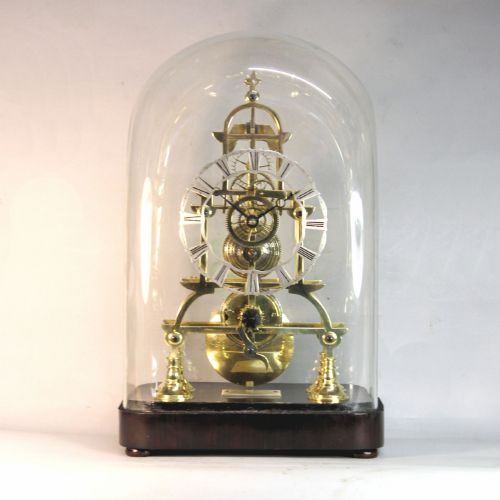
- A timepiece with an open framework showing the gear train and escapement without a concealing dial plate. They are frequently displayed beneath a glass dome.
- Opaline glass
- An opaque or translucent glass produced in various colours during the nineteenth and twentieth centuries. It provides a smooth, milky surface finish for desk clocks.
- Escapement
- The mechanical linkage that controls the release of power in a clock movement, translating force into regular impulses.
Antique Glass Desk Timepiece: Frequently Asked Questions
Where should I place a glass desk timepiece?
Position your timepiece on a sturdy desk, mantel, or side table away from direct sunlight and heavy vibrations. A stable surface ensures the pendulum or balance wheel maintains accurate motion.
Because glass panels reveal the interior from multiple angles, placing the piece near a light source enhances the visual depth of the brass gears and enamelled dial.
What is the difference between a timepiece and a clock?
In horological terms, a timepiece is a clock that simply tells the time without striking hours or sounding alarms. Many carriage clocks and glass desk models were built strictly as timepieces.
Clocks with striking mechanisms include additional gear trains, hammers, and gongs, which add complexity and require separate winding arbors for the strike train.
How do I identify the period of a glass desk clock?
Examine the design style, materials, and maker signatures, noting that Victorian pieces often feature heavy brass and Gothic revival motifs, while 1930s examples lean towards chrome and coloured glass.
Movement types and escapement styles also shift across decades, moving from platform cylinder escapements in the nineteenth century to electric movements by the mid-twentieth century.