
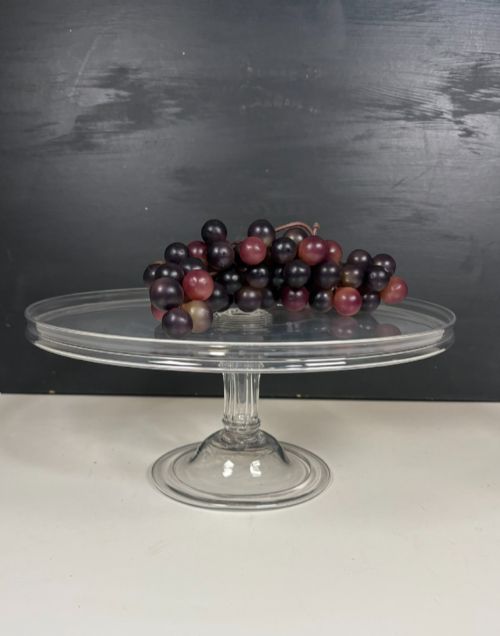


Antique Glass Compote Dish
An antique glass compote dish serves fruits and sweets with elevated presence, combining practical table service with decorative form.
Antique Glass Compote Dish
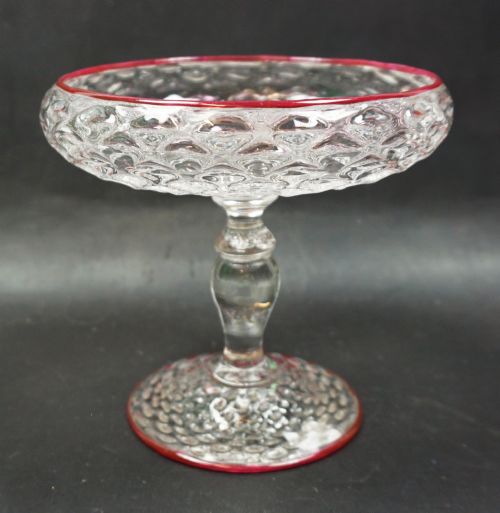
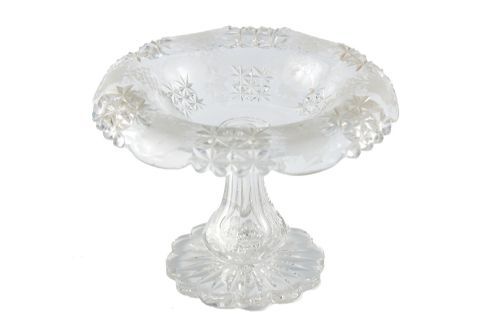
An antique glass compote dish stands on a raised pedestal foot, serving fruit, sweetmeats or centrepiece displays across formal dining tables. These elevated vessels appear in forms ranging from shallow tazzas to deep turnover bowls and elaborate mounted centrepieces.
Victorian, Edwardian and Georgian eras dominate the selection, alongside items from the Art Nouveau and Art Deco periods. English, Irish and continental workshops produced these pieces, utilising cut glass, lead crystal and coloured glass.
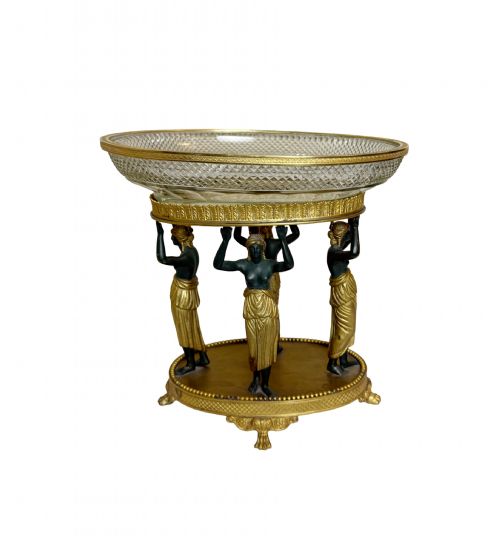
Buyers meet versatile serving vessels that function equally as decorative bowls or structured tazzas. The selection bridges simple pressed glass fruit bowls and grand bronze-mounted crystal table centrepieces.
How they were made
Makers shaped molten material through blowing and moulding, often pressing patterns into heavy lead crystal or clear glass. Craftsmen then employed wheel-cutting to carve crisp facets, flutes and geometric motifs across the surface.
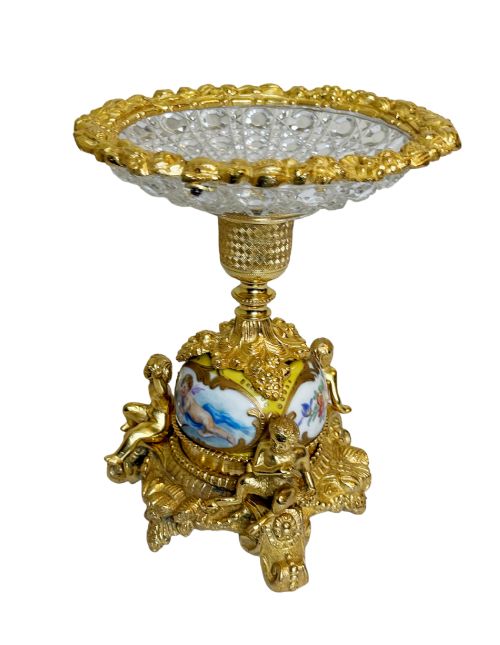
Gilt bronze, ormolu and gilded pewter mounts provide structural support and decorative framing for many bowls. Artisans applied gold leaf, ruby staining, enamel or red cane decoration to enhance the visual depth of the glass.
Bronze mermen and cherubs occasionally hoist heavy crystal bowls aloft, proving that Victorian table service took inspiration from mythical depths.
What varies in quality
Depth and crispness of wheel-cut facets separate standard pressed items from superior hand-finished crystal. Sharp geometric precision reflects greater skill in the glasshouse.
The integration of metalwork dictates overall refinement, where cast bronze cherubs, mermen or plique-a-jour elements show meticulous artisan detail. Colour saturation in ruby, cranberry, yellow and green glass further distinguishes finer examples.
W M F·Orivit·Waterford
The Antique Glass Compote Dish Glossary
- Tazza
- An Italian term for a shallow bowl raised on a high foot or pedestal, frequently used for serving fruit or small cakes.
- Centrepiece
- A large decorative bowl or mounted vessel placed in the middle of a dining table for formal presentation.
- Turnover bowl
- A vessel with an everted or folded rim, typical of Georgian and earlier Irish glass production.
- Ormolu
- Finely ground high-carat gold applied to a bronze base, creating a rich metallic mount for crystal bowls.
- Plique-a-jour
- An enamelling technique similar to cloisonne where the enamel rests unsupported within a wire frame, letting light shine through.
Antique Glass Compote Dish: Frequently Asked Questions
How were compote dishes used historically?
These dishes held fruit, nuts and sweet confections at the conclusion of formal meals. Placed centrally on the dining table, they combined practical service with visual display.
Larger pedestal bowls and tazzas also functioned as decorative centrepieces when not holding food. Their elevated stature brought height and proportion to dining room table settings.
How do I identify a Victorian piece?
Victorian examples often feature heavy cut crystal, cranberry or ruby glass, and robust pedestal forms. Decoration frequently includes naturalistic motifs like grapevine engraving or moulded honeycomb patterns.
Pieces from this era typically show heavier proportions and deeper colour saturation compared to lighter Georgian designs. The bottom of the foot may exhibit a polished pontil mark from manufacture.
Can I use these dishes for serving food today?
Most antique glass compote dishes remain fully functional for serving dry fruits, sweets or pastries. Lead crystal and glass are food-safe materials for general dining use.
Exercise caution with items featuring delicate gilding, enamel work or metal mounts, restricting those to decorative display. Avoid serving acidic foods in pieces with vulnerable metallic surfaces.