


Antique Glass Caster Set
An antique glass caster set brings practical elegance to the table, combining cut glass bottles with metal stands for daily dining.

Antique Glass Caster Set
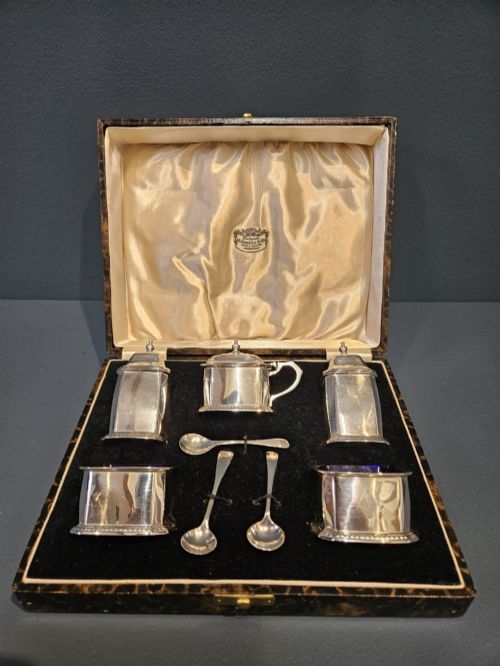
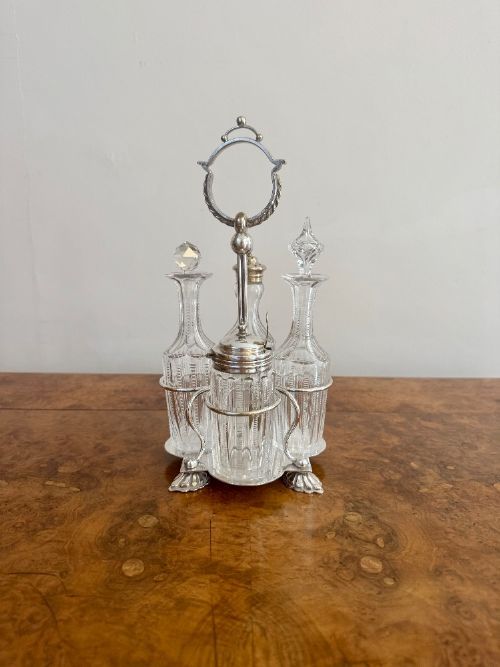
When you search for an antique glass caster set, you encounter matched collections of bottles and pots held within a central frame or stand for condiments. These vessels hold items such as pepper, mustard, and vinegar, keeping the dining table organised during meals.
The pieces on this page span several eras, reaching from Georgian and Victorian designs up through Edwardian and later twentieth-century examples. You will frequently meet silver-plated frames holding cut glass bottles, alongside sterling silver stands and occasionally wood or ebonised bases.
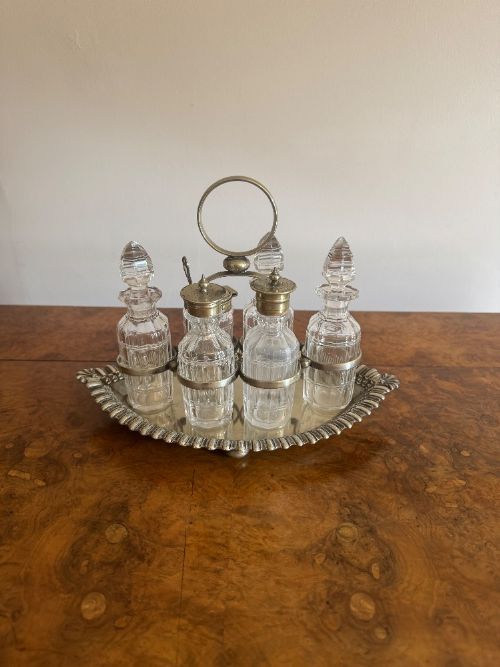
Cruet sets and condiment stands appear regularly alongside traditional casters, offering multiple bottles for oil, vinegar, and sauces within a single portable frame. These assemblies range from compact bachelor sets with just a few bottles up to large eight-piece arrangements designed for formal dining.
Materials and construction
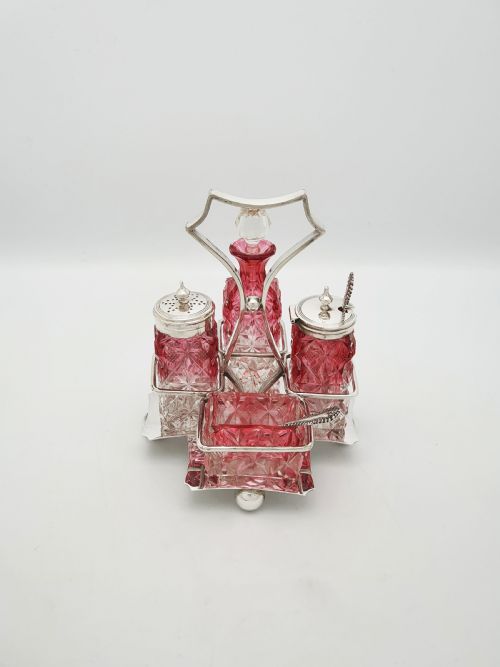
Makers shaped the bottles from clear, blue, or cranberry-flashed glass, applying deep wheel-cut patterns to catch the light on the dining table. Silver plate and sterling silver formed the stands, carrying handles, and bottle mounts, while oak and ebonised wood provided contrasting bases for specific frames.
Silversmiths constructed sturdy metal frameworks with fitted rings to secure each glass bottle safely during transit across the table. Pierced galleries, cast handles, and engraved mounts decorate the metal surfaces, often paired with stoppers and lids matching the principal material.
Specialist condiment containers take whimsical shapes, including silver owls and novelty trays styled like butlers' items.
Judging the quality of sets
Quality shows in the crispness of the glass cutting and the weight of the metal stand supporting the ensemble. Superior sets retain their matching original bottles and stoppers rather than replacement vessels gathered together at a later date.
The refinement of the silversmith's work dictates the upper tier of these objects, seen in balanced proportions, clear hallmarks, and sturdy construction. Well-executed novelty designs and substantial sterling silver frames stand apart from standard mass-produced plated items.
Mappin Brothers·Walker & Hall·Charles Thomas Fox·Elkington & Co·Wade Wingfield Wilkins
The Antique Glass Caster Set Glossary
- Caster
- A small vessel with a pierced top used for sprinkling sugar or dry seasonings over food. These form the central shaking elements within many condiment assemblies.
- Cruet
- A small glass bottle or jar kept on the table for holding liquids like oil, vinegar, or soy sauce. Sets typically group several of these together in a single frame.
- Silver Plate
- A base metal coated with a thin layer of silver to provide the appearance of solid precious metal at a lower cost. Most Victorian and Edwardian stands utilise this technique.
- Sterling Silver
- An alloy consisting of pure silver and other metals, usually copper, standardised for durability and strength. Items made to this standard carry official assay office hallmarks.
- Cut Glass
- Glass decorated by grinding facets and patterns into the surface using a rotating wheel. This technique adds considerable sparkle and tactile texture to condiment bottles.
Antique Glass Caster Set: Frequently Asked Questions
How do I date an antique set?
Dating relies on metal hallmarks, the style of the stand, and the manufacturing techniques used on the glass bottles. Silver pieces often carry assay marks that pinpoint the exact year of production.
Design motifs also offer strong clues, shifting from the heavy elegance of Georgian frames to elaborate Victorian ornamentation and lighter Edwardian silver plate.
Are all bottles original?
Many sets retain their original matching glass bottles and stoppers, though replacement vessels frequently find their way into older stands over time. Examining the glass tint, cutting style, and fit helps determine if the bottles belong together.
A complete set with matching stoppers commands greater interest among collectors than an assembly of mismatched components.
How should I clean the silver?
Cleaning requires a gentle silver polish applied with a soft cloth, avoiding abrasive pads that might scratch the underlying metal or plating. Take care around glass mounts to prevent moisture trapped beneath silver collars.
Regular dusting and minimal polishing preserve the aged patina without wearing away the fine details of the maker's work.
Can I use these sets daily?
These pieces function well for modern dining if handled with care during washing and refilling. Glass bottles hold oils and vinegars securely, while sturdy stands safely transport condiments.
Hand washing protects both the glass and the delicate silver plate or sterling metal from harsh dishwasher detergents.