




Antique Glass Candlestick Lustre
These antique glass candlestick lustre pieces catch the light and hold a room with their swinging crystal drops.
Antique Glass Candlestick Lustre
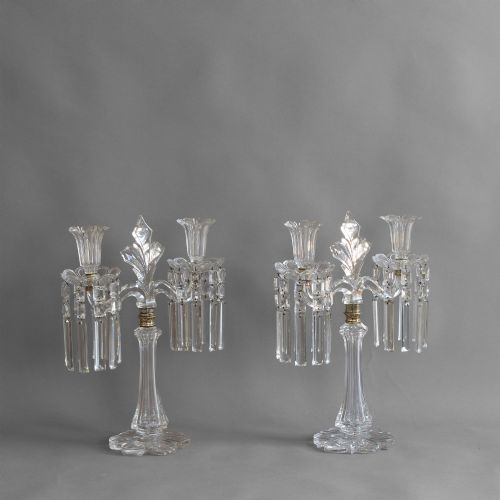
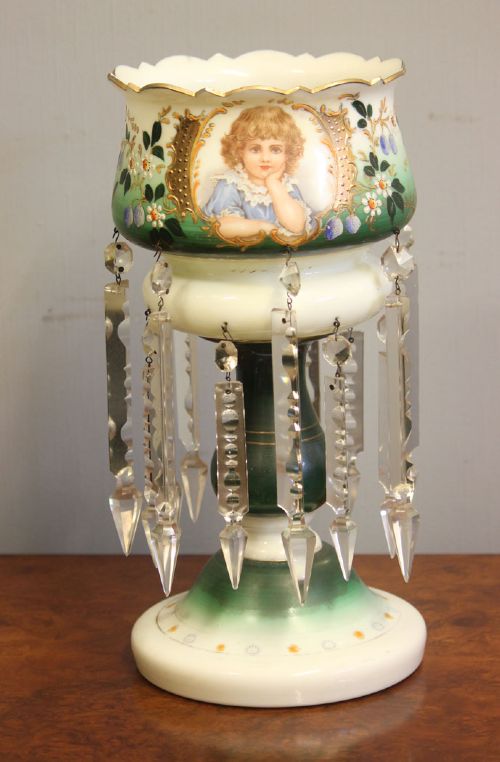
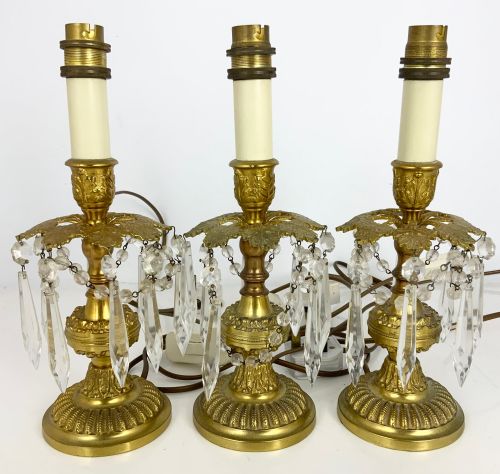
An antique glass candlestick lustre combines a traditional candle holder with a decorative vase fitted with hanging crystal prisms designed to refract candle flame. When someone searches for an antique glass candlestick lustre, they find table lamps, mantel garnitures, and candelabras spanning the eighteenth, nineteenth, and early twentieth centuries.
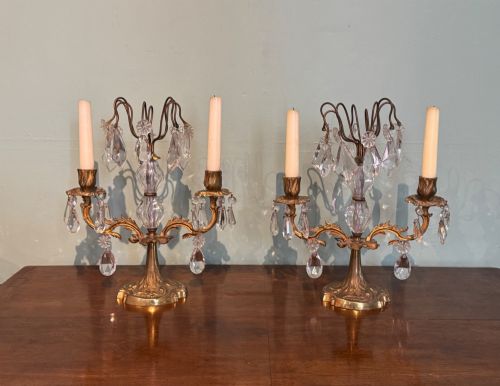
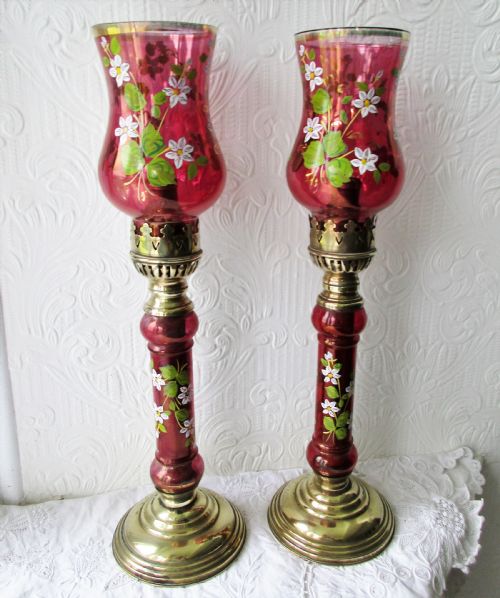
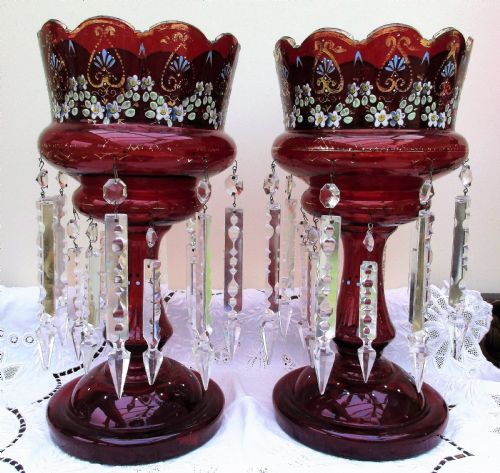
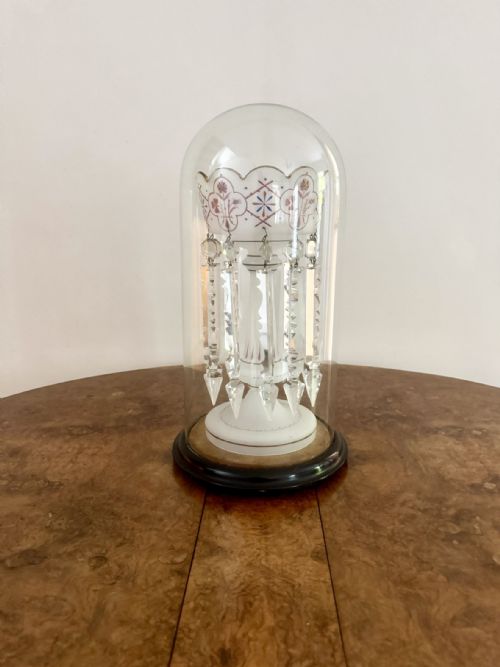
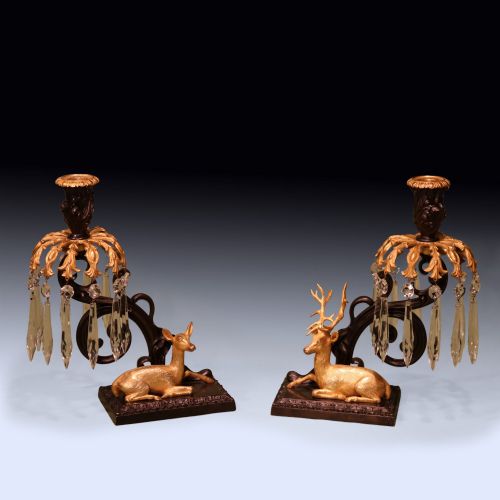
The most common examples encountered in these listings are Victorian and Regency pairs featuring ruby, cranberry, or clear cut glass, often accented with brass, gilt bronze, or ormolu mounts. Makers utilised varied forms from single mantle pieces to large pairs with storm shades or matching domes, reflecting domestic lighting needs of past eras.
Origin styles range across English Victorian production, French Empire, and Rococo Revival aesthetics, showing both simple table lamps and elaborate multi-light candelabras. These objects served both practical illumination and decorative display upon dining tables and mantelpieces.
Materials and Construction
Makers shaped these pieces using heavy cut glass and crystal, alongside ruby, cranberry, and green coloured glass bodies. Metal components such as brass, gilt bronze, ormolu, and gold leaf provide structural support and decorative bases.
Glass elements underwent precise cutting and polishing to create sharp facets that maximise light reflection from the hanging crystal drops. Metal mounts were cast in bronze or brass and joined to the glass shafts using threaded rods or pins.
Prisms and lustres hang from the main body via wire hooks or pins threaded through drilled apertures in the glass rims. Enamel detailing sometimes decorates the glass surfaces alongside gilded highlights on the metalwork.
Current listings feature pieces spanning the eighteenth century through to nineteen-thirties, incorporating cut crystal, brass, ormolu, and coloured glass.
Judging Quality and Finish
Superior examples show deep, hand-cut facets on the glass that catch and break light cleanly, contrasting with shallower machine-pressed surfaces found on simpler items. The weight and clarity of the crystal itself indicate the standard of the batch.
The completeness and matching nature of the hanging drops dictate the integrity of a piece, as replacements alter the unified appearance. Original metal mounts displaying crisp chasing in ormolu or cast brass elevate the overall standard above plain cast alternatives.
The Antique Glass Candlestick Lustre Glossary
- Lustre
- A decorative glass vase or candlestick fitted with hanging glass pendants designed to reflect light. These items sat on mantelpieces and side tables during the nineteenth century.
- Prism
- A cut glass pendant suspended from the rim of a lustre to refract candlelight. These drops swing gently to create a sparkling effect.
- Ormolu
- Gilt bronze mounted on decorative objects, providing a bright golden finish that resists tarnishing. Makers applied this technique extensively during the Regency and Victorian periods.
- Cricklite
- A brand of patented table lamp and candelabra using specialised glass shades and candle holders. Clarkes produced these popular lighting fixtures in the late Victorian era.
- Garniture
- A set of decorative objects, often comprising a central lustre or clock flanked by matching candlesticks. These sets arranged symmetrical displays on mantelpieces.
Antique Glass Candlestick Lustre: Frequently Asked Questions
How do I clean glass lustres safely?
Remove hanging drops individually and wash them in warm soapy water using a soft cloth. Wipe the main glass body carefully without submerging metal mounts or disturbing glued joints.
Dry each component thoroughly with a lint-free towel before rehanging the crystals to prevent water spots and rust on metal pins.
Were these used for lighting rooms?
These pieces provided soft accent lighting on dining tables and mantelpieces rather than general room illumination. The candles cast light outward while the hanging crystal prisms scattered the glow across the surrounding walls.
As artificial lighting improved, many lost their practical candle-burning function and remained purely as decorative garnitures.
How do I spot a Regency lustre?
Regency pieces often display clean classical lines, clear cut crystal, and crisp bronze or ormolu mounts influenced by French Empire styles. The cutting on the glass tends to be deep and precise.
Later Victorian versions frequently introduced vibrant colours such as ruby and cranberry glass, moving away from the austere clarity favoured earlier in the century.
Are replacement drops acceptable?
Finding vintage replacement drops of the correct size and cut is common practice among collectors maintaining damaged sets. Matching the exact age and facet pattern maintains the visual harmony of the piece.
Slight variations in glass tint between original and replacement crystals become visible under direct light.