




Antique Giltwood Candlesticks
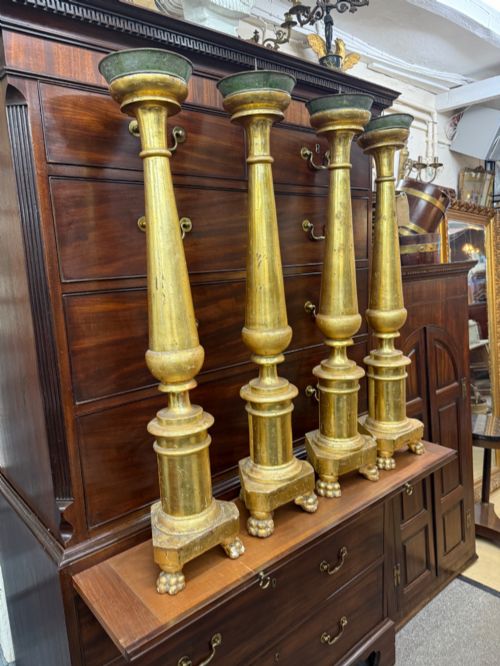
These antique giltwood candlesticks bring carved warmth and gilded presence to a room, drawn mostly from eighteenth-century Italian altars and nineteenth-century parlours.
Antique Giltwood Candlesticks
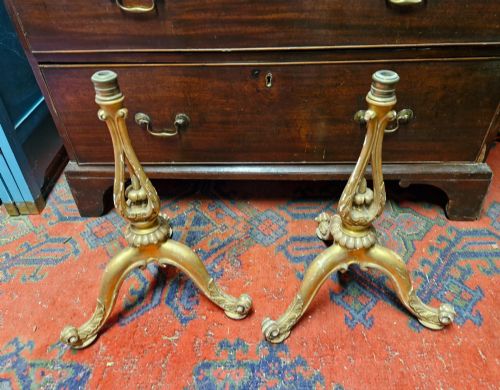
Italian Baroque and Spanish Baroque forms dominate the offerings, alongside French Rococo and Victorian interpretations. You will frequently find pairs designed for symmetry on a mantel, sideboard, or large table.
The materials record layers of history, transitioning from original candle-holders to electrified lamp bases without losing their carved wooden character. These pieces carry the weight of centuries of devotional and domestic interior display.
How they were made
Carved wood forms the structural core of these objects, shaped by hand into scrolls, fluting, and figural elements. Artisans applied gesso over the timber to create a smooth, responsive surface for subsequent decoration.
Gold leaf or gilt applications provide the characteristic metallic sheen, sometimes enhanced by polychrome or silvered mecca finishes. Iron and brass components occasionally appear in internal fittings or structural fixings.
Antique Giltwood Candlesticks Retail Price Guide 2026
Typical asking prices for giltwood candlesticks among the pieces listed under this phrase on Sellingantiques today, from the lower quarter to the upper quarter. They describe what is for sale here now, not the wider market.
The listings span the eighteenth century, the Victorian era, and the early twentieth century, incorporating wood, brass, iron, and fabric elements.
What varies in quality
The depth and vigour of the hand-carving distinguish superior examples from simpler production, particularly in the crispness of acanthus leaves and sculptural flourishes. Finer items display meticulous preparation of the gesso ground before gilding, allowing the metallic leaf to catch the light evenly.
Proportion and scale dictate the visual impact of a pair, with taller altar pieces commanding greater presence than domestic table versions. The integrity of the underlying wood and the retention of original surface layers carry significant weight in assessing a piece.
The Antique Giltwood Candlesticks Glossary
- Giltwood
- Wood that has been coated with gold leaf or a gold-coloured metallic finish. This surface treatment gives the candlesticks their bright, reflective quality.
- Gesso
- A plaster-like mixture applied to carved wood to create a smooth surface for gilding. It fills the grain and allows fine details to be sculpted sharply.
- Pricket
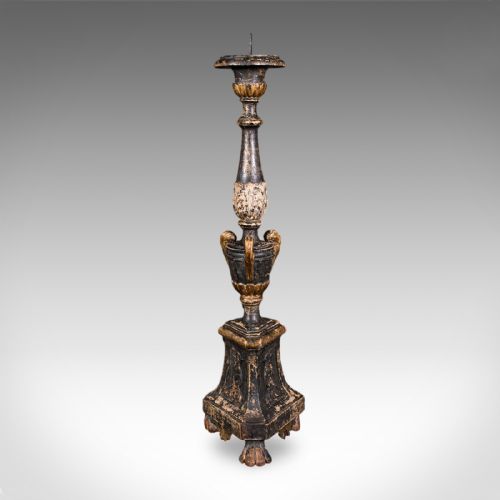
- A sharp metal spike on a candlestick designed to secure a candle in place. Altar candlesticks frequently utilise this method rather than a socket.
- Mecca
- A transparent golden varnish applied over silver leaf to simulate the richer appearance of gold. It creates a distinct warm tone found on specific continental pieces.
- Baroque
- An ornate artistic style characterised by dramatic movement and exuberant detail. Many of the listed altar sticks draw directly from this aesthetic.
Antique Giltwood Candlesticks: Frequently Asked Questions
How do I wire a giltwood candlestick?
Conversion usually involves running a slender flex through the centre channel or down the exterior with minimal disruption to the carved wood. Professional electricians ensure the fitting respects the age and structural limits of the piece.
Many examples arrive already converted into table lamps or standard lamps, sparing you the process. Reversible modifications allow purists to retain the original appearance of the candle holder.
Where should I place these candlesticks?
Tall altar pieces suit substantial sideboards, hallways, or floor-standing positions where their height creates a strong vertical accent. Pairs look particularly striking when balanced on either side of a fireplace or console table.
Smaller table versions fit comfortably on desks or side tables, adding metallic warmth to a room. Keep them away from direct heat sources to protect the gesso and gold leaf.
How do I date an antique giltwood piece?
Dating relies on examining the style of the carving, the species of the underlying timber, and the composition of the gesso layers. Eighteenth-century examples often display deep, exuberant Baroque or Rococo hand-carving from Italian or Spanish workshops.
Later nineteenth-century and Victorian pieces frequently adopt revival styles with slightly different tool marks and surface patination. Comparing the joinery and base construction helps confirm the period.
Can I still burn candles on them?
Prickets and candle holders designed for traditional wax require careful monitoring if used for actual illumination. Drip wax can damage the historic giltwood and gesso surface beneath.
Most buyers prefer to use them unlit or in their lamp adaptations to preserve the delicate gold leaf. If you do burn candles, fitted drip protectors help safeguard the finish.