

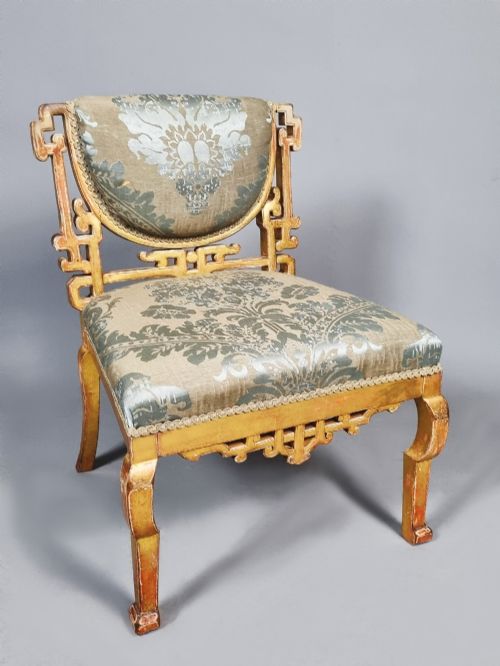
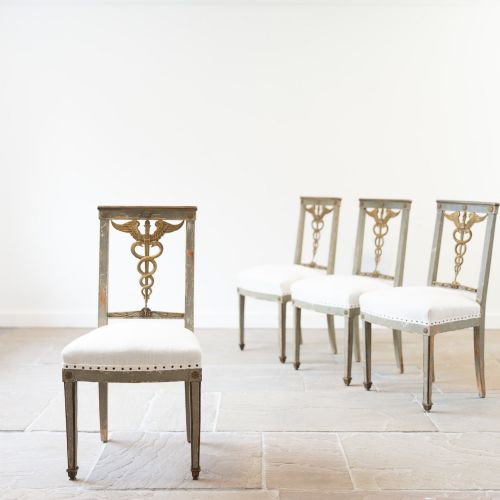
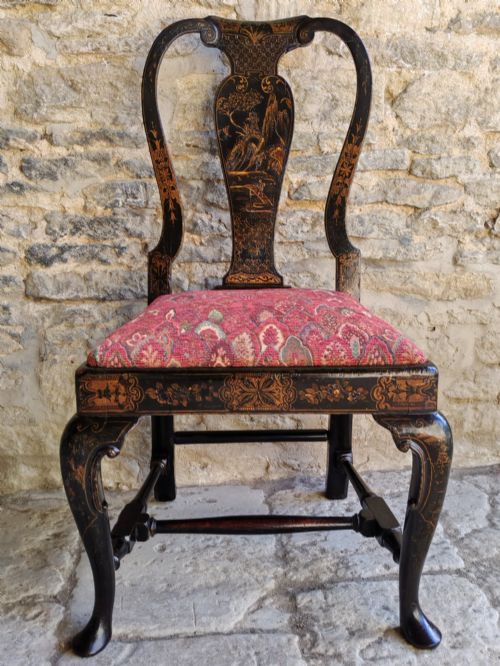
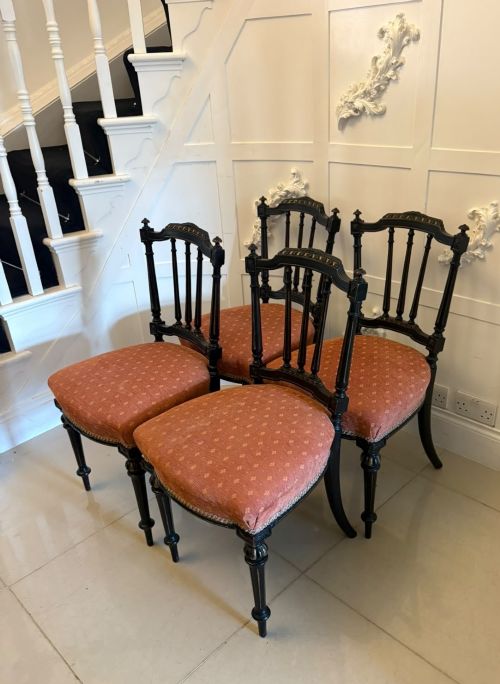


Antique Gilt Side Chairs
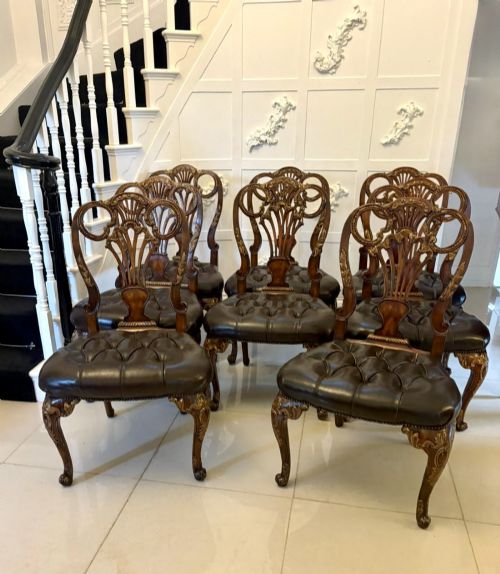
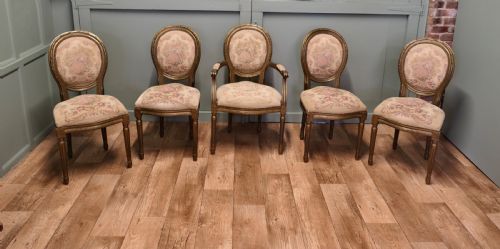
These antique gilt side chairs bring a touch of golden warmth to a room, offering both sculptural presence and functional seating.
Antique Gilt Side Chairs
When buyers search for antique gilt side chairs, they encounter pieces originating across the eighteenth, nineteenth, and early twentieth centuries. The selection spans distinct revivals, including French Rococo, Louis XVI, and Regency styles, alongside English and continental workshops.
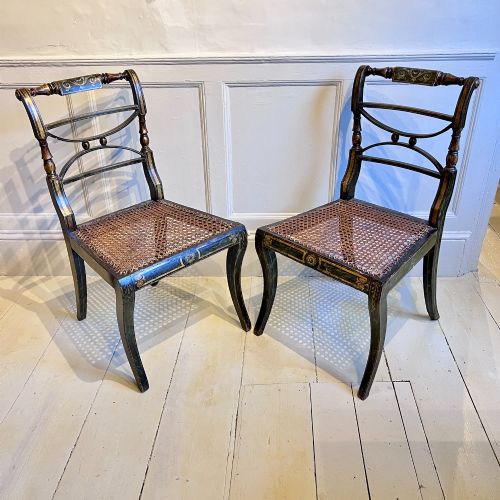
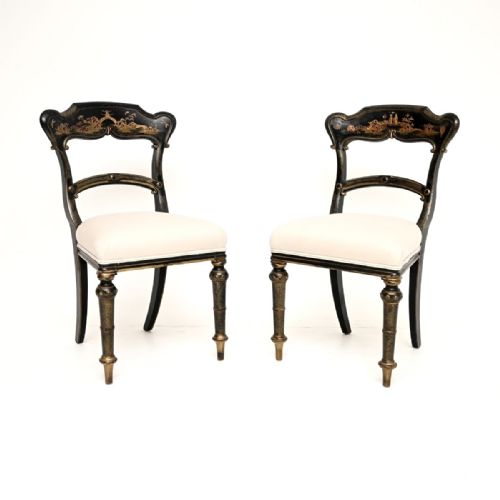
The form is primarily a lighter chair designed for occasional use in salons, parlours, or bedrooms rather than heavy dining. Pairs and sets appear frequently, constructed in woods like walnut and mahogany or finished with ebonised and painted surfaces beneath the gilding.
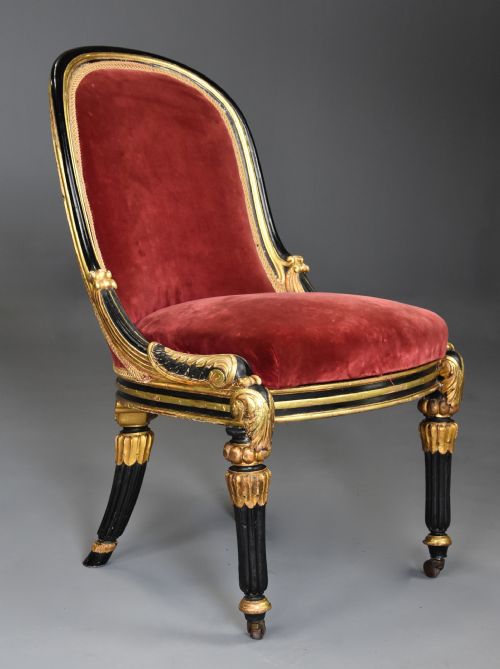
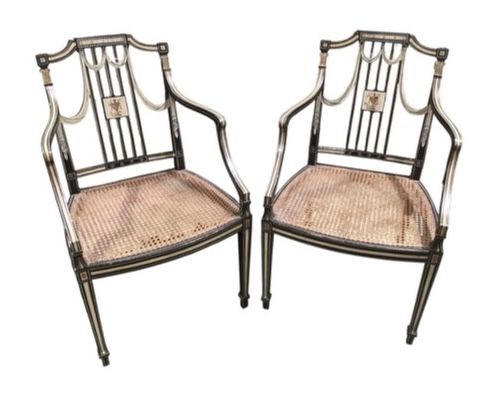
French and English examples dominate the selection, often incorporating cane seats, silk upholstery, or decorative carving. Buyers find both simple painted frames and elaborate giltwood structures showing detailed floral motifs and classical proportions.
Materials and Construction
Gilding forms the defining surface finish, applied using gold leaf or liquid gold over prepared wooden frames. Artisans frequently carved giltwood directly or applied gold leaf to ebonised wood, walnut, and kingwood substrates.
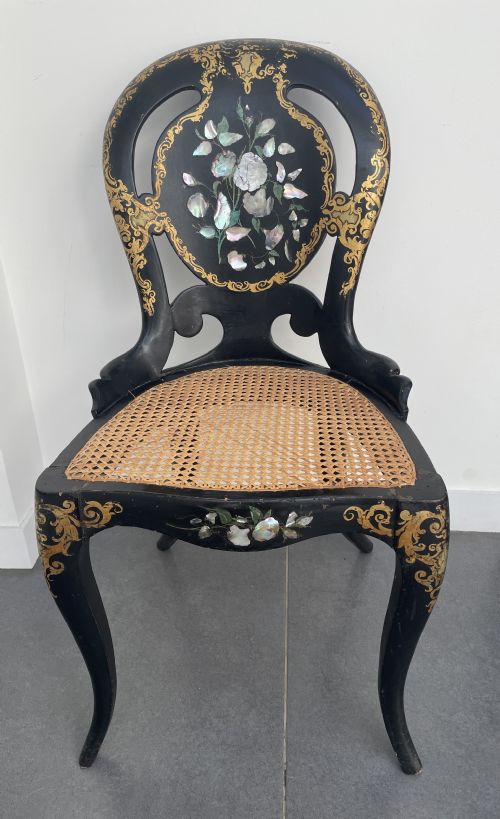
Upholstery methods varied by period, utilising silk fabric, damask, or cane inserts for seats and backrests. Structural joints relied on traditional woodworking techniques, sometimes enhanced with ormolu mounts and mother of pearl inlay.
Antique Gilt Side Chairs Retail Price Guide 2026
Typical asking prices for gilt side chairs among the pieces listed under this phrase on Sellingantiques today, from the lower quarter to the upper quarter. They describe what is for sale here now, not the wider market.
Listings feature pieces spanning the 18th, 19th, and early 20th centuries, utilising giltwood, ebonised wood, and cane.
Assessing Quality and Craftsmanship
Quality rests in the crispness of the hand-carving and the depth of the gilding on the wooden frame. Superior pieces display finely detailed motifs and secure joinery that withstands centuries of gentle use.
The integrity of the original surface finish distinguishes finer examples from later restorations. Chairs retaining untouched gold leaf and period upholstery or intact cane work hold greater visual coherence.
Waugh & Son·Daniel Marot·Lamb of Manchester
The Antique Gilt Side Chairs Glossary
- Giltwood
- Wood that has been coated with gold leaf or powder. This finish gives the chair a bright, metallic appearance that catches candlelight.
- Ebonised
- Wood stained or painted black to imitate ebony. This dark finish provides a sharp contrast against applied gilding.
- Cane
- Woven rattan or split cane used for seats and backs. It offers a light, flexible surface common on Regency pieces.
- Ormolu
- Gilded bronze mounts applied as decoration. These metal details appear frequently on fine French furniture.
- Parcel-gilt
- Partially gilded woodwork where only specific carved elements receive gold leaf. The remaining surface shows painted or natural wood.
Antique Gilt Side Chairs: Frequently Asked Questions
Where were antique gilt side chairs used?
These chairs served primarily in formal reception rooms, salons, and bedrooms rather than daily dining spaces. Their lighter frames allowed servants to move them easily around the house for gatherings.
Today, they function well as occasional seating in living rooms or as decorative accents in hallways and bedrooms.
How do I care for antique gilt surfaces?
Gilt surfaces require gentle dusting with a soft, dry microfibre cloth to prevent the accumulation of abrasive particles. Avoid commercial cleaning sprays or water, which can lift the delicate gold leaf from the underlying gesso.
Keep the chairs away from direct sunlight and strong heat sources to protect both the gilding and any historic silk or damask upholstery.
Can I use these chairs for daily dining?
Most side chairs from these periods were built for lighter sitting rather than heavy, everyday dining use. Their antique joints and delicate carved frames demand careful handling to prevent structural wear.
Reserving them for occasional use helps preserve their historic glue joints, cane seats, and fragile gold leaf finishes.
How do I identify a Regency gilt chair?
Regency chairs often feature ebonised frames, sabre legs, and classical motifs inspired by ancient Greece and Rome. They frequently incorporate cane seats or simpler painted decorations rather than heavy carving.
Comparing the proportions and turning details against documented early nineteenth-century examples helps confirm the period style.