
Antique Gilt Mantel Timepiece
An antique gilt mantel timepiece sits on the surface, bringing nineteenth-century French and English precision into the room.
Antique Gilt Mantel Timepiece
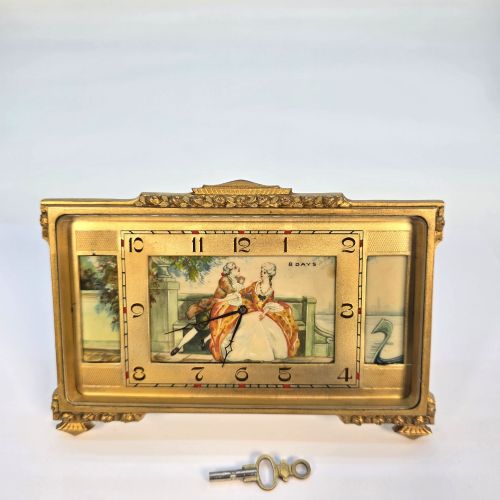
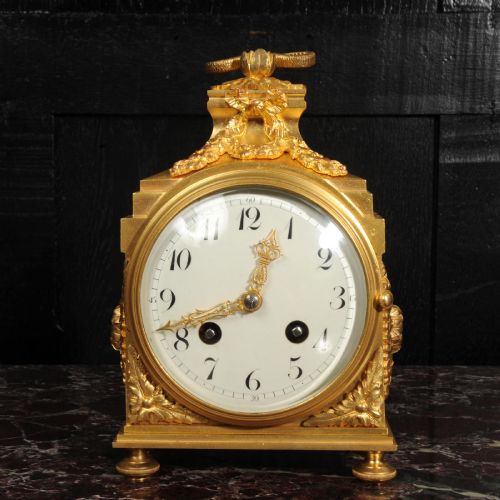
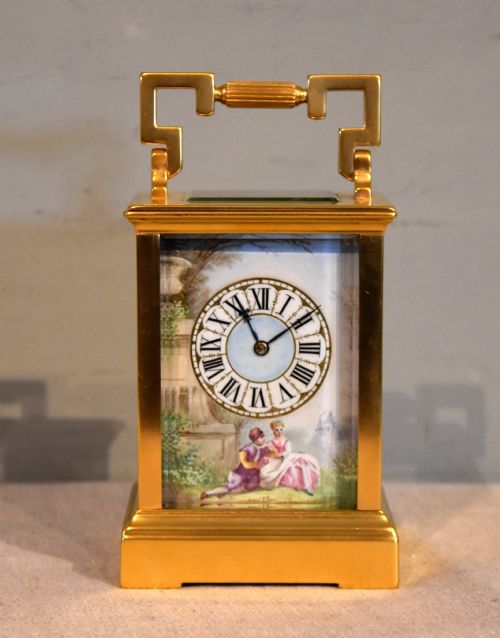
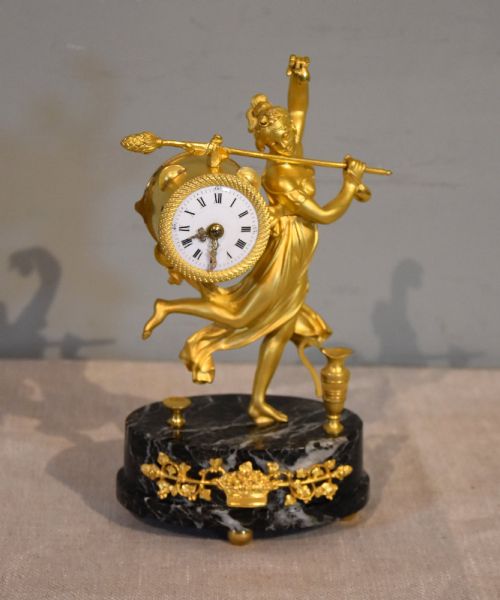
An antique gilt mantel timepiece is a freestanding domestic clock designed to sit upon a fireplace shelf or table, measuring hours through mechanical movements housed in decorative metal and stone cases. These objects span the nineteenth century, including Victorian, Regency, and French Empire periods, reflecting diverse stylistic revivals such as Rococo and Louis XV. Buyers searching for an antique gilt mantel timepiece encounter architectural portico designs, figural subjects, and glass-fronted carriage clocks.
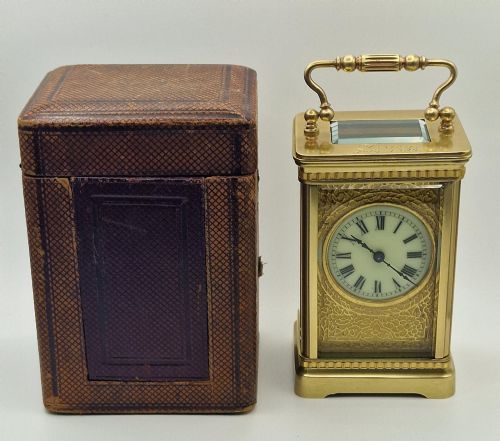
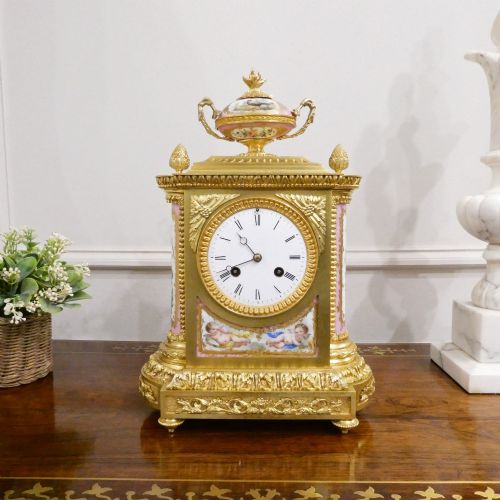
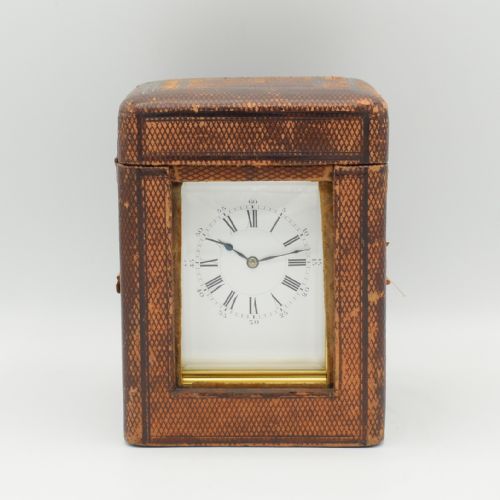
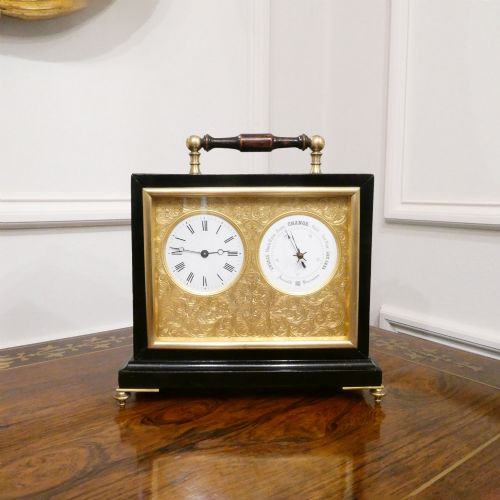
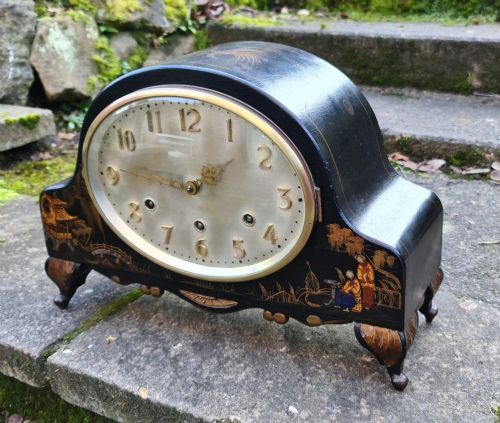
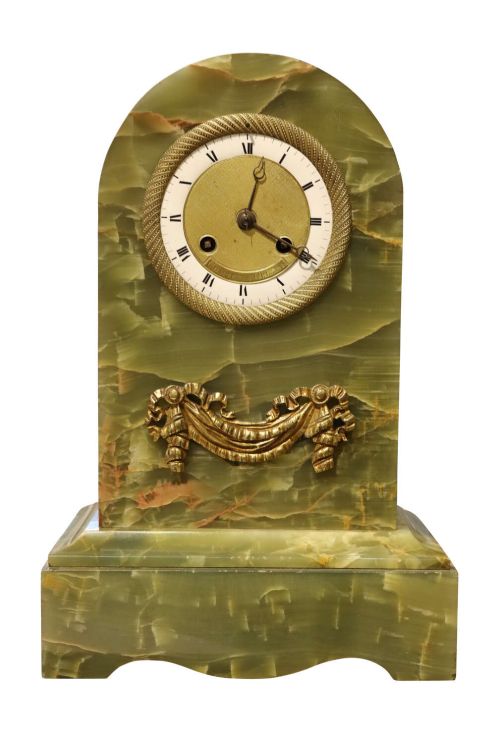
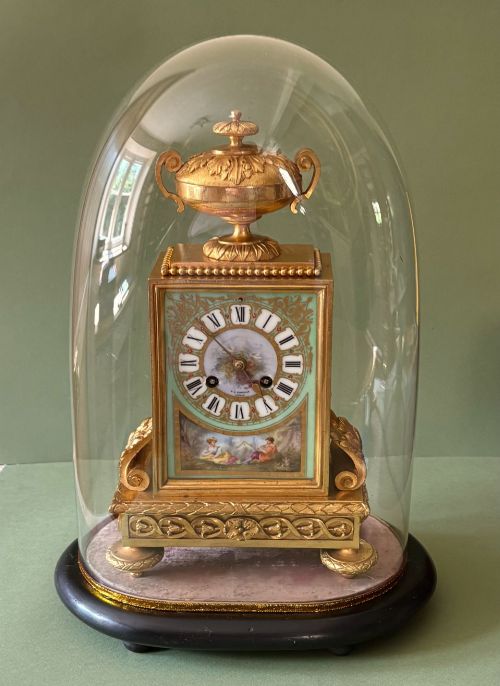
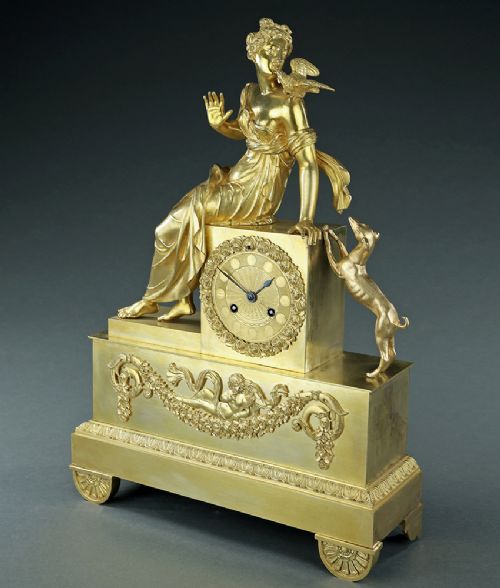
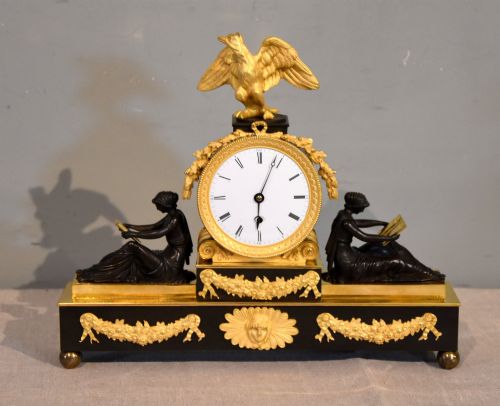
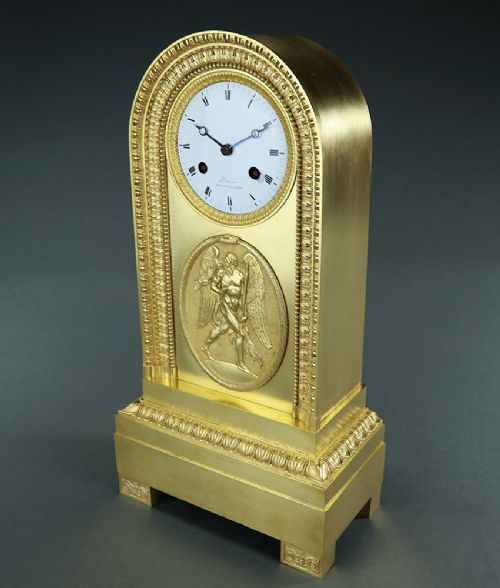
The selection on this page demonstrates various regional workshops, from Parisian makers utilising ormolu and marble to English makers crafting brass and mahogany timepieces. Pieces range from compact carriage clocks with travel cases to large green onyx or porcelain-mounted mantel clocks. Each version records the mechanical and decorative ambitions of nineteenth-century horology.
Materials and construction
Movements are built from brass and steel components, engineered for eight-day running, bell strikes, or repeating mechanisms in carriage clocks. Cases incorporate structural stones like green onyx, green marble, or mahogany and tortoiseshell veneers, assembled with precision to support heavy metal mounts. Artisans carved figural details and engraved gilt brass framing to achieve ornate surface textures.
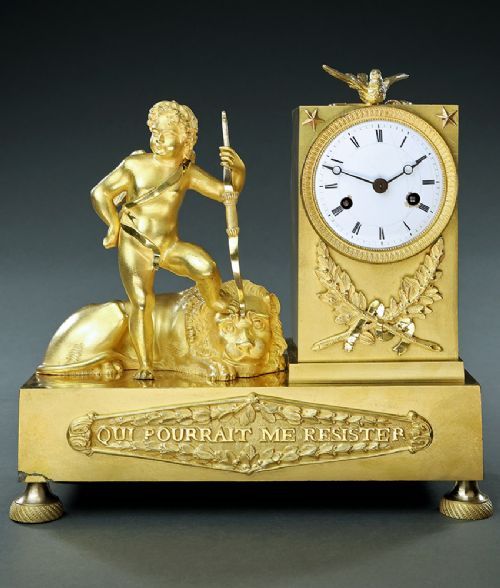
Elephant forms and scenes of triumph over strength appear among the gilt metal mounts guarding the hours.
Distinctions in quality
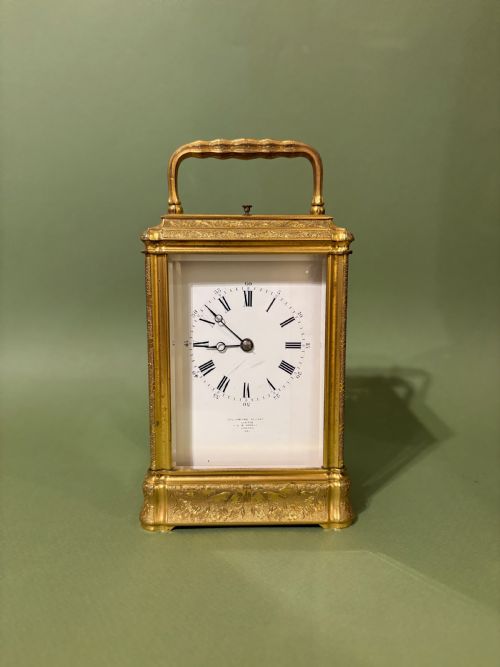
Quality rests in the crispness of the gilt bronze chasing, the depth of the fire-gilding, and the integration of porcelain or enamel elements. Superior examples display sharply defined figures, such as patinated bronze subjects or figural putti, alongside finely pierced hands and fully engraved brass carriage clock cases. Lesser pieces rely on simpler castings with softer detail and less refined surface finishing.
The sophistication of the movement further separates tiers of manufacture, evident in grand sonnerie striking trains, repeating complications, and signed maker movements. The harmony between the architectural stone case, such as marble or portico columns, and the cast metal mounts dictates the overall cohesion and authority of the clock.
HENRI JACOT·Charles à Orléans·Baetens London·Le Roy Paris·VINER LONDON·Philippes Paris
The Antique Gilt Mantel Timepiece Glossary
- Ormolu
- Gilded bronze or brass produced by applying a mercury and gold amalgam to the metal surface and heating it. This technique creates a durable, golden finish characteristic of nineteenth-century decorative objects.
- Carriage clock
- A portable spring-driven timepiece developed for travel, typically fitted with a carrying handle and glass panels. These clocks often feature escapements visible through the top or front casing.
- Portico clock
- A mantel clock designed with an architectural case resembling a classical portico, supported by columns. They frequently incorporate a suspended pendulum swinging within the central frame.
- Grand Sonnerie
- A complex striking mechanism that chimes the hours and the quarters automatically as they pass. Such movements represent a higher standard of clockmaking craftsmanship.
- Champlevé
- An enamelling technique where troughs or cells are hollowed out of a metal surface and filled with vitreous enamel powder before firing. The resulting coloured patterns decorate the brass and gilt bronze frames.
Antique Gilt Mantel Timepiece: Frequently Asked Questions
What is a gilt mantel timepiece?
A gilt mantel timepiece is a portable or stationary clock featuring a gilded metal case, designed to sit on a mantelpiece or shelf to show the time.
Unlike striking clocks that sound the hours, timepieces focus purely on the timekeeping function, though some advanced models include alarms or repeating mechanisms.
How do carriage clocks work?
Carriage clocks operate using a spring-driven movement regulated by a balance wheel rather than a hanging pendulum, making them portable and resistant to motion.
They were originally housed in travel cases and designed for gentlemen on journeys during the nineteenth century.
How do I identify French Empire style?
French Empire style draws heavily on classical antiquity, featuring military trophies, laurel wreaths, and patinated bronze figures contrasting with bright ormolu mounts.
Cases often take architectural forms like porticos or plinths, reflecting the aesthetic of early nineteenth-century France.
What is an ormolu clock?
An ormolu clock utilises a bronze or brass case coated in a golden finish, achieved through traditional mercury gilding or later electroplating methods.
This bright metallic surface frames the enamel dial and complements surrounding materials like marble, onyx, or mahogany.
How do I care for my timepiece?
Living with these clocks involves placing them on stable, level surfaces away from direct sunlight, extreme temperature changes, and moisture.
Mechanical movements require periodic professional cleaning and oiling to ensure the gears and escapements continue to function accurately.