




Antique Gilt Dessert Spoons
These antique gilt dessert spoons bring the quiet brilliance of Georgian and Victorian tables straight to the modern home.
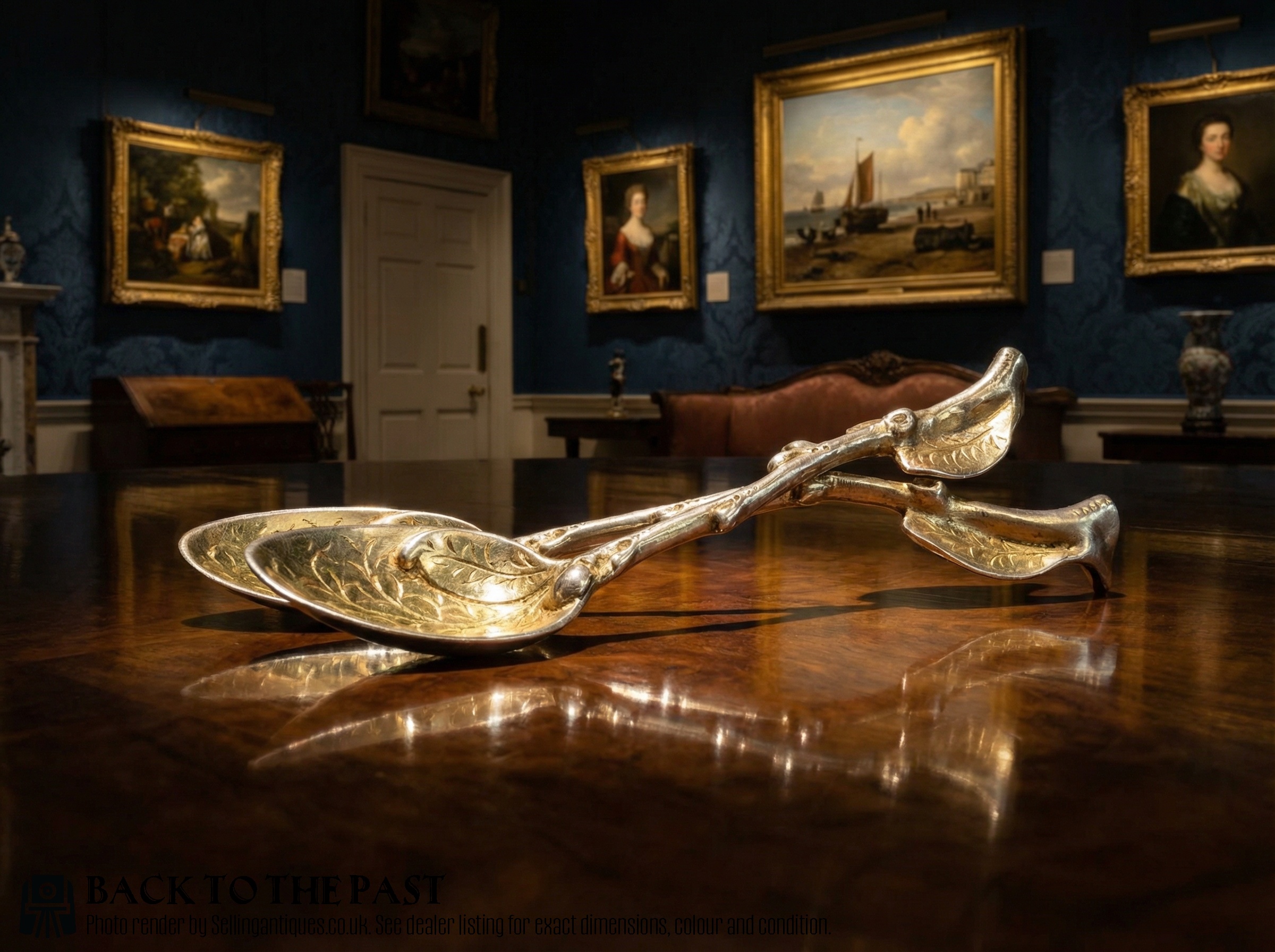
Antique Gilt Dessert Spoons
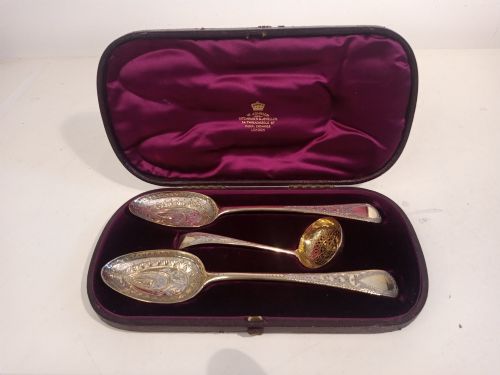
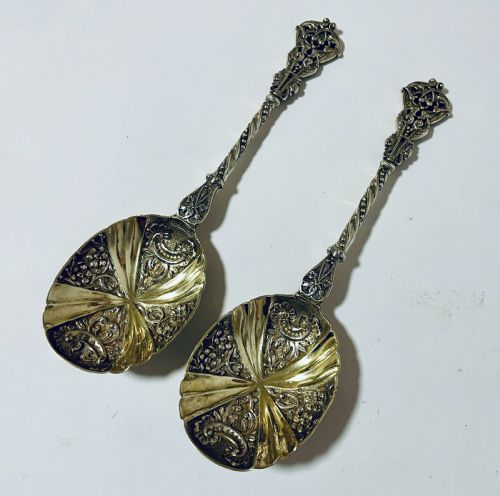
These antique gilt dessert spoons encompass a range of decorative flatware originating from the Georgian and Victorian eras. Buyers frequently encounter ornate berry spoons, fruit serving sets, and specialised sifter spoons designed for formal dining.
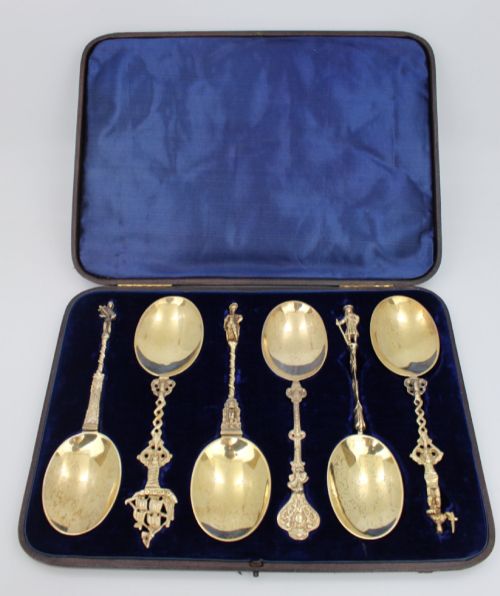
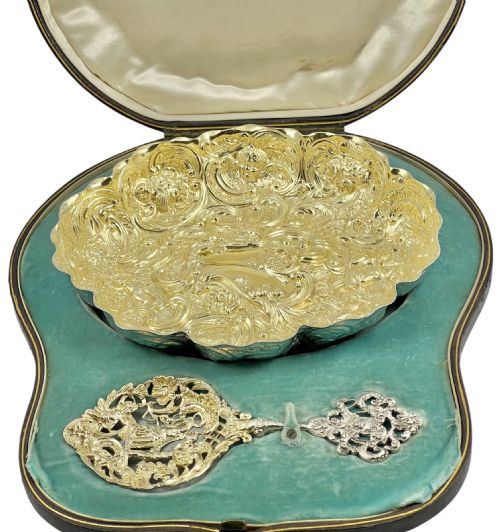
The selection on this page highlights pieces fashioned in silver gilt, sterling silver, and silver plate. Many items arrive complete with fitted cases lined in velvet, silk, or leather, preserving the objects exactly as previous generations kept them.
Makers such as William Chawner II and Sebastian Crespell appear among the items, offering collectors verifiable pieces of historical silversmithing. Forms span from simple engraved handles to Victorian naturalistic leaf designs and heavy berry spoon configurations.
How they were made
Silversmiths of the Georgian and Victorian periods shaped these pieces primarily from sterling silver or silver plate before applying a gold wash known as silver-gilt. This technique imparted a rich, warm yellow sheen over the base metal of the spoon.
Handles received detailed attention through hand engraving, ornate chasing, and naturalistic leaf motifs that reflected contemporary tastes. Specialised items like fruit sets and sugar sifters were often housed in custom leather cases lined with velvet and silk.
Listings span both the Georgian and Victorian periods, featuring sterling silver, silver-gilt, and silver plate alongside velvet, silk, and leather cases.
What varies in quality
Depth and crispness of the hand engraving distinguish finer examples from standard production, particularly on the fruit and berry bowls. Crisp relief work on naturalistic leaf patterns demands high skill from the silversmith.
The completeness of original fitted cases lined in velvet or leather alters the desirability of a set. Silver-gilt preservation across the bowl and handle also indicates how carefully a piece was maintained over the centuries.
William Chawner II·Sebastian Crespell
The Antique Gilt Dessert Spoons Glossary
- Silver-gilt
- Sterling silver or silver plate that has been coated with a thin layer of gold. This treatment protects the underlying metal from tarnishing and provides a rich golden appearance.
- Berry Spoon
- A large serving spoon, often Georgian or Victorian, featuring fruit and foliage repoussé work added to the bowl. These pieces were adapted for serving fruit during dessert courses.
- Sugar Sifter
- A spoon with perforations in the bowl designed for sprinkling loose sugar over fruit or desserts. They frequently accompany matching berry spoons in fitted presentation cases.
- Naturalistic
- A Victorian design style that mimics organic forms such as leaves, vines, and branches. Makers like Sebastian Crespell utilised this aesthetic to give flatware a lifelike texture.
Antique Gilt Dessert Spoons: Frequently Asked Questions
What are antique gilt dessert spoons?
These pieces are decorative serving implements fashioned from silver or silver plate with a gold wash applied to the surface. They originate primarily from the Georgian and Victorian eras.
Collectors find them in various forms, including berry spoons, fruit sets, and sugar sifters, often nestled inside original velvet or leather cases.
How were these spoons used?
Dining traditions of the Georgian and Victorian periods required specialised utensils for specific courses, particularly the dessert service. Berry spoons and fruit sets served fresh produce at the conclusion of a meal.
Perforated sifter spoons distributed loose sugar over the fruit. Many were presented in fitted cases lined with silk or velvet for formal dining occasions.
How do I identify a Victorian piece?
Victorian examples often display heavier ornamentation, such as ornate chasing or naturalistic leaf motifs on the handles and bowls. Makers embraced elaborate designs that set them apart from earlier Georgian minimalism.
Assay office marks and date letters stamped onto the sterling silver provide exact chronological placement for items from this era.
How should I care for silver gilt?
Silver-gilt requires gentle handling because aggressive polishing will wear away the thin gold layer over the silver base. Use a soft cloth and avoid abrasive cleaning pastes.
Store the spoons in dry conditions, utilising their fitted leather and velvet cases where available to protect the delicate gilt surfaces from atmospheric tarnish.