
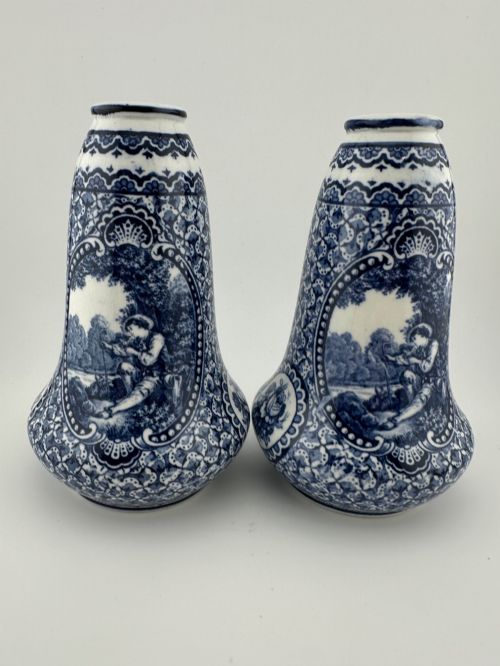


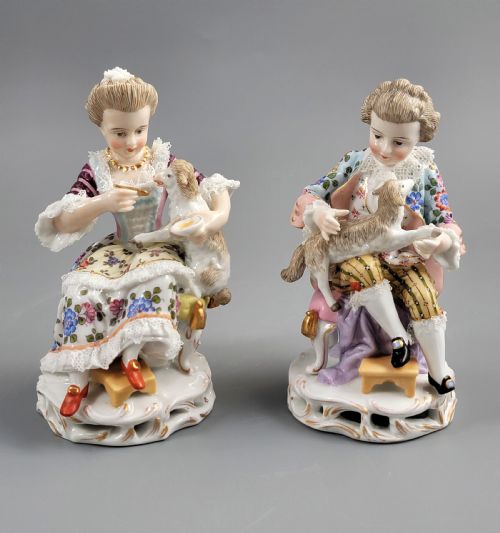


Antique German Pastoral Porcelain
These antique german pastoral porcelain figures and vessels capture rustic idylls in hard-paste ceramic, bringing rural charm to a room.
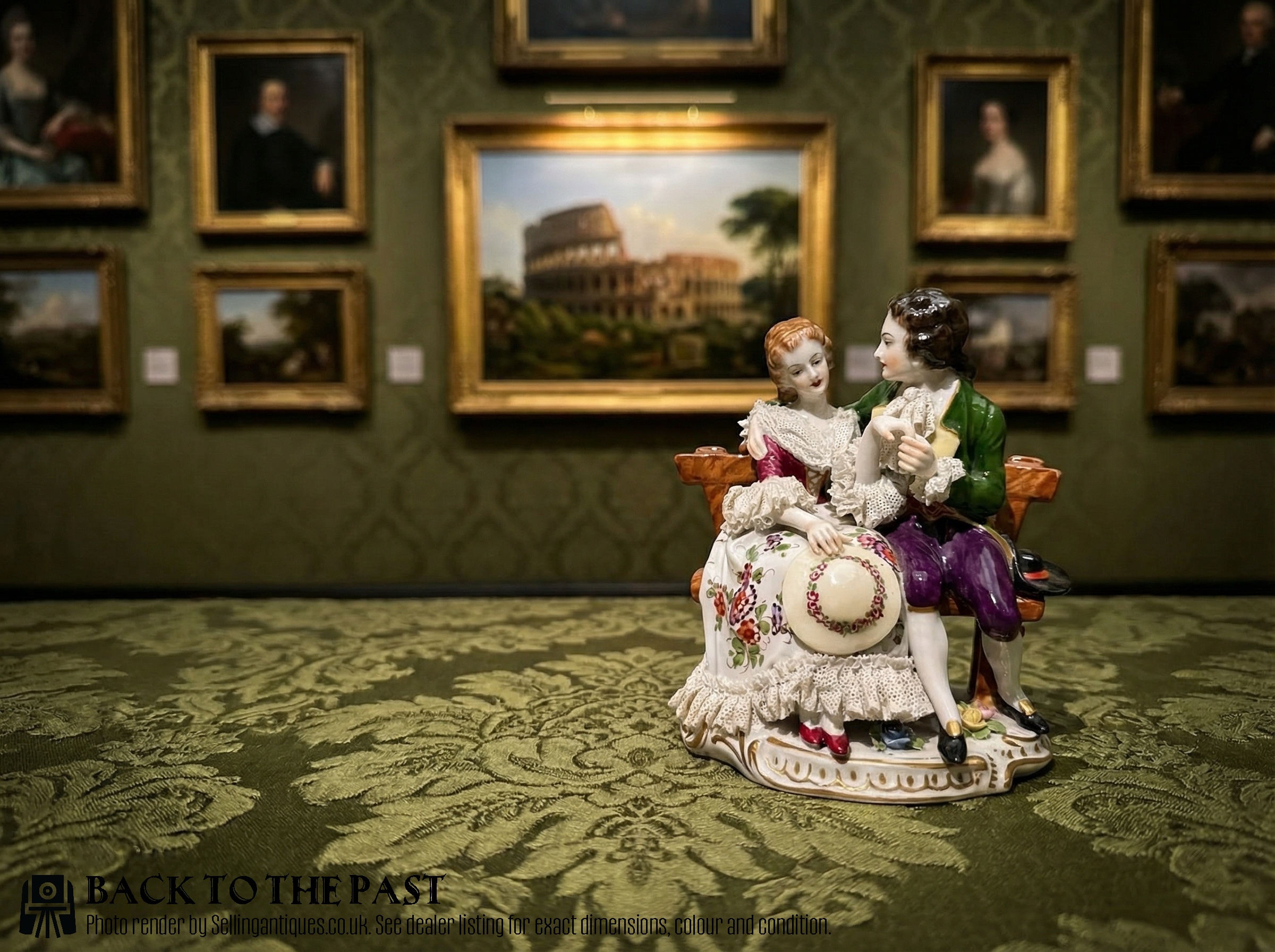
Antique German Pastoral Porcelain
When you search for antique german pastoral porcelain, you encounter figures of gardeners, grape harvesters, shepherdesses, and children in garden settings. These objects reflect a romanticised view of country life that gripped European courts and households across centuries.
The selections available run from eighteenth-century Meissen and Ludwigsburg pieces to nineteenth-century Sitzendorf, Dresden, and KPM-school productions. Candlesticks, decorative vases, and figural groups dominate the forms you meet.
Makers drew on Rococo and Louis XVI revival styles, translating pastoral themes into elaborate ceramic sculptures. They serve as decorative focal points that carry the aesthetic of European manufactories into domestic spaces.
What varies in quality
The crispness of the modelling sets superior examples apart from simpler workshop output. Finer pieces display sharp facial expressions, individualised hand-modelled leaves, and precise underglaze painting rather than hurried brushwork.
Weight, porcelain translucency, and the delicacy of applied decorative elements indicate the skill of the manufactory. Pieces produced by primary houses like Meissen or Ludwigsburg show greater refinement in anatomy and composition than later derivative works.
The object forms span figural candlesticks, decorative vases, and pastoral figurines depicting children, grape harvesters, and gardeners.
Franz Anton Mehlem·Meissen·Sitzendorf·Helena Wolfsohn·Carl Thieme·Ludwigsburg
The Antique German Pastoral Porcelain Glossary
- Hard-paste porcelain
- A dense, vitrified ceramic composed of kaolin and petuntse fired at very high temperatures. It resists scratching and takes enamel decoration brilliantly.
- Bisque
- Unglazed porcelain that has been fired once, offering a smooth, matte white surface resembling marble. It highlights sculptural form without glossy reflections.
- Rococo
- An ornate artistic style marked by asymmetrical curves, scrollwork, and naturalistic motifs. It heavily influenced eighteenth-century pastoral figures.
- Enamel
- Coloured glass powder fused to the ceramic surface during a secondary firing. It provides the vibrant hues found on garments and scenic panels.
- Glaze
- A glassy coating fused to the pottery body through firing. It waterproofs the vessel and gives the ceramic a lustrous sheen.
Antique German Pastoral Porcelain: Frequently Asked Questions
How do I date german pastoral porcelain?
Examine the paste, style, and any underglaze marks beneath the glaze. Eighteenth-century pieces tend to feature hand-mixed clays and softer modelling, whereas nineteenth-century revival items often display sharper mould lines and brighter enamel palettes.
Compare the object's stylistic markers against known manufactory periods, such as Rococo curves or Louis XVI symmetry. Secondary factories often copied earlier Derby or Meissen models decades later.
Where were these figures displayed?
Wealthy households placed these porcelain groups on mantelpieces, dining tables as centrepieces, or within specialised cabinet displays. They were meant to be admired up close as conversation pieces.
The pastoral subjects provided urban residents with a whimsical connection to an idealised countryside. Candlesticks combined this decorative function with practical illumination.
How do I clean antique porcelain?
Dust the surface gently with a soft, dry brush to remove particulate matter without abrading delicate applied flowers or gold leaf. Avoid soaking older pieces, especially those with cold-painted highlights.
If washing is necessary, use lukewarm water and mild soap, supporting the base at all times. Pat dry immediately with a lint-free cloth.
What is the difference between Meissen and Dresden?
Meissen was the premier eighteenth-century European manufactory that pioneered hard-paste porcelain formulas and set the standard for figural sculpture. Dresden acts more as a style and decorating centre umbrella term for various nineteenth-century decorating studios.
Pieces marked as Dresden often utilised blanks sourced from other kilns, painting them in elaborate Watteau scenes or floral motifs. Meissen pieces typically bear the famous crossed swords mark directly in the porcelain paste.