




Antique Geometric Floor Rug
An antique geometric floor rug brings centuries of tribal craft into a modern room through bold medallions and repeating angular patterns.
Antique Geometric Floor Rug
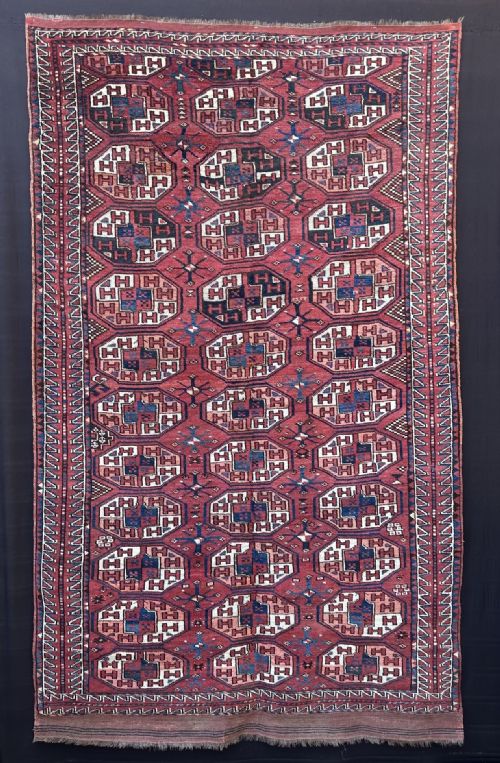
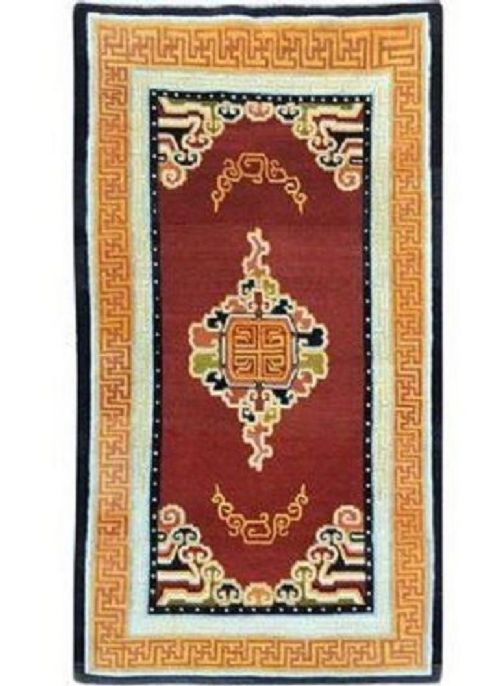
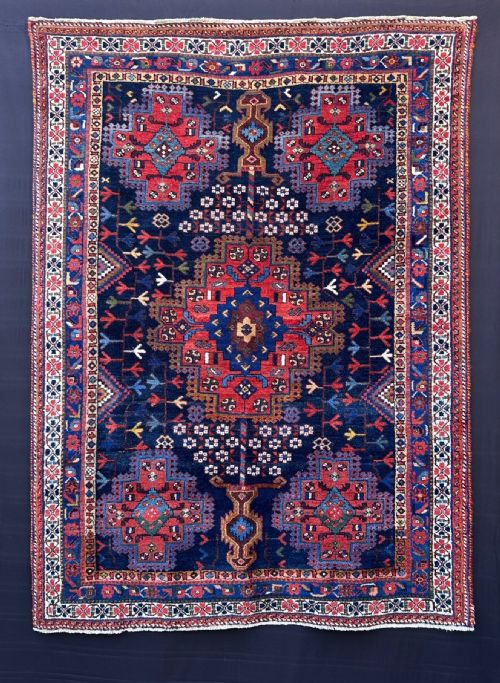
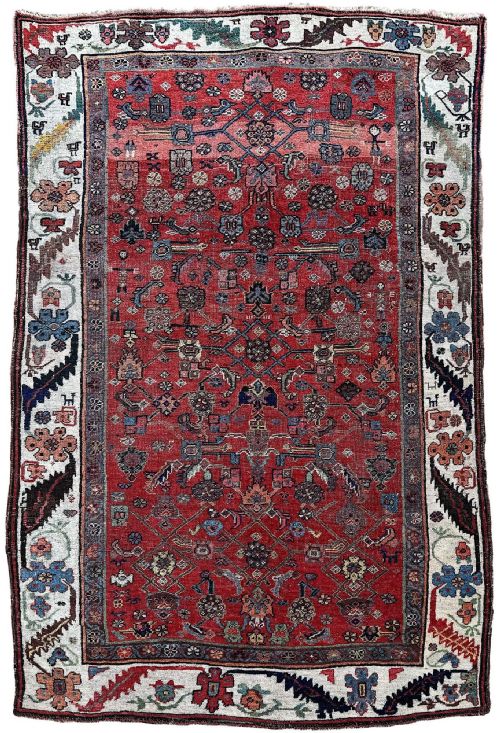
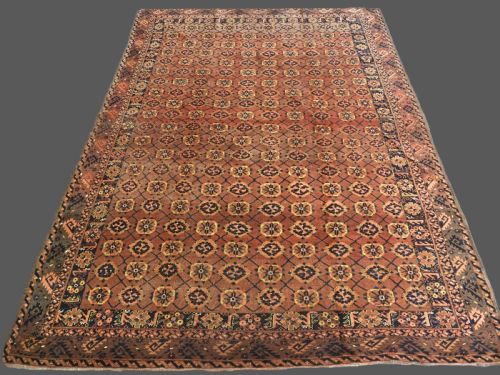
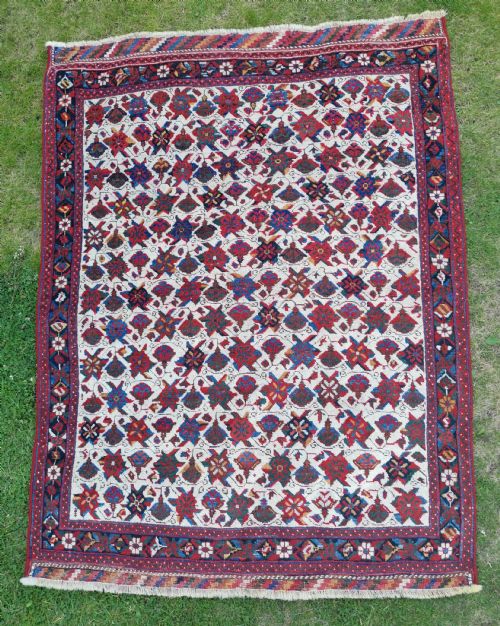
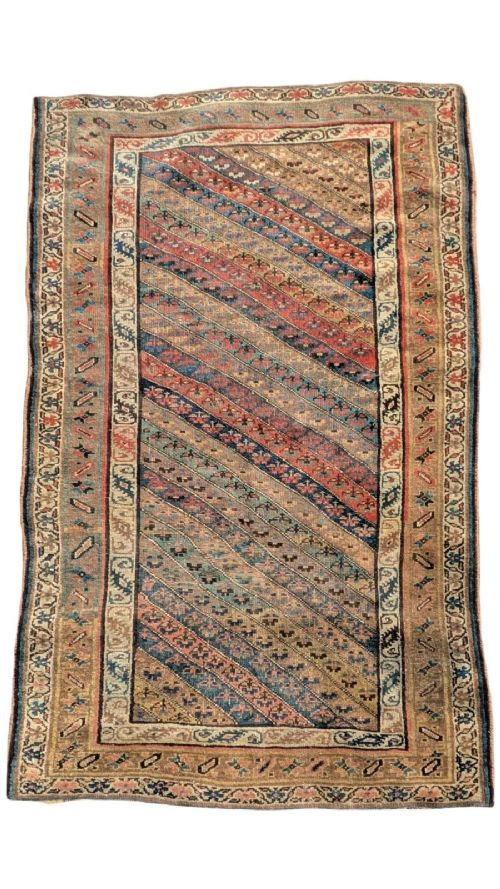
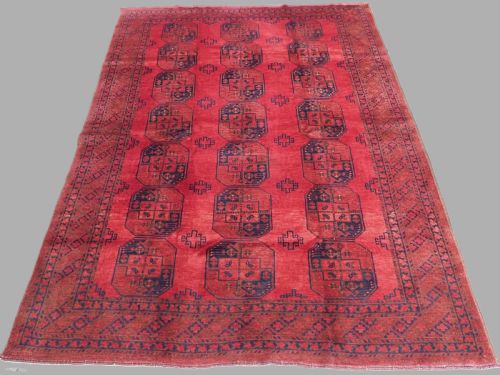
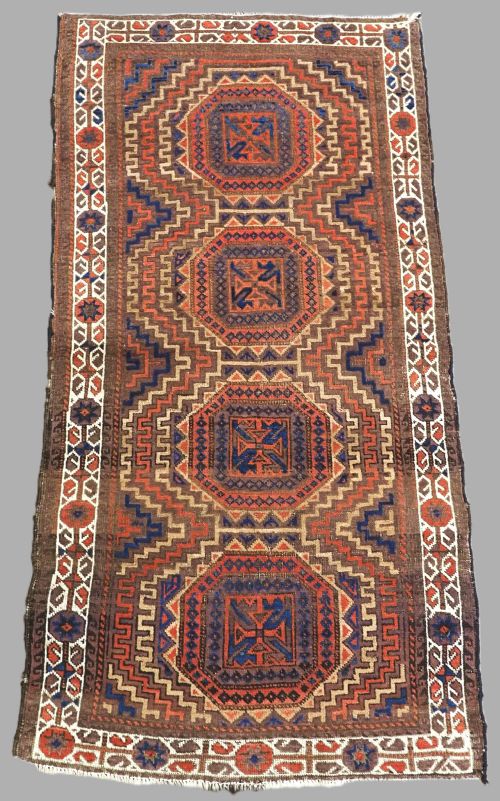
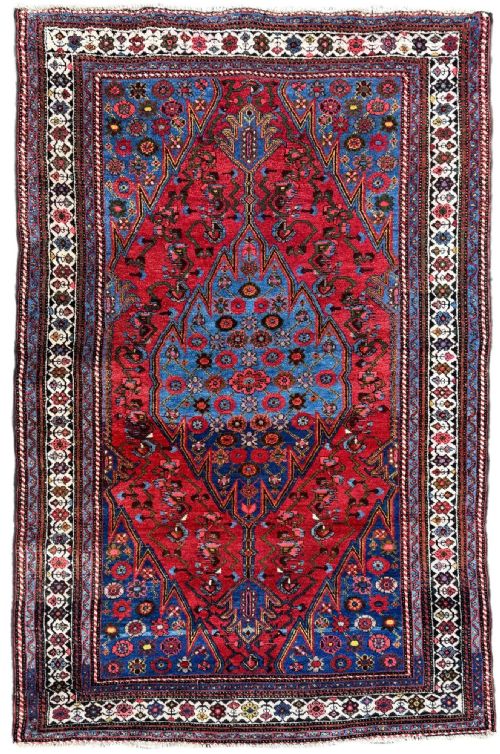
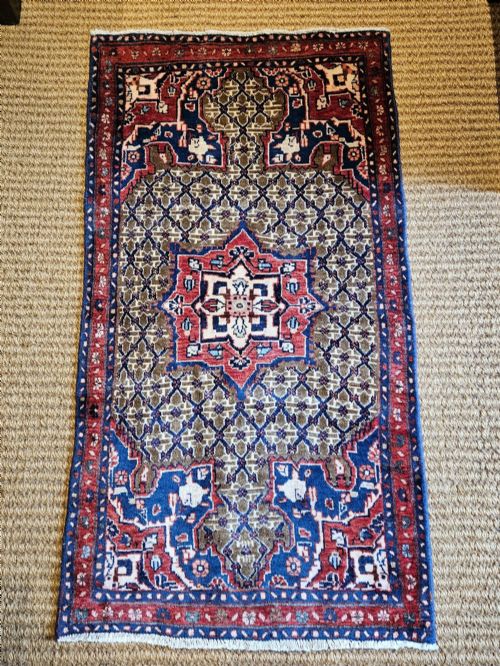
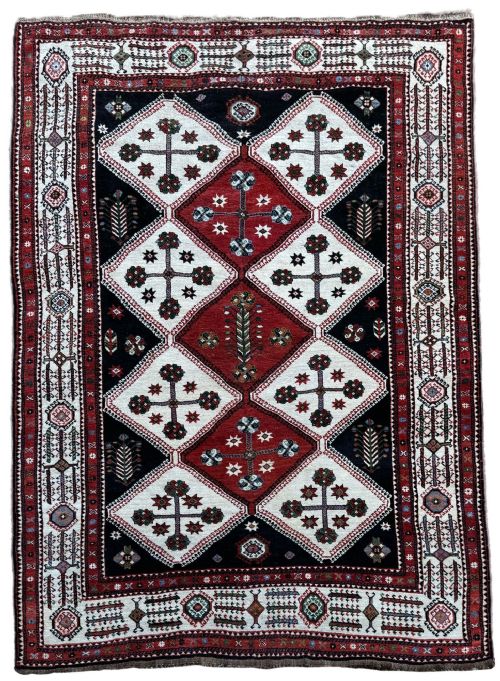
When searching for an antique geometric floor rug, buyers encounter heavy woolen carpets and smaller mats woven by nomadic tribes and village workshops across Persia, the Caucasus, and Central Asia. These pieces display distinct rectilinear motifs, including octagonal guls, large central medallion layouts, and sharp diagonal lines that define regional weaving traditions.
The selections available range from grand Heriz and Serapi carpets down to compact hearth-sized rugs, hallway runners, and tribal prayer rugs. Village pieces from regions such as Afshar, Khamseh, and Kurdish areas appear frequently alongside Caucasian Kazak and Shirvan weaves.
Materials and construction
Makers constructed these floor coverings primarily using hand-spun wool for the pile and foundation, often supplemented by cotton foundations in larger city or village carpets. Artisans relied on natural dyes derived from plants and minerals to achieve deep tones of red, navy blue, sky blue, and warm earth hues.
Weavers knotted the wool tightly onto vertical or horizontal looms, creating durable structures designed to withstand heavy daily use. The interplay of natural dye variations across the wool gives these vintage surfaces their characteristic depth of colour.
Some tribal weavers tucked small protective amulets directly into the wool pile to ward off bad luck.
Judging the standard
The distinction between ordinary and exceptional examples rests in the precision of the drawing, the saturation of the natural dyes, and the density of the knotting. Master weavers achieved crisper lines and more harmonious colour balances, whereas lesser pieces can display muddied tones or irregular proportions.
Condition and structural integrity also divide the range, as heavily worn surfaces with extensive foundation damage contrast sharply against resilient piles that have retained their original guard borders and selvedges.
The Antique Geometric Floor Rug Glossary
- Gul
- A repeating octagonal medallion motif frequently found in Turkmen and Baluch tribal carpets. It often serves as the primary compositional building block across the field.
- Medallion
- A large central ornamental design dominating the field of the rug. Heriz and Serapi carpets typically feature this prominent geometric focal point.
- Selvedge
- The bound or reinforced edge running along the length of a carpet. Original and intact selvedges indicate careful preservation.
- Prayer rug
- A small format rug featuring a mihrab or niche design at one end. Woven for devotional use, these pieces point toward Mecca during daily prayers.
- Runner
- An elongated narrow carpet format suited for hallways and corridors. These pieces adapt traditional tribal border patterns to linear dimensions.
Antique Geometric Floor Rug: Frequently Asked Questions
How do I clean an old wool rug?
Gentle surface vacuuming without a beater bar removes loose grit and dust accumulated within the pile fibres. Professional washing remains necessary for deep cleaning to protect the natural dyes.
Harsh chemical detergents and excessive water damage the wool structure and cause colours to bleed. Specialist rug conservators handle total immersion cleaning safely.
Can I place these carpets in hallways?
Sturdy village runners and heavy wool carpets withstand moderate foot traffic when paired with a quality underlay. The dense weave absorbs pressure effectively in corridors.
Direct, continuous sunlight causes natural dyes to fade unevenly over extended periods. Rotating the rug periodically balances environmental exposure.
How do I distinguish regional styles?
Caucasian weaves like Kazak feature bold, primary-coloured geometric shapes and stiff wool. Persian Heriz carpets display large scale angular medallions with robust structural framing.
Turkmen rugs utilise repeating guls in deep red fields with dark navy accents. Kurdish and Afshar pieces show smaller, intricate village motifs.
What is a village rug versus a tribal rug?
Village rugs are produced by settled communities working in fixed locations using traditional regional patterns. They often incorporate sturdier cotton foundations alongside wool.
Tribal pieces originate from nomadic groups weaving on portable looms with entirely woolen materials. Their designs reflect immediate ancestral motifs and spontaneous colour choices.