




Antique Gentlemans Compactum
An antique gentlemans compactum is a capacious multi-compartment wardrobe designed for masculine attire, offering serious storage capacity for the serious collector.
Antique Gentlemans Compactum
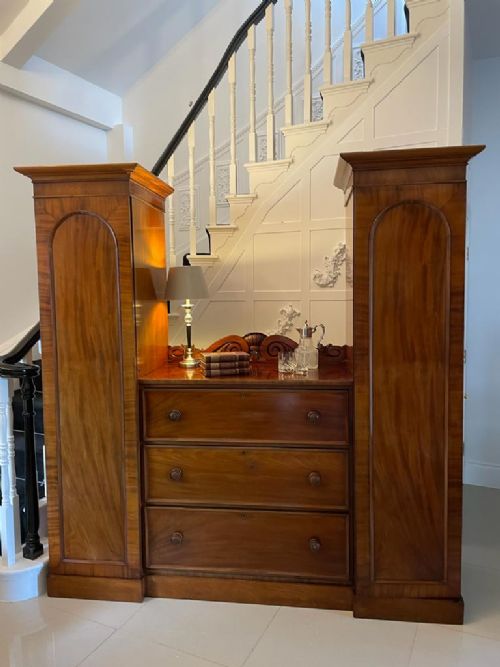
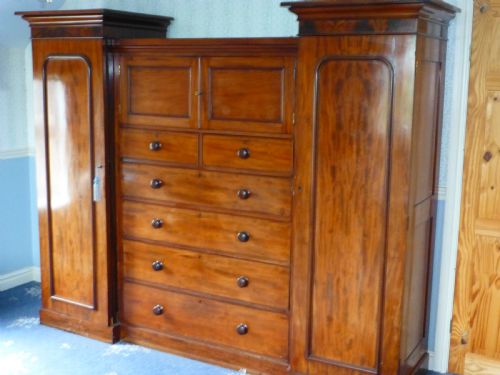
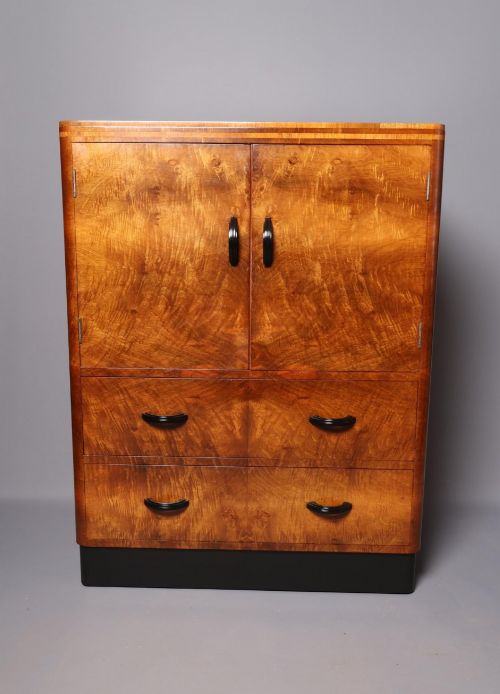
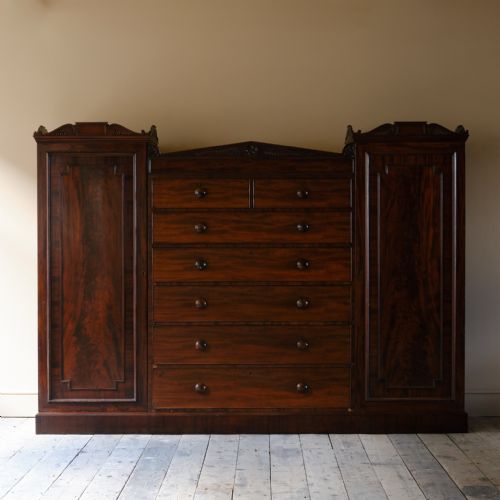
An antique gentlemans compactum brings together hanging space, linen drawers and sliding trays within a single substantial cabinet, often taking the form of a combination wardrobe with an inverted breakfront or central section. These practical pieces span the Georgian, Victorian and Edwardian eras, leading through to later Art Deco interpretations.
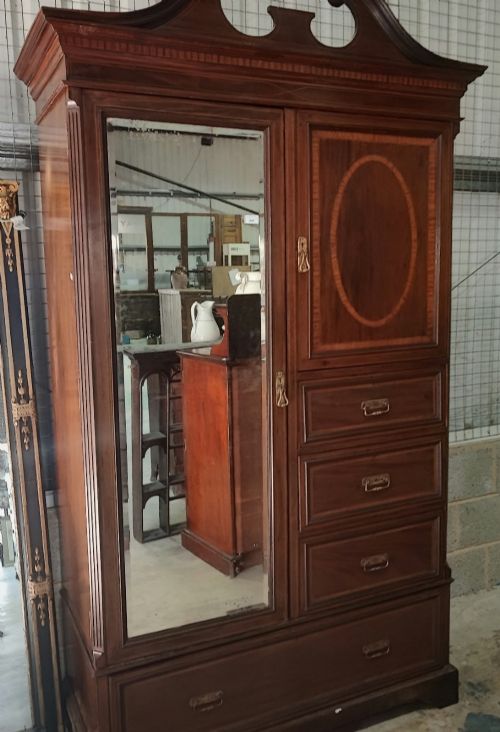
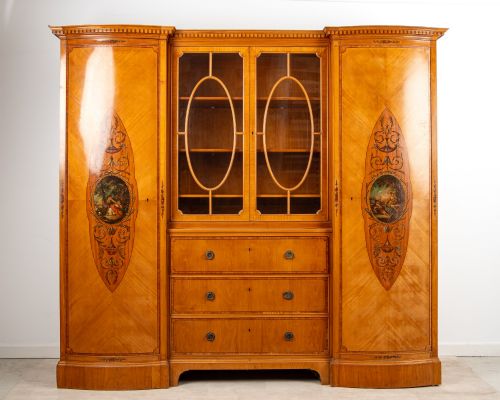
The Edwardian iterations frequently incorporate satinwood, mahogany or inlaid panels, whilst earlier Victorian examples lean towards robust mahogany, burr walnut and pollard oak. Buyers seeking this specific form will find large triple wardrobes, combination cupboards with trouser presses, and occasional smaller chests that fulfil the same multi-purpose role.
How They Were Made
Cabinetmakers constructed these large wardrobes using solid timbers including oak, mahogany, walnut and ash, frequently applying figured flame mahogany veneer or satinwood to the primary surfaces for visual depth. Brass hardware, lead light glass panels and hand-painted decorative details complete the construction of the finer examples.
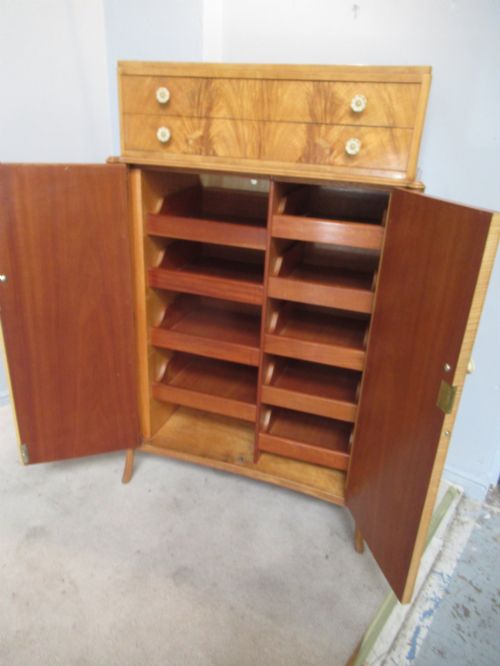
Internal engineering matches the exterior ambition, incorporating sliding linen trays, dedicated trouser presses, adjustable shelves and hanging compartments housed behind heavy panelled doors.
Listings feature woods such as mahogany, satinwood, oak, walnut, ash, and pollard oak across periods from the Georgian era to the 1930s.
What Varies in Quality
The standard of timber selection and veneer matching dictates the visual success of the piece, with figured grains and careful book-matching separating standard workshop production from high-end cabinet work. The complexity of the internal fittings, from dedicated trouser press mechanisms to well-fitted linen slides, marks the difference in utility.
Fine craftsmanship shows in the precision of the marquetry inlay, the integration of hand-painted panels, and the structural integrity required to support such large combinations of drawers and hanging space.
Edwards and Roberts·Gillows·Maple and Co·Heal's
The Antique Gentlemans Compactum Glossary
- Compactum
- A multi-functional wardrobe or cabinet combining hanging space, drawers, and shelving in a single unit. It is designed to accommodate a complete gentleman's wardrobe efficiently.
- Breakfront
- A cabinet design where the central section projects forward from the flanking wings. This architectural arrangement creates depth and shadow across large wardrobe facades.
- Flame Mahogany Veneer
- A thin layer of timber sliced from the point where a branch meets the trunk, showing a distinctive flame-like grain pattern. Cabinetmakers applied this to drawer fronts for decorative impact.
- Lead Light
- Glass panes held together within lead cames to form geometric or decorative patterns. These panels frequently appear on the doors of Edwardian and later cabinets.
- Pollard Oak
- Timber taken from trees that have been pollarded, producing a dense, knotty grain full of irregular markings. It yields a highly decorative surface highly prized by Victorian makers.
Antique Gentlemans Compactum: Frequently Asked Questions
What is a compactum wardrobe?
An antique gentlemans compactum is a combination wardrobe designed to hold a complete outfit within one piece of furniture. It typically integrates hanging space, shelving and drawers behind multiple doors.
Cabinetmakers built these large items to serve as private dressing stations for gentlemen, keeping garments pressed and organised in designated compartments.
How do I date a compactum?
Dating relies on timber choices, decorative styles and construction methods. Georgian examples show simple architectural lines, while Victorian pieces often use heavy mahogany or burr walnut.
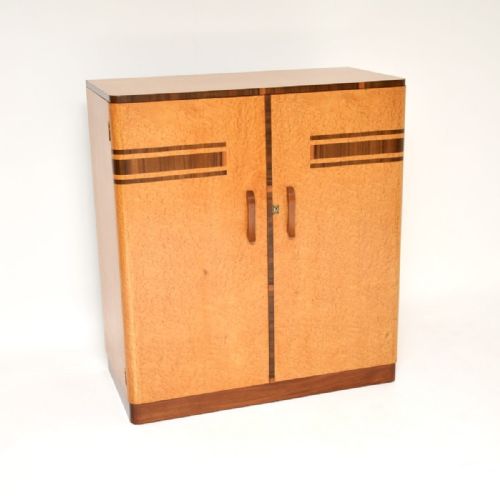
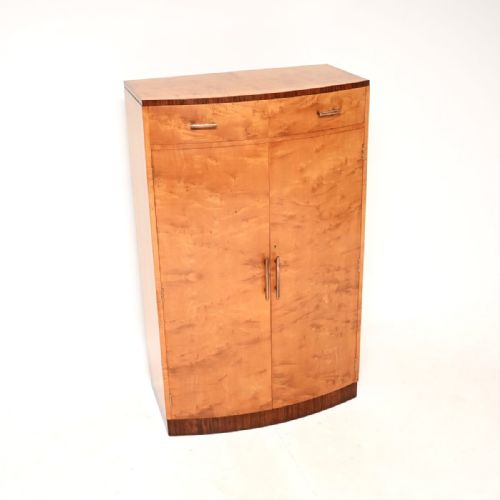
Edwardian compactums frequently feature lighter satinwood, delicate inlay, or painted panels, whereas Art Deco pieces from the 1930s adopt streamlined geometric veneering.
Will a compactum fit my bedroom?
These are exceptionally large items of furniture that usually require substantial room height and floor space. Many examples are built as single heavy units or multi-part breakfronts that demand careful measuring before placement.
Consider ceiling clearance and door swing paths, as internal sliding trays require full clearance to pull out properly.
How were internal fittings used?
The interior layout provided dedicated storage for specific garments, including sliding trays for folded shirts, hooks for coats, and built-in trouser presses.
Gentlemen used the various drawers and compartments to keep accessories, linen and suits neatly separated without needing separate chests of drawers.