



Antique Gate Bracelet
An antique gate bracelet is a wrist ornament of interlocking metal links modelled on cottage gates, offering a secure fastener and lasting everyday wear.
Antique Gate Bracelet
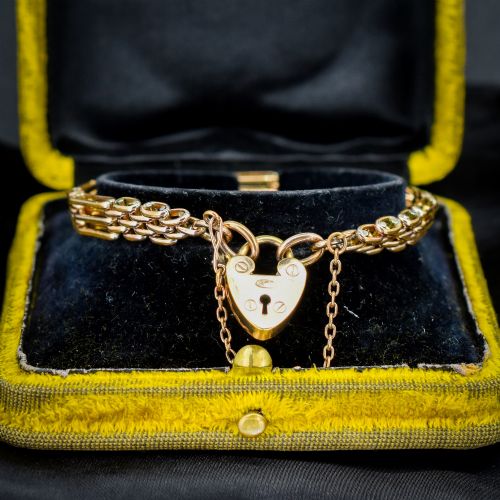
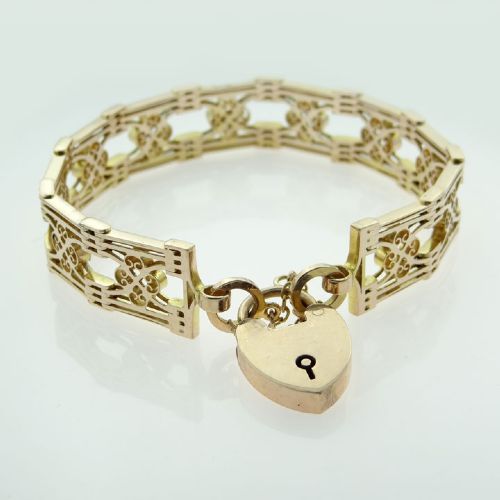
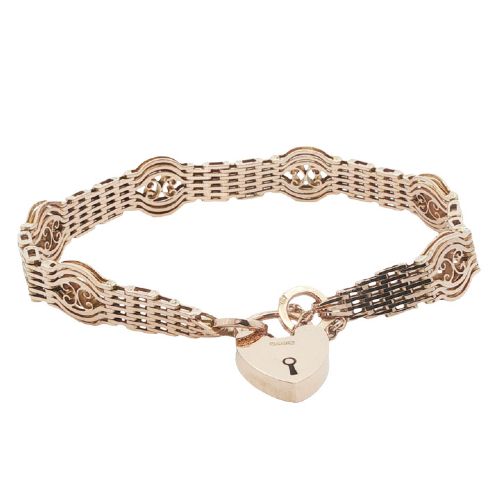
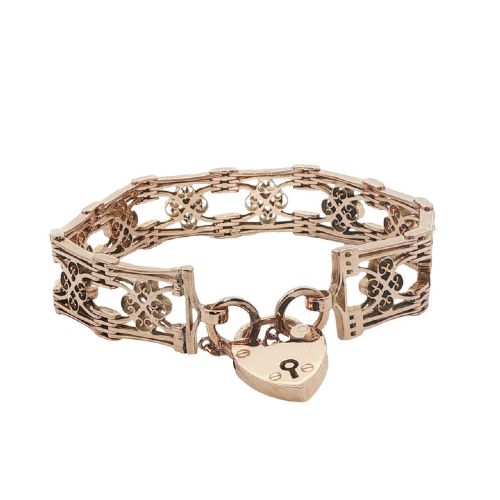
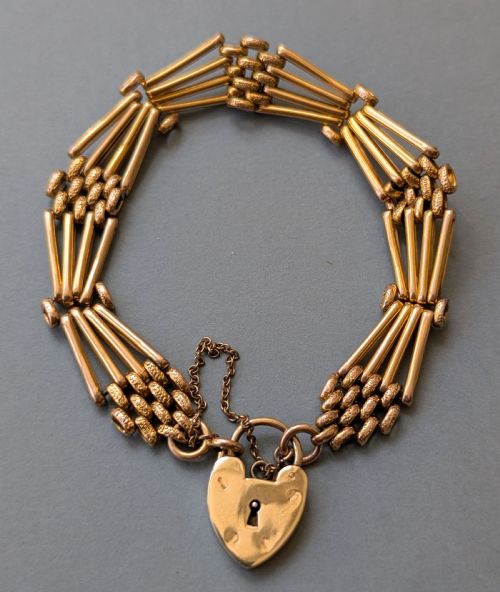
When you search for an antique gate bracelet, you are looking at wrist ornaments constructed from parallel rows of interlocking metal bars connected by vertical links, mimicking the appearance of garden gates. The pieces met on this page span the Victorian era, the Edwardian period, and mid-century decades, reflecting long-standing popularity.
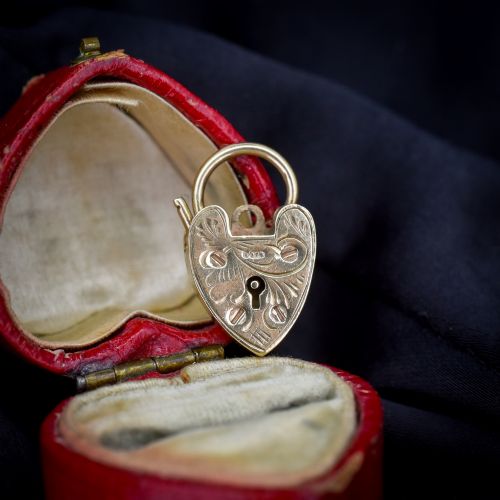
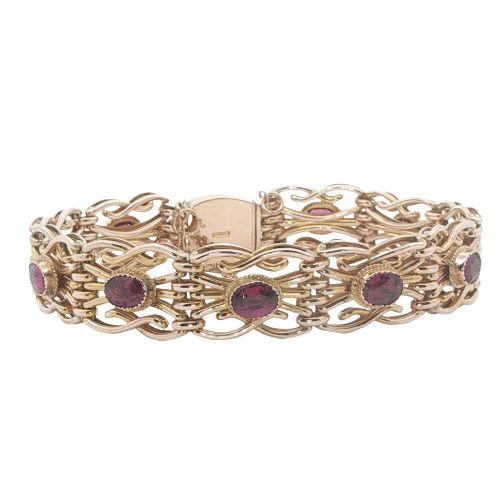
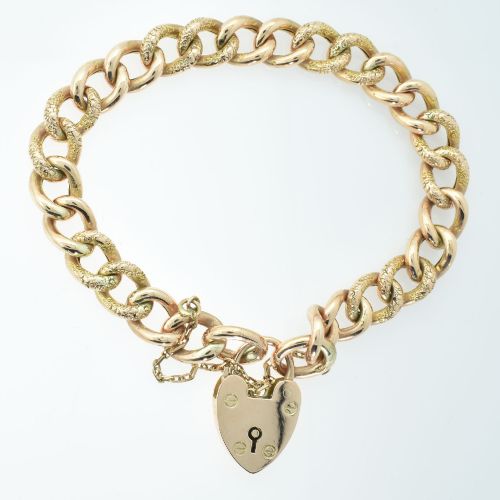
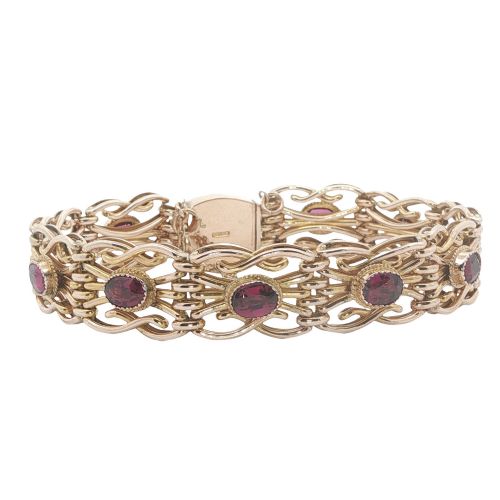
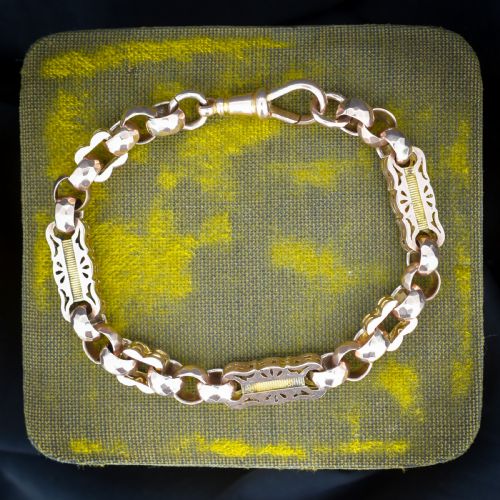
The most common versions on this page are fashioned from nine-carat rose gold or yellow gold, frequently secured with a functional heart padlock or a dog clip. Several examples incorporate gemstones such as almandine garnets, amethysts, rubies, and opals, or feature decorative motifs like love knots and engraved patterns.
The form developed from sturdy chain links into wide, multi-bar configurations, sometimes reaching fourteen bars in width. These bracelets range from simple solid gold links to elaborate pieces set with seed pearls or natural gemstones alongside the traditional padlock charm.
How they were made
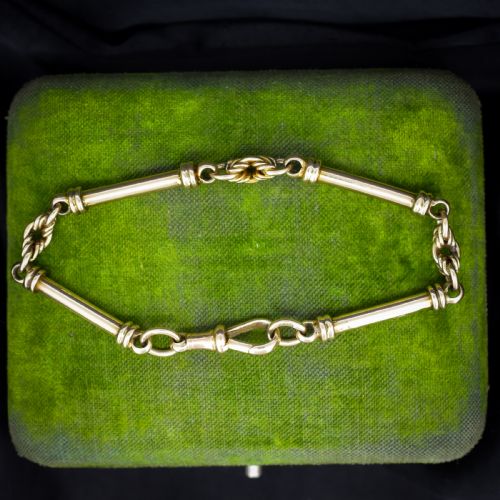
Makers constructed these bracelets primarily from nine-carat gold, utilising both rose and yellow colour variations shaped into tubular bars, curb links, and flat strips. Metal components were meticulously joined to form flexible grilles that drape comfortably around the wrist while maintaining structural strength.
Gemstones including almandine garnets, amethysts, rubies, and opals were integrated into the gold structures using traditional setting methods. Padlocks and dog clips were cast or stamped separately, then fitted with internal springs to ensure a reliable closure for the wearer.
Antique Gate Bracelet Retail Price Guide 2026
Typical asking prices for gate bracelet among the pieces listed under this phrase on Sellingantiques today, from the lower quarter to the upper quarter. They describe what is for sale here now, not the wider market.
Some nineteenth-century wearers kept a tiny lock key on a matching chain, ensuring nobody opened their gate without permission.
What varies in quality
The calibre of a piece depends heavily on the weight of the gold and the complexity of the link construction, with wider multi-bar configurations requiring greater precision from the maker. Substantial weight and tight, even articulation separate the finer examples from lighter, simpler chains.
The inclusion of natural gemstones such as almandine garnets, amethysts, rubies, or seed pearls alters the character and distinction of the piece. Engraved details on padlocks and individual links demonstrate the level of hand-finishing executed by the original workshop.
The Antique Gate Bracelet Glossary
- Gate link
- A style of bracelet link formed of multiple parallel bars connected by small vertical links, resembling a traditional garden gate. This design provides both flexibility and considerable width to the band.
- Heart padlock
- A heart-shaped clasp commonly used on nineteenth-century and early twentieth-century bracelets. It functions as both a secure fastening and a decorative pendant charm.
- Dog clip
- A spring-loaded swivel clasp attached to one end of a bracelet or watch chain. It allows the wearer to easily hook the piece onto a link or ring.
- Almandine garnet
- A deep red variety of garnet commonly set in Victorian and Edwardian gold jewellery. It provides a dark, rich colour contrast against rose gold.
- Love knot
- A decorative motif formed by intertwined strands of metal symbolising affection and unity. It frequently appears alongside links or padlocks on period bracelets.
Antique Gate Bracelet: Frequently Asked Questions
How do you wear a gate bracelet?
Wearing a gate bracelet involves securing the integrated heart padlock or dog clip to a suitable link or ring on the chain. Many owners wear them daily as standalone statement pieces or paired with other period gold bracelets.
Because the metal links are flexible, the bracelet conforms naturally to the wrist. Care should be taken to ensure the clasp spring functions securely before regular wear.
How are Victorian and Edwardian bracelets told apart?
Victorian bracelets often display heavier curb links, robust gold weights, and deep rose gold hues, sometimes featuring rich gemstones like garnets or amethysts. Edwardian examples frequently shift towards lighter, more delicate constructions and intricate filigree or star motifs.
However, styles overlapped considerably around the turn of the twentieth century, meaning examination of hallmarks and specific link formations is necessary for precise dating.
What are heart padlocks used for?
Heart padlocks function primarily as secure clasps designed to keep the bracelet fastened around the wrist. They were also used symbolically in Victorian jewellery to represent affection and commitment.
Many padlocks are attached via a small jump ring and can double as decorative charms. Some pieces include safety chains connected to the padlock to prevent loss.