
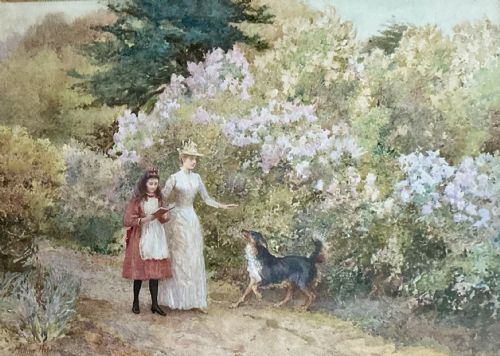


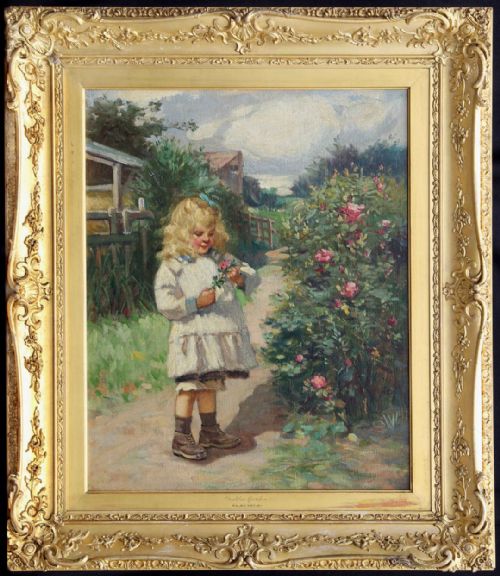


Antique Garden Genre Scene
These antique garden genre scene pieces capture quiet domestic moments outdoors, offering a glimpse into past daily life through accomplished brushwork.
Antique Garden Genre Scene
An antique garden genre scene captures human figures engaged in everyday outdoor activities, typically set against a backdrop of domestic planting, paths, or lawns. These works range from intimate watercolour paintings to large oil paintings on canvas, framed for display.
Most examples originate from the nineteenth century and the early twentieth century, spanning Victorian, Edwardian, and continental European traditions. A buyer meets subjects such as children with pets, musicians, and labourers beside herbaceous borders.
The format varies between delicate works on paper and substantial oils, housed variously in simple wood or gilded frames. These portrayals offer a specific window into historical leisure and rural pursuits.
How they were made
Artists painted these subjects using watercolours on paper or oil on canvas, employing traditional pigments and varnishes suited to the period. The supports consist of stretched canvas on wooden frames or heavy paper sheets mounted behind glass.
Many works reside in their original surrounds, which include period gilt wood and carved wooden frames that complement the painting style. These framing methods reflect standard workshop practices of the Victorian and Edwardian eras.
Several garden scenes include domestic pets, showing that nineteenth-century dogs enjoyed herbaceous borders just as much as their modern counterparts.
What varies in quality
Quality rests in the handling of light, the naturalism of the figures, and the precision of the botanical or architectural background. Superior works demonstrate confident draftsmanship in the faces and garments of the subjects.
The condition of the pigment, the stability of the canvas or paper, and the preservation of the original frame contribute significantly to the standing of each piece.
Arthur Hopkins·Martinetti·Frank Moss Bennett·Arturo Orselli·Paul Viry·Arthur Claude Strachan·Edmund Alphonse Andre·Belisario Gioja·Ralph Hedley RBA·John F. Pasmore
The Antique Garden Genre Scene Glossary
- Genre scene
- A pictorial representation of everyday life and ordinary people engaged in common activities. These works depict non-idealised subjects in domestic or outdoor settings.
- Watercolour
- A painting method where fine pigment is suspended in a water-based solution, typically applied to paper. It yields translucent colour washes and delicate detail.
- Chrystoleum
- A Victorian technique where a photograph or print is made transparent on glass, hand-coloured with oils, and mounted behind convex glass. This process produces a dimensional effect resembling an oil painting.
- Rococo Revival
- A nineteenth-century design style drawing on eighteenth-century French motifs, characterised by ornate, asymmetrical scrolls and floral ornamentation. It appears frequently in period framing.
- Herbaceous border
- A garden planting design featuring perennial plants arranged in rows or beds, frequently depicted in nineteenth-century landscape and genre painting.
Antique Garden Genre Scene: Frequently Asked Questions
What is an antique garden genre scene?
An antique garden genre scene is a painting or framed artwork depicting people in outdoor domestic settings, such as cottage gardens or near fountains.
These pieces record historical pastimes, clothing, and garden architecture from the nineteenth and early twentieth centuries.
Where were these paintings displayed?
These framed works hung primarily in domestic parlours, drawing rooms, and studies during the Victorian and Edwardian periods.
They served as decorative focal points that brought natural outdoor imagery into interior spaces.
How do I date a garden genre painting?
Dating relies on stylistic evidence, artist signatures, framing materials, and the clothing worn by the figures depicted in the composition.
Nineteenth-century works often feature distinct academic or Victorian artistic conventions compared to later Edwardian examples.
What materials are used in these frames?
Frames are constructed from wood, frequently finished with gilding or decorative mouldings characteristic of the period.
Some watercolours combine gilded wood surrounds with glass protection to preserve the delicate paper beneath.