


Antique Gaming Desk
An antique gaming desk brings the deliberate pace of past social evenings into a room, offering fold-over surfaces and clever compartments designed for traditional play.
Antique Gaming Desk
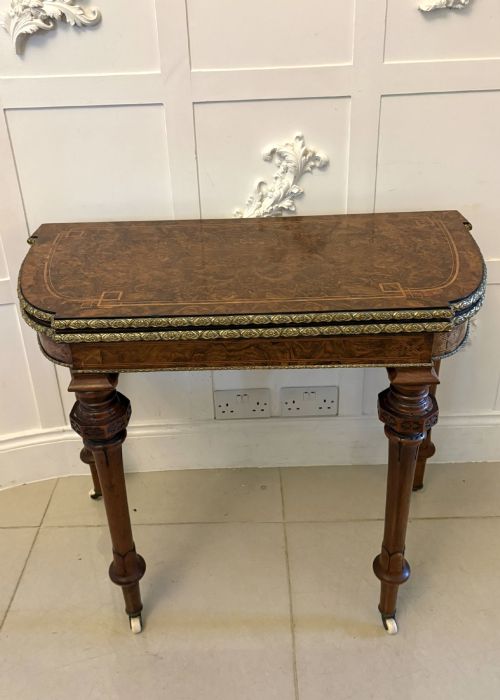
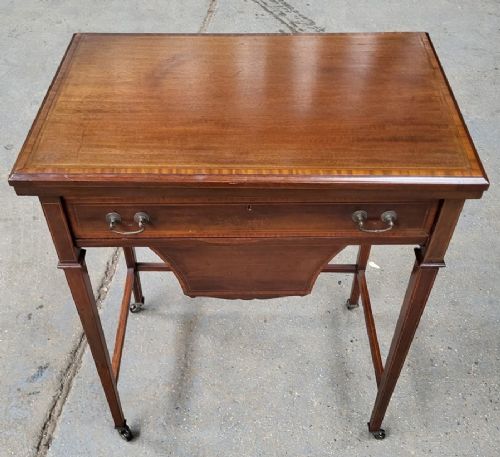
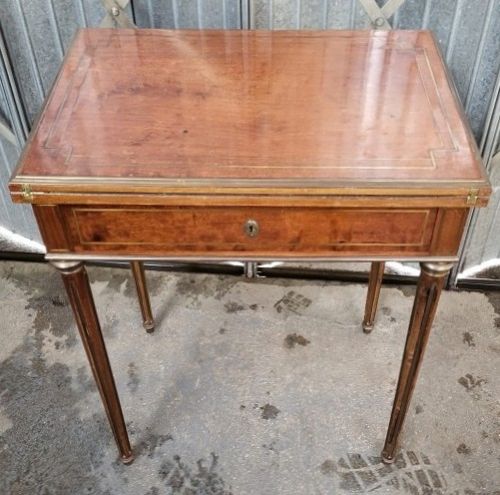
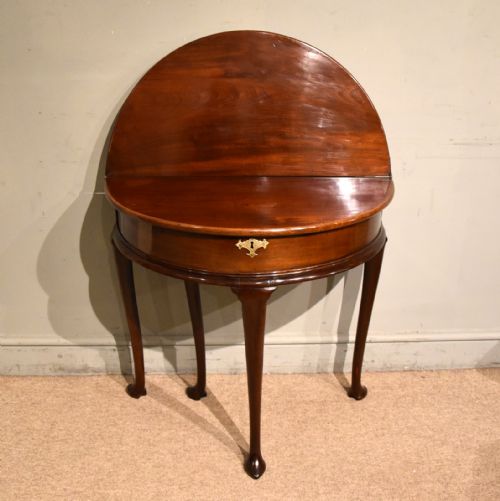
An antique gaming desk or games table provides a dedicated surface for cards, chess, and social play, often transforming from a modest side or console table into a wider playing area when needed. The pieces seen here span the Georgian, Victorian, and Edwardian eras, reflecting changing domestic fashions in British and continental homes.
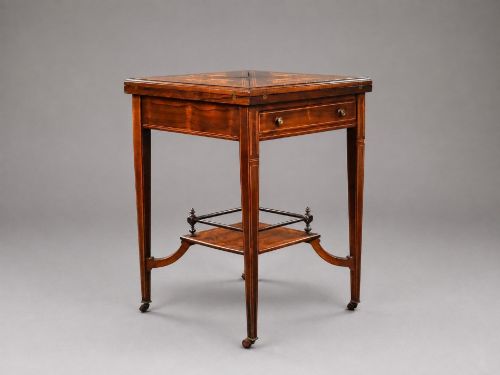
Most examples rely on a fold-over top, a concertina action, or a swivel mechanism to reveal a baize-lined or polished wooden interior. Alongside traditional card tables, the selection includes specialised forms such as envelope tables with folding leaves and metamorphic pieces designed for multiple uses.
Materials and construction
Cabinetmakers relied heavily on timber like mahogany, walnut, and burr walnut, frequently enhancing the grain with satinwood, boxwood, and intricate marquetry or cross-banding. Structural integrity was essential for tables that opened and closed repeatedly, leading to sturdy framing in oak or mahogany.
Secondary elements include brass hinges, locks, and ormolu mounts, alongside leather inserts for writing or gaming surfaces. French polishing and hand-cut joinery defined the finish of these pieces, ensuring smooth operation of folding leaves and internal compartments.
Listings feature woods including mahogany, walnut, burr walnut, and rosewood, spanning periods from the Georgian era to the Edwardian period.
Distinguishing quality
Quality rests in the precision of the mechanics and the crispness of the cabinetwork, where folding leaves align flush with the frame when closed. Superior examples display carefully chosen veneers that match symmetrically across the top, showing depth and movement in the timber.
The refinement of secondary details - such as finely turned or carved legs, well-fitted concertina frames, and intact original hardware - separates standard production from exceptional craftsmanship. Subtle touches like inlaid stringing and well-preserved interior compartments indicate a higher tier of manufacture.
Maples of London
The Antique Gaming Desk Glossary
- Concertina action
- A table frame that expands on a bellows-like hinged framework to support a fold-over top evenly on all four sides. This mechanism allows the table to bear weight securely when open without needing a swing leg.
- Envelope table
- A square card table with four triangular flaps that fold inward like an envelope over the centre. Rotating the top reveals the interior compartments.
- Marquetry
- Decorative patterns formed by fitting contrasting veneers into a prepared wooden background. Craftsmen used various coloured woods to create floral or geometric designs.
- Turnover top
- A hinged tabletop that rotates and unfolds to double its surface area, frequently concealing a shallow well for storage beneath. It is a defining feature of many 18th and 19th-century card tables.
- Cross-banding
- A decorative border of veneer laid around the perimeter of a tabletop with the grain running perpendicular to the central panel. This technique frames the primary wood and adds visual contrast.
Antique Gaming Desk: Frequently Asked Questions
How do you open an antique games table?
Most pieces utilise a swivel top that rotates ninety degrees before folding out flat, or a concertina frame that pulls outward to support the hinged leaf. Careful handling is required to release any internal wooden catches without straining the original hinges.
Once opened, the leaf rests evenly on the expanded framework or a swinging rear leg, revealing the baize or polished wood playing surface ready for use.
Were these tables only used for cards?
While primarily designed for card games like whist or ombre, many examples doubled as tea tables or writing desks during the day. The enclosed storage wells beneath the folding tops held counters, cards, and small gaming paraphernalia.
In later Edwardian and Victorian periods, versatile forms emerged that combined sewing compartments or lamp table functions with traditional gaming layouts.
How can you date a gaming table?
Stylistic clues such as cabriole legs point toward Georgian and George II origins, while straight tapered legs and satinwood inlay often indicate the Sheraton influence of the late 18th century. Burr walnut finishes and heavier proportions are typical of mid to late 19th-century Victorian production.
Examining the construction methods, secondary timbers like oak or pine, and the wear on hinge mechanisms provides further confirmation of the period.
How do I care for a wooden gaming top?
Keep the timber away from direct sunlight and consistent heat sources to prevent the wood veneers from drying out or warping over time. Dust gently with a dry, soft cloth and avoid chemical polishes that can build up on antique finishes.
When opening the top for use, ensure the area is clear and support the leaf fully rather than letting gravity drop it into position.