


Antique Furniture with Glass
Antique furniture with glass brings together timber and transparency, offering a practical way to exhibit objects while keeping them safe.
Antique Furniture with Glass
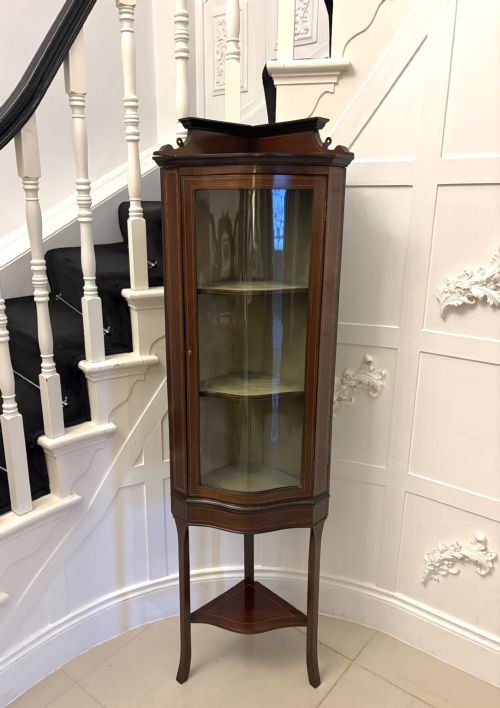
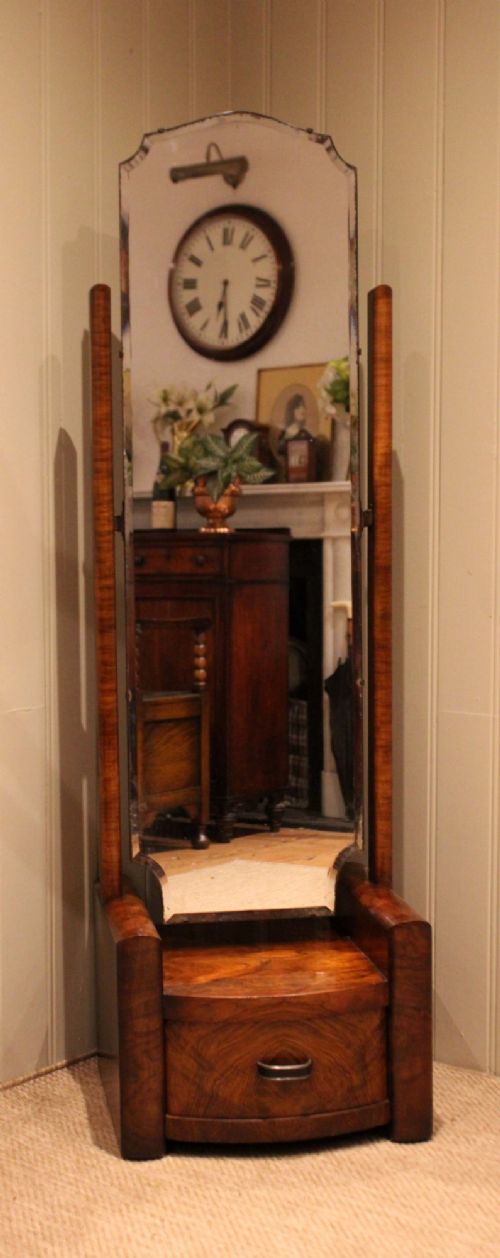
Antique furniture with glass encompasses a range of domestic forms designed to display or reflect, with display cabinets and bookcases appearing most frequently alongside mirrors, credenzas, and vitrines. These pieces span the eighteenth, nineteenth, and early twentieth centuries, drawing on Georgian, Victorian, and Edwardian periods as well as continental revival styles.
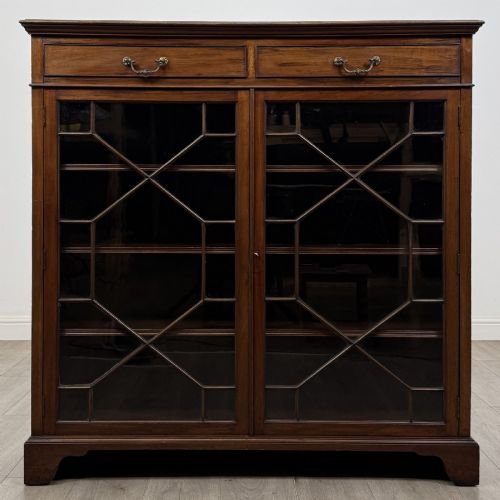
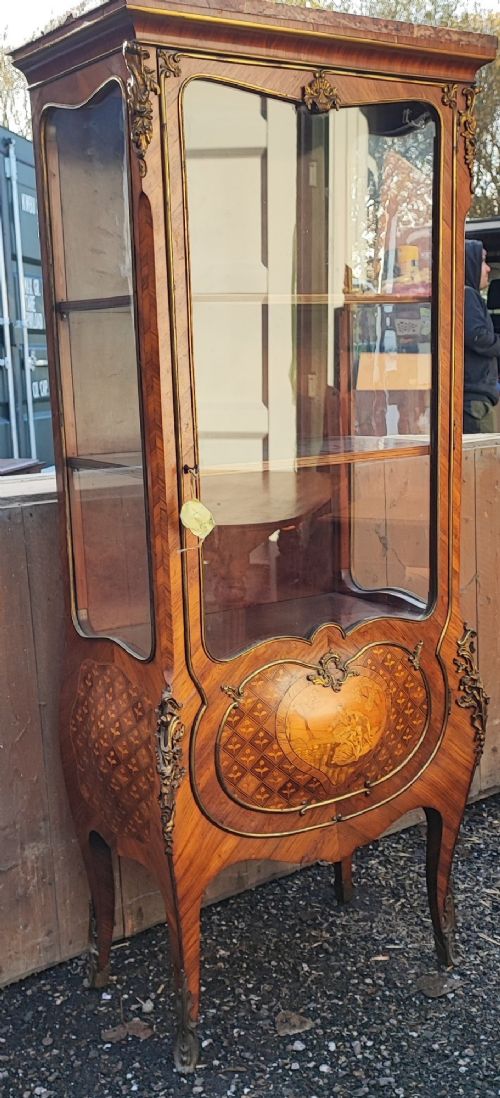
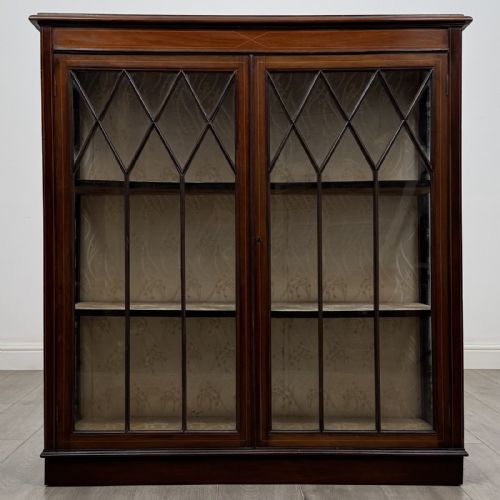
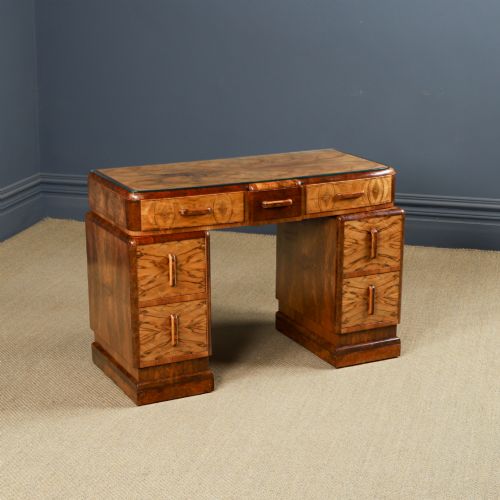
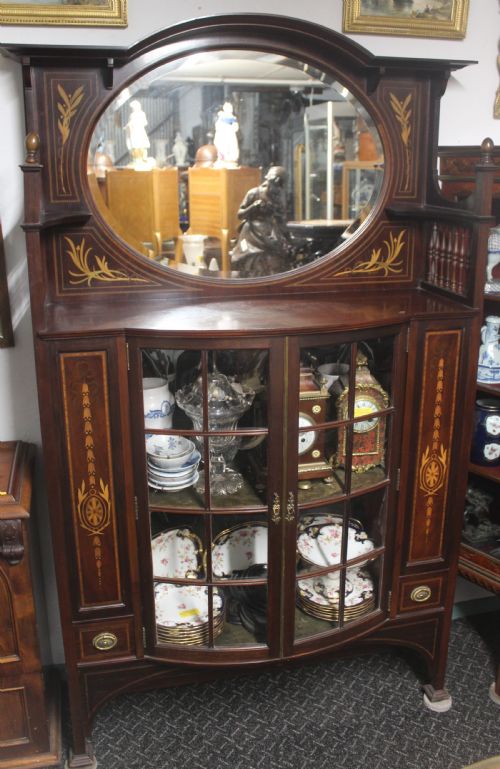
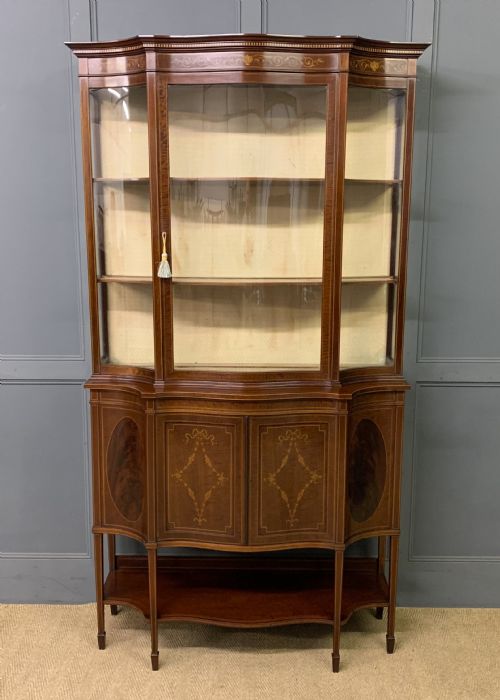
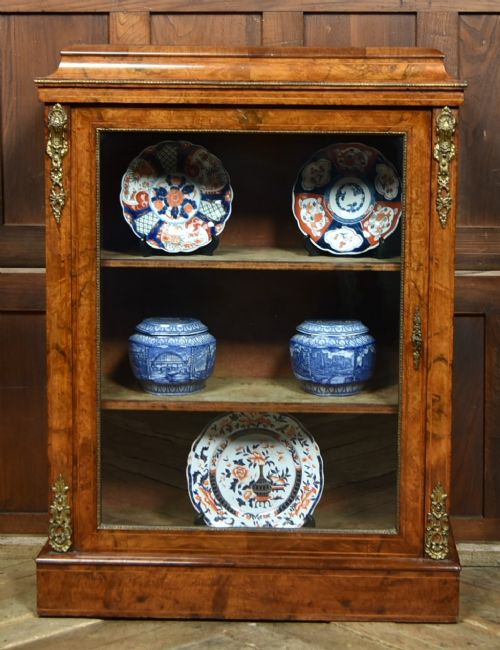
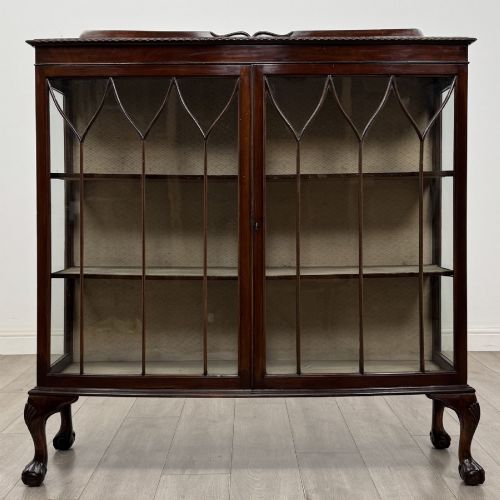
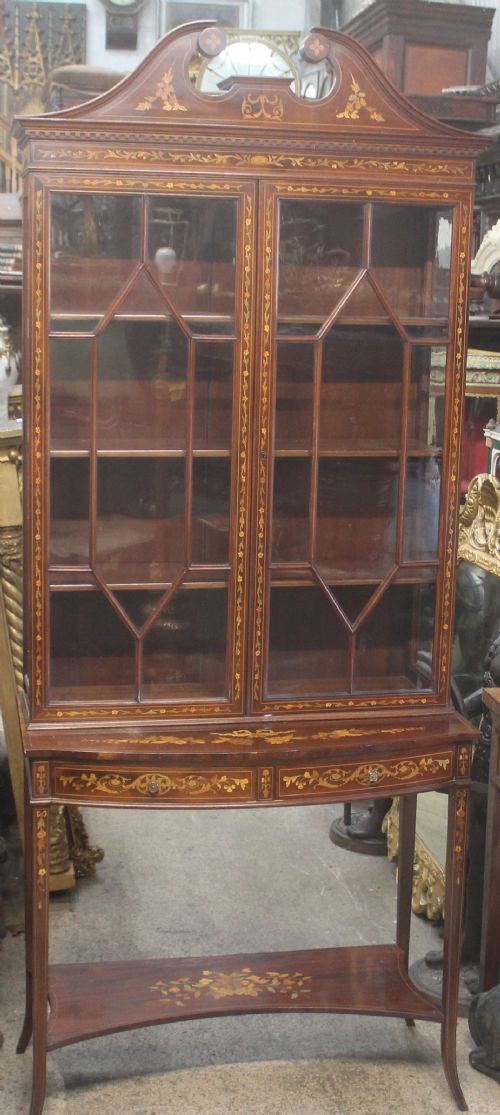
Buyers seeking antique furniture with glass will most commonly encounter Edwardian mahogany display cabinets and bookcases fitted with glazed doors or panels. Alongside these, French kingwood vitrines mounted in ormolu and walnut credenzas with inlaid details represent the standard forms available across this selection.
Materials and Construction
Cabinet makers relied heavily on timber carcasses of mahogany, walnut, satinwood, and kingwood, often enhanced with marquetry, painted decoration, or amboyna veneers. Structural stability was maintained through traditional joinery, while decorative surfaces integrated cast ormolu mounts, marble tops, and detailed wood inlays.
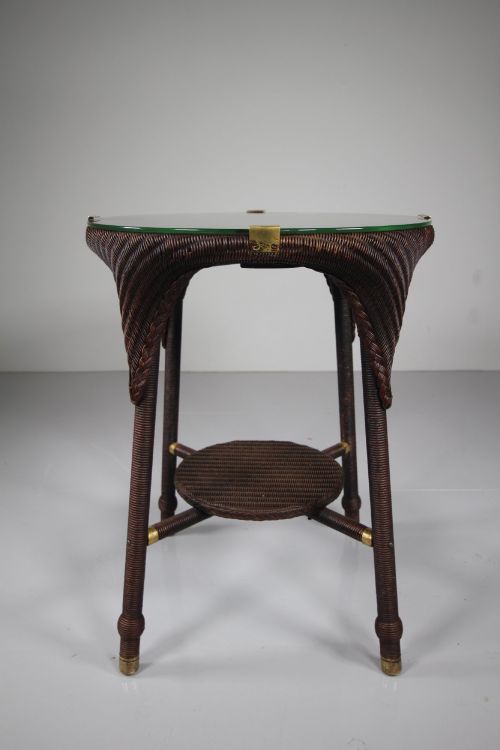
Glass was incorporated into doors, shelves, and tray tops, sometimes featuring astral glazing bars or curved and bowed profiles. French pieces additionally utilised Vernis Martin panels and giltwood frames to achieve elaborate decorative effects.
Antique Furniture with Glass Retail Price Guide 2026
Typical asking prices for furniture with glass among the pieces listed under this phrase on Sellingantiques today, from the lower quarter to the upper quarter. They describe what is for sale here now, not the wider market.
Listings feature mahogany, walnut, kingwood, and satinwood, spanning the Georgian, Victorian, and Edwardian periods.
Standards of Execution
Quality in antique furniture with glass rests upon the precision of the cabinetwork and the selection of timber veneers. Finely figured mahogany, burr walnut, and matched kingwood indicate superior workshops, whereas simpler pieces utilise plain secondary timbers with straightforward painted finishes.
The refinement of ancillary elements distinguishes the best examples from standard production. Finely chased ormolu mounts, original hand-painted panels, and integrated glass shelving demonstrate a higher tier of craftsmanship than plain glazed cupboards.
Maple & Co.·H&L Epstein·Maison Krieger
The Antique Furniture with Glass Glossary
- Vitrine
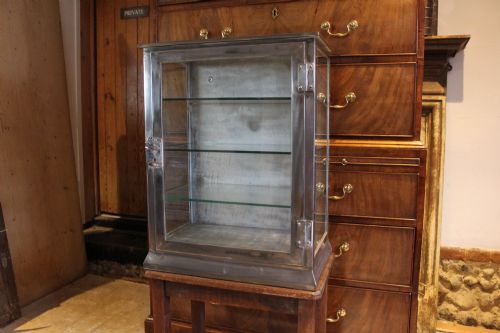
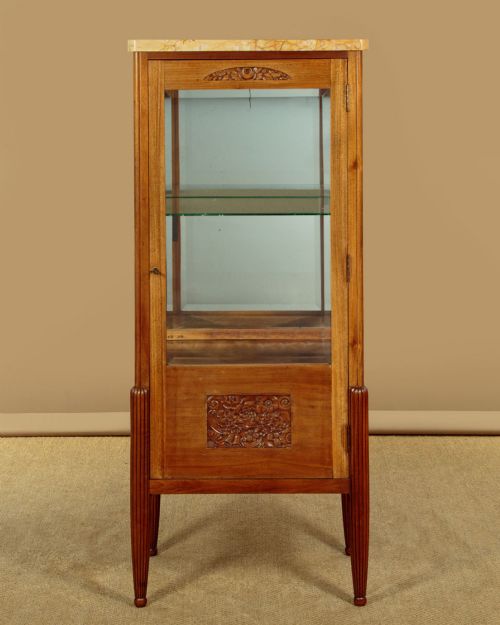
- A glass-fronted cabinet designed specifically for the display of porcelain, curiosities, and small decorative objects. These pieces often feature glazed sides to maximise light penetration.
- Credenza
- A low cabinet or sideboard, frequently mounted with ormolu and ceramic plaques in the Victorian period. They often incorporate central glass doors flanked by curved side cupboards.
- Ormolu
- Gilded bronze used for decorative mounts on nineteenth-century furniture. The technique involves applying a mercury and gold amalgam to cast bronze.
- Marquetry
- The art of applying decorative veneer pieces to a timber structure to form geometric or floral pictures. Boxwood and satinwood were frequently utilised for contrast.
- Astral Glazing
- A lattice of wooden or metal bars dividing a glass window or cabinet door into smaller panes. This technique is characteristic of eighteenth and nineteenth-century bookcases.
Antique Furniture with Glass: Frequently Asked Questions
What is a vitrine cabinet?
A vitrine is a display cabinet enclosed almost entirely in glass, designed to showcase precious items from all angles.
Originating largely in France during the nineteenth century, these pieces frequently feature delicate wood frames, marble tops, and gilt bronze mounts.
How do I date a glass cabinet?
Dating relies on timber choices, decorative motifs, and construction methods combined with the style of the glazing bars. Edwardian pieces often show lighter satinwood and painted floral details, while Victorian examples favour heavier burr walnut and ebonised finishes.
Earlier Georgian bookcases display heavier architectural cornices and hand-blown glass panes with subtle surface distortions.
Can I adjust glass shelves?
Most antique glass shelves sit on fixed wooden supports or traditional adjustable notches rather than modern metal tracks.
Original glass shelves are fragile and require careful handling if removed during relocation or cleaning.
Where should I place a glazed bookcase?
Glazed bookcases need stable interior environments away from direct sunlight to protect antique book bindings and sensitive timber finishes.
Placement should account for door clearance, as many Edwardian and Victorian display cabinets feature wide hinged or sliding glass doors.