
Antique Furniture Sheet Holder
An antique furniture sheet holder, known widely as a canterbury, keeps folios, scores and papers tidy beside a seat.
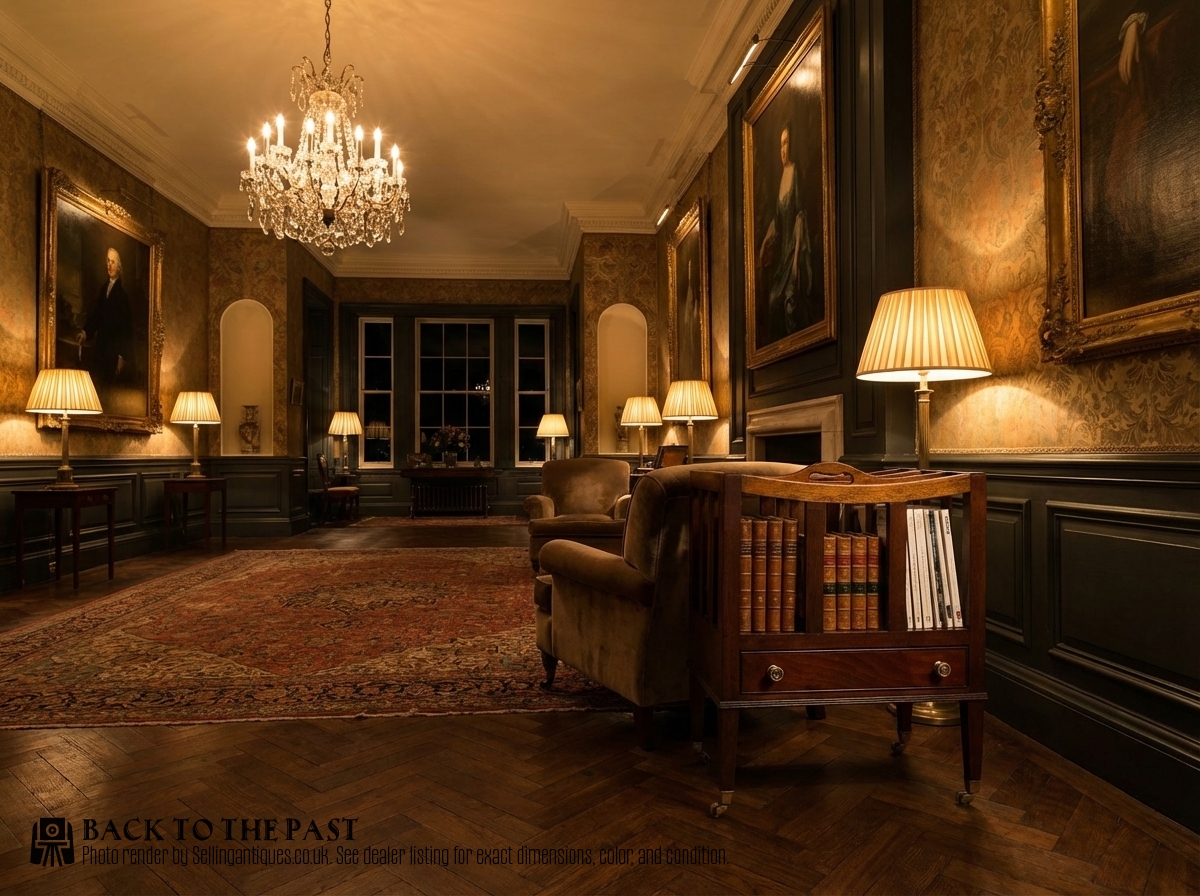
Antique Furniture Sheet Holder
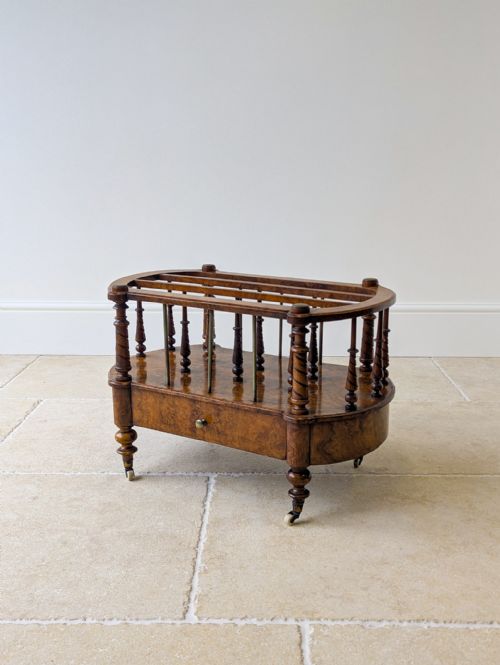
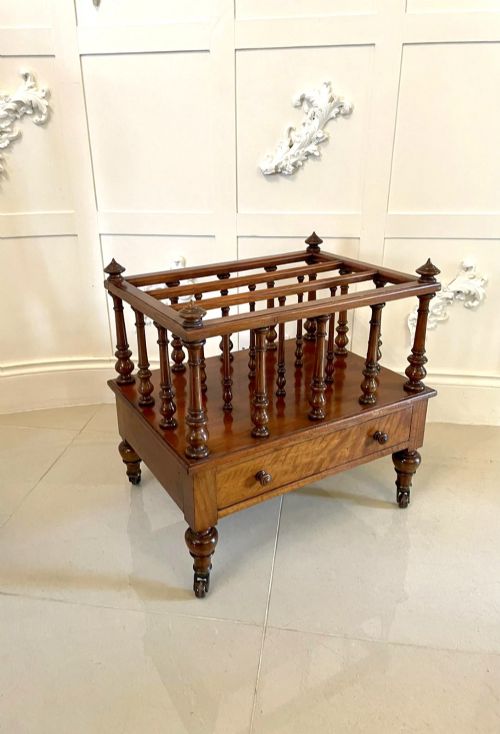
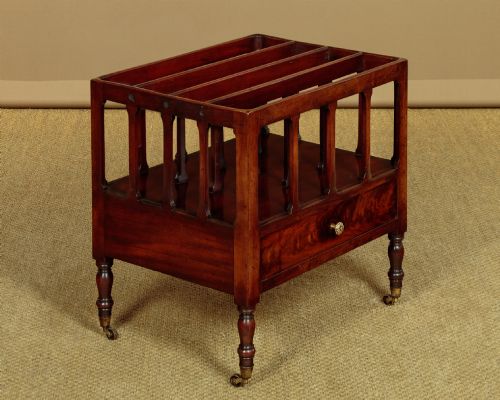
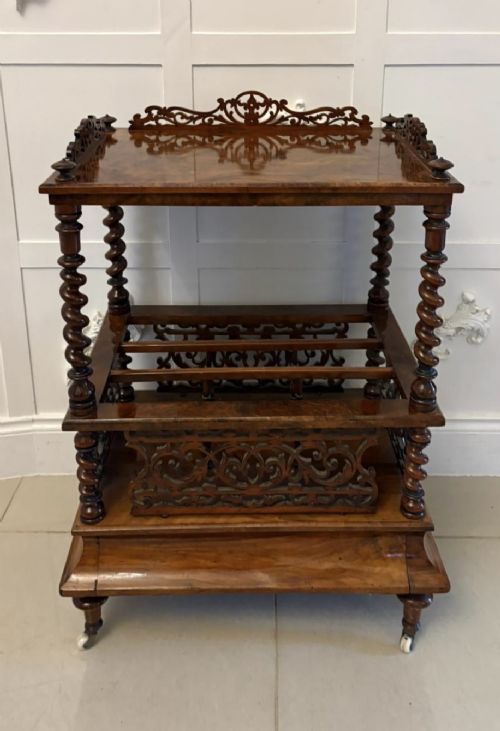
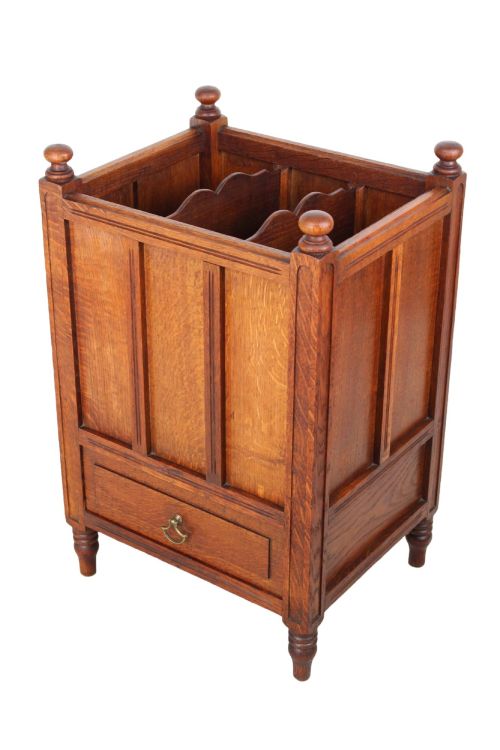
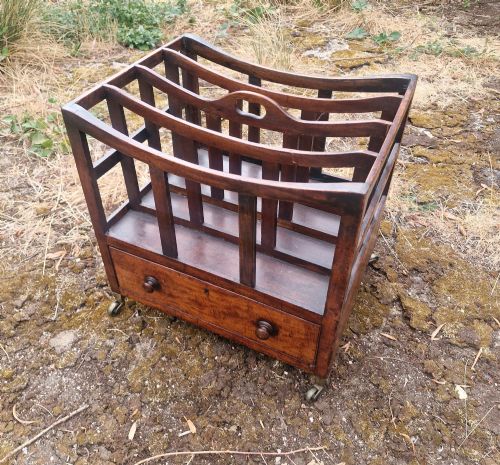
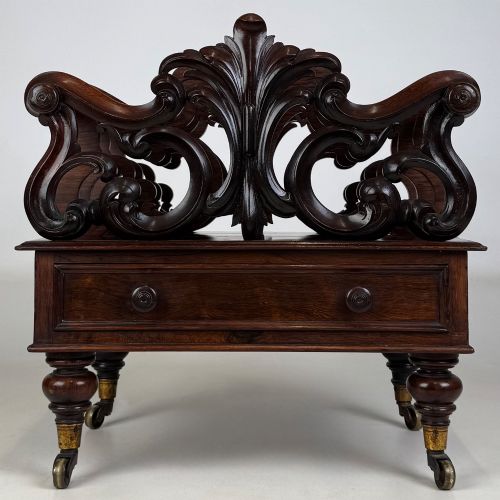
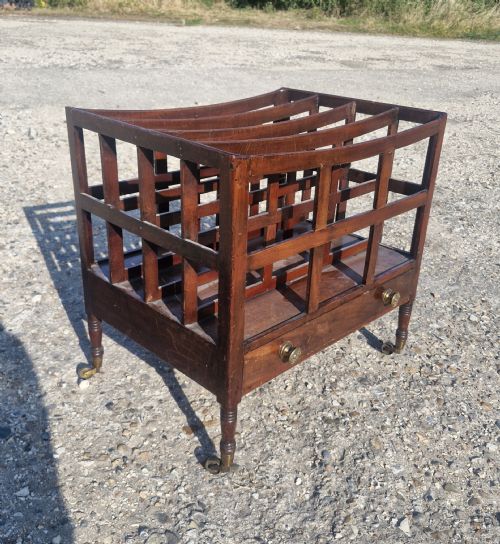
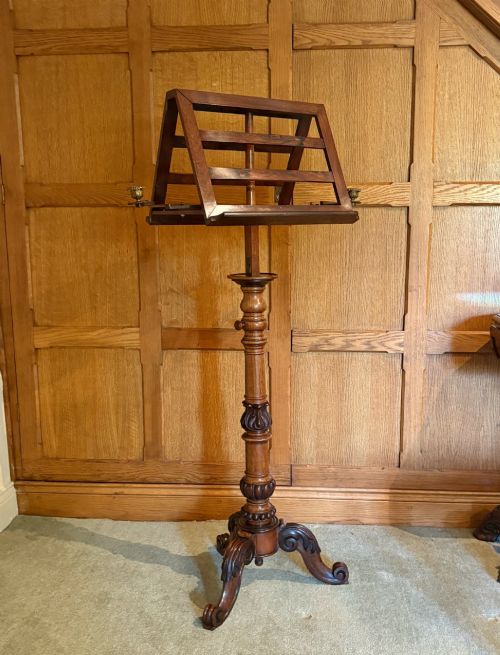
An antique furniture sheet holder primarily takes the form of a canterbury, alongside related music stands and magazine racks designed for domestic parlours. These pieces emerge across the Georgian, Regency, William IV, Victorian and Edwardian periods, serving as compartmentalised storage for papers and folios.
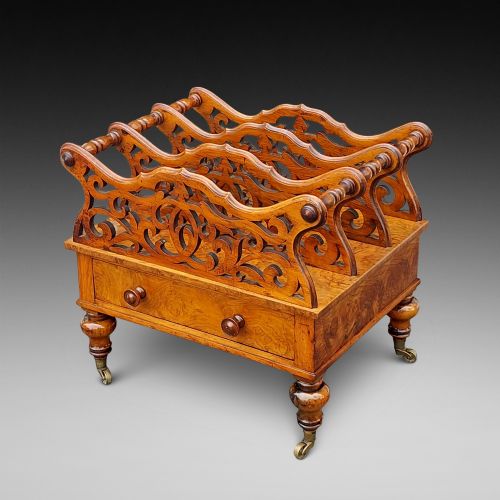
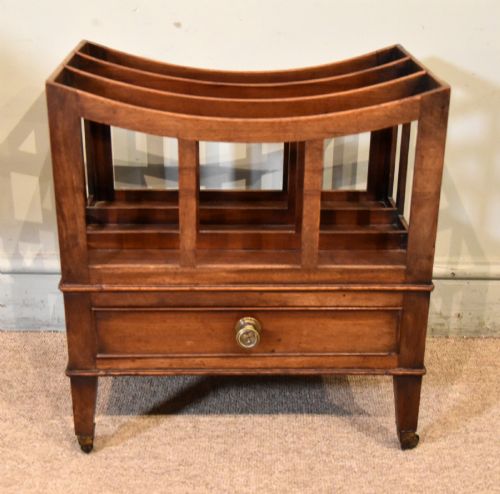
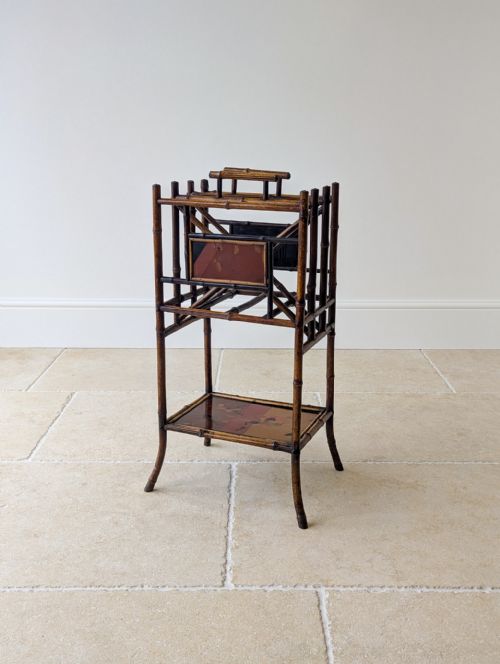
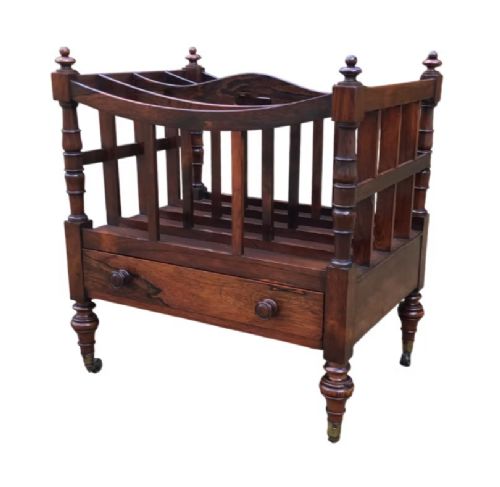
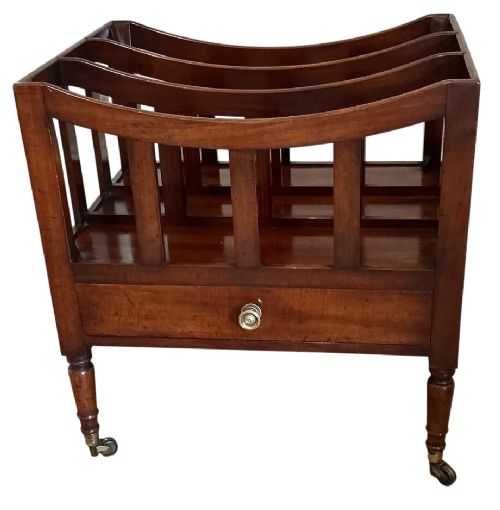
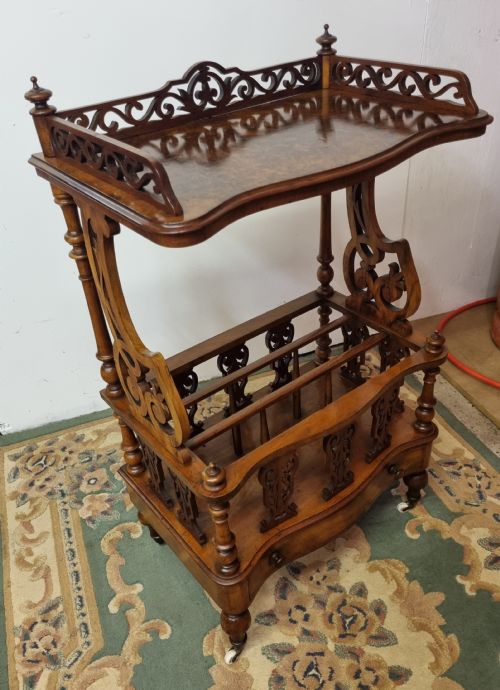
Buyers will most frequently encounter mahogany and rosewood examples from the nineteenth century, often featuring slatted divisions above a low drawer or castor feet. Forms range from boat-shaped Regency models to burr walnut Victorian iterations and occasional bamboo pieces from the Aesthetic Movement.
The typology frequently merges functions, appearing as combined music stands, work tables or diminutive cabinets tailored for sheet music and periodicals. Such designs reflect the Victorian and Edwardian parlour culture that demanded accessible yet orderly repositories for daily reading and performance.
Materials and construction
Cabinet makers utilised dense, durable timbers such as mahogany, rosewood and walnut, frequently selecting figured veneers and burr walnut for decorative surfaces. These woods were turned into slender uprights, shaped rails and delicate spindle partitions to support loose sheets without adding unnecessary bulk.
Joinery methods combined traditional frame-and-panel construction with fine turning for legs, often incorporating small lower drawers mounted on side runners. Metal castors and brass fittings frequently appeared on Regency and Victorian iterations to ease movement across carpeted drawing rooms.
Named after an Archbishop of Canterbury who supposedly requested a supper tray with divisions, the furniture form quickly left the dining room for the music parlour.
Factors of quality
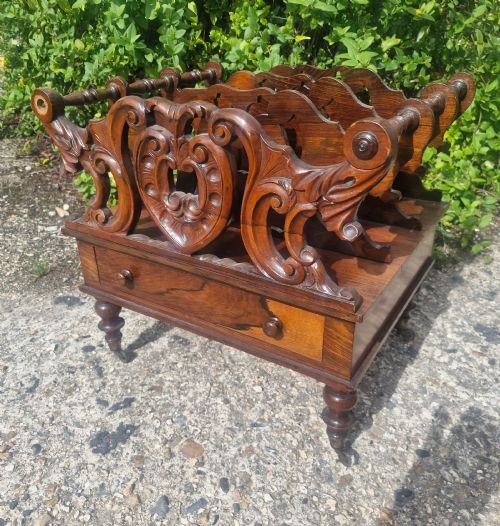
Superior examples display crisp carving on structural elements like Prince of Wales feathers or turned supports, coupled with deeply figured timber grains in the walnut or mahogany. The refinement of the slatted divisions and the snug fit of any lower drawer indicate the original maker's skill.
Proportion and stability separate standard production from exceptional pieces, particularly in boat-shaped Regency models and elaborate Victorian multi-tier designs. Original brass castors and uncompromised structural joints preserve the piece's intended balance and utility.
Gillows·Edwards and Roberts
The Antique Furniture Sheet Holder Glossary
- Canterbury
- A low stand with partitioned uprights for holding sheet music, folios or magazines, typically featuring a small drawer below. The form dates from the eighteenth century and persisted through the Edwardian era.
- Boat-shaped
- A characteristic Regency silhouette featuring curved ends that sweep upward, resembling the hull of a vessel. This profile appears frequently on rosewood and mahogany canterburys.
- Aesthetic Movement
- A late nineteenth-century design style that embraced simplicity and often utilised alternative materials such as bamboo. Pieces from this movement discard heavy classical ornamentation in favour of lighter, nature-inspired frameworks.
- Whatnot
- A piece of open shelving consisting of several tiers supported by slender pillars, sometimes combined with a canterbury base. It was used in Victorian parlours for displaying ornaments or holding books.
Antique Furniture Sheet Holder: Frequently Asked Questions
What was an antique furniture sheet holder used for?
These pieces served primarily to hold sheet music, unbound folios, newspapers and periodicals near a piano or a sitting room chair. The partitioned upper sections kept fragile papers upright and separated.
Lower drawers often provided additional storage for smaller accessories, writing implements or extra musical scores. They functioned as both practical storage and refined parlour furniture.
How do I distinguish Regency from Victorian examples?
Regency pieces often display cleaner lines, boat-shaped profiles and restrained use of brass inlay or elegant turned legs. Mahogany and rosewood predominate in this earlier phase.
Victorian versions tend toward heavier ornamentation, incorporating burr walnut veneers, serpentine shapes, elaborate carvings and occasionally bamboo. They reflect the evolving decorative tastes of the later nineteenth century.
Can these stands hold modern magazines?
Most standard canterburys easily accommodate modern periodicals, newspapers and thin softcover books within their vertical partitions. The spacing is generally deep enough for standard folio sizes.
However, oversized or particularly thick modern volumes may exceed the height or width of the wooden dividers, risking strain on the delicate uprights.
Are castors on these pieces original?
Many nineteenth-century examples retain their original brass or ceramic castors, which were fitted to facilitate moving the loaded stand across carpets. Examining the fixing pins helps determine period authenticity.
Replacements are common due to wear over generations of use, though well-matched antique replacements still preserve the correct height and stance.