





Antique Furniture Manchester
Antique furniture Manchester brings together robust Victorian and Edwardian pieces crafted by notable northern workshops, offering timeless utility and distinct regional character.
Antique Furniture Manchester
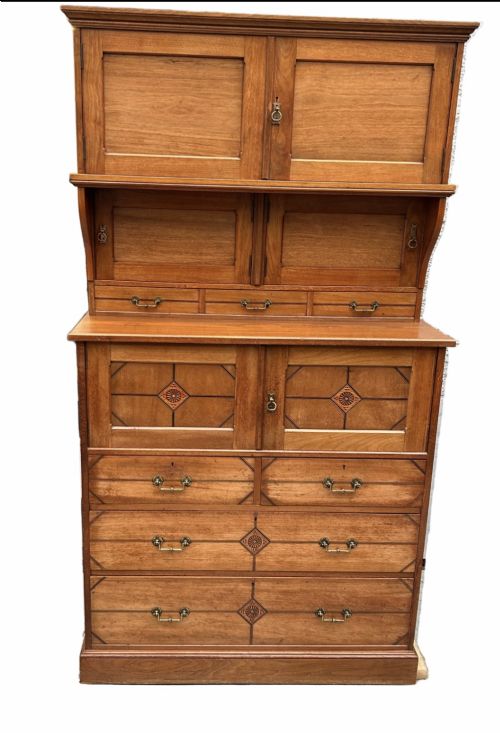
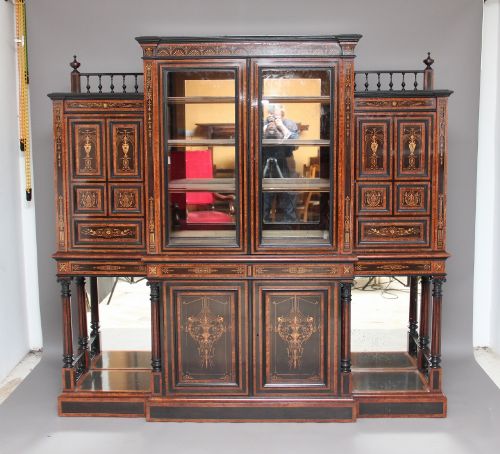
Bookcases, display cabinets, card tables, and bedroom suites dominate the current listings. Walnut, mahogany, and oak appear frequently alongside refined satinwood and decorative ebonised wood details.
Victorian and Aesthetic Movement styles sit alongside Sheraton Revival interpretations. Buyers are most likely to meet refined mahogany bookcases and walnut wardrobes bearing the stamp or mark of prominent Manchester workshops.
Materials and construction methods
Cabinet makers utilised dense hardwoods such as mahogany, walnut, and oak to build durable carcases and structural frames. Fine veneers of satinwood and exotic coromandel were applied to display surfaces to create striking grain patterns and visual contrast.
Brass hardware and clear glass panels complete the functional elements of cabinets, sideboards, and games room accessories. Ebonised wood accents often highlight structural mouldings in Aesthetic Movement pieces.
Antique Furniture Manchester Retail Price Guide 2026
Typical asking prices for furniture manchester among the pieces listed under this phrase on Sellingantiques today, from the lower quarter to the upper quarter. They describe what is for sale here now, not the wider market.
Victorian gentlemen took their card games seriously enough to commission specialised tables with fold-over tops and hidden scoring accessories.
Quality variations across the range
Distinctions in quality often rest on the selection of timber veneers and the intricacy of the cabinet work. Pieces bearing documented attribution to prominent Manchester workshops demonstrate superior timber matching and refined decorative carving.
The sophistication of internal fittings and secondary timbers separates standard utility items from elite commissions. High-grade items display careful attention to structural stability alongside harmonious proportions and intact original hardware.
Lamb of Manchester·Goodall Lamb and Heighway·Orme and Sons Manchester·H Ogden of Manchester·James Lamb Manchester
The Antique Furniture Manchester Glossary
- Compactum
- A large fitted wardrobe combining hanging space, drawers, and shelving within a single multi-section unit. This form gained popularity during the late nineteenth and Edwardian periods.
- Breakfront
- A piece of furniture featuring a central section that projects forward from flanking wings. This architectural arrangement creates depth and visual rhythm on large bookcases and sideboards.
- Ebonised
- Wood treated with a chemical stain or finish to imitate expensive ebony. The technique was widely utilised during the Victorian era and featured prominently in Aesthetic Movement design.
- Pedestal desk
- A heavy flat-top desk supported by two banks of small drawers resting on the floor. These functional pieces formed the centrepiece of Victorian studies and libraries.
Antique Furniture Manchester: Frequently Asked Questions
What defines Manchester-made antique furniture?
Manchester pieces are characterised by sturdy nineteenth-century construction using dense timbers like mahogany, walnut, and oak. They frequently bear the signatures or marks of prominent local workshops that rivalled London cabinet makers.
The regional style spans heavy Victorian forms to lighter Edwardian designs, often incorporating Aesthetic Movement detailing and refined timber veneers.
How do I identify a piece by Lamb of Manchester?
Lamb of Manchester items often carry paper labels, stamped signatures, or maker marks directly on the wood or within drawer interiors. They typically feature high-grade mahogany, walnut, or coromandel.
These pieces range from extensive bedroom suites and breakfront bookcases to compact card tables, all displaying meticulous attention to structural joinery.
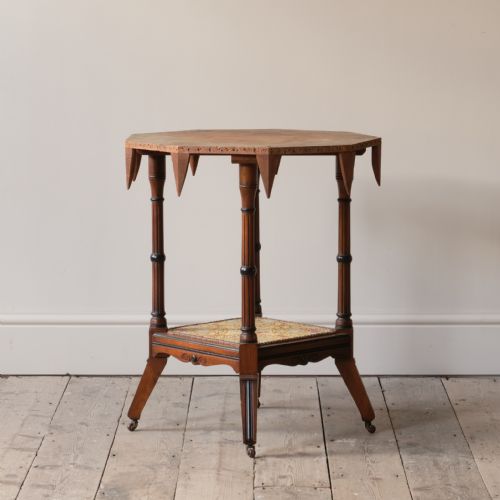
What is an Aesthetic Movement table?
An Aesthetic Movement table from the late nineteenth century embraces decorative design over rigid historical revivalism. These pieces frequently utilise ebonised wood and subtle brass details.
Card tables and side tables from this tradition display clean geometric lines and deliberate attention to surface texture rather than heavy ornamentation.
Where were these pieces used originally?
Large bookcases, sideboards, and pedestal desks were built for the principal rooms of substantial nineteenth-century homes and administrative buildings. They served practical storage and display functions for wealthy households.
Specialist items like snooker scoreboards equipped dedicated private billiard rooms and gentleman's clubs across the region.
How do I care for antique mahogany and walnut?
Protect antique hardwoods by maintaining stable indoor humidity and avoiding direct sunlight, which fades rich timber tones. Dust regularly with a dry, soft cloth to preserve the polished finish.
Avoid silicone-based sprays and heavy polishes that can build up on delicate veneers and compromise the historic surface of the wood.