



Antique Fruit Service
An antique fruit service brings painted plates and paired knives directly to the dining table for the final course.
Antique Fruit Service
An antique fruit service gathers matched plates, comports, and specialised cutlery designed specifically for serving fruit at the end of a formal meal. These sets span periods from the Georgian era through the Victorian and Edwardian decades, reflecting changing dining habits and social rituals.
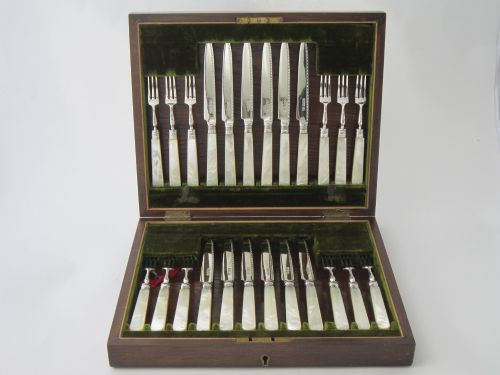
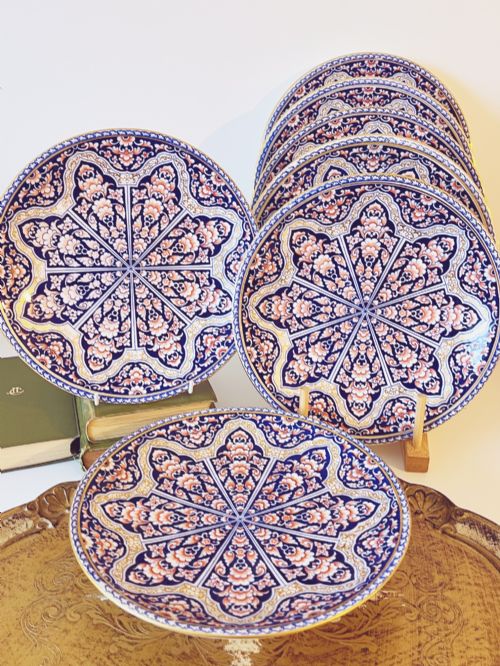
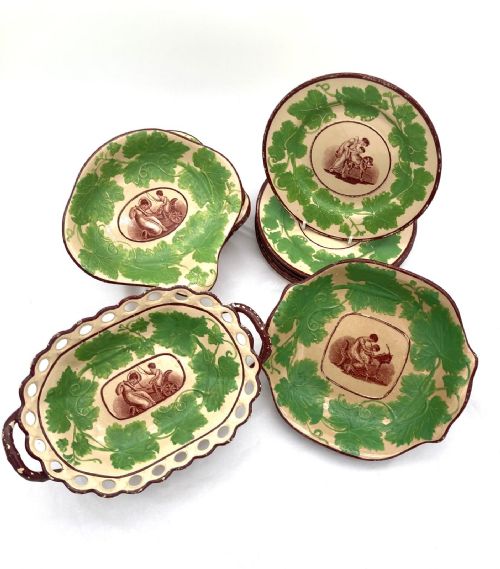
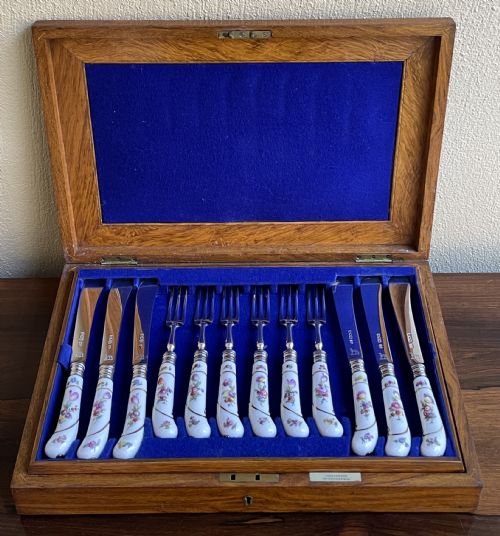
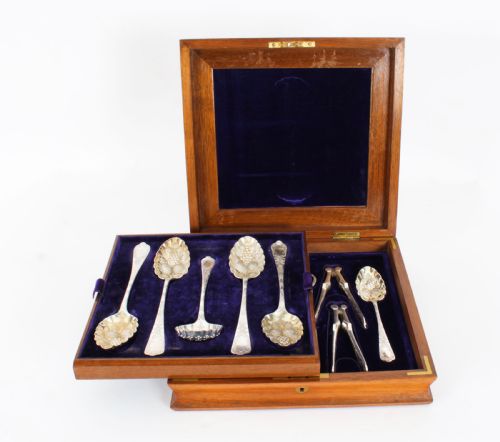
The most common configurations on this page include dessert services featuring hand-painted botanical or fruit scenes alongside boxed cutlery sets with mother of pearl handles. Pieces take the form of individual plates, serving comports, knives, forks, spoons, and nutcrackers housed in fitted wooden boxes.
Origins vary across English traditions, incorporating creamware, bone china, and porcelain alongside sterling silver and silver plate. Buyers encounter both complete settings for multiple guests and partial services that survived down the generations.
Materials and construction
Ceramic components rely on porcelain, bone china, and creamware shaped into plates and comports, then decorated with hand-painted glazes and enamel details. Skilled artisans applied botanical scenes directly onto the ceramic body before firing.
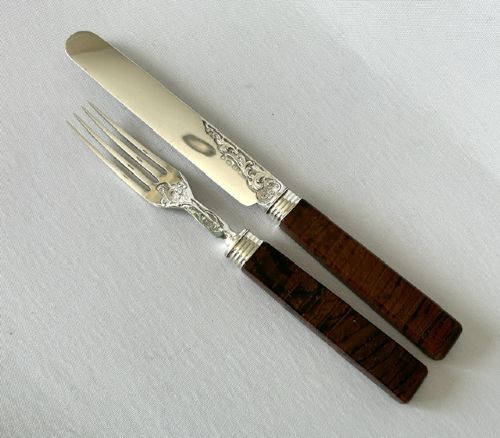
Cutlery items combine silver plate or sterling silver blades with handles fashioned from natural materials such as mother of pearl, agate, and bone. Metalwork involves casting, engraving, and silver plating to create durable implements for the table.
Storage solutions utilise fitted wooden cases lined with velvet, securing delicate sets of spoons, nutcrackers, and grape scissors within individual slots.
Listings feature 19th Century, Victorian, and Edwardian periods, utilising porcelain, silver plate, bone china, velvet, and mother of pearl across dessert services and cutlery sets.
Factors that define quality
Quality rests upon the skill of the hand-painting found on the ceramic surfaces, where detailed fruit and floral studies executed by named artists elevate the work. The crispness of the engraving on silver blades and the selection of unblemished mother of pearl or agate for handles also separate standard sets from finer examples.
The integrity of the original fitted wooden case and the completeness of the service influence the character of the piece. Matching components that retain their original velvet linings and show minimal wear to the glaze and silver plating represent higher execution.
Royal Crown Derby·Hukin & Heath·Royal Worcester·Wedgewood·Carrington
The Antique Fruit Service Glossary
- Comport
- A raised serving dish or pedestal bowl used for presenting fruit in the centre of the table. It stands higher than the surrounding plates to create tiered arrangements.
- Creamware
- A fine earthenware developed in England during the eighteenth century, possessing a pale cream or yellowish hue under a transparent glaze. It forms the body of many early dessert services.
- Bone china
- A type of porcelain incorporating bone ash, known for its high strength, chip resistance, and translucent quality. It provides a bright white base for hand-painted decoration.
- Mother of pearl
- The iridescent inner layer of certain mollusc shells, carved and polished into smooth handle scales for dessert cutlery. Its natural lustre complements polished silver.
- Agate
- A decorative quartz variety used for ornamental knife and fork handles. Its natural banded patterns provide distinct colour variations across individual pieces.
Antique Fruit Service: Frequently Asked Questions
What is included in a fruit service?
A traditional service includes plates and comports for presentation alongside dedicated knives, forks, and spoons. Some sets also incorporate nutcrackers and grape scissors for the dessert course.
Items often arrive together in a fitted wooden canteen lined with velvet to protect the delicate ceramic and silver components.
How were these sets used?
Hosts brought out the service at the conclusion of a formal dinner when fruit, nuts, and sweetmeats were served to guests. Specialised cutlery prevented the acidic juices of fresh fruit from tarnishing ordinary steel blades.
The decorated plates and elevated comports added visual display to the dining room table during the final course.
Can I use these sets today?
Many people continue to use antique dessert services for special dinners and seasonal gatherings. Hand washing is essential to preserve the delicate hand-painted glazes on the porcelain and the natural materials on the knife handles.
Proper care ensures that silver plate and soft ceramics survive for daily enjoyment or celebratory occasions.
How do I identify the period?
Makers' marks stamped into the underside of ceramics provide exact date codes for factories like Royal Crown Derby. Stylistic clues such as Regency shapes or Edwardian engraving styles also point toward specific decades.
Material choices like creamware suggest earlier Georgian production, while later Victorian sets often feature elaborate silver plating.