


Antique French Tiered Stand
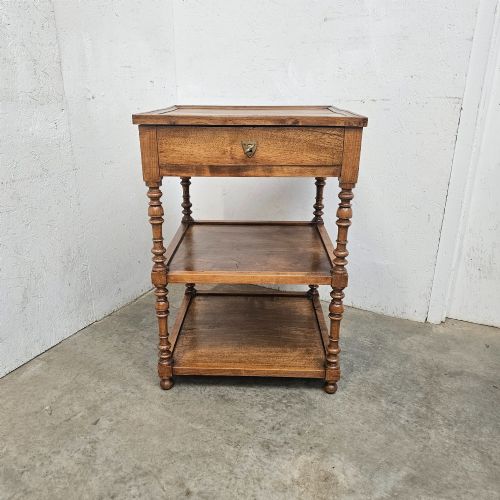
An antique french tiered stand brings layered display space to a room, offering multiple levels of shelving for plants, books, or decorative objects.
Antique French Tiered Stand
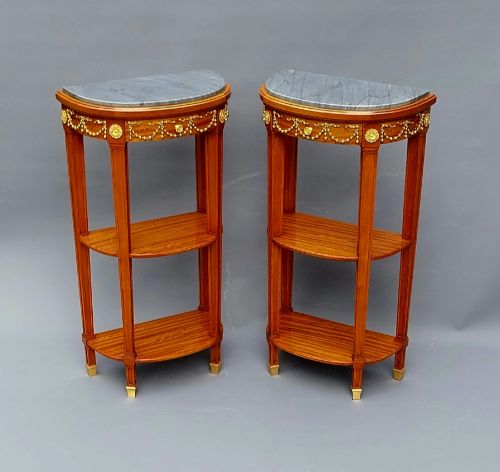
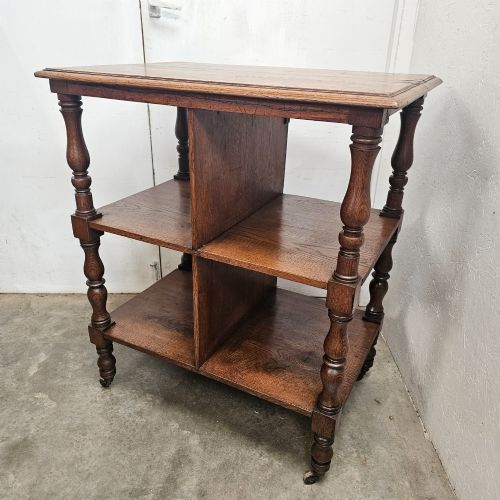
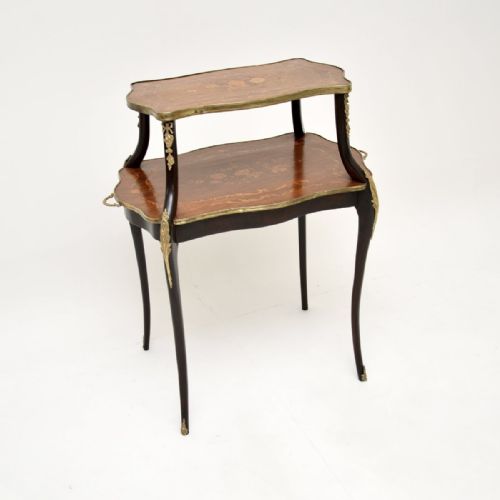
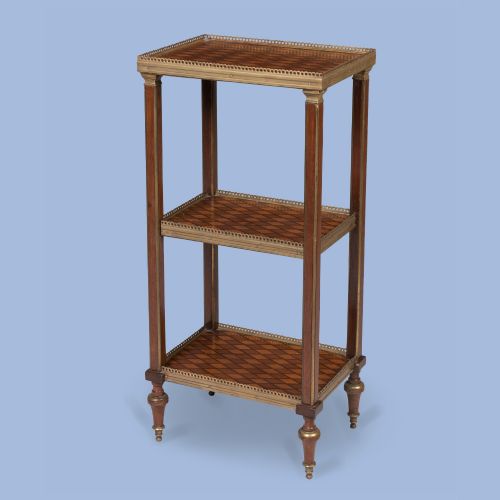
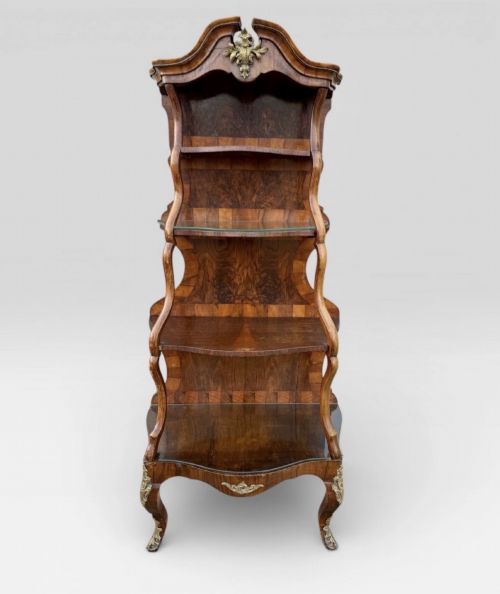
An antique french tiered stand encompasses forms such as étagères, whatnot display shelves, and multi-level occasional tables designed for compact display. These pieces frequently appear in walnut, mahogany, and ebonised wood, spanning periods from the nineteenth century through the early twentieth century.
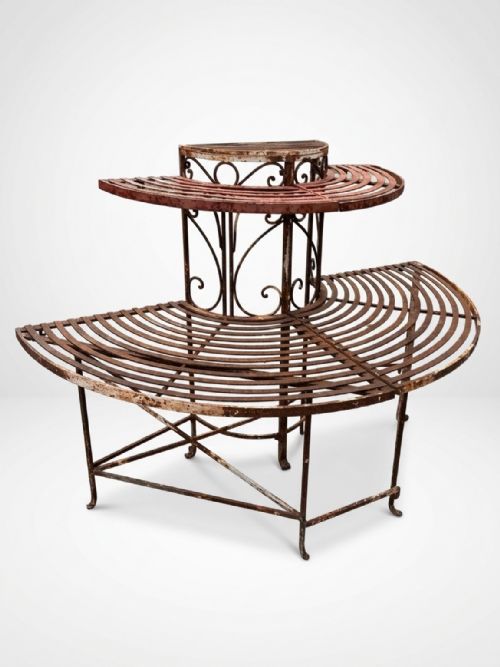
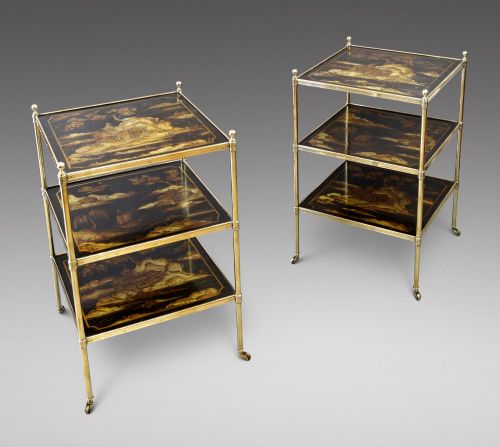
The layout typically involves two or more open platforms supported by slender uprights, allowing light to pass through while providing distinct surfaces for ornamental placement. Variations on this page include side tables, plant stands, and specialised tea or library carts utilising similar stacked architecture.
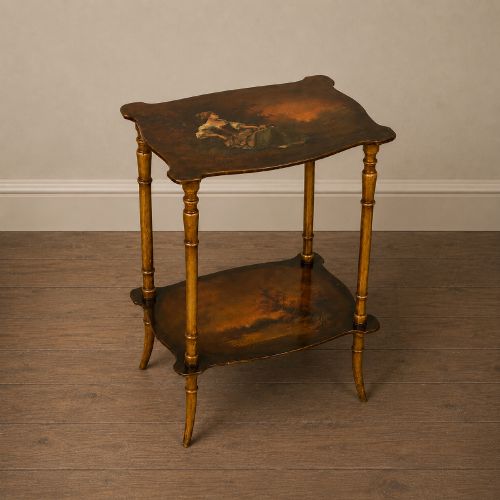
Stylistic influences range from Louis XV and Louis XVI revivals to Napoleon III and French Empire designs, often incorporating curved lines, serpentine edges, or classical proportions. Makers utilised these tiered formats to maximise vertical display capacity within formal drawing rooms and intimate boudoirs alike.
Materials and construction methods
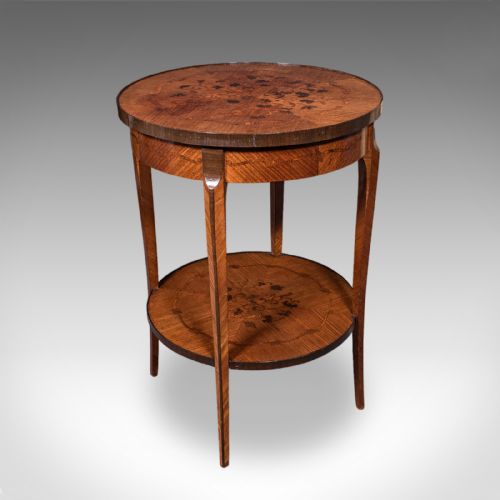
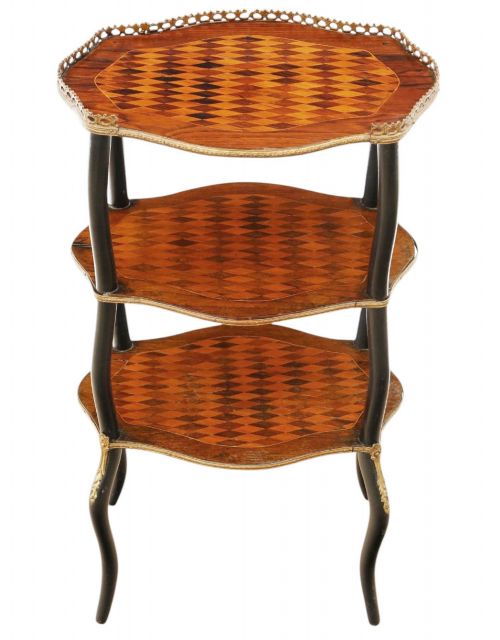
Cabinetmakers constructed these stands using solid hardwoods like walnut, oak, and mahogany, frequently applying decorative veneers such as kingwood, rosewood, and amboyna in intricate marquetry or parquetry patterns. Surface enrichment often includes hand-applied polish, ebonising, or painted and gilt finishes.
Metal components played a structural and decorative role, with cast bronze ormolu mounts, brass galleries, and wirework utilised to edge shelves or support uprights. Marble inserts and canework panels also appeared on platform surfaces, combining stone and woven textures with traditional timber frames.
Materials paired with these tiered stands include white marble, brass wirework, canework, and gilt bronze ormolu mounts.
Markers of distinction and build
Quality separates through the precision of the timber inlay and the crispness of the cast ormolu mounts, where hand-chased details display greater definition than mass-produced alternatives. The structural integrity of the tiered joints and the selection of figured wood veneers distinguish master workshops from standard production items.
The integration of secondary materials, such as genuine white marble tops or finely woven canework, elevates the execution of a piece. Finer examples maintain balanced proportions across multiple tiers without wobble, demonstrating careful joinery in the upright supports and shelves.
Edwards and Roberts·Gabriel Viardot
The Antique French Tiered Stand Glossary
- Étagère
- A piece of furniture consisting of a set of open shelves for displaying small objects. These tiered stands emerged in France during the eighteenth century and remained popular through the Victorian era.
- Ormolu
- Gilded bronze used for furniture mounts and decorative hardware. Craftsmen cast and chased these metal ornaments to embellish table corners and shelf supports.
- Marquetry
- Decorative veneer work where pieces of wood, shell, or ivory are fitted into a ground to form geometric or pictorial designs. This technique covered the flat surfaces of many tiered display tables.
- Whatnot
- A nineteenth-century term for an open tiered shelving unit used to hold ornaments and bric-a-brac. The name reflects its catch-all utility in period interiors.
- Parquetry
- A geometric mosaic of wood pieces used for decorative floors and furniture surfaces. It appears on the tabletops of several inlaid stands on this page.
- Jardiniaere
- An ornamental pot or stand designed to hold plants or flowers. These items often incorporated metal liners to protect the surrounding timber structure.
Antique French Tiered Stand: Frequently Asked Questions
What is an étagère used for?
An étagère provides multiple open levels for displaying small decorative objects, porcelain, or books without crowding a room.
Historically, these tiered surfaces held ornaments in formal reception rooms and parlours.
How do I identify a Napoleon III piece?
Napoleon III pieces often feature rich rosewood or ebonised surfaces accented with intricate marquetry and polished bronze ormolu mounts. This mid-to-late nineteenth-century style drew heavy inspiration from earlier French court aesthetics.
They frequently combine dark timbers with bright metal highlights and curved silhouettes.
Can these stands support heavy items?
Most tiered stands are engineered for lighter decorative objects, plants, or books rather than heavy loads. The slender uprights and multi-tiered structure prioritize elegant vertical display over robust utility.
Marble-topped versions offer slightly sturdier surfaces for small planters or lamps.
Where should I place a tiered stand?
These compact stands fit well in corners, beside seating arrangements, or against empty wall spaces where vertical display adds interest. Their open shelving allows light to pass through, keeping rooms feeling open.
They function effectively as lamp tables, plant holders, or bedside display units.