




Antique French Military Art
Antique french military art gathers centuries of martial portraits and naval watercolours, offering tangible history for collectors.
Antique French Military Art
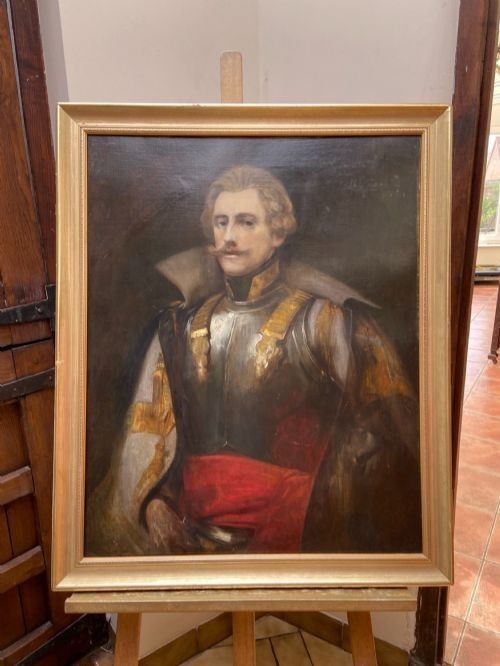
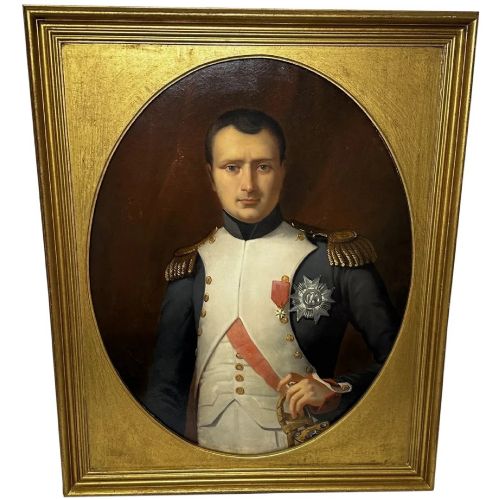
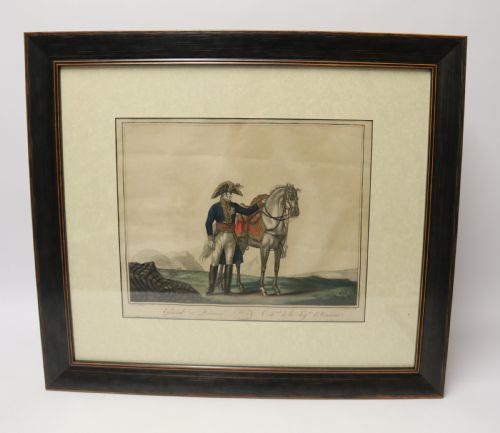
Antique french military art comprises paintings, sculptures, prints, and textiles depicting officers, cavalrymen, battles, and ships from past centuries. The selection ranges from formal 18th-century portraits of naval and military figures to 19th-century visual records of Napoleon and his campaigns.
Buyers will encounter oil on canvas works, framed watercolours, gouache paintings, and bronze sculptures across these listings. Pieces span from the 18th century through the 19th century and into the 20th century, capturing various eras of French service.
How these works were created
Artists utilised oil on canvas, wood panels, paper, and watercolour, alongside gilt wood and giltwood framing techniques. Sculptors shaped bronze into detailed figures of soldiers, while textile artisans produced tapestry embroidery.
Many works incorporate delicate hand colouring on prints and detailed brushwork on miniature portraits and large canvases. Materials such as glass and wood protect and house these works.
Listed periods include the 18th century, 19th century, 1860, 1910, 1920, and 1940.
What separates the finest examples
Quality rests in the precision of the portraiture, the handling of the medium by identified artists or schools, and the preservation of the canvas, paper, or bronze. Finer pieces demonstrate superior depth in uniform details and facial expressions.
The integrity of the original frame, whether gilt wood or plain wood, contributes significantly to the overall presentation and historical coherence of the piece.
E.H. Dumaige·Nicolas De Largillière·Jean Sobieski·Paul Leon Jazet·Albert Ferdinand Le Dru·Donald Wood·Stephanus Chiantor·Jean-Baptiste Santerre
The Antique French Military Art Glossary
- Gouache
- An opaque watercolour medium that dries to a matte finish. It allows for rich colour saturation and precise detail in naval and military depictions.
- Giltwood
- Wood carved and covered with a thin layer of gold leaf. This material frequently frames important portraits and historical artworks.
- Cuirassier
- A cavalry soldier equipped with a cuirass body armour. These mounted troops form a frequent subject in 18th and 19th-century military imagery.
- Miniature oil portrait
- A small-scale painting executed in oil on panel, canvas, or metal. They demand immense skill due to their restricted dimensions.
Antique French Military Art: Frequently Asked Questions
What periods do these military pieces cover?
The available works span from the 18th century through the 19th century, with select items stretching into the 1920s and 1940s. Napoleonic subjects and 19th-century academic styles feature prominently.
Collectors can find works dated from specific years such as 1803, 1860, and 1910, reflecting shifting artistic techniques across different eras.
How should I display framed watercolours and oil paintings?
Keep framed art away from direct sunlight to protect watercolours, paper, and oil on canvas from fading. Maintaining stable room humidity preserves both the wood frames and the paint layers.
Ensure that gilt wood frames are dusted gently with a dry cloth without using harsh chemical cleaners.
Are bronze sculptures common in this category?
Bronze pieces appear alongside oil paintings and watercolours, often depicting specific historical figures such as Napoleonic soldiers. These sculptures utilise durable metal casting techniques from the 19th century.
Each sculpture offers a three-dimensional record of uniform and equipment design from its respective period.
What subjects besides portraits are available?
Beyond portraits of officers and rulers, listings include naval battle scenes, ironclad warships, and cavalry skirmishes. Sentimental tributes to ships and shipmates also appear in gouache and watercolour.
Textile art featuring embroidered battle scenes provides an alternative medium to traditional paintings.