


Antique French Buffet Server
An antique french buffet server anchors a dining room with practical storage and regional character.
Antique French Buffet Server
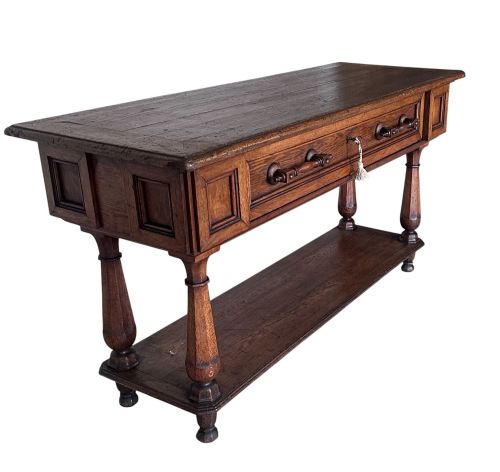
When you search for an antique french buffet server, you encounter robust timber storage pieces designed for domestic service, dining organisation and food preparation. These items bridge the gap between utilitarian cupboards and grand reception room furniture, originating from various provincial and metropolitan French workshops.
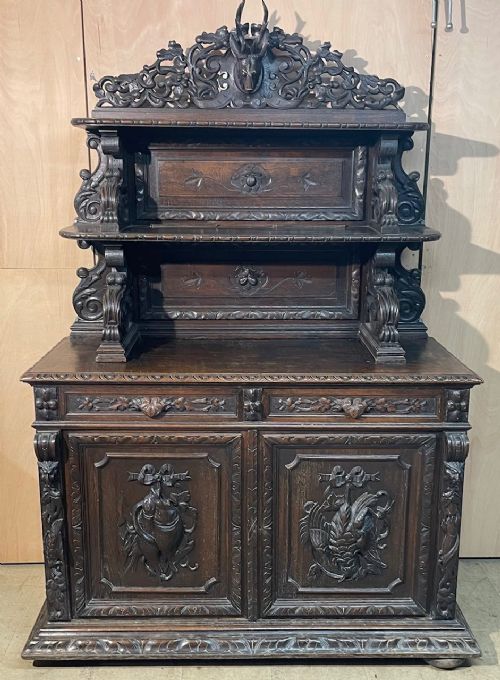
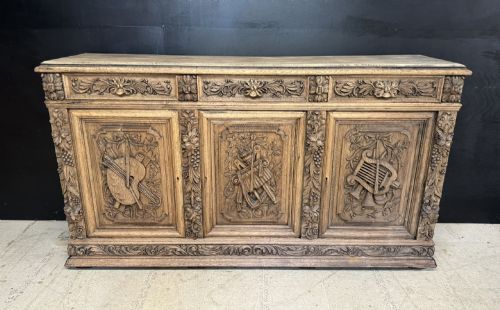
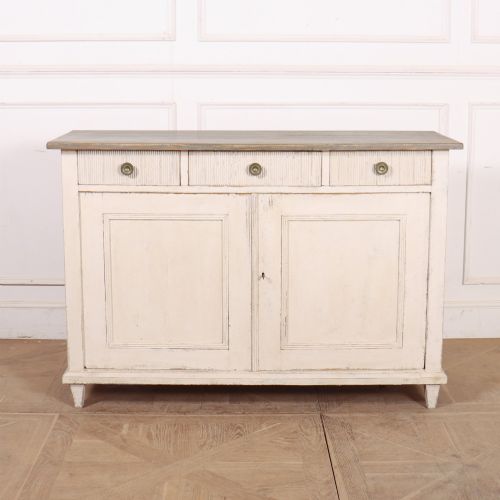
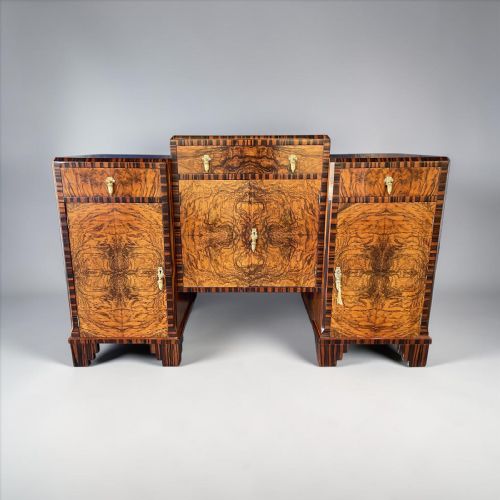
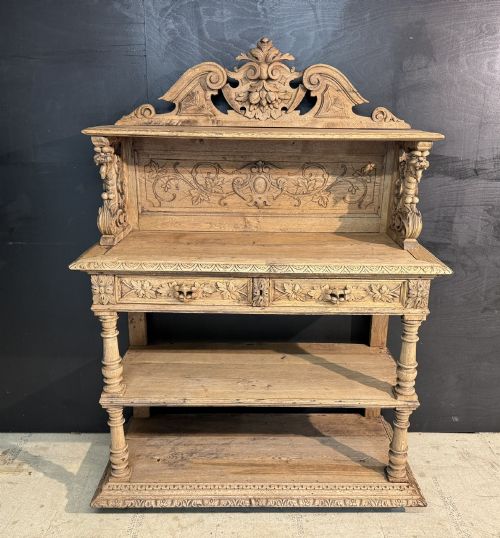
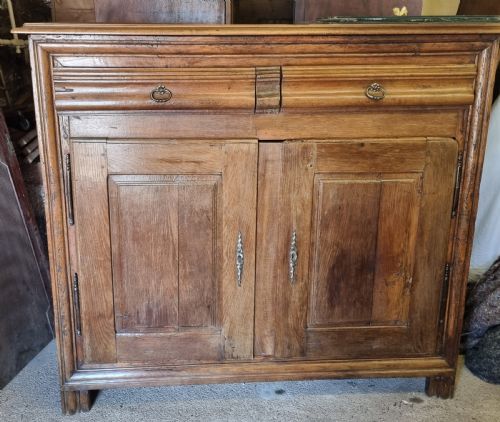
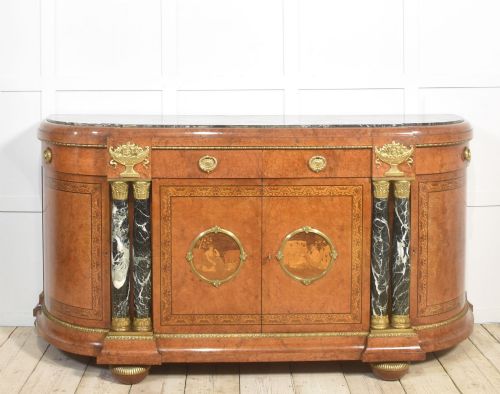
The versions you are most likely to meet on this page span from rustic eighteenth-century oak and fruitwood farmhouse bases to ornate nineteenth-century walnut revival pieces and sleek nineteen-thirties Art Deco designs. Common regional variations include low dresser bases, marble-topped serving tables and tall two-door cupboards.
Makers and regional artisans adapted these serving pieces for specific domestic routines, ranging from simple harvest rooms to formal Parisian drawing rooms. Their forms evolved from heavy panelled construction to lighter geometric lines, retaining a distinct continental presence across every period.
How They Were Made
Cabinetmakers utilised dense native hardwoods such as oak, walnut, cherrywood and chestnut, often selecting burr elm or mahogany for decorative grain patterns on later twentieth-century models. Joinery relied on traditional pegged mortise and tenon frames, panelled doors and hand-cut dovetails for drawer construction.
Surface treatments and hardware defined the finished appearance, incorporating hand-carved vegetal motifs, parquetry tops, painted finishes and contrasting brass or ormolu mounts. Many nineteenth and twentieth-century examples integrated heavy slab marble tops to provide durable, stain-resistant surfaces for serving food and drink.
The inventory records regional cabinetmaking traditions ranging from rustic provincial harvest tables to refined Parisian Art Deco furniture.
What Varies in Quality
The standard of a piece depends heavily on the selection of timber and the crispness of its hand-carved detail, distinguishing high-status urban commissions from standard provincial joinery. Superior examples display thoughtful grain matching, particularly on burr walnut or macassar veneers, and retain original marble slabs and period brass mounts.
Structural integrity and the retention of original hardware separate fine survivals from heavily altered items. Better items maintain smooth drawer movement, well-fitted panelled doors and uncompromised internal timber thickness, reflecting the original workshop standards of their period.
Krieger of Paris·Melissa White·Gillows
The Antique French Buffet Server Glossary
- Buffet server
- A low cabinet or table designed for holding food, tableware and serving dishes in a dining room. These pieces combine cupboard storage with a flat upper surface.
- Dresser base
- A lower kitchen or dining cabinet featuring drawers above enclosed cupboards, historically used for food preparation and storage.
- Ormolu
- Gilded bronze ornamentation applied to furniture mounts, hinges and decorative accents. It gained widespread use in refined nineteenth-century Parisian cabinetmaking.
- Parquetry
- Geometric patterns formed by small inlaid pieces of wood veneer. Artisans arranged contrasting timbers to create decorative table and cabinet tops.
- Macassar
- A dense, dark tropical timber featuring distinct blonde and brown striping. Art Deco designers utilised this exotic wood for high-end modernist sideboards.
Antique French Buffet Server: Frequently Asked Questions
What is an antique french buffet server used for?
These pieces serve as practical storage furniture in dining rooms, kitchens and hallways, offering surface space for serving meals alongside enclosed room for crockery and linens.
Historically, they supported domestic service by keeping dining essentials close at hand during large household gatherings.
How do I date an antique french buffet server?
Dating relies on observing the timber species, construction methods, hardware and stylistic motifs present on the cabinet. Eighteenth-century examples typically feature hand-cut dovetails and pegged joinery in solid oak or chestnut.
Later nineteenth-century pieces introduce machine-sawn elements, revival styling and ormolu mounts, while twentieth-century versions display sleek geometric lines and exotic veneers.
Where should I place a buffet server at home?
A buffet server fits naturally against a dining room wall, providing a convenient surface for laying out dishes during dinner parties or displaying decorative objects.
They also function well in wide hallways or living rooms where extra surface space and enclosed storage are required.
What is the difference between a buffet and a sideboard?
The terms are often used interchangeably, though traditional buffets frequently emphasise cupboard storage while sideboards can feature a combination of drawers, cupboards and open serving surfaces.
French variations frequently include distinct regional traits such as heavy marble tops or raised display shelving.