



Antique Freestanding Shelving
Antique freestanding shelving organises rooms with open access, bringing character and practical storage to any wall.
Antique Freestanding Shelving
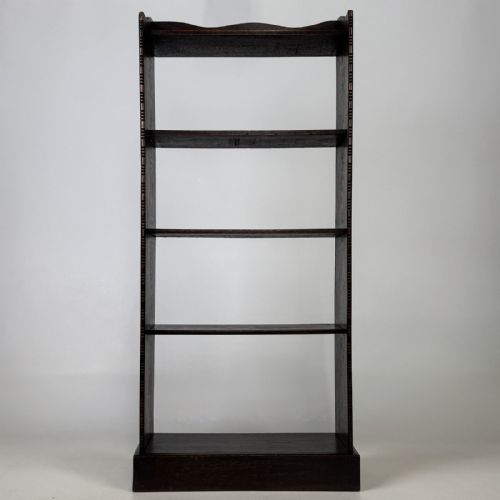
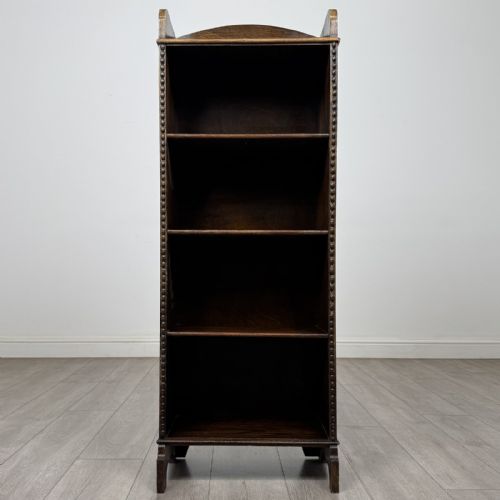
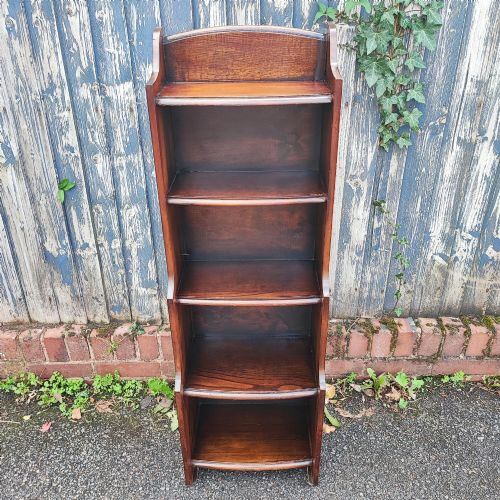
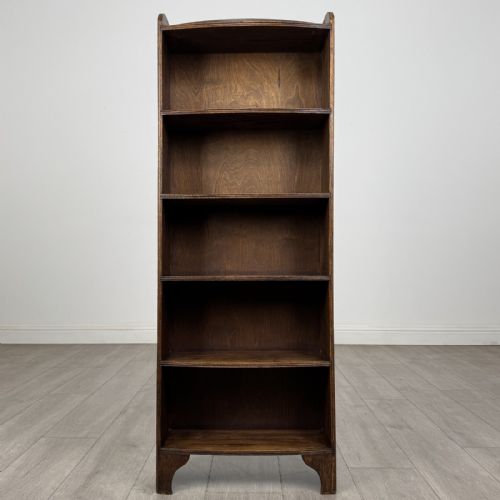
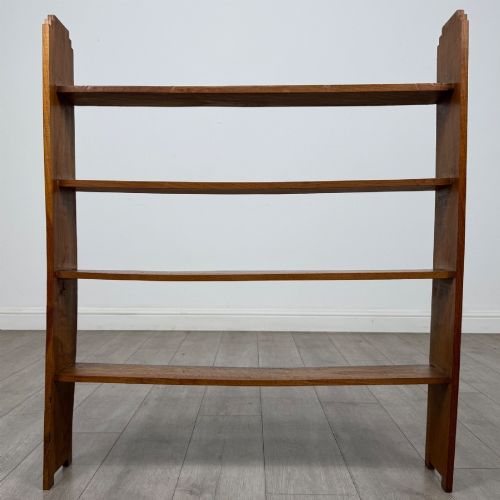
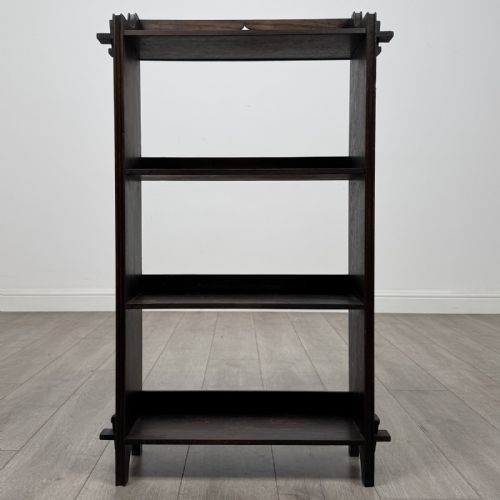
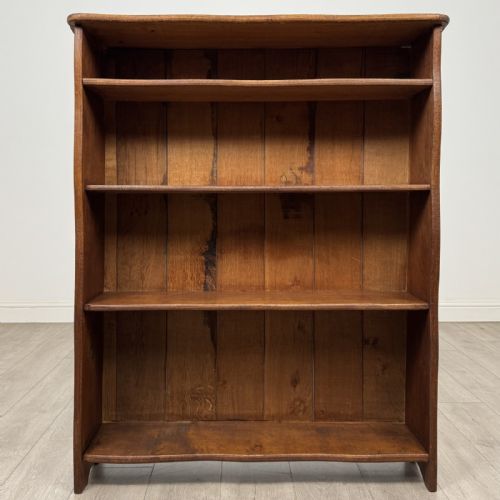
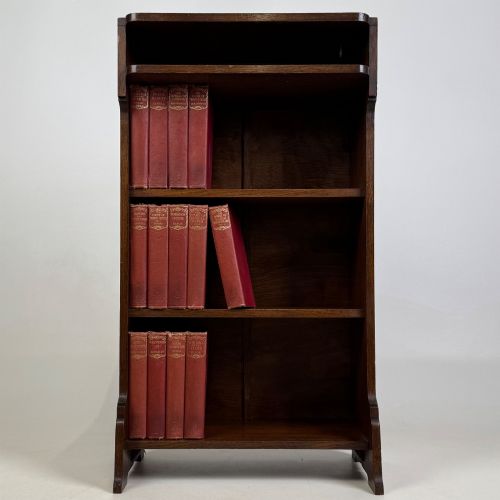
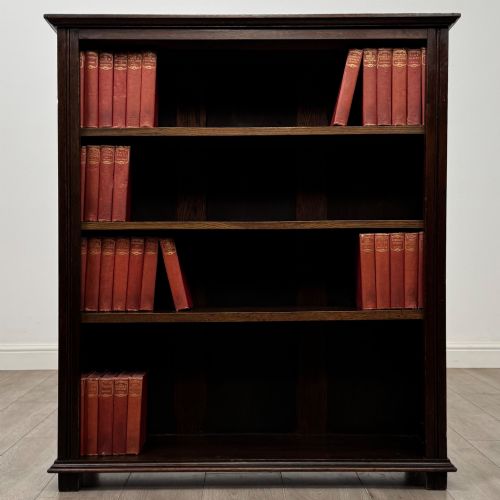
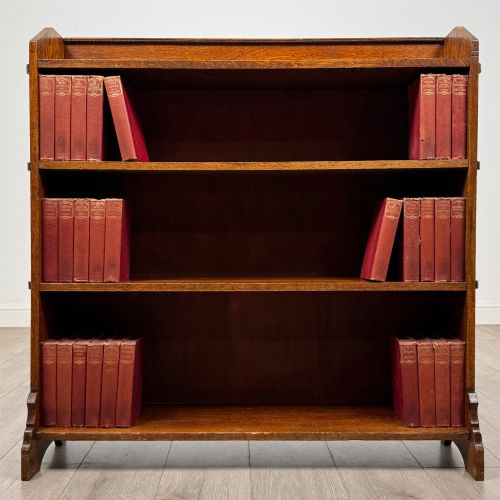
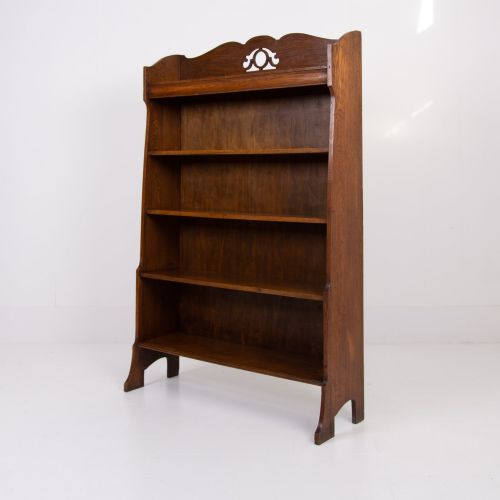
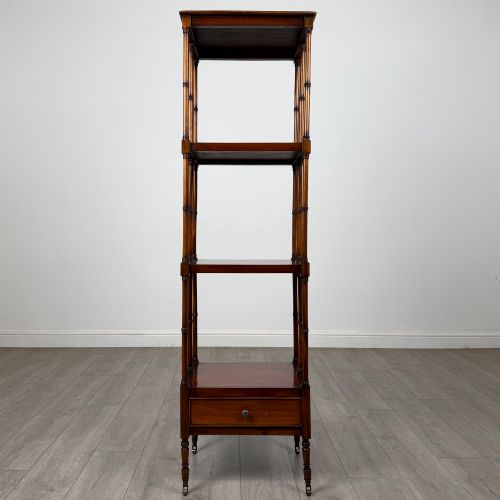
Antique freestanding shelving comprises open bookcases, whatnots, baker's racks and corner units designed to stand away from walls without built-in fixtures. These pieces provide flexible display and storage for books, linen and decorative objects across living spaces.
The pieces on this page span the Victorian and Edwardian eras alongside the early twentieth century, with oak and mahogany standing as the predominant woods. Buyers meet slender corner whatnots and low open bookcases most frequently in these listings.
Makers utilised resilient pine and walnut alongside durable hardwoods to construct sturdy storage units. Many examples incorporate adjustable shelves, raised galleries and carved edges to balance utility with decorative presence.
How They Were Made
Cabinetmakers worked primarily with solid oak, mahogany, walnut and pine, selecting timber for grain pattern and structural strength. They joined boards using traditional dovetail and mortise methods to ensure stability across open shelves and upright pillars.
Metal elements such as wrought iron, steel and brass appear in industrial and bakery racks, shaped through forging and casting. Makers finished timber surfaces with wax or polish to protect the grain while maintaining a natural sheen.
Antique Freestanding Shelving Retail Price Guide 2026
Typical asking prices for freestanding shelving among the pieces listed under this phrase on Sellingantiques today, from the lower quarter to the upper quarter. They describe what is for sale here now, not the wider market.
Listings feature oak, mahogany, walnut and pine as the primary woods, spanning the Victorian and Edwardian periods alongside the early twentieth century.
What Varies in Quality
The refinement of timber selection and carving separates standard items from finer examples. Superior pieces display carefully matched burr walnut veneers, intricate inlay work and thoughtful proportions that elevate a functional storage unit into a decorative centrepiece.
Structural integrity depends on the quality of the joinery and the original condition of the wood. Items retaining their adjustable mechanisms and solid backing boards demonstrate greater care in initial construction.
Dubois of Lyon
The Antique Freestanding Shelving Glossary
- Whatnot
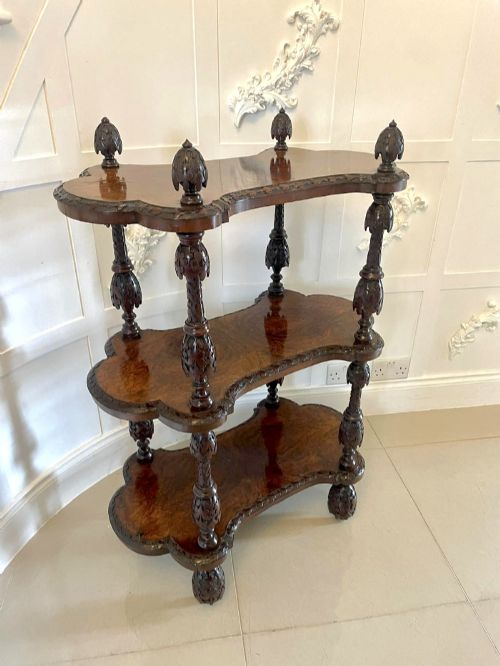
- A multi-tiered open piece of furniture designed for displaying ornaments or books. These units often feature slender corner supports and multiple graduated shelves.
- Open Bookcase
- A freestanding storage unit without doors, allowing direct access to books from the front. Edwardian and Victorian versions frequently incorporate raised galleries or carved edges.
- Baker's Rack
- A tall metal or wood shelving unit originally used in commercial food preparation. French industrial examples typically combine scroll-work iron frames with wooden boards.
- Adjustable Shelves
- Shelves that can be moved to different heights within a bookcase using rack and pinion or peg supports. This feature allows the storage of books in varying sizes.
- Raised Gallery
- A low decorative railing or rim around the top surface of a piece of furniture. It prevents items placed on top from sliding off.
Antique Freestanding Shelving: Frequently Asked Questions
Where should I place freestanding shelving?
Freestanding shelving works well against any solid wall or positioned in a corner to maximise awkward spaces. Because these pieces are finished on all sides or designed to be viewed openly, they also act as room dividers.
Ensure the unit rests on level flooring to maintain stability, particularly with taller oak or mahogany bookcases. Placing them away from direct heat sources protects the timber from warping over time.
How do I care for antique wood shelves?
Dust the timber regularly with a soft, dry cloth to prevent a buildup of particles in the grain. Apply a traditional beeswax periodically to nourish the wood and maintain its natural lustre.
Avoid using modern liquid polishes or silicone sprays, as these can leave a residue that damages the antique finish. Keep the units out of direct sunlight to prevent the mahogany or oak from fading unevenly.
What is the difference between a whatnot and a bookcase?
A whatnot is primarily a multi-tiered display stand featuring slender pillars and open sides, traditionally used for ornaments and small decorative objects. They often fit neatly into corners or stand on delicate legs.
An open bookcase is built specifically for storing books, featuring deeper shelves and a more robust frame. While both offer open storage, bookcases prioritise load-bearing capacity for heavy volumes.