


Antique Framed Paper Art
Antique framed paper art brings together centuries of delicate hand-cut silhouettes, watercolours, and early printmaking preserved behind glass.
Antique Framed Paper Art
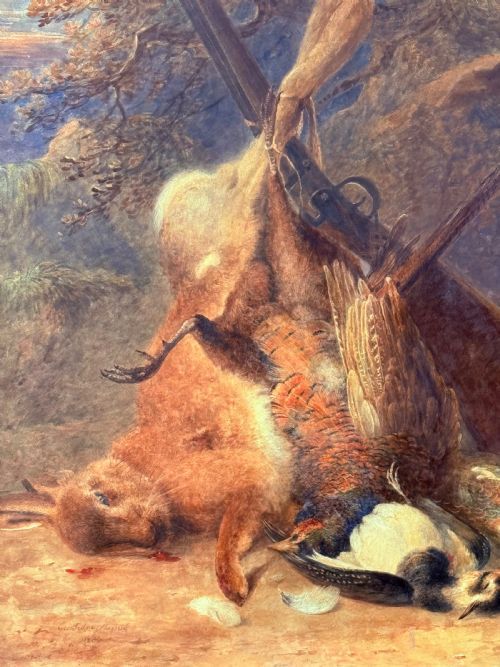
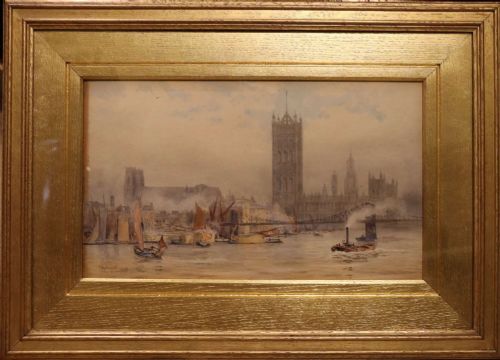
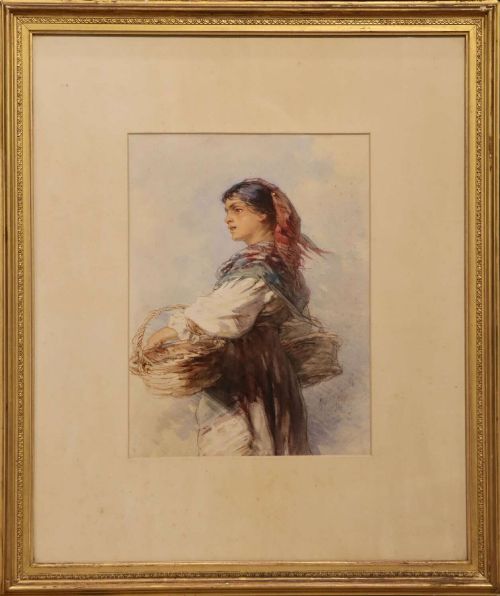
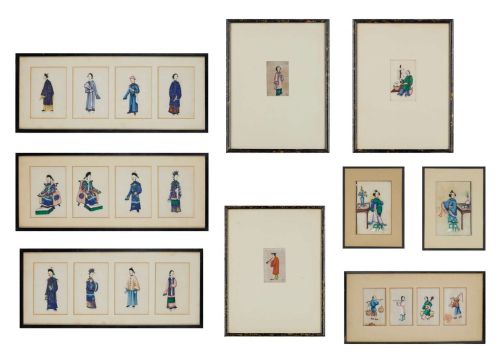
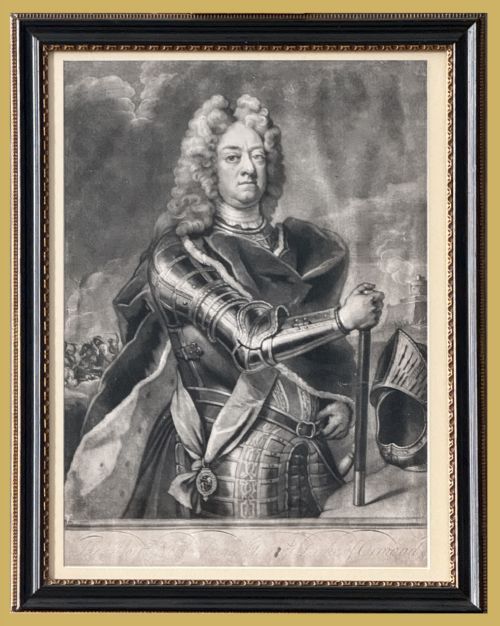
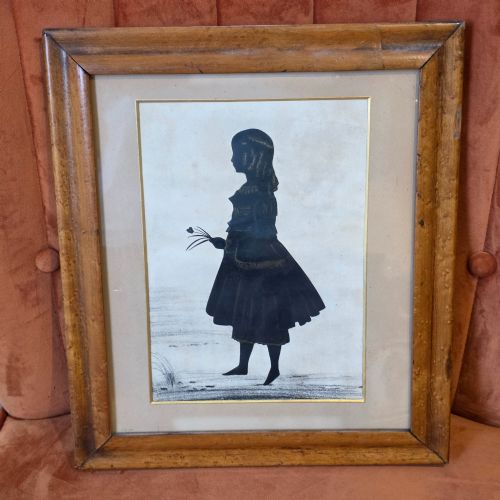
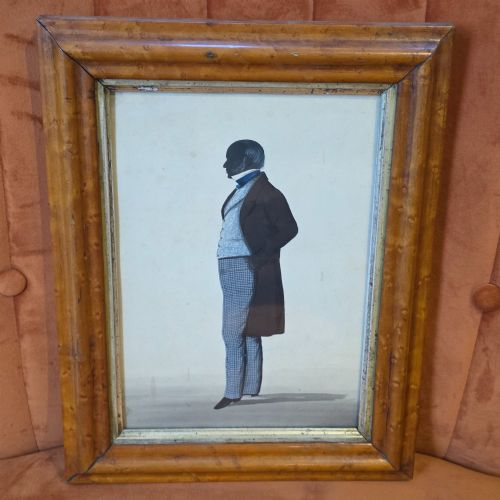
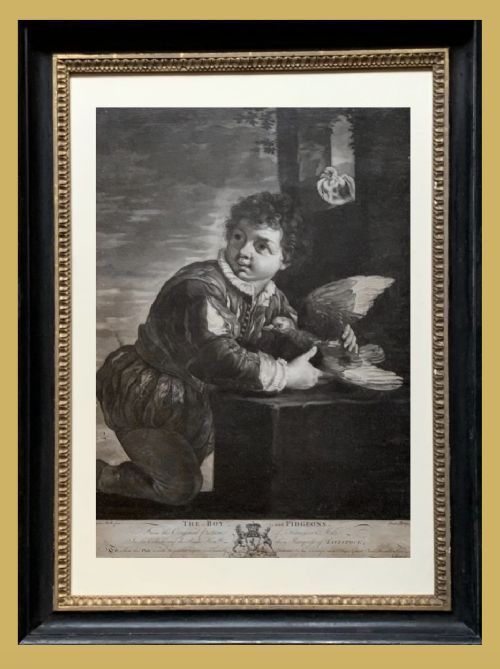
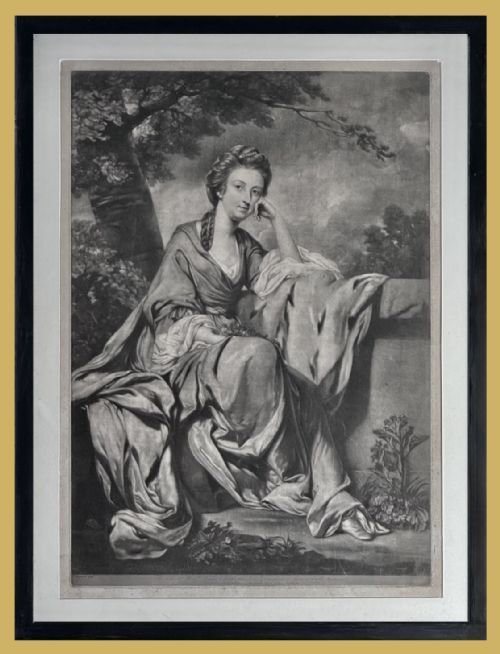
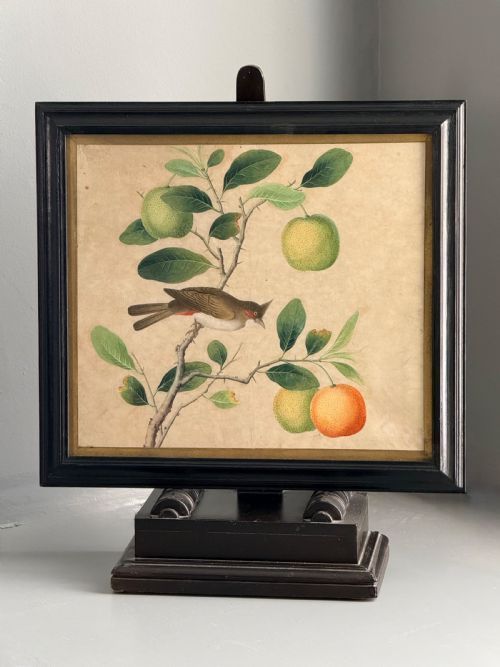
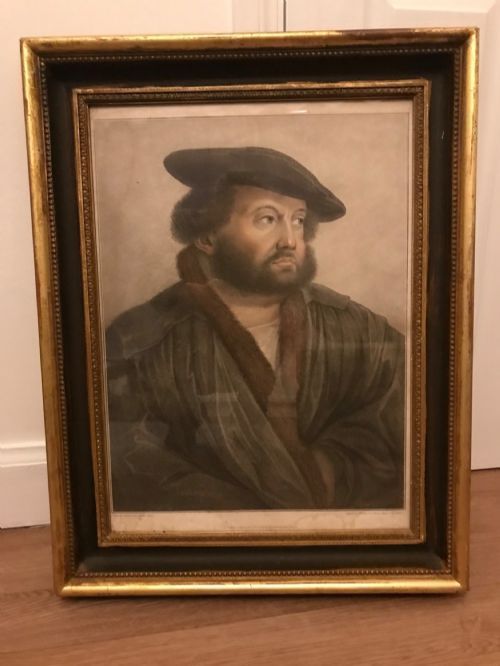
When you search for antique framed paper art, you encounter a diverse range of works on paper spanning from the eighteenth century into the twentieth century. The selection encompasses delicate cut-paper silhouettes, watercolour landscapes, gouache paintings on pith paper, and detailed mezzotint portraits.
You are most likely to meet nineteenth-century watercolours and silhouettes alongside eighteenth-century mezzotints on this page. These works arrive framed in period woods, often retaining their original glass and backing materials.
The category bridges fine portraiture, botanical and topographical recording, and decorative wall art. Pieces range from intimate domestic portraits to expansive maritime and landscape scenes.
Materials and techniques
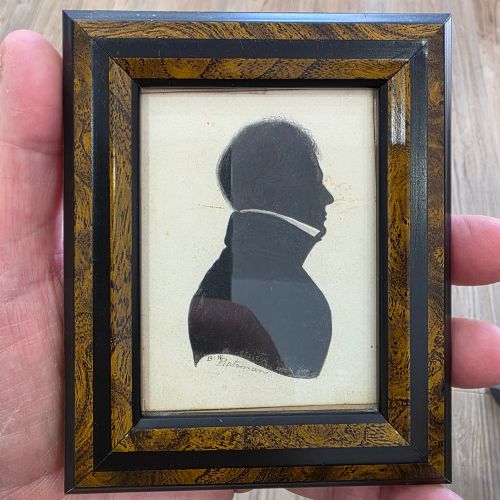
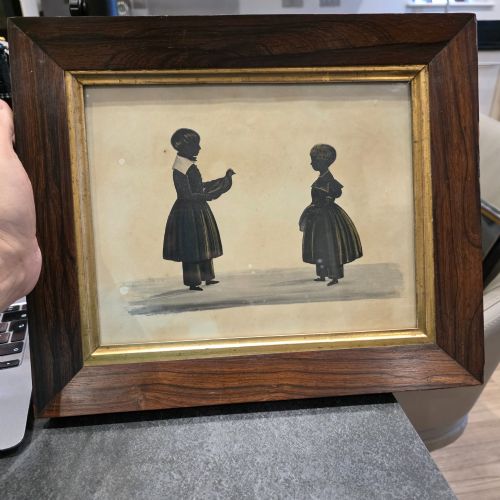
The works utilise rag paper, pith paper, and heavy card as foundational surfaces for ink, watercolour, pastel, and gouache. Silhouette artists employed fine scissors to cut profile portraits from black paper, frequently adding highlights in gold leaf or watercolour washes.
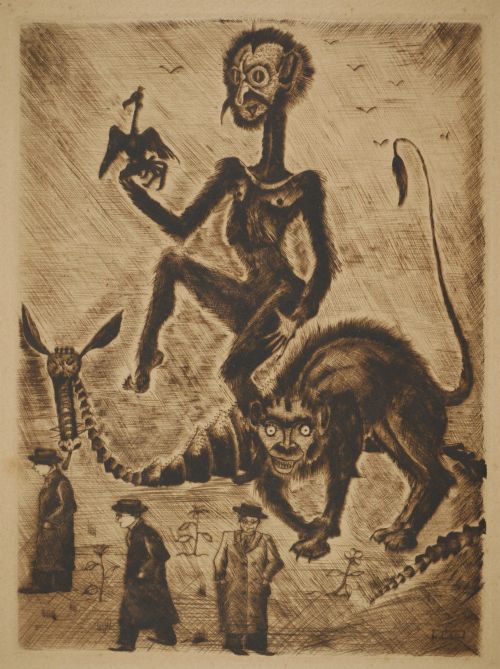
Printmakers of the eighteenth and nineteenth centuries utilised copper plates for mezzotints, stipple engravings, and etchings, pressing dampened paper into inked plates under pressure. Lithographers drew directly onto limestone blocks to produce multi-tonal prints of scenes and portraits.
Makers housed these fragile works beneath protective glass within wooden frames, occasionally incorporating giltwood moulding or painted reverse-glass mats to separate the paper from the glazing.
The listings span the seventeenth century through the 1940s, featuring works executed in watercolour, pastel, ink, and gouache on paper.
What defines quality in paper art
The standard of execution in brushwork, knife control, and plate preparation dictates the hierarchy of quality in these pieces. Precision in a cut-paper silhouette or control in a watercolour wash separates masterworks from standard studio output.
Condition and originality play a major role, particularly the survival of the sheet without heavy foxing, acid burn, or colour fading. Works retaining their original period frames and uncompromised backing papers command greater consideration.
Signatures, attribution to documented artists or publishers, and contemporary inscriptions add historical depth and certainty of origin.
John Simon·Michael Dahl·William James Hubard·Kurt Lorein Victor Peiser·John Boydell·Edward Fisher·Sir Joshua Reynolds·Francesco Bartolozzi·James Orrock·William Henry Earp·Henry Percy Huggill·Sir James Dromgole Linton·John Smith·G. Kneller·Thomas Murray·Percy Lancaster·Henry Stacy Marks·James Watson·James Smetham·Sir William Nicholson·A. Marie Parsons·John McDougal·Herskind
The Antique Framed Paper Art Glossary
- Mezzotint
- A printmaking process where the copper plate is roughened to produce rich dark tones, then scraped and burnished to create highlights. This technique allows for subtle tonal gradations particularly suited to portraiture.
- Silhouette
- A portrait profile cut from dark paper or painted in solid black against a light background. Named after the French finance minister Étienne de Silhouette, these works gained immense popularity in the eighteenth and nineteenth centuries.
- Pith paper
- A delicate material formed from the cellular pith of the Tetrapanax papyrifer plant, commonly used in nineteenth-century Chinese export paintings. It accepts gouache and watercolour with a characteristic velvety texture and luminous depth.
- Stipple engraving
- An intaglio printmaking method utilising dots of varying density to form the image rather than continuous lines. This technique created soft, painterly flesh tones favoured for reproductive portraits.
- Foxing
- Brown or yellowish spots caused by chemical reactions in the paper over time, often triggered by humidity and impurities in the pulp. Moderate foxing is common in antique paper works.
Antique Framed Paper Art: Frequently Asked Questions
How should I hang antique paper art safely?
Position works away from direct sunlight and damp environments to protect the fragile paper fibres and water-soluble pigments from degradation.
Ensure stable wall fixings and keep pieces out of areas subject to significant temperature fluctuations.
Why do some watercolours appear faded?
Early pigments were often unstable and sensitive to ultraviolet light, leading to gradual loss of colour intensity over decades of exposure.
Professional conservation framing with UV-filtering glass helps prevent further deterioration of surviving pigments.
What is the difference between an engraving and a mezzotint?
Engravings rely on precise lines cut directly into a metal plate with a burin to build up the image. Mezzotints work from dark to light by roughening the entire plate surface before scraping away areas to create tones.
Are silhouettes always handmade?
Most antique silhouettes are freehand paper cuttings or painted profiles produced by travelling artists and gallery proprietors. Mechanical aids like the physiognotrace were also utilised in the nineteenth century to assist with accurate proportions.