




Antique Forest Scene
An antique forest scene brings the quiet depth of ancient woodland indoors through rich oil paint and delicate watercolour.
Antique Forest Scene
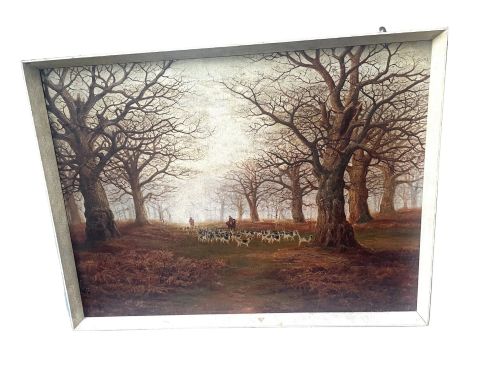
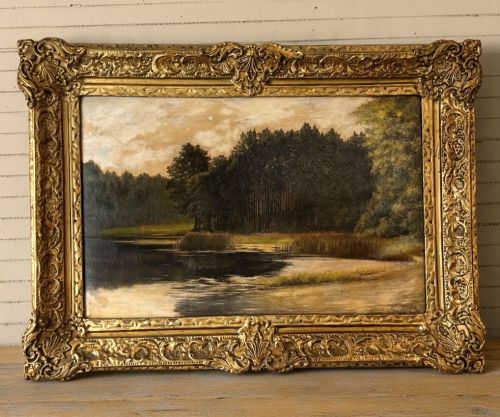
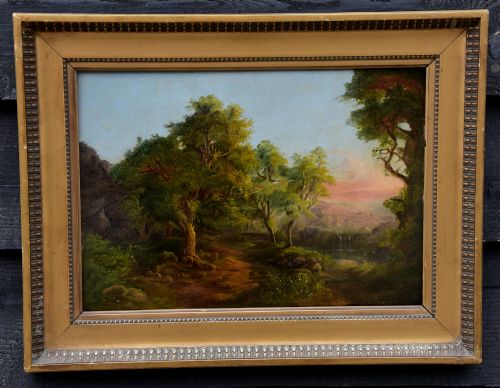
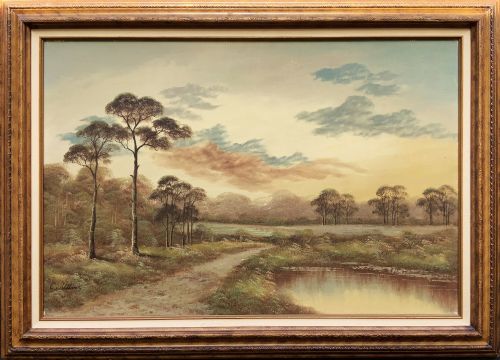
When you search for an antique forest scene, you meet framed oil paintings, watercolours, woven tapestries, and carved wood panels. These works capture quiet country woodlands, cattle resting under trees, and dense river glens.
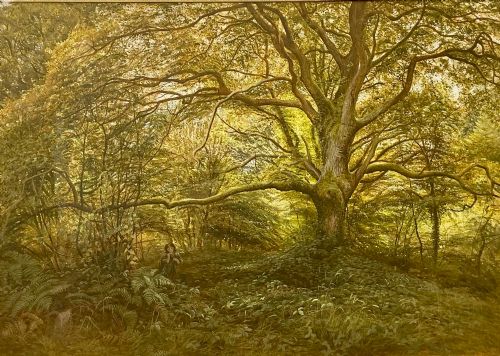
The most common versions on this page are oil paintings on canvas and paper watercolours dating from the Victorian era into the early twentieth century. Painters of these periods focused closely on natural light falling through branches and seasonal shifts in foliage.
You also encounter carved wooden panels and large Flemish verdure tapestries depicting woodland foliage and hunting scenes. These heavier textile and carved pieces extend the theme beyond flat canvas into tactile home decoration.
How these pieces were made
Painters applied oil paint and watercolour onto stretched canvas, wood panels, and paper to build up depth in the foliage. Artists layered pigments to capture the dark interiors of woods alongside bright openings of sky.
Carvers shaped solid walnut and other woods into high-relief panels using specialist gouges and chisels. Textile workers wove wool and silk threads on large looms to construct expansive verdure tapestries.
Framers encased these works in carved wood and gold leaf mouldings which often bear the marks of the period. Every material reflects the specific craft traditions available to makers across the eighteenth and nineteenth centuries.
Antique Forest Scene Retail Price Guide 2026
Typical asking prices for forest scene among the pieces listed under this phrase on Sellingantiques today, from the lower quarter to the upper quarter. They describe what is for sale here now, not the wider market.
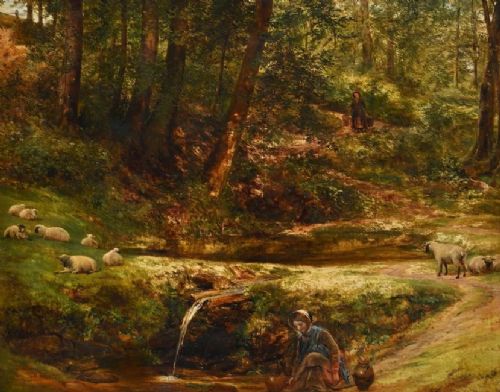
Some forest scenes feature hidden cattle and stray sheep quietly grazing beneath the boughs.
What separates the best from the rest
The highest quality works display a confident handling of light and shade that creates a convincing sense of atmosphere. Master painters used subtle colour variations in greens and browns to suggest the density of a real wood.
Carved wooden panels separate themselves by the crispness of the undercutting and the naturalism of the animal and plant forms. Weavers of verdure tapestries achieved longevity through tight knotting and balanced dye compositions that held their tone.
Daum·William H Myers·Richard Redgrave·Bonomi Edward Warren·David Watts·James Proudfoot·Jan Evert Morel·Rowland Henry Hill·Edmund George Warren·Charles James Adams·J McIntyre·Augustus William Enness·Charles Branwhite·Walter Emsley·William Mellor
The Antique Forest Scene Glossary
- Verdure tapestry
- A large wall hanging woven with a predominant theme of green foliage, trees, and often animals. These textiles frequently date from the seventeenth and eighteenth centuries.
- Black Forest
- A nineteenth-century carving style originating in Germany and Switzerland, characterised by deeply carved walnut depicting animals and woodland foliage. Pieces often take the form of panels or decorative objects.
- Watercolour
- A paint consisting of pigment suspended in a water-based solution, applied to paper to achieve translucent washes of colour. Artists used this medium to capture delicate atmospheric effects in landscape studies.
- Oil on canvas
- A painting technique where pigmented oil is applied to a woven cloth stretched across a wooden frame. This method allows for rich texture and long-term durability.
- Cameo glass
- Glass formed in multiple layers of different colours, carved away to create a raised design against a contrasting background. Examples include miniature vases featuring natural motifs.
Antique Forest Scene: Frequently Asked Questions
What periods do these forest scenes come from?
The pieces span from the late seventeenth century through the Victorian era and into the mid-twentieth century. Most examples date from the nineteenth and early twentieth centuries.
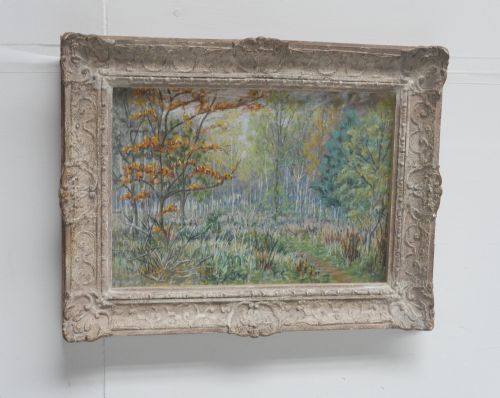
Paintings and tapestries from different decades show distinct approaches to colour and naturalism. Earlier works often lean towards darker, dramatic woodland depths while later pieces embrace impressionist light.
How were verdure tapestries used in homes?
Large verdure tapestries functioned as wall hangings to insulate stone rooms and decorate grand interiors. Their forest motifs brought the outside landscape directly into domestic spaces.
Today these textiles serve as statement wall art in large rooms. They require careful placement away from direct sunlight to protect the woven threads.
How do I tell an oil painting from a watercolour?
Oil paintings feature a textured surface built up with opaque paint on canvas or wood panels. Watercolours present a flatter, more translucent appearance on paper under glass.
Examining the surface closely under a strong light reveals the characteristic brushstrokes of oil or the soft washes of water-based pigment.
Where should I hang a Black Forest carved panel?
Black Forest relief carvings suit prominent wall positions such as over doors or above mantelpieces where their detailed woodwork stands out. They pair well with traditional wooden furniture and period interiors.
These heavy wooden panels require secure fixings into wall studs to support their weight safely over time.