




Antique Forest Landscape
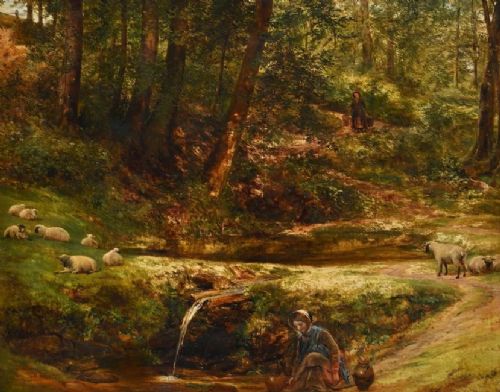
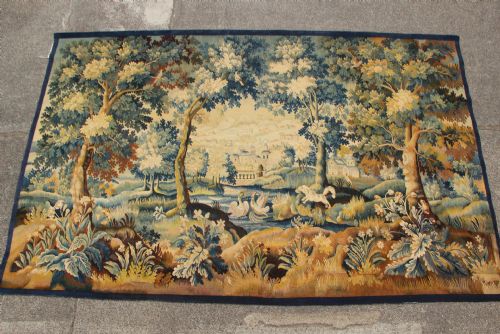
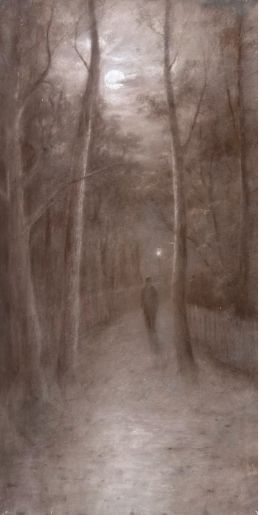
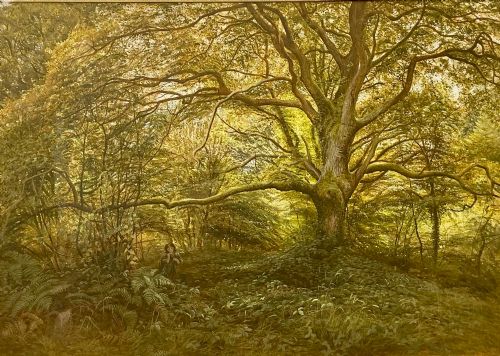
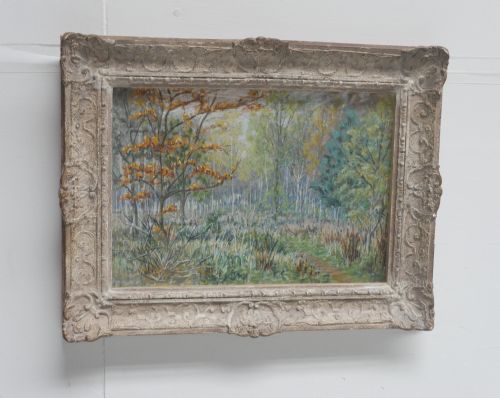
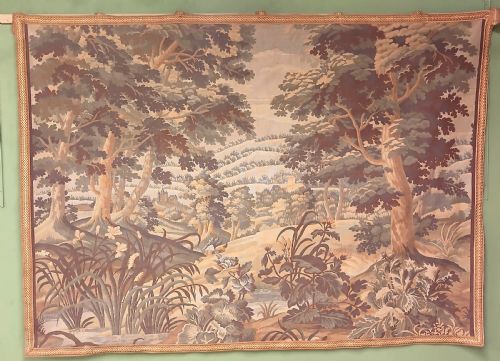
When you search for an antique forest landscape, you find works capturing ancient woodlands, verdant canopies and quiet forest paths across canvas, wood panel and woven tapestries.
Antique Forest Landscape
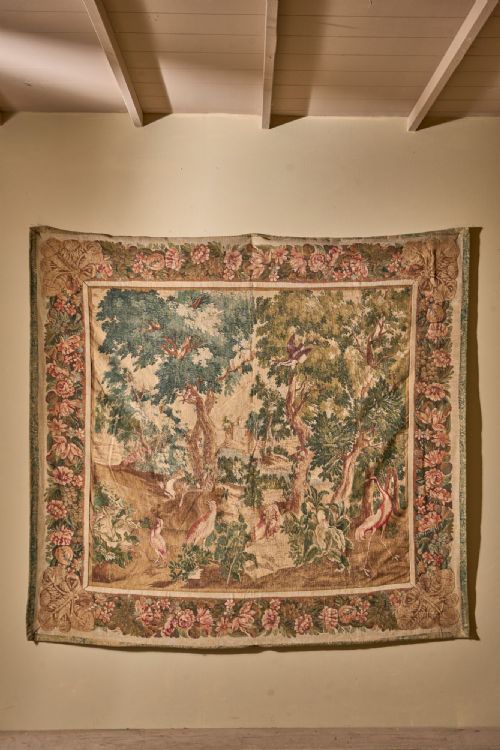
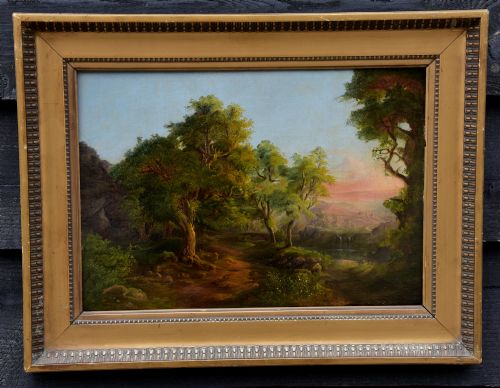
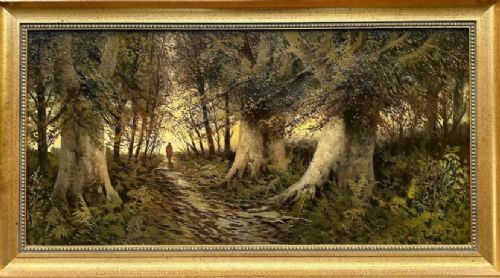
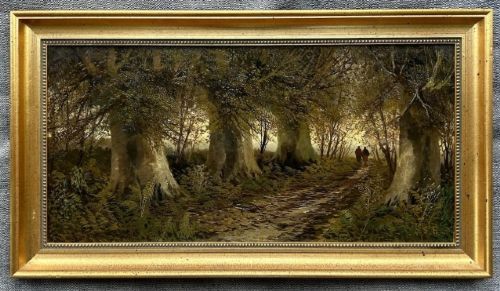
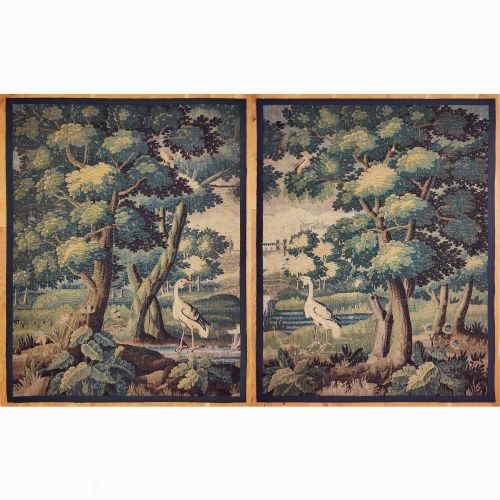
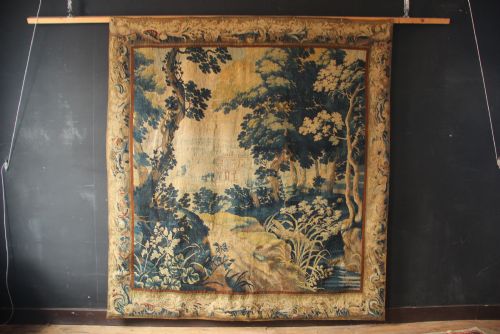
The antique forest landscape category encompasses oil paintings, watercolours, and woven wall tapestries that focus on woodland scenes, trees, and forest floors. Buyers exploring this search phrase encounter pieces ranging from Victorian oil paintings on canvas and wood panel to large Flemish and French verdure tapestries.
Whether rendered in the bold strokes of oil paint, the delicate washes of watercolour, or the dense wool and silk threads of a loom, each piece reflects the period's fascination with natural scenery. The enduring appeal lies in the ability of these artworks to transform an interior space with a sense of historic depth and pastoral calm.
How they were made
Painters utilised oil on canvas, wood panel, or board, applying pigment to capture the shifting light and shadow of woodland environments. Watercolours on paper offer a lighter, more translucent rendering of trees and foliage, while charcoal and pastel provide textured, immediate studies of bark and leaf.
Tapestries require complex weaving techniques on horizontal or vertical looms, employing wool, silk, and sometimes metal threads to construct dense foliage scenes known as verdures. These textile works build up layers of green and earthy tones to depict lush forest canopies without relying on painted pigments.
Listings feature works spanning from the seventeenth century through to the mid-twentieth century, executed in oil paint, watercolour, canvas, and wool tapestry.
What varies in quality
The distinction between standard and superior pieces rests on the artist's command of light, depth, and atmospheric perspective within the woodland setting. Master painters manipulate tone to make sunlight filter convincingly through dense branches, whereas lesser works rely on flat, repetitive foliage.
In tapestries, quality depends on the density of the weave, the preservation of the wool and silk fibres, and the complexity of the verdure design. Tighter weaves and rich, stable colour palettes separate fine workshop output from more utilitarian textile production.
William H Myers·Thomas W Lascelles·Richard Redgrave·David Watts·James Proudfoot·Jan Evert Morel·Ernest Higgins Rigg·Frederick Golden Short·Augustus William Enness·Charles Branwhite
The Antique Forest Landscape Glossary
- Verdure tapestry
- A wall hanging woven with a dominant theme of plants, trees, and foliage, frequently populated by birds or animals. These textiles often served as insulating wall coverings in grand houses.
- Wood panel
- A rigid support for oil paintings made from timber such as mahogany or oak, prepared with a ground layer before painting. Panels provide a stable surface that predates the widespread adoption of stretched canvas.
- Collotype
- A planigraphic printing process that uses hardened gelatin and ink to produce continuous-tone photographic reproductions. This technique allows for fine detail in early twentieth-century art prints.
- Aubusson
- A style of tapestry woven in the French town of Aubusson, known for pastoral and forest landscape designs. These pieces often incorporate classical architectural elements or distant chateaux amongst the trees.
Antique Forest Landscape: Frequently Asked Questions
How do I care for an oil painting on wood?
Oil paintings on wood panels require stable environmental conditions to prevent the timber from warping or cracking. Keep them away from direct sunlight, radiators, and damp areas.
Dust the surface gently with a soft, dry brush and avoid using any liquid cleaners or chemical solvents on the paint layer.
How do I identify a nineteenth-century landscape?
Nineteenth-century landscape paintings often display Romantic or realist tendencies, focusing on natural lighting, dramatic weather, or quiet rural paths. Examining the canvas weave, stretcher bars, and framing style can help confirm the age.
Signatures, exhibition labels, and inscriptions on the reverse of the canvas or panel also offer clues to the precise period.
Where were Aubusson tapestries made?
Aubusson tapestries originated in the town of Aubusson and the surrounding region in central France, where weaving workshops flourished for centuries. These workshops specialised in large-scale decorative panels featuring woodland and garden motifs.
The town became a recognised centre of excellence for textile arts, producing works commissioned by nobility across Europe.