






Antique Footstool Box
An antique footstool box combines hidden storage with a seat, bringing practical nineteenth-century comfort and versatile utility to a modern room.
Antique Footstool Box
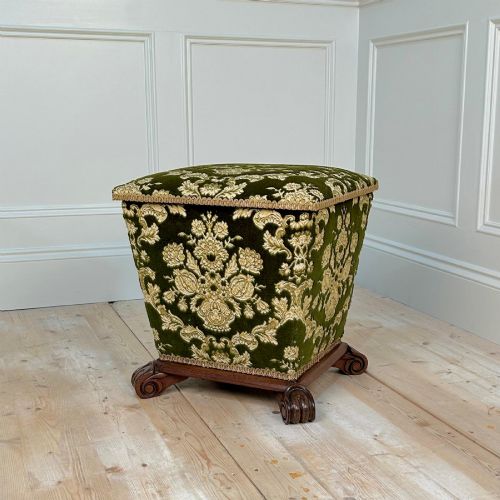
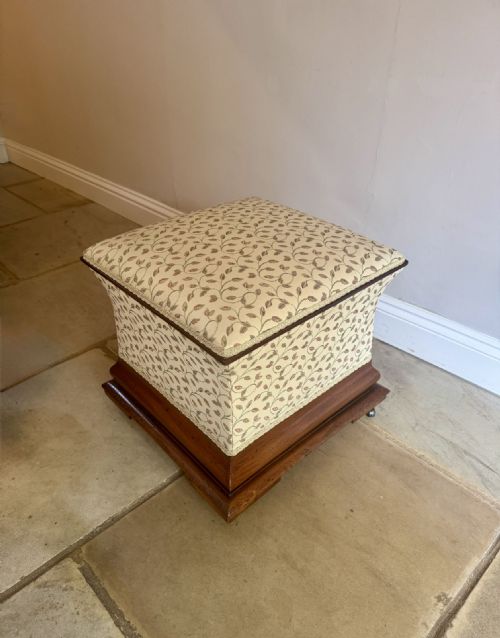
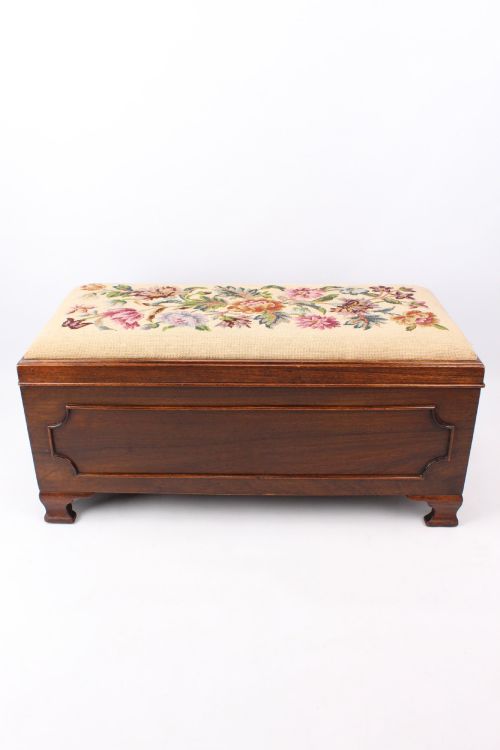
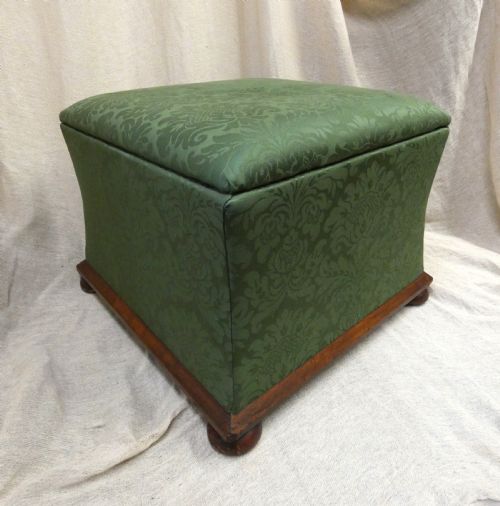
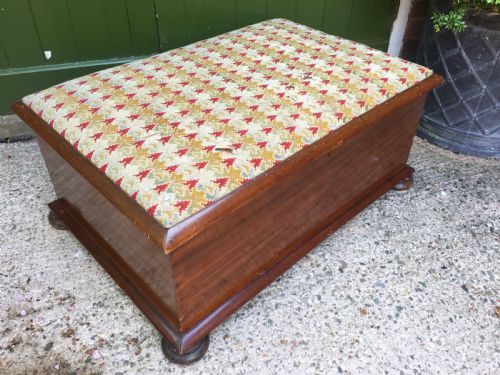
When you search for an antique footstool box, you encounter pieces designed to serve dual purposes as seats and concealed receptacles for sewing materials, blankets, or household items. These hybrid furnishings bridge the gap between low seating and enclosed storage, taking forms ranging from modest needlework boxes to large country house ottomans.
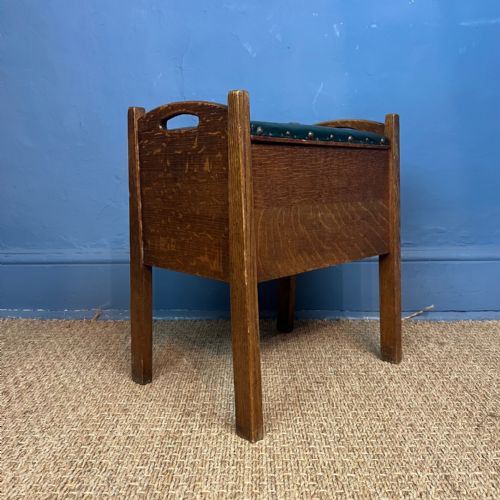
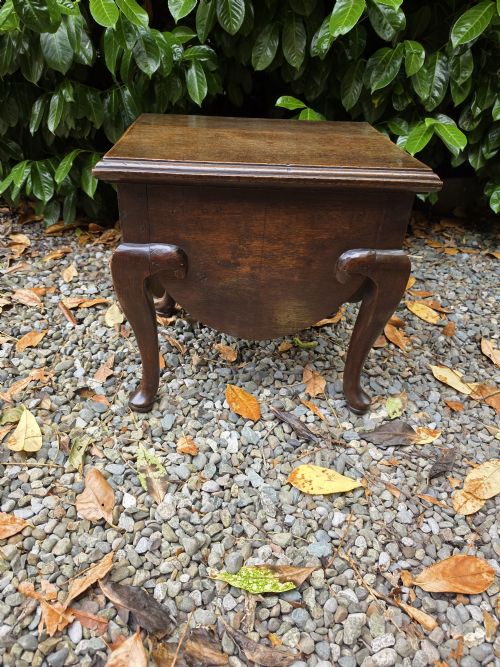
The pieces appearing most frequently in this selection span the Regency and Victorian periods, alongside later twentieth-century iterations. Mahogany and rosewood form the primary timber frames for these sophisticated nineteenth-century variants, while oak appears in earlier or more rustic country formats.
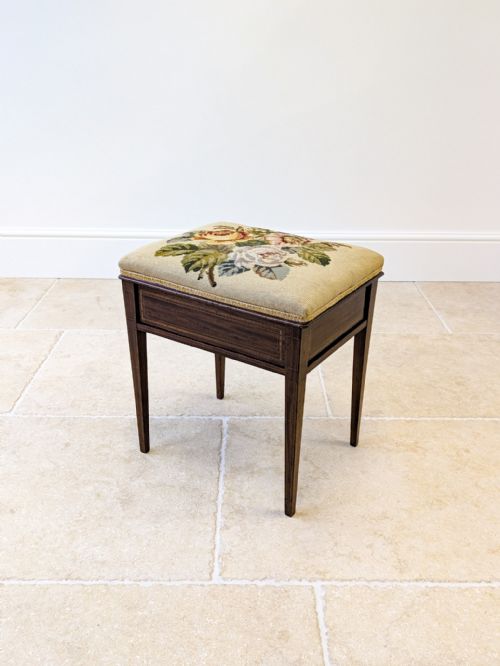
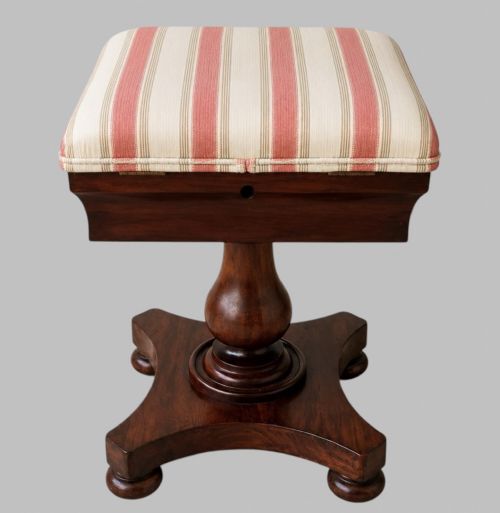
Makers utilised various functional layouts, including sewing box stools with fitted compartments, concave blanket boxes, and piano stools with upholstered tops. Buyers will discover both compact personal pieces and substantial storage ottomans designed to anchor a drawing room or study.
Materials and construction methods
Cabinet makers built the structural frames of these boxes from dense hardwoods like mahogany, walnut, and rosewood, often employing solid timber for lids and polished veneers for exterior sides. Oak supplied the robust foundation for earlier vernacular items, while turned feet, carved brackets, and brass details added architectural definition.
Upholstery techniques dictated the finish of the seat, incorporating traditional stuffing over webbing or springs beneath needlework, wool, velvet, and hand-dyed leather coverings. Hinged lids were carefully balanced to support daily opening while maintaining a flush fit against the wooden box frame.
Antique Footstool Box Retail Price Guide 2026
Typical asking prices for footstool box among the pieces listed under this phrase on Sellingantiques today, from the lower quarter to the upper quarter. They describe what is for sale here now, not the wider market.
Listings feature mahogany, rosewood, walnut, and oak frames paired with leather, velvet, wool, and needlework upholstery.
Evaluating craftsmanship and condition
Superior examples distinguish themselves through the selection of finely figured timber veneers, precise joinery in the box compartment, and crisp carving on the wooden frames and feet. The integrity of the original lining or internal sewing compartments also separates standard production pieces from higher-tier workshop commissions.
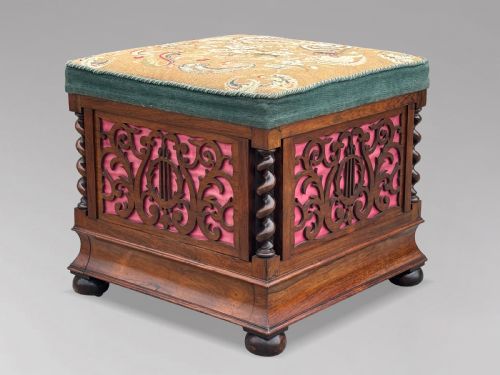
The quality of the top upholstery and the condition of the leather or needlework significantly influence the character of the piece. Fine surviving examples retain their original textiles, such as gros-point needlework, whereas later reupholstery reflects the ongoing utility of the furniture through successive generations.
Hallett & Sons
The Antique Footstool Box Glossary
- Ottoman
- A low, upholstered seat without arms or a back, frequently constructed with a hinged lid to provide interior storage. This form served as a central seating and storage hybrid in nineteenth-century interiors.
- Gros-point
- A heavy, counted-thread embroidery stitch used to create durable and decorative needlework seat covers. It appears on the tops of mid-nineteenth-century ottomans.
- Regency
- An English design period spanning the early nineteenth century, characterised by classical restraint, rosewood or mahogany timbers, and occasional brass inlay or gilt bronze mounts.
- Canterbury
- A low wooden stand fitted with partitions for holding sheet music, books, or papers, occasionally combined with a box seat stool format. This form met the musical and domestic demands of Victorian parlours.
- Gothic Revival
- A nineteenth-century architectural and decorative style that revived medieval forms, pointed arches, and heavy carved woodwork. Walnut and oak pieces from this movement display distinctive architectural tracery.
Antique Footstool Box: Frequently Asked Questions
What is an antique footstool box used for?
These dual-purpose furnishings served as both low seats and enclosed storage receptacles in historic homes. They held sewing equipment, textiles, or personal items while providing a comfortable place to rest the feet.
Today, they function effectively in living spaces to store blankets or magazines while adding period character to a room.
How do I tell Regency and Victorian boxes apart?
Regency pieces often display classical proportions, rosewood or mahogany timbers, and restrained decorative elements like brass paw feet. Victorian examples tend to be heavier, sometimes incorporating walnut, elaborate needlework, or revival styles.
Examining the internal construction and secondary woods helps clarify the manufacturing period when exterior styles overlap.
Are the interiors usually lined?
Many sewing box stools and work tables feature compartmented wooden interiors designed to organise threads, needles, and tools. Larger ottomans frequently present plain wood interiors meant for storing bulky textiles or blankets.
Linings varied according to the original owner's specific domestic requirements and the quality of the workshop.
Can I use these daily in a modern home?
These sturdy wooden boxes and upholstered seats were built for robust daily use in nineteenth-century households. Their solid hardwood frames and functional hinges suit contemporary living spaces well.
Placing them in studies, bedrooms, or sitting rooms allows you to utilise their hidden storage capacity alongside their seating.