


Antique Food Warmer
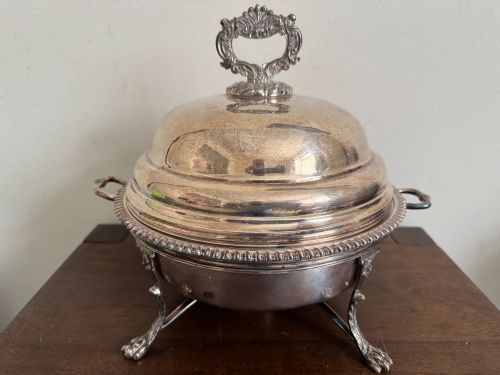
These antique food warmer examples are clever table engines designed to keep fine meals hot during long dining room services.
Antique Food Warmer
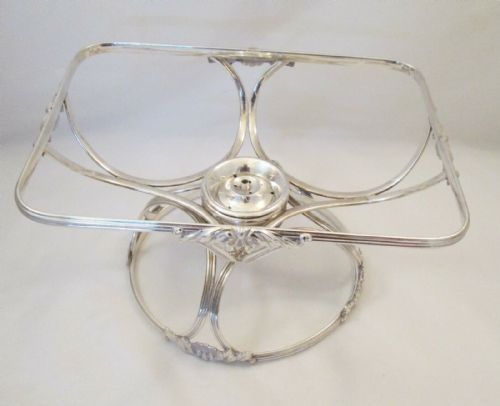
An antique food warmer brings practical dining apparatus into the formal entertaining spaces of the nineteenth and early twentieth centuries. These pieces appear in forms such as supper dishes, chafing dishes, revolving breakfast dishes, and egg warmers.
The material record on this page spans solid sterling silver and silver plate alongside copper, ceramic, and nickel silver compositions. Buyers frequently encounter Edwardian and Victorian silver plated examples, often featuring spirit burners or lampstands.
Origin points reflect English and Continental workshops, drawing on Georgian Regency, Victorian, and Edwardian styles. These servants of the dining table range from simple copper bain-maries to elaborate George III supper sets.
How they were made
Makers utilised heavy gauge copper and durable silver plate over base metals to construct heat-retaining vessels that withstood daily use. Old Sheffield Plate and electroplated nickel silver provide the gleaming exterior finishes characteristic of these serving pieces.
Intricate casting and spinning techniques formed the bodies, revolving lids, and internal water jackets necessary for indirect heating. Burners and lampstands were engineered to house small flames safely beneath the main food compartments.
Some Victorian egg warmers were designed with tiny individual boiling pots so each guest could have their egg cooked exactly to preference.
What varies in quality
Superior execution shows in the precision of revolving mechanisms and the weight of the metal utilised in the body and covers. Master silversmiths and notable makers applied crisp ornamentation and balanced proportions that elevate utilitarian vessels into sculptural centrepieces.
The integrity of the original plating and the completeness of internal liners, burners, and lampstands dictate the desirability of each piece. Simpler copper warmers rely on the honesty of their construction and the warmth of the patination built up over decades of service.
Mappin and Webb·Dan Holy·Alex Boyd and Son·Gioielleria Agliardi Cassino
The Antique Food Warmer Glossary
- Bain-marie
- A heated water bath used to keep food warm without overcooking it. This culinary vessel sits atop a dedicated heat source.
- Chafing dish
- A heated dish used to warm food at the table using a small burner underneath. They often incorporate ceramic liners and metal covers.
- Old Sheffield Plate
- A fused composite material made by melting a sheet of sterling silver onto a thicker copper base. This technique was largely superseded by electroplating.
- Supper dish
- A large, multi-compartment serving vessel equipped with a lampstand for extended dining. These elaborate pieces often include covers and sauce tureens.
Antique Food Warmer: Frequently Asked Questions
How did a food warmer work?
These pieces utilised boiling water jackets or spirit burners placed beneath the serving vessel to maintain food temperature.
Dining rooms relied on this sustained indirect heat during long, multi-course meals before electric warmers existed.
Can I use an antique warmer today?
Many silver plated and copper pieces remain entirely functional for modern dining and buffet service.
Careful cleaning and safe management of spirit burners allow these historical items to perform their original duties.
How do I date a warmer?
Stylistic clues such as Edwardian restraint, Victorian ornamentation, or Georgian proportions help assign a broad era.
Maker marks, silver hallmarks, and manufacturing techniques like Old Sheffield plating narrow the timeline further.