



Antique Food Server
These antique food server pieces are heavy metal and ceramic vessels designed to keep dishes hot at the dining table.
Antique Food Server
When you search for an antique food server, you encounter a range of heavy domestic vessels designed to bring hot food to the table. These include silver plated meat covers, ceramic vegetable tureens, revolving breakfast dishes, and copper or silver food warmers spanning from the seventeenth century through to the Edwardian era.
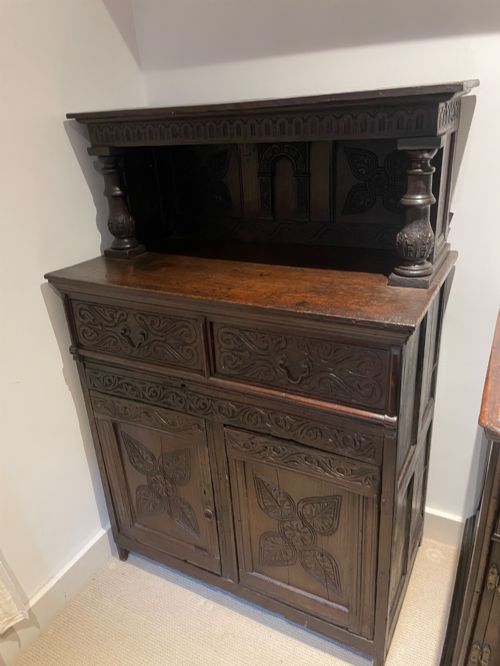
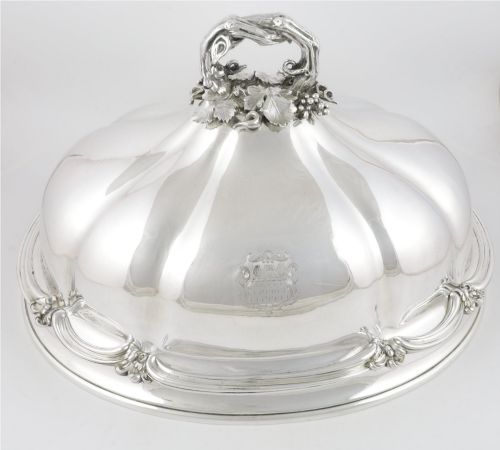
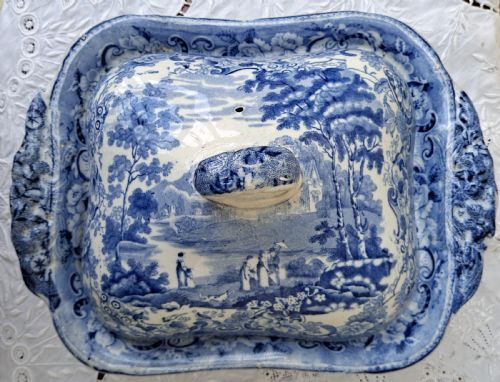
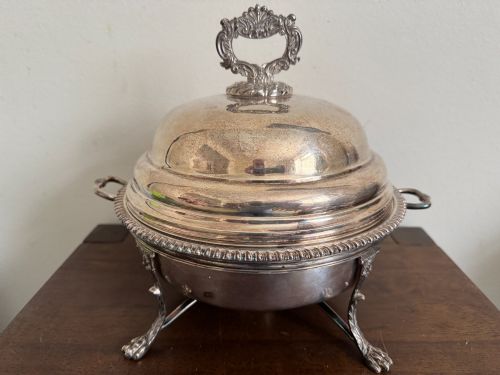
The most common versions met on this page are nineteenth-century and Edwardian silver plated pieces such as entree dishes, egg warmers, and meat domes. Alongside these metal table pieces, you also find earthenware vegetable tureens with transfer-printed blue and white scenes and substantial early wooden cupboards.
Makers and makers' marks appear on several items, ranging from Roberts Cadman and James Wallace and Co to Mappin and Webb and Dan Holy. These objects reflect formal dining customs across Georgian, Victorian, and Edwardian households where keeping large meals warm before guests was paramount.
How they were made
Metal items like meat domes, breakfast dishes, and warming stands utilise base metals such as copper and nickel silver coated in silver plate or formed from solid sterling silver. Old Sheffield Plate combines a thin layer of silver fused to a copper core, visible where the silver wears thin over time.
Ceramic vegetable tureens and covers are shaped from earthenware or ceramic bodies, finished with glaze and often decorated with blue and white transfer-printed patterns like rural scenery. Early cupboards are constructed from timber using traditional joinery methods suited to the seventeenth century.
Antique Food Server Retail Price Guide 2026
Typical asking prices for food server among the pieces listed under this phrase on Sellingantiques today, from the lower quarter to the upper quarter. They describe what is for sale here now, not the wider market.
Listings feature silver plate, copper, earthenware, and sterling silver across Georgian, Victorian, and Edwardian periods.
What varies in quality
Quality in these serveware pieces rests on the weight of the metal, the crispness of applied handles and borders, and the intactness of the silver plate over copper. Maker attribution also plays a part, with pieces bearing marks from established firms such as Mappin and Webb or Roberts Cadman showing finer finishing.
Ceramic items vary according to the clarity of the blue and white glaze transfer and the absence of heavy crazing or major cracks in the earthenware body. The complexity of the mechanism in revolving breakfast dishes or the presence of a complete lampstand and cover set also elevates a piece.
Roberts Cadman·James Wallace and Co·Mappin and Webb·Dan Holy
The Antique Food Server Glossary
- Old Sheffield Plate
- An early method of fusing a thin sheet of silver onto a copper ingot before rolling them into sheets. This technique predates electroplating and often reveals a warm copper tone along high-wear edges.
- Electroplated Nickel Silver
- A manufacturing process where a layer of silver is deposited onto a nickel silver alloy base via electrolysis. This technique became widespread during the Victorian period for domestic serveware.
- Meat Dome
- A large, domed metal cover placed over joints of meat on a platter to retain heat and keep insects away. These pieces frequently feature engraved crests or robust cast handles.
- Entree Dish
- A shallow serving vessel with a fitted cover used for bringing secondary courses to the table. They are commonly oval or rectangular and often found in matched pairs.
Antique Food Server: Frequently Asked Questions
What is an antique food server used for?
These pieces were utilised in formal dining rooms to transport, present, and maintain the temperature of hot meats, vegetables, and breakfast dishes at the table.
Lidded meat domes, revolving breakfast dishes, and warming stands with internal lamps ensured that food remained hot throughout long meals.
How do I care for silver plated serveware?
Silver plated items require gentle cleaning with non-abrasive silver polish and soft cloths to preserve the thin metallic layer over the base metal.
Avoid soaking antique ceramics or metal pieces in harsh chemical detergents, and dry them thoroughly after washing.
How can I tell the period of a metal food server?
Makers' marks, manufacturing techniques like Old Sheffield Plate versus electroplating, and stylistic details help date metal serveware.
Georgian pieces often display hand-beaten marks or fused silver, while Edwardian and late nineteenth-century items typically utilise electroplated nickel silver.