


Antique Folk Art Commode
These antique folk art commode pieces bring character and rustic charm into a room through hand-painted surfaces and utilitarian forms.
Antique Folk Art Commode
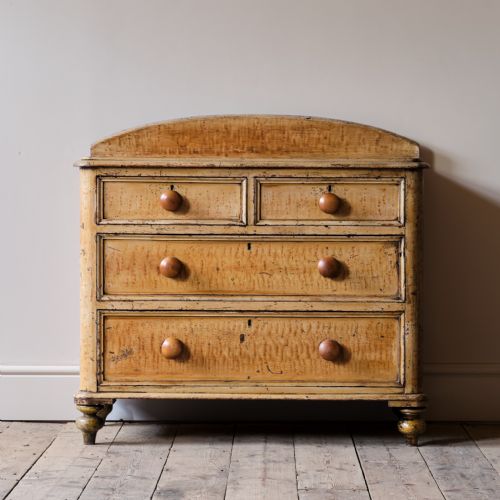
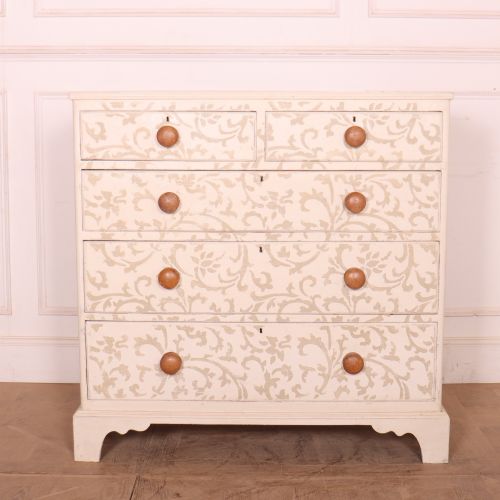
An antique folk art commode search brings up practical storage furniture transformed by regional decoration, typically taking the form of chests of drawers, cupboards, and miniature models. These pieces originate from various European traditions, including Austrian, Hungarian, Swedish, and continental workshops, displaying a vernacular aesthetic distinct from formal court furniture.
The pieces on this page span from the eighteenth century through the early twentieth century, with nineteenth-century examples appearing most frequently. Alongside standard chests of drawers, buyers will encounter unusual variants such as miniature slate models and a child's high chair, all united by their painted or decorated surfaces.
Materials and construction methods
Makers relied on accessible domestic timber, predominantly constructing these items from pine and softwood. Surfaces were frequently treated with paint, scumble finishes, or simulated graining such as simulated birch to mimic more expensive hardwoods.
Hardware details like brass fixtures were utilised alongside ceramic elements where appropriate for handles and closures. The decorative schemes applied directly to the timber define the visual identity of each piece.
Someone once carved a miniature chest of drawers out of heavy slate instead of wood, proving that folk artists loved a practical joke in stone.
Judging quality in folk art furniture
The integrity and survival of the original painted surface separate exceptional examples from heavily restored pieces. Patina developed through decades of domestic use adds depth to the visual character.
Proportion and the confidence of the brushwork in regional decorative schemes indicate the skill of the original maker. Regional distinctiveness, such as specific Scandinavian or Austrian motifs, elevates the interest of a piece.
Gemla Fabrikers
The Antique Folk Art Commode Glossary
- Commode
- A low cabinet or chest of drawers designed for storage, often standing on short legs. In a folk art context, it refers to domestic case furniture with decorative painted finishes.
- Scumble paint
- A translucent or semi-opaque glaze applied over a base coat and manipulated with combs or rags to simulate wood grain or texture. It was a popular technique on nineteenth-century softwood.
- Pine
- A softwood commonly used in regional European cabinetmaking due to its availability and ease of working. It served as a stable canvas for decorative paintwork.
- Miniature furniture
- Small-scale models often produced as apprentice pieces, salesmen's samples, or ornamental items. They replicate the full-sized forms using the same materials.
Antique Folk Art Commode: Frequently Asked Questions
What is an antique folk art commode?
An antique folk art commode is a piece of regional storage furniture, usually a chest of drawers or cupboard, decorated with hand-painted finishes by local artisans.
These items reflect the vernacular traditions of specific European countries rather than academic design styles.
How were these pieces decorated?
Makers applied oil paint, scumble glazes, and simulated graining directly onto pine or softwood surfaces.
Over time, this paint layer developed a distinct patina through everyday use in domestic settings.
Where do these pieces originate?
The listings include items from various European regions, such as Austria, Hungary, Sweden, and the Netherlands.
Each region developed particular palettes and decorative motifs that distinguish their folk furniture.
How do I live with a painted commode?
Painted folk art furniture works well as a focal point in a room, providing both practical storage and strong decorative colour.
Placing them away from direct sunlight helps preserve the fragile historical paint surfaces.