


Antique Folding Chairs
Antique folding chairs offer portable comfort and ingenious mechanisms, spanning campaign furniture, metamorphic library steps, and deck chairs.
Antique Folding Chairs
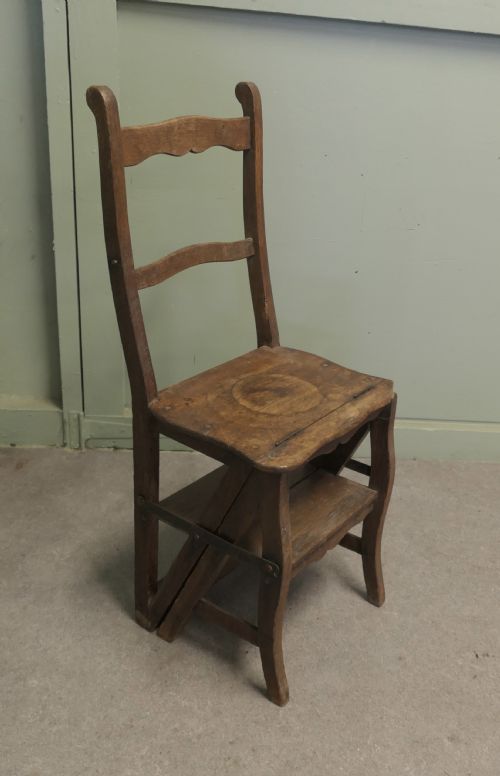
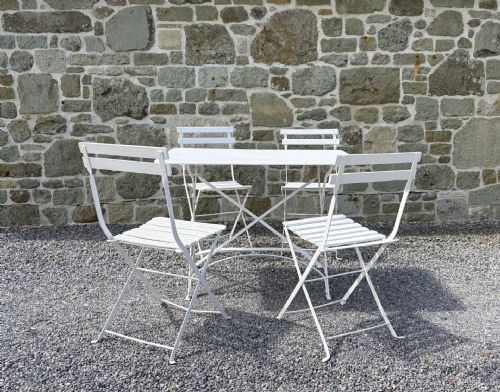
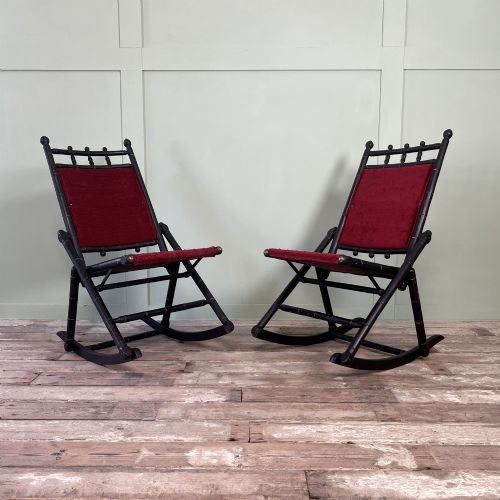
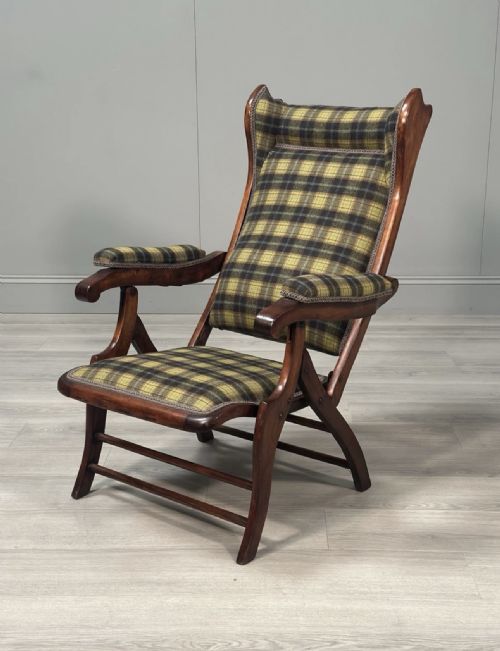
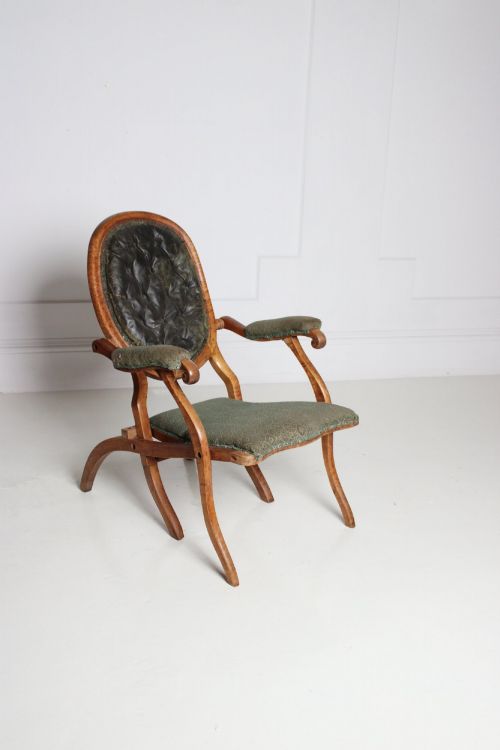
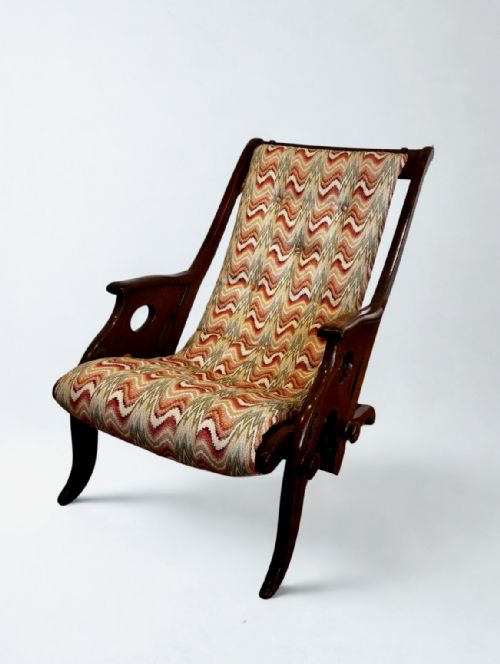
When you search for antique folding chairs, you encounter a diverse range of portable and transformable seating designed for travel, libraries, and gardens. The selection encompasses nineteenth-century campaign armchairs, Edwardian steamer deck chairs, and inventive metamorphic library steps that convert into seats.
The most common examples on this page date from the nineteenth and early twentieth centuries, reflecting Victorian, Edwardian, and Regency periods. These pieces frequently incorporate campaign styling, oak or mahogany frames, and specialised folding mechanisms intended for easy storage or transport.
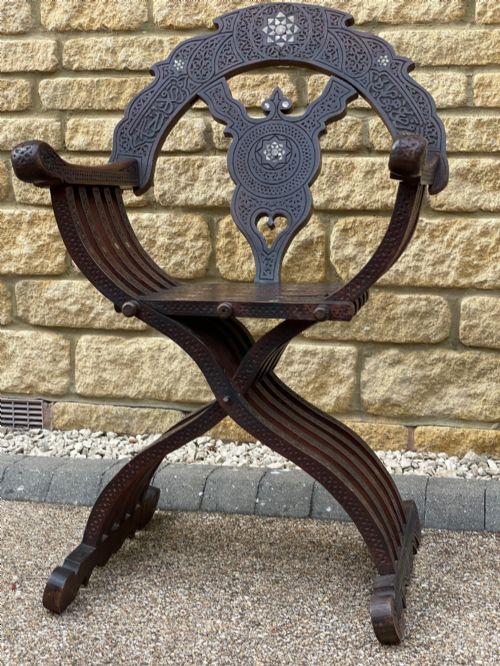
Beyond standard seating, the category extends to specialised forms such as Glastonbury chairs, Savonarola chairs, and folding garden bistro chairs. Materials vary widely from simple iron and hardwood to elaborate Syrian mother-of-pearl inlay and rosewood.
How they were made
The construction of these seats relies on durable timbers such as oak, mahogany, walnut, and rosewood, alongside robust metals like iron and brass. Artisans utilised natural materials including cane, leather, and woven berget to form flexible seats and backs.
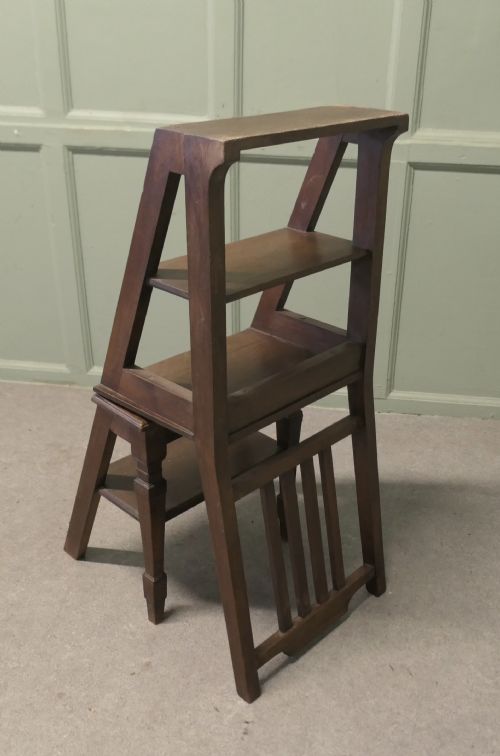
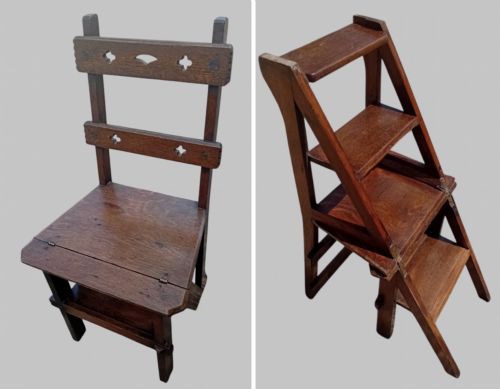
Metamorphic designs required intricate pivot points, hinges, and sliding brackets to transform library steps into armchairs safely. Decorative elements such as bone button details, pierced carved crest rails, and mother-of-pearl inlay demonstrate high craftsmanship within campaign and aesthetic movement pieces.
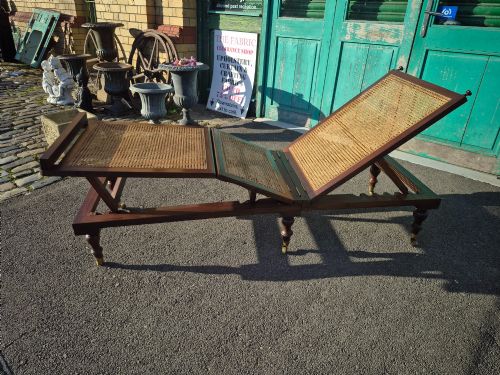
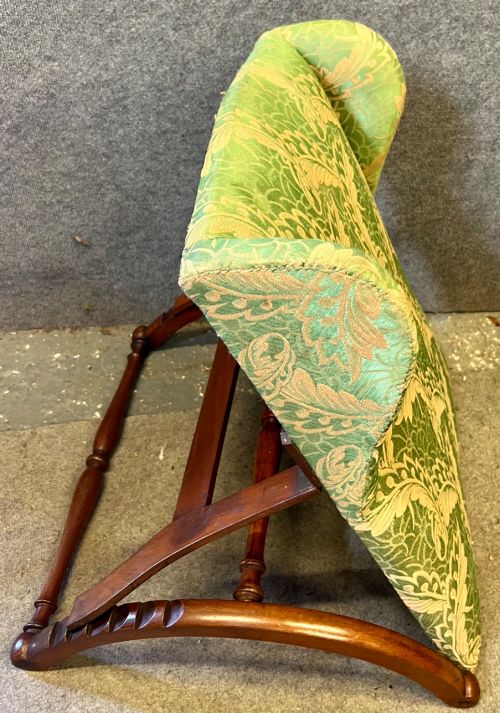
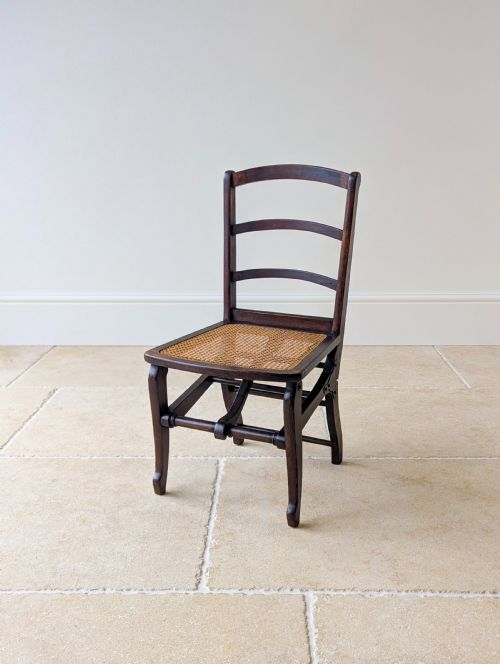
A folding chair made for wartime service doubles as an invalid rest, proving that relaxation brooks no delay even during the First World War.
What varies in quality
Quality in these pieces depends upon the integrity of the folding mechanism and the precision of the joints. Finer examples retain smooth operation without looseness in the pivot points, whereas lesser versions suffer from structural wear due to frequent folding.
Material selection and decorative detailing set apart standard utility seating from high-end examples. Solid rosewood frames, intricate bone button decorations, and complex inlay distinguish finer campaign and salon furniture from basic garden ironwork.
J. Herbert McNair·Morgan and Sanders·Stakmore
The Antique Folding Chairs Glossary
- Metamorphic furniture
- An item designed to transform into another functional object, such as a library chair converting into a flight of steps.
- Campaign chair
- Portable folding seating built for military officers and travellers during the eighteenth and nineteenth centuries.
- Glastonbury chair
- A traditional X-framed wooden armchair with a sloping back and panel seat, often associated with Gothic revival styles.
- Savonarola chair
- An X-chair formed of multiple curved wooden slats intersecting to create a barrel-shaped seat, inspired by Renaissance designs.
- Bergère
- A closed upholstered armchair with an enclosed wooden frame, frequently utilised in nineteenth-century leisure and steamer seating.
Antique Folding Chairs: Frequently Asked Questions
How do metamorphic library step chairs work?
These dual-purpose items use pivoting hinges and folding sections that allow the backrest and seat to swing upward and outward, transforming a comfortable armchair into a stable set of wooden steps for reaching high bookshelves.
Most nineteenth-century examples rely on clever concealed brass brackets and wooden tracks to lock the frame securely into whichever configuration is required for use.
What defines a campaign folding chair?
Campaign furniture was specifically built for military officers on active service, requiring materials and hinges that allowed rapid dismantling or compact folding into transit crates.
They typically feature robust hardwoods like mahogany or oak paired with brass hardware, leather upholstery, and X-frame structures designed to withstand rough travel.
How should I care for antique cane or leather seats?
Natural materials like cane and leather require stable indoor humidity and occasional conditioning to prevent drying and cracking over time. Avoid placing them near direct heat sources or in overly damp environments.
Cleaning should be limited to dusting with a soft dry cloth and applying appropriate leather balms only when the surface shows signs of dryness.
Are these chairs comfortable for daily use?
Many folding and campaign seats offer surprising ergonomic support, particularly upholstered Victorian models and steamer deck chairs designed for prolonged relaxation.
However, rigid wooden X-frame chairs and metamorphic library seats are generally firmer and better suited for occasional seating rather than all-day lounging.