


Antique Flower Pin
An antique flower pin brings together precious metals and stones to capture botanical forms across the Victorian, Edwardian, and Art Nouveau periods.
Antique Flower Pin
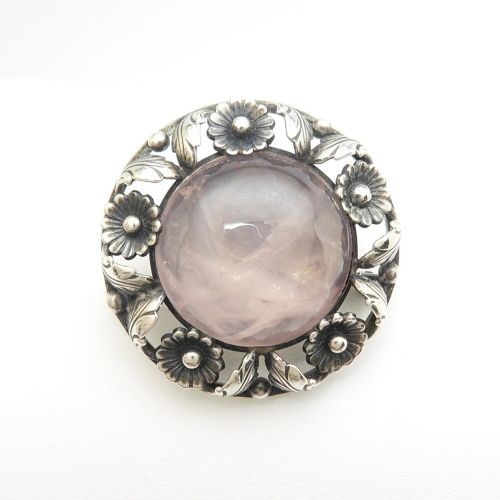
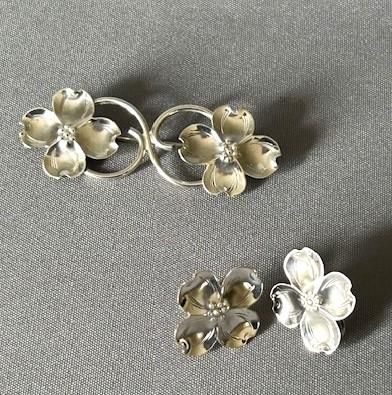
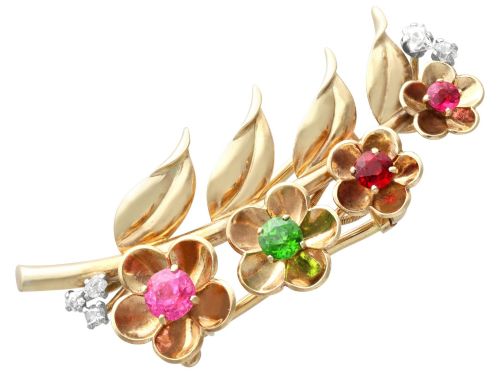
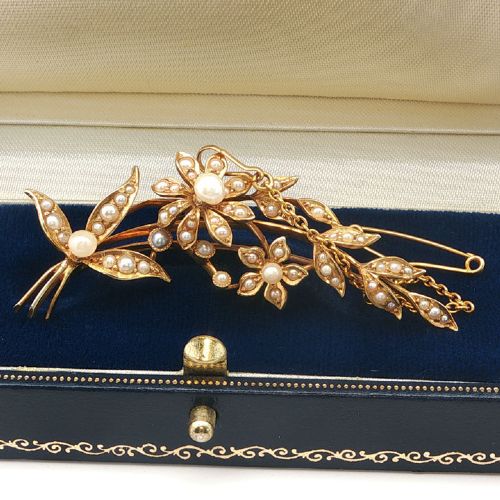
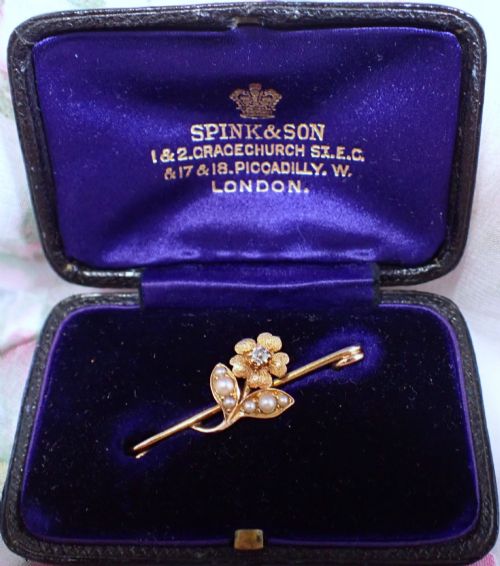
The selection on this page spans multiple periods, including Early Victorian, Victorian, Edwardian, Art Nouveau, Art Deco, and mid-century modern eras. Common forms mimic natural blossoms, pansies, and flower sprays using traditional mounting techniques.
How they were made
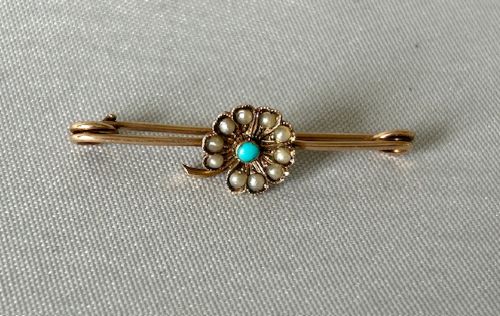
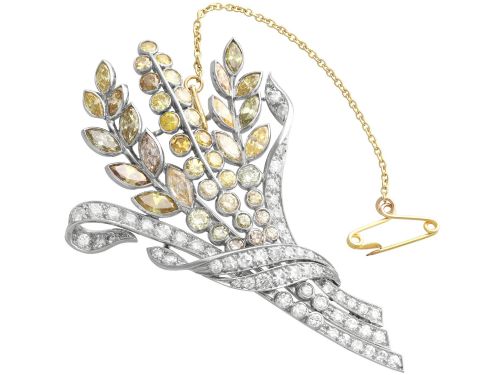
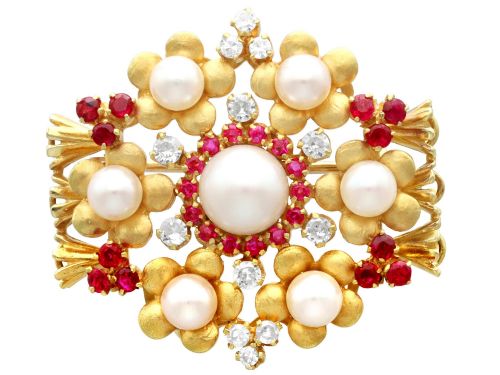
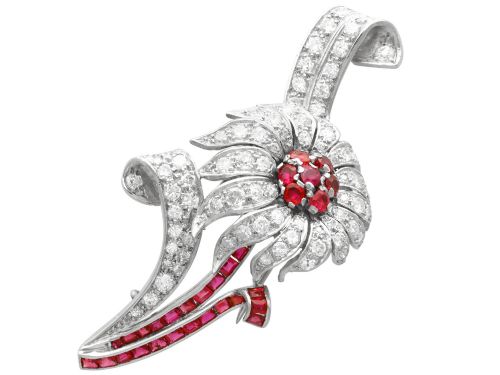
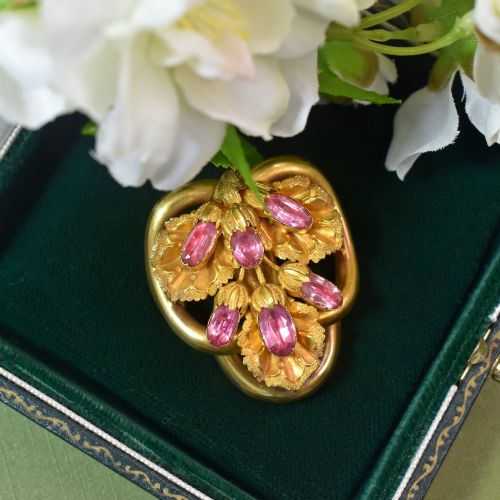
The construction relies heavily on 15ct gold, sterling silver, and yellow gold set with gemstones such as diamond, pearl, almandine garnet, moonstone, opal, and ruby. Coloured paste stones and foil-backed topaz also appear frequently in earlier pieces.
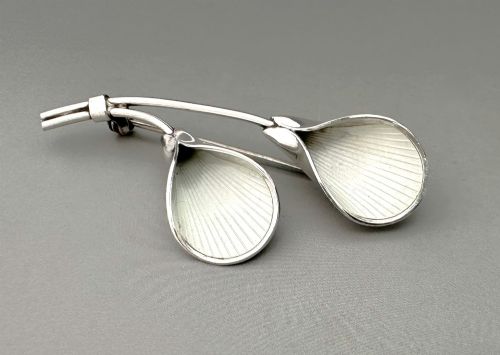
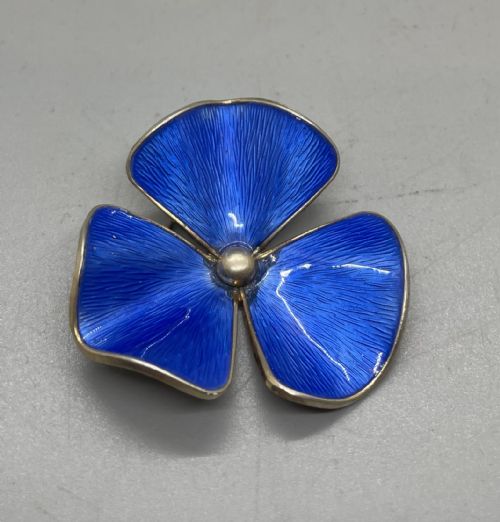
Enamel work forms a major part of the technique, featuring guilloche enamel, translucent plique-a-jour, and multi-coloured enamel applications on silver or gold backplates to render realistic petals and leaves.
Antique Flower Pin Retail Price Guide 2026
Typical asking prices for flower pin among the pieces listed under this phrase on Sellingantiques today, from the lower quarter to the upper quarter. They describe what is for sale here now, not the wider market.
Silver flower fairy brooches from the Art Nouveau era prove that tiny metal wings can brighten even the sternest lapel.
What varies in quality
Quality separates ordinary metalwork from exceptional pieces through the precision of gemstone cutting and the intricacy of the enamel work. Fine examples display well-matched diamonds and hand-mixed enamel shades that capture natural light.
The finesse of the metal mounting, whether in 15ct gold or silver-gilt, determines the structural refinement of the flower stem and leaf details.
A H Darby & Son·Meyle & Mayer
The Antique Flower Pin Glossary
- Guilloche enamel
- A decorative technique where an enamel layer is applied over engine-turned metalwork. This creates repeating geometric patterns beneath translucent colour.
- Plique-a-jour
- An enamelling technique resembling miniature stained glass where enamel is fired in open cells without a backing. It allows light to pass directly through the petals.
- Giardinetti
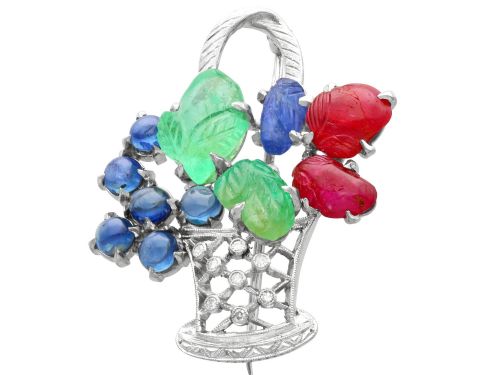
- A style translating to little garden, depicting flowers arranged in a basket or vase. These mountings often use colourful paste or gemstones.
- Stick pin
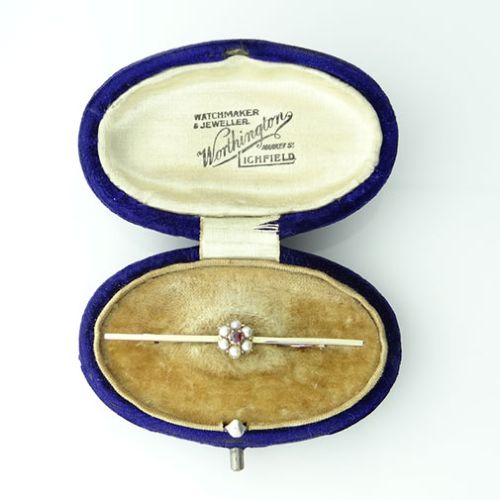
- A long pin topped with a decorative motif designed to secure a cravat, lapel, or scarf. The flower head remains visible while the pin shaft holds the garment.
- Carbuncle
- A cabochon-cut garnet or other red gemstone. These stones feature a smooth, rounded top without facets.
Antique Flower Pin: Frequently Asked Questions
What materials are used in antique flower pins?
The pieces utilise yellow gold, sterling silver, and 15ct gold paired with gemstones including diamonds, pearls, garnets, rubies, and moonstones. Enamel work is also common.
Craftsmen incorporated materials like glass paste and foil-backed topaz in various Victorian and Edwardian designs.
How do I identify an Art Nouveau flower pin?
Art Nouveau examples feature fluid, organic lines inspired by natural plant forms. They often utilise plique-a-jour enamel and soft curving stems.
These designs frequently include delicate flower fairies or asymmetrical floral arrangements characteristic of the early twentieth century.
Were these pins worn daily?
Victorian and Edwardian flower pins served as practical fastenings for garments, lace collars, and hats in addition to decorative ornaments.
Sturdier bar brooches and heavy gold spray pins accommodated thicker fabrics, while stick pins secured lapels and cravats.
What is a Giardinetti pin?
A Giardinetti pin depicts a small garden arrangement, usually featuring flowers in a vase, urn, or basket. The term originates from eighteenth-century Italian jewellery.
Victorian interpretations use colourful paste stones and garnet clusters to represent varied floral bouquets.