
Antique Floral Cabinet
An antique floral cabinet brings botanical marquetry and painted detail into a room, offering both storage and a distinct focal point.
Antique Floral Cabinet
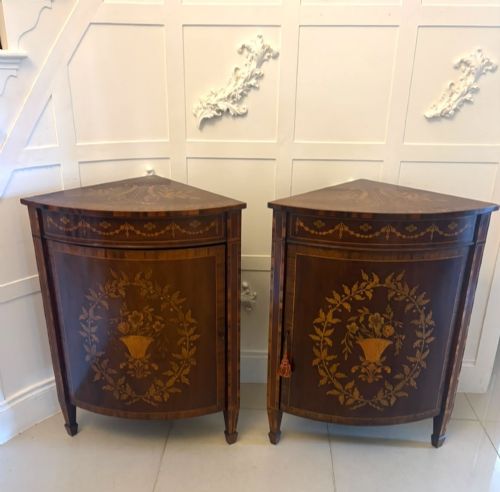
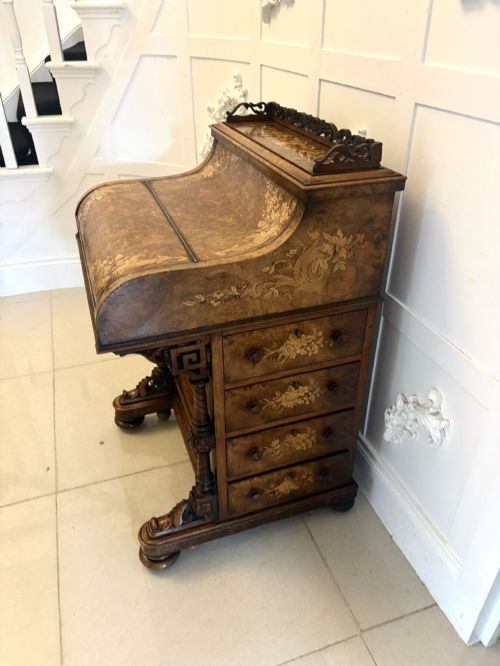
An antique floral cabinet encompasses a variety of storage and display pieces, from grand bureau bookcases and corner units to compact bedside cupboards and display cabinets. These pieces emerge across the 18th, 19th, and early 20th centuries, originating from English, Dutch, and French workshops.
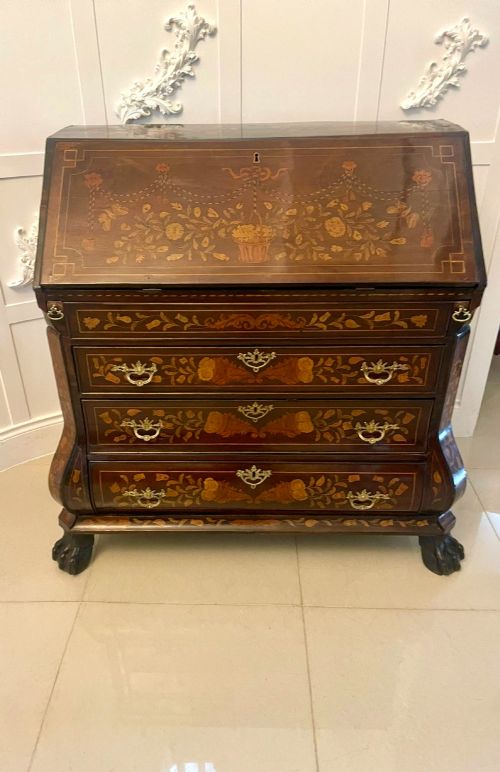
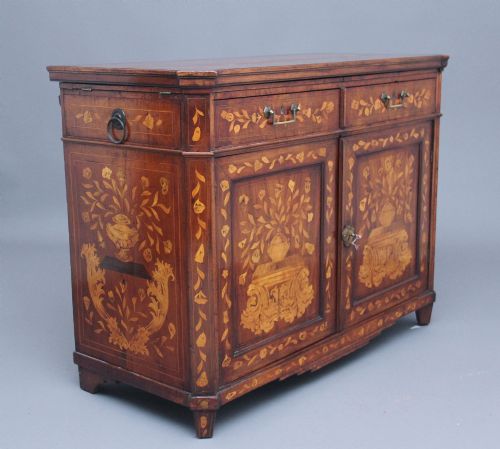
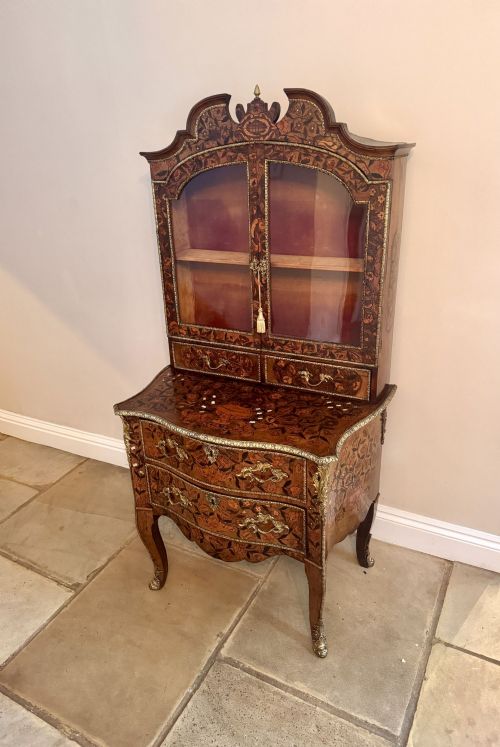
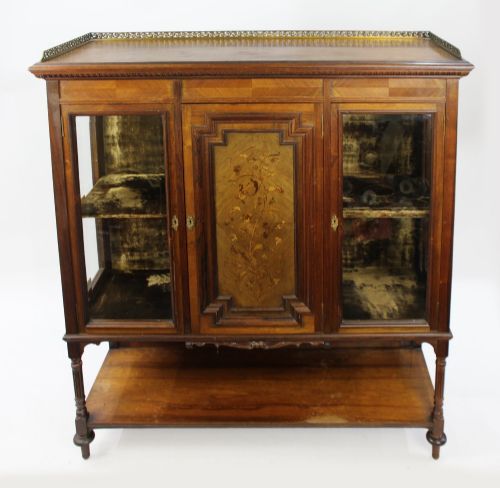
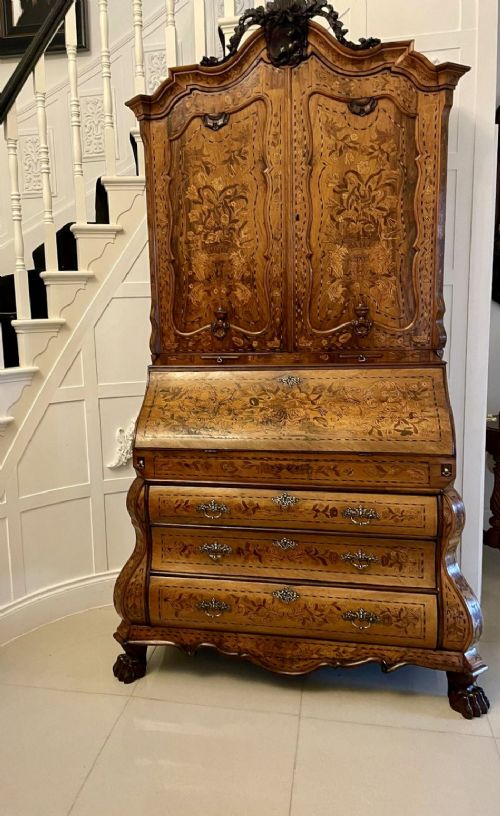
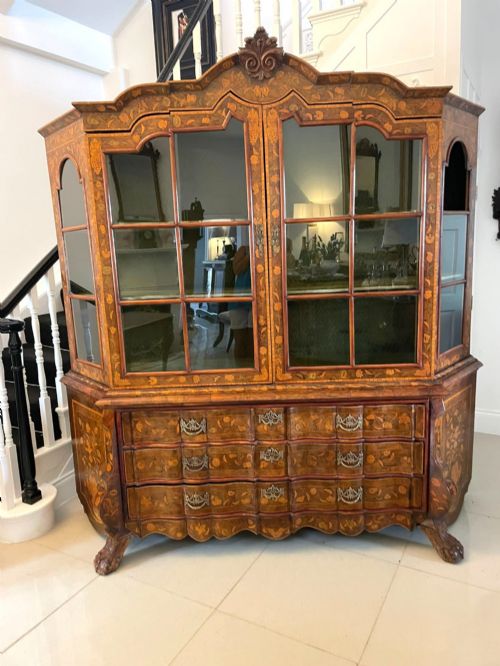
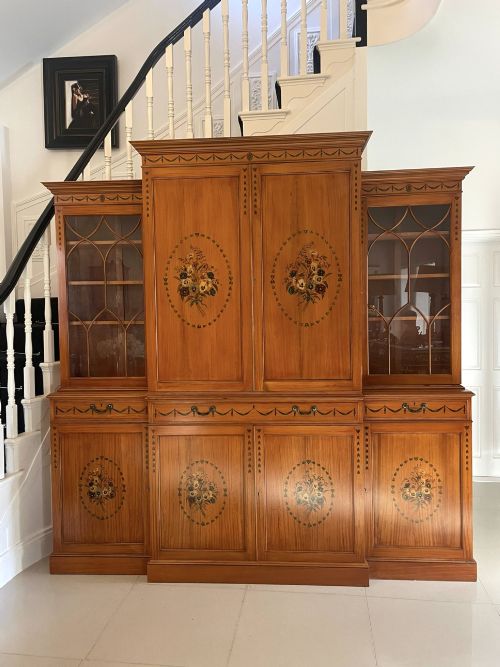
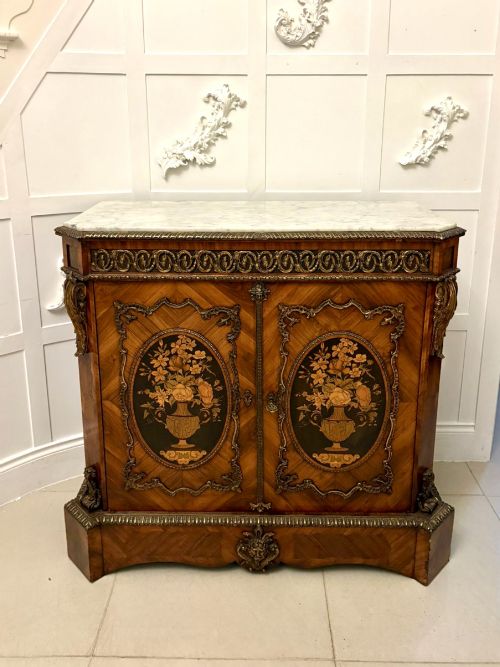
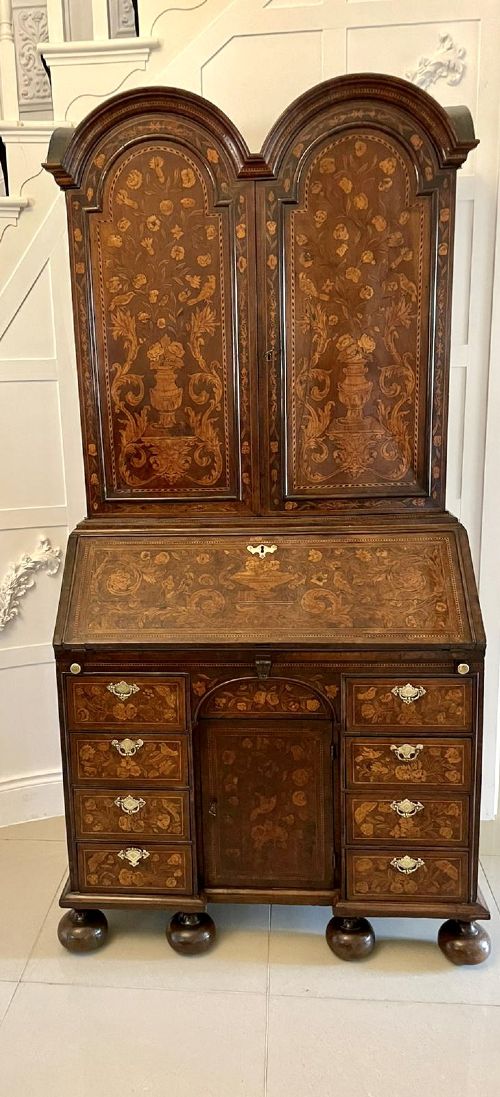
The most prevalent version on this page is the Dutch or English marquetry cabinet, frequently fashioned from burr walnut or mahogany and adorned with intricate floral and botanical inlays. Buyers also encounter display cabinets, side cabinets, and credenzas featuring satinwood or rosewood surfaces.
Earlier examples include 18th-century Dutch bombe shaped bureaux and linen presses, while later 19th-century and Edwardian pieces tend towards display cabinets, sideboards, and Sheraton Revival satinwood forms.
Materials and Technique
Cabinet makers utilised choice timbers such as burr walnut, mahogany, satinwood, and fruitwood as the primary structural foundations and ground veneers. These dense woods provided stable surfaces for complex cutting and fitting.
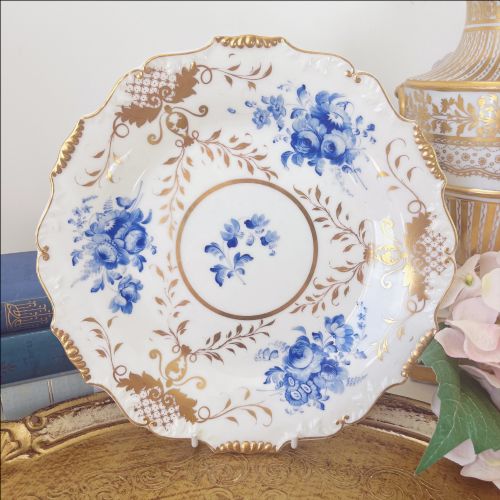
Floral decoration was achieved primarily through marquetry, using contrasting woods and stained veneers to compose botanical motifs, often supplemented by hand-painted details on satinwood or porcelain panels.
Materials recorded span walnut, mahogany, satinwood, fruitwood, porcelain, and enamel.
The Measure of Craft
The standard of a floral cabinet rests upon the precision of the veneer work and the integration of the botanical inlay into the surrounding timber. Finer pieces demonstrate seamless alignment, subtle shading within the floral petals, and a balanced composition across panels and doors.
Structural integrity and the selection of secondary woods further differentiate the work, as superior examples maintain original handles, glass, and mounts alongside carefully fitted drawers and doors that close true.
Hewetsons London·H & R Daniel·Hampton & Sons London
The Antique Floral Cabinet Glossary
- Marquetry
- Decorative veneer work where small pieces of various woods, tinted bone, or ivory are assembled in geometric or pictorial patterns. This technique forms the primary floral imagery on walnut and mahogany cabinets.
- Bombe
- A swollen or bulging contour characteristic of certain 18th-century case furniture, notably Dutch designs. This curved profile requires advanced woodworking skill to veneer accurately.
- Bureau bookcase
- A dual-purpose piece combining a sloping writing flap above drawers with an upper shelving section enclosed by doors. These often incorporate extensive floral inlay across the fall-front.
- Satinwood
- A lustrous, hard timber native to Ceylon and India, exhibiting a yellow sheen. It served as a favoured canvas for painted decoration and inlaid cabinets during the Sheraton Revival period.
- Credenza
- A low-standing side cabinet developed in the Victorian era for dining rooms or parlours. These frequently incorporate glass display doors and marquetry panels.
Antique Floral Cabinet: Frequently Asked Questions
What periods do these floral cabinets cover?
The pieces span from the 17th century through the 18th and 19th centuries, extending into Edwardian and 1930s productions. Dutch Baroque, Regency, and Victorian styles appear frequently among the listings.
Craftsmen across these eras adapted floral marquetry and painted decorations to changing domestic tastes, moving from heavy walnut bureau bookcases to lighter satinwood display cabinets.
How do I identify floral marquetry?
Floral marquetry involves hand-cut veneers of contrasting timbers assembled to form flower and foliage patterns. Artisans used shaded woods to give petals a three-dimensional appearance.
Close inspection reveals natural wood grain within the floral motifs rather than printed or painted surfaces, though some later satinwood pieces combine inlay with direct hand-painted botanical art.
Where were these cabinets placed originally?
Larger bureau bookcases and display cabinets served as principal statement pieces in formal reception rooms and libraries. Smaller side cabinets and corner units filled alcoves and parlours.
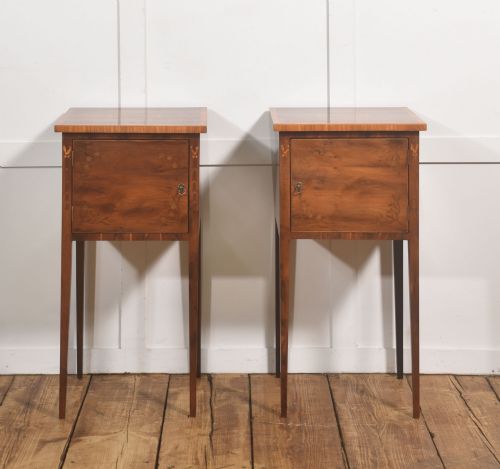
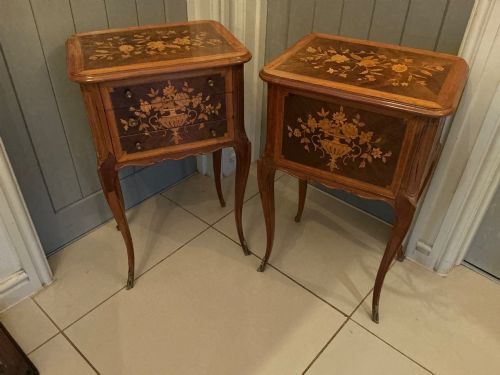
Bedside cabinets and cupboards provided practical enclosed storage within private chambers, maintaining the decorative floral theme throughout the home.
What woods were used for the floral inlay?
Makers selected a variety of contrasting fruitwoods, satinwood, and darker timbers like walnut and rosewood to render leaves, stems, and blossoms. The natural colours of the wood provided the palette.
Dyed veneers and engraved lines added depth and botanical accuracy to the floral sprays depicted across the cabinet doors and drawer fronts.