



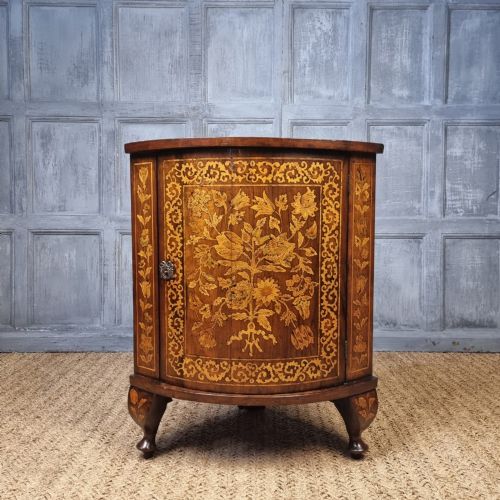


Antique Floor Cabinet
An antique floor cabinet brings solid timber and proportion to a room, offering upright storage designed to stand directly on the floor.
Antique Floor Cabinet
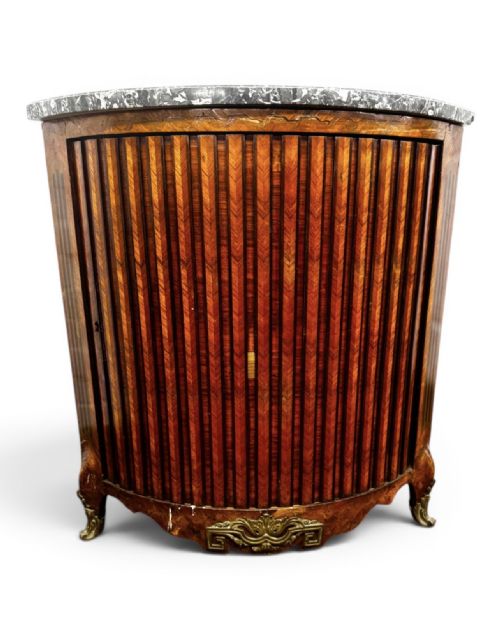
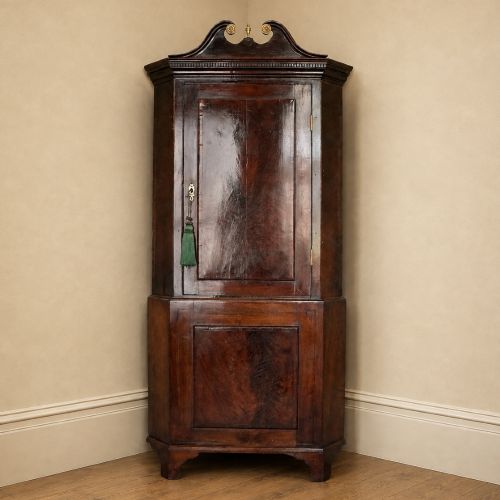
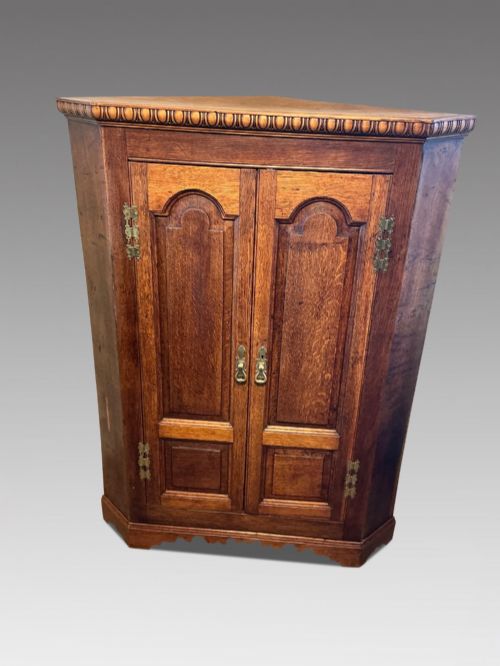
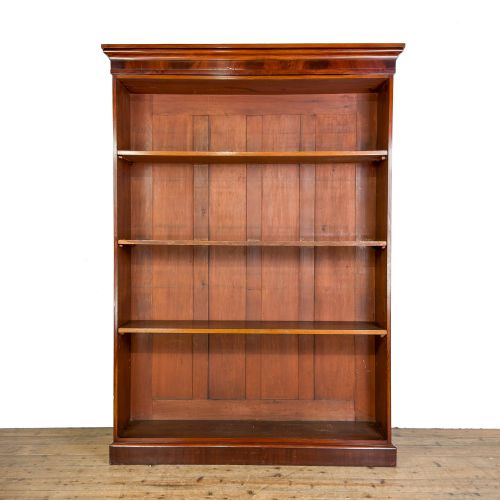
An antique floor cabinet primarily encompasses standing corner cupboards, bookcases, and specialised storage pieces that rest on the floor rather than hanging on a wall. The listings show a strong presence of Georgian and Victorian examples, with corner cupboards being the most frequently encountered form among these upright items.
Makers and cabinetmakers built these pieces to utilise awkward room angles or to house books, folios, and domestic provisions within substantial timber housings. They span multiple eras from the eighteenth century through to the early twentieth century, reflecting shifts in domestic utility.
The materials range from native oak and mahogany to walnut and yew wood, often styled with inlay or marquetry. Whether standing as a breakfront bookcase or a corner cupboard in two parts, each piece serves as a prominent vertical element in an interior.
How they were made
Cabinetmakers constructed these pieces primarily using solid mahogany, oak, and walnut, frequently incorporating secondary timbers like satinwood for inlay and brass for hinges, escutcheons, and locks. Construction methods relied on traditional joinery to build sturdy carcases capable of supporting heavy internal shelving and contents.
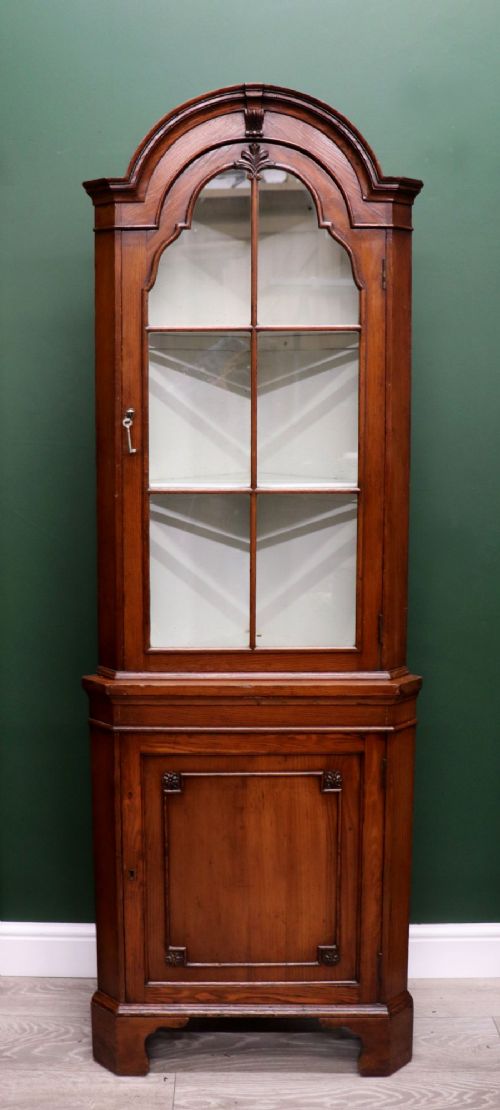
Surfaces received careful attention through veneering, marquetry, or parcel gilding, particularly on Georgian and Dutch walnut examples. Glazed doors on bookcases and display cabinets required fine timber framing to hold individual panes of glass securely.
Antique Floor Cabinet Retail Price Guide 2026
Typical asking prices for floor cabinet among the pieces listed under this phrase on Sellingantiques today, from the lower quarter to the upper quarter. They describe what is for sale here now, not the wider market.
What varies in quality
The distinction between standard utility items and finer pieces rests upon the choice of timber figure, such as richly grained mahogany or figured Irish yew wood, paired with the precision of inlay and marquetry. Master cabinetmakers selected stock with deep natural figuring and aligned grain patterns across doors and panels.
Construction depth also defines the grade of a piece, separating simple single-piece carcases from elaborate two-part standing cupboards with fitted interiors, dental mouldings, or breakfront architecture. Original brass hardware, intact glass, and untouched patination further elevate the standing of a cabinet.
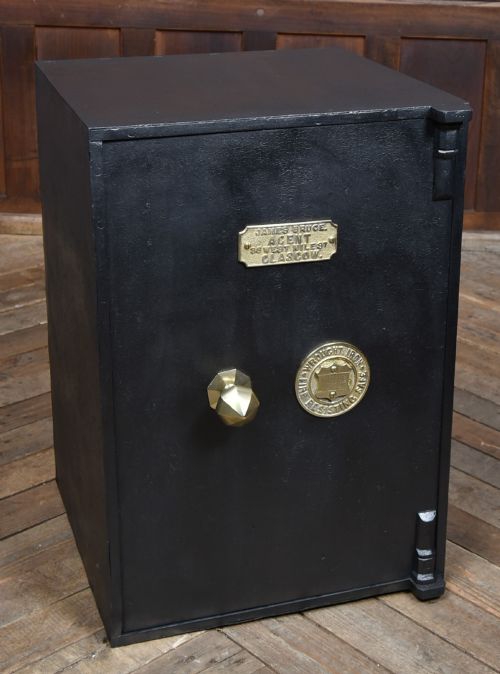
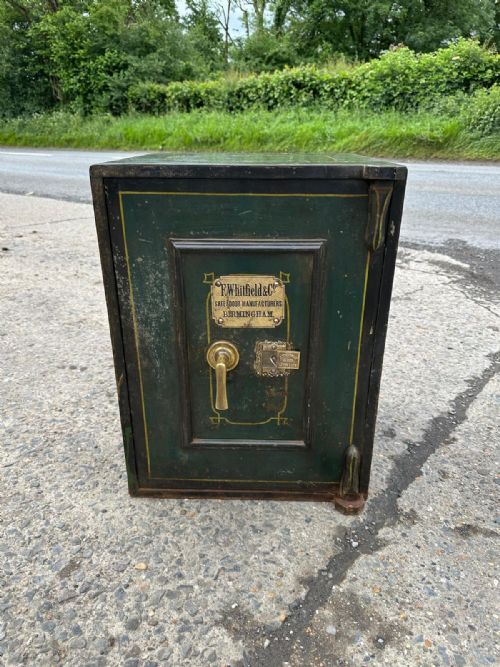
James Bruce·F. Whitfield & Co.·U Phone·Lochmanns·Chubb·Waring & Sons
The Antique Floor Cabinet Glossary
- Standing corner cupboard
- A tall cabinet specifically designed with a triangular footprint to fit neatly into the corner of a room, resting directly on the floor. These often feature upper glazed or panelled doors.
- Marquetry
- Decorative veneer work using various coloured woods, ivories, or metals arranged in intricate pictorial patterns. This technique frequently appears on Dutch and Georgian walnut cabinets.
- Breakfront
- A cabinet design where the central section projects forward from the flanking sections, creating architectural depth and presence. It is commonly seen on large bookcases from the Georgian and Victorian eras.
- Book press
- A heavy mechanical device integrated into a cabinet or standing on its own base, utilised for flattening and pressing pages of paper. Early Victorian examples often utilise oak and mahogany.
- Folio cabinet
- A specialised low or floor-standing cabinet designed to store large sheets of paper, prints, or maps flat. These pieces provide wide, shallow drawers or compartments.
Antique Floor Cabinet: Frequently Asked Questions
What is an antique floor cabinet?
An antique floor cabinet is a freestanding vertical storage piece, most commonly found as a corner cupboard, bookcase, or folio cabinet dating from the eighteenth to the early twentieth century.
These pieces were constructed to stand independently on the floor, utilising timbers like mahogany, oak, and walnut to furnish domestic spaces with practical storage.
How do I identify a Georgian corner cabinet?
Georgian corner cabinets typically display substantial timber construction in oak or mahogany, often featuring fielded panels, brass H-hinges, and classical cornices.
Earlier examples from the eighteenth century frequently separate into two distinct stacked sections to facilitate transport and placement in room corners.
Where should I place a standing corner cupboard?
A standing corner cupboard is specifically proportioned to occupy the ninety-degree junction between two walls, turning dead space into functional display and storage.
Because they rest directly on the floor without wall fixings, they can be positioned in dining rooms, halls, or drawing rooms alongside other period furniture.
What is the difference between oak and mahogany cabinets?
Oak cabinets generally reflect earlier country house or Georgian vernacular styles, known for a prominent grain and sturdy, robust carcase construction.
Mahogany cabinets often exhibit finer urban cabinetmaking, smoother surfaces, and decorative additions like stringing, inlay, or glazed display doors.