

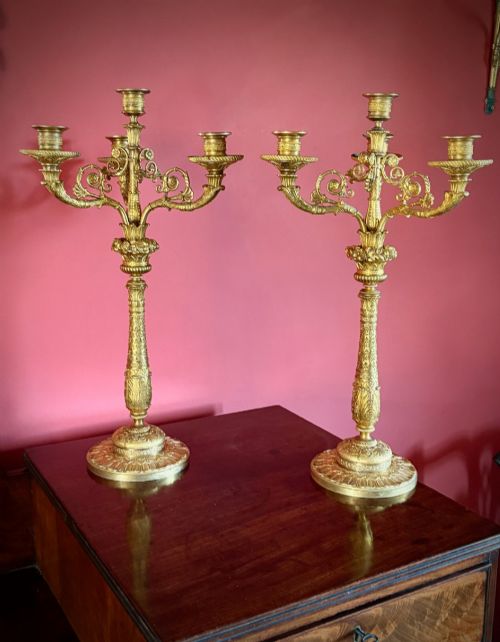


Antique Five Arm Candelabra
These antique five arm candelabra offer grand illumination, bringing sculptural form and metalwork from the eighteenth, nineteenth, and twentieth centuries into your interior.
Antique Five Arm Candelabra
When you search for antique five arm candelabra, you are looking at substantial branch-form lighting designed to hold five separate candles. These pieces emerge from periods including the eighteenth century, the nineteenth century, and the twentieth century.
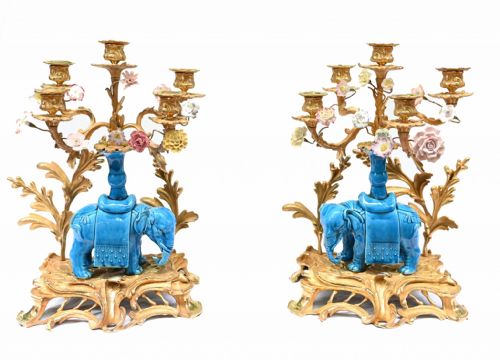
The selection encompasses table candelabra, wall lights, and wall sconces created in styles such as French Empire, Louis XIV, Rococo, and Arts and Crafts. You will encounter pairs fashioned from ormolu, gilt bronze, silver plate, brass, and porcelain.
Originating from French workshops, English makers, and Italian makers, these lighting pieces range from formal classical revival designs to simpler brass craftwork.
How they were made
Foundries cast these pieces in bronze, brass, and copper before applying mercury gilding, ormolu, or silver plating to the metal surfaces. Skilled metalworkers chased the cast details by hand to sharpen the leafwork, figures, and architectural motifs.
Silver plated items utilise base metals coated in a layer of silver, while porcelain elements are fired, glazed, and mounted in metal mounts. Wall lights and candelabra frequently combine multiple cast sections joined with threaded pins and screws.
Antique Five Arm Candelabra Retail Price Guide 2026
Typical asking prices for five arm candelabra among the pieces listed under this phrase on Sellingantiques today, from the lower quarter to the upper quarter. They describe what is for sale here now, not the wider market.
Keep an eye out for exotic porcelain elephants pressed into service as candle-holders, proving the Victorians had a wonderful sense of whimsy.
What varies in quality
The sharpness of the chasing on gilt bronze and ormolu dictates the visual clarity of the ornament, separating crisp hand-finished casting from softer production. Heavier gauge metals provide greater stability across the five arms and prevent drooping under the weight of candles.
The integration of materials, such as porcelain mounts fitted securely to bronze bases, reveals the maker's precision. Original gilding depth and surface wear patination demonstrate how well the piece has survived centuries of use.
Pierre Philippe Thomire
The Antique Five Arm Candelabra Glossary
- Ormolu
- Gilt bronze produced by applying a mercury and gold amalgam to a bronze base and heating it to vaporise the mercury. This technique creates a durable golden finish characteristic of French decorative metalwork.
- Silver Plate
- A base metal, such as copper or nickel silver, coated with a thin layer of silver. This method provided the appearance of solid silver at a lower production cost during the nineteenth century.
- Gilt Bronze
- Bronze metal that has been coated with gold leaf or a gold wash. It combines the structural strength of bronze with a bright golden surface.
- Candelabra
- A branched candlestick holder designed to support multiple candles from a single base. They appear in table-standing and wall-mounted formats across various historical periods.
- Chasing
- The manual method of refining a metal casting from the front using small punches and hammers. This technique restores crispness and adds texture to leaves, drapery, and faces.
Antique Five Arm Candelabra: Frequently Asked Questions
How do I clean antique ormolu?
Dust gently with a soft brush and avoid harsh chemical dips that strip the historic gilding.
Moisture should be kept away from porous mounts and joined sections to prevent corrosion.
Can these candelabra be wired for electricity?
Many examples can accommodate concealed wiring through the central column without altering the structural metal.
Professional conversion allows you to use them safely as lamps while preserving the original candle sockets.
How do I date an antique brass candelabrum?
Examine the casting seams, tool marks, and fastening methods used to join the arms to the central stem.
Stylistic indicators like classical revival motifs or arts and crafts simplicity help narrow the period.