
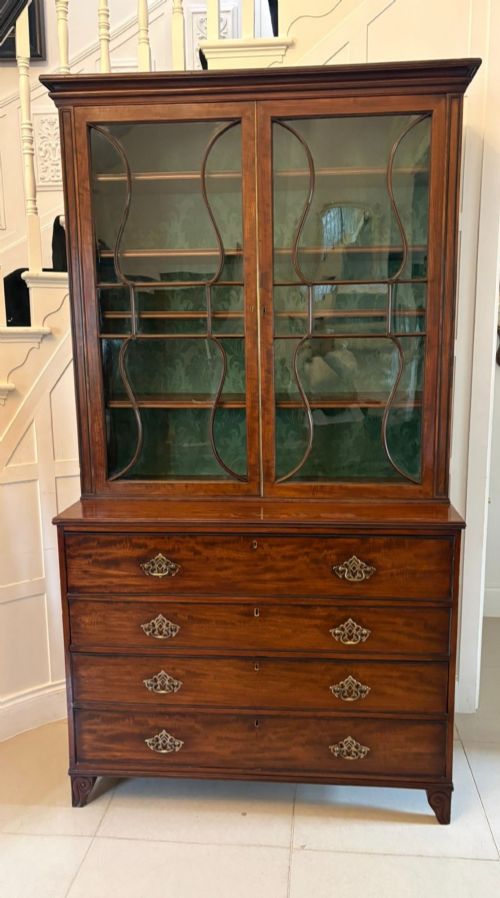
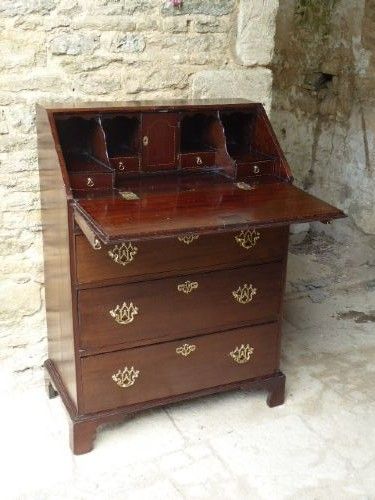
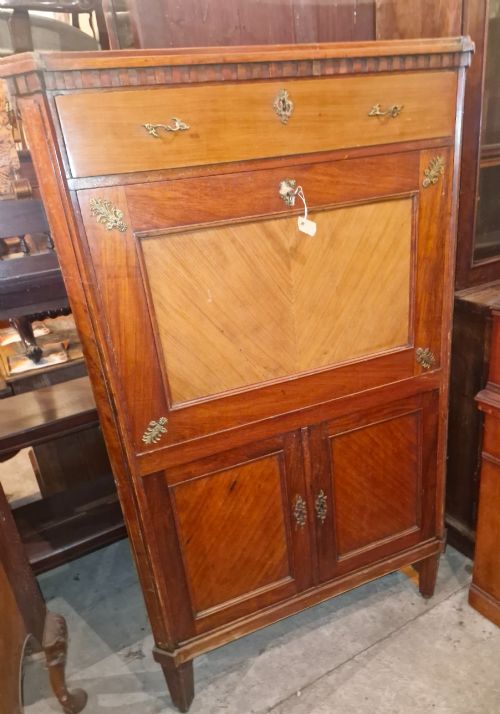
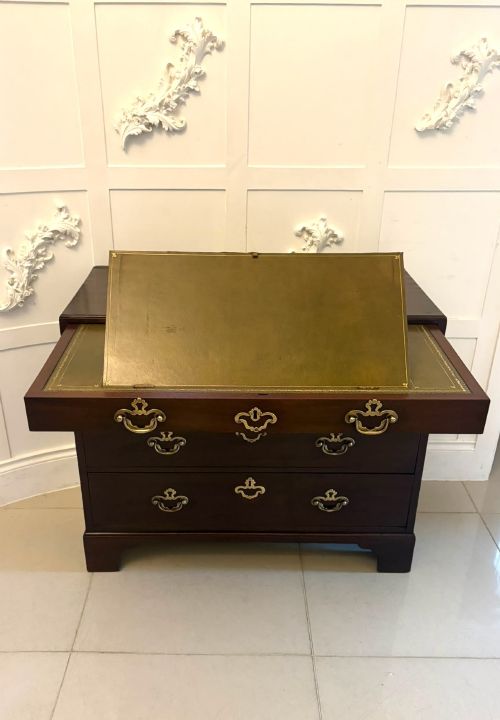



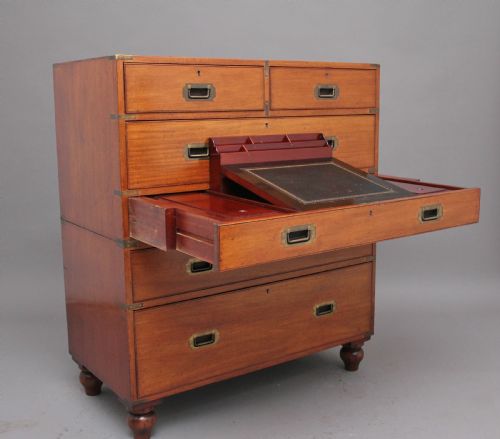

Antique Fitted Secretaire Chest
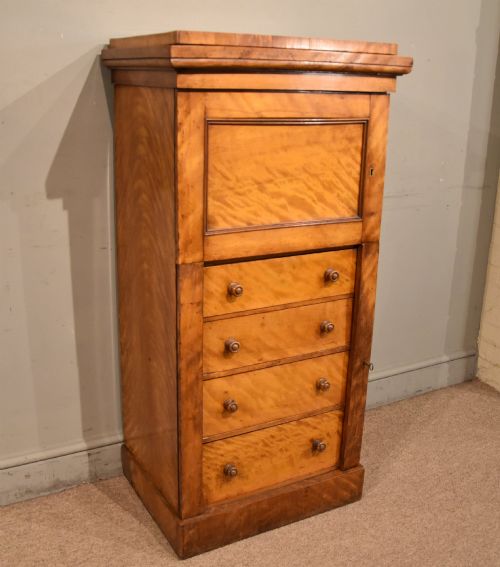
An antique fitted secretaire chest combines the outward form of a traditional drawer chest with a clever drop-down writing surface enclosing pigeonholes and small drawers.
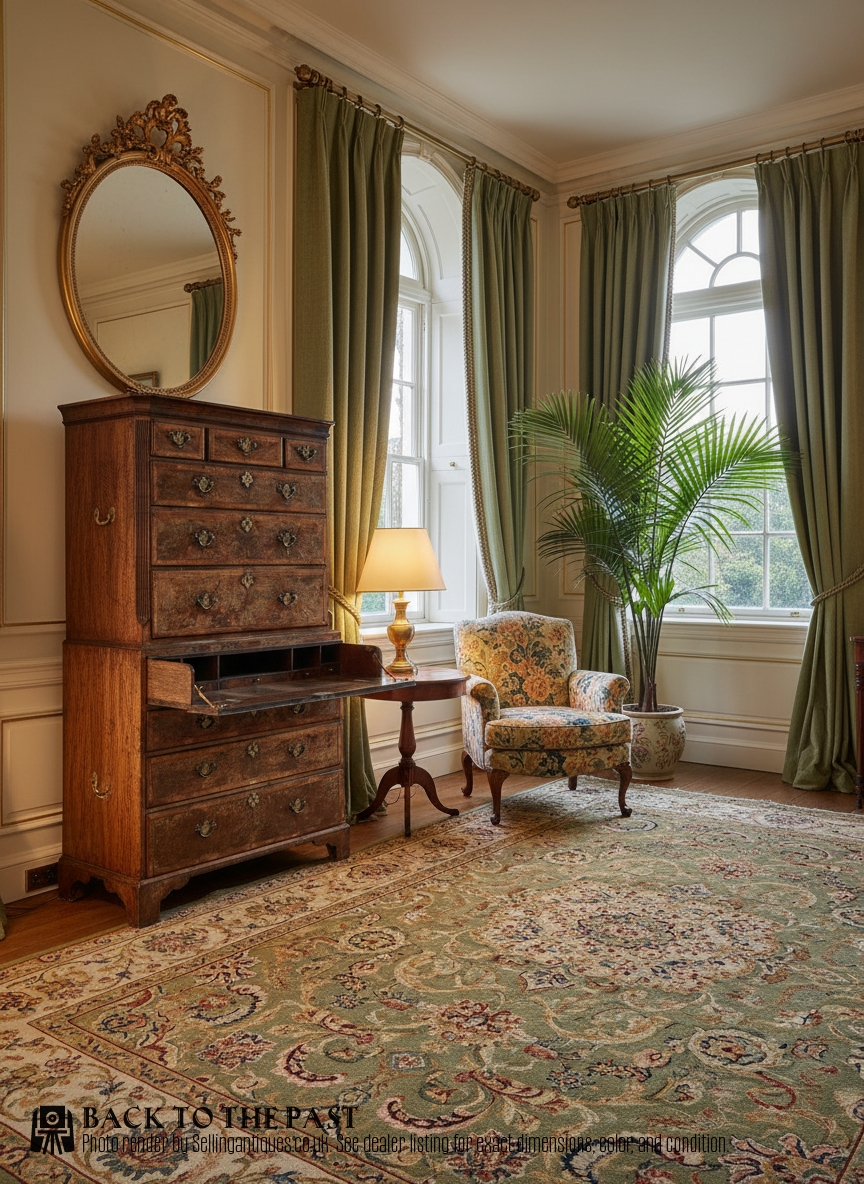
Antique Fitted Secretaire Chest
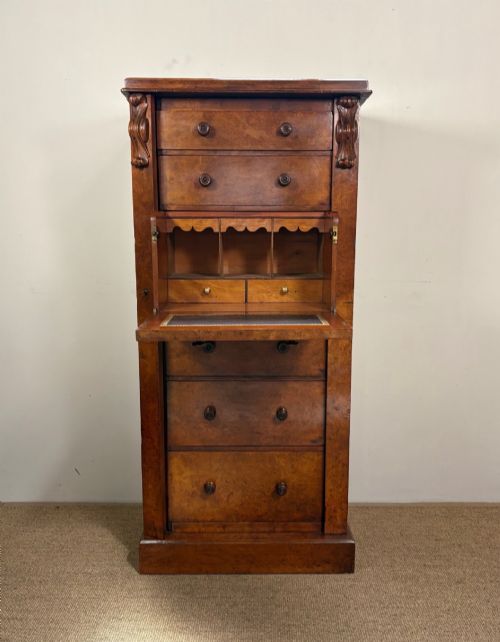
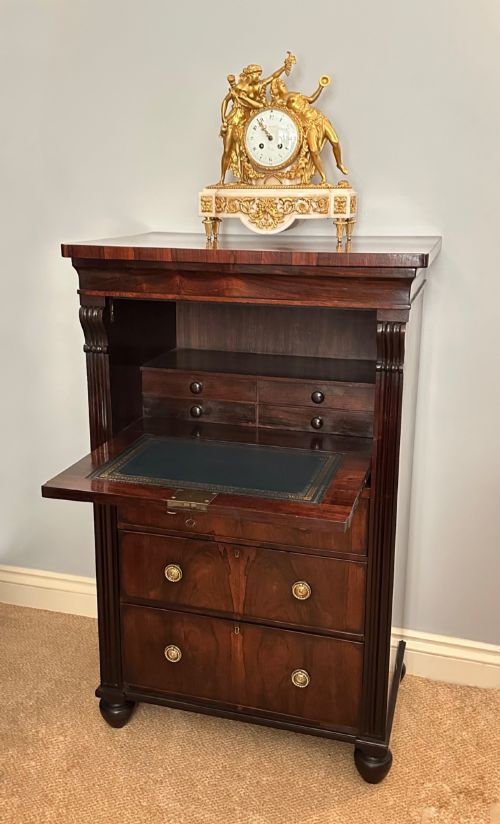
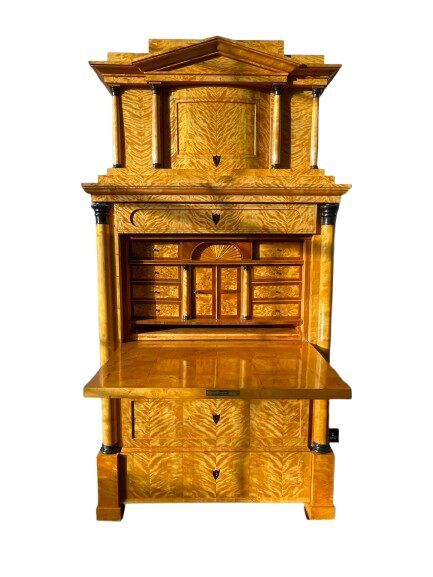
An antique fitted secretaire chest presents as a standard set of drawers from the exterior, yet conceals a functional writing drawer within its upper section. The drop-front mechanism reveals pigeonholes, small drawers, and occasionally central compartments designed for correspondence and paperwork.
The pieces appearing here span several centuries and styles, drawing from Georgian, Regency, and Victorian periods. Mahogany and walnut serve as the predominant woods, alongside specialised regional examples in oak, yew, and camphorwood.
Makers integrated the secretaire element into various forms, ranging from tallboys and chest on chests to compact campaign boxes and Wellington chests. Buyers find both simple provincial examples and grand urban workshop pieces with fitted interiors.
Judging Quality
Quality rests in the precision of the internal arrangement, where secondary woods, dovetail joints, and small drawer construction reflect the maker's care. Superior examples maintain crisp cockbeading around drawer edges and smooth operation of the secretaire drop-front hinge mechanisms.
The choice of timber grain defines the aesthetic tier, with highly figured flame mahogany, pollard oak, or figured walnut elevating standard utility furniture into masterworks. Original hardware, intact leather writing surfaces, and matching key sets preserve the integrity of the piece.
Gillows of Lancaster·William Trotter Edinburgh
The Antique Fitted Secretaire Chest Glossary
- Secretaire drawer
- A disguised upper drawer featuring a hinged front that folds down to create a writing desk. It conceals internal compartments for stationery and ink.
- Tallboy
- A tall chest of drawers made in two sections, typically stacking a smaller set of drawers atop a larger base chest.
- Campaign chest
- A portable chest built in two or more sections with recessed brass handles and corner brackets for military transport.
- Wellington chest
- A tall, narrow chest of drawers secured by a locking vertical side bar that fastens over the drawer edges.
- Cockbeading
- A narrow rounded wooden moulding applied around the edges of drawer fronts to protect the veneer joints.
Antique Fitted Secretaire Chest: Frequently Asked Questions
How do I identify a secretaire drawer?
Look for a false lockplate or dual locking mechanisms on the top drawer of the chest. The entire upper drawer front pulls forward and hinges down horizontally to reveal the writing surface.
Inside, you will find an arrangement of small pigeonholes and miniature drawers designed for letters and inkwells, often trimmed with contrasting lighter woods.
Were these chests used for travel?
Standard domestic secretaire chests remained in fixed positions within bedrooms and libraries. However, specific campaign variants were built in sectional parts with recessed brass fittings for military officers on active service.
These campaign pieces dismantle into two separate boxes to ease transport on ships and wagons during the eighteenth and nineteenth centuries.
How do I care for the leather writing surface?
Keep the leather or baize writing insert away from direct sunlight to prevent fading and drying out. Clean the surface gently with a dry cloth and avoid liquid polishes that can stain the material.
Condition the surrounding wood with appropriate wax while protecting the interior leather from moisture and heavy pressure.
What is the difference between a tallboy and a chest on chest?
A chest on chest consists of a larger chest base supporting a slightly narrower upper chest, providing substantial storage capacity. The term tallboy sometimes encompasses this stacked form as well as single tall vertical drawer units.
Both configurations frequently incorporate a secretaire drawer within the lower section of the top module for dual storage and writing utility.