



Antique Fireside Store
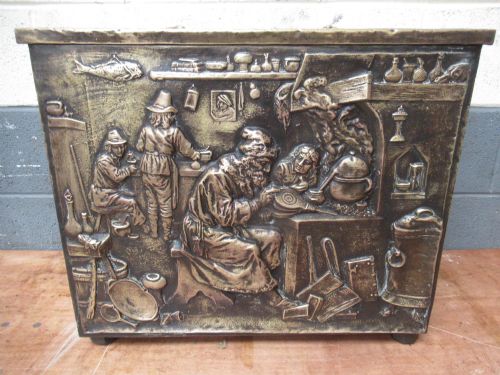
An antique fireside store gathers coal, logs and kindling beside the hearth in brass, copper and timber.
Antique Fireside Store
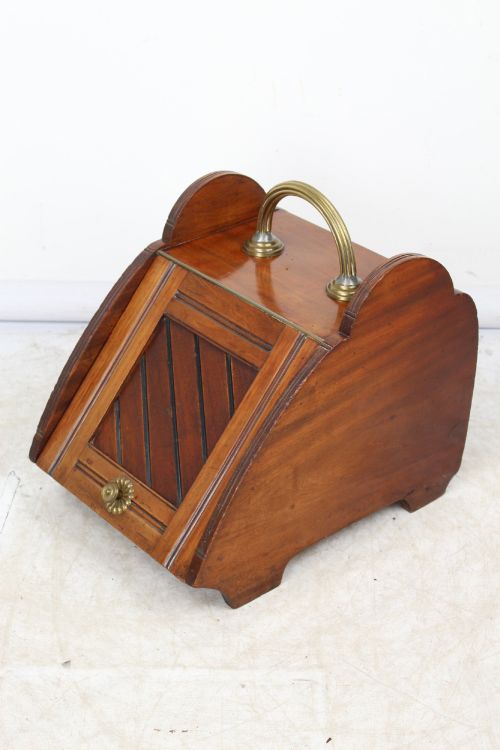
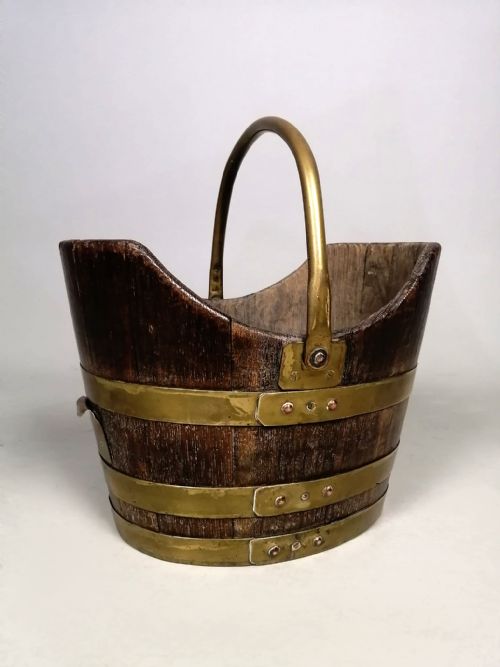
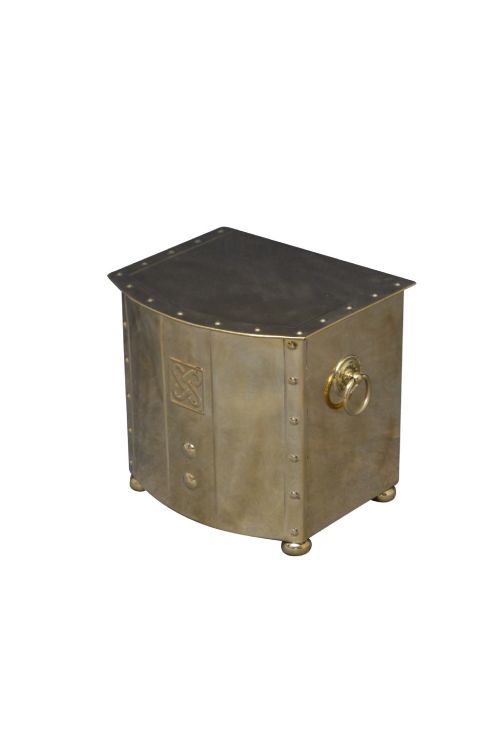
An antique fireside store serves the hearth by holding fuel near the fire, taking forms such as coal scuttles, coal boxes, log bins, purdoniums and buckets. These pieces originate across the eighteenth, nineteenth and early twentieth centuries, spanning Georgian, Victorian, Edwardian and Art Nouveau eras.
Victorian and nineteenth-century examples dominate the selection, offering substantial timber boxes and riveted metal bins alongside Arts and Crafts copper vessels. Georgian and Regency pieces appear less frequently, often taking the form of coopered buckets or cellarettes adapted for fuel storage.
Regional variations include English country oak and mahogany designs, Scottish walnut purdoniums, and continental copper or brass work from Belgium and France. Buyers meet everything from rustic farmhouse pine to decorative hammered copper buckets made for domestic hearths.
Materials and Technique
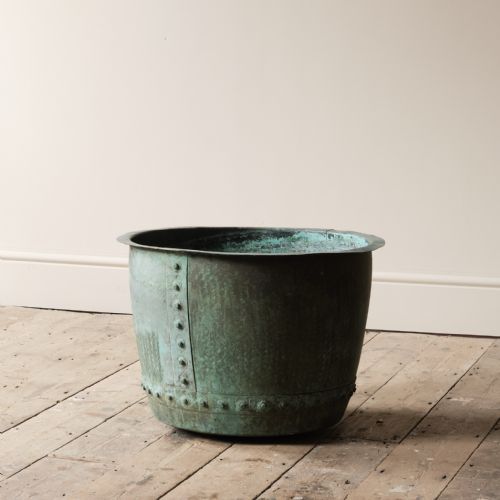
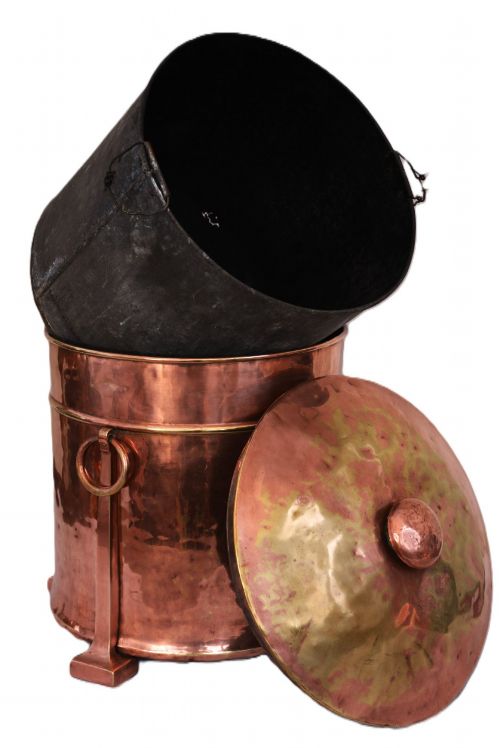
Makers utilised durable metals such as brass and copper, often shaping them through hand-beating, riveting or embossing to create sturdy coal buckets and bins. Copper vessels frequently feature riveted seams and brass swing handles, while brass bands reinforce timber examples.
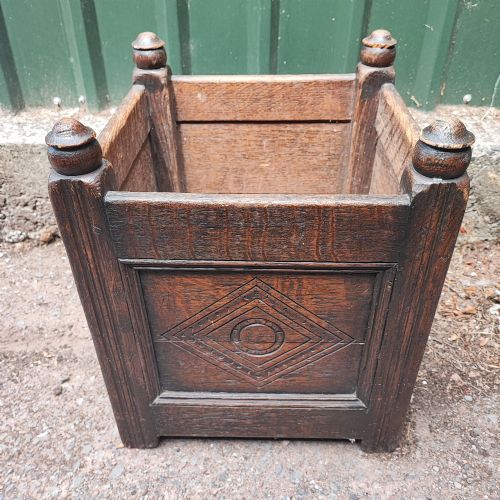
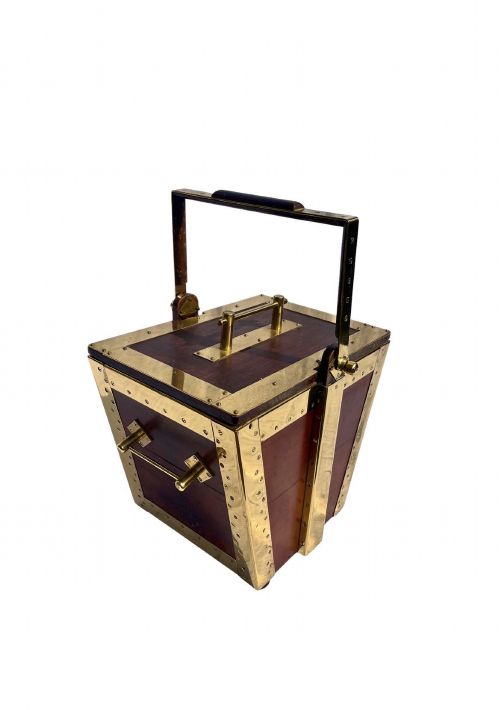
Cabinetmakers worked in solid hardwoods including oak, mahogany, walnut and fruitwood, employing traditional joinery and coopered stave construction for bins and buckets. Carved panels, brass mounts and liner inserts complete the construction of finer Victorian and Edwardian boxes.
The Measure of Quality
Quality rests in the weight of the metal and the integrity of the timber construction, where heavier gauge copper, solid oak staves and robust brass mountings indicate superior manufacture. Superior pieces display crisp hand-beating, neat riveting and well-fitted interior linings rather than thin sheet metal or loose joints.
Design ambition separates standard utility items from finer examples, such as those finished with detailed carving, Arts and Crafts hand-hammering or elegant walnut veneers. Original hardware, including matching brass handles and hinges, elevates the standing of a piece against later replacements.
William Soutter & Sons
The Antique Fireside Store Glossary
- Coal purdonium
- A specialised front-tipping coal box, often featuring a hinged lid and an interior metal liner for carrying fuel.
- Coopered
- Constructed from wooden staves bound together with metal hoops, much like a traditional barrel.
- Cellarette
- A fitted box originally used for chilling wine or storing bottles, frequently repurposed as a fireside fuel store.
- Aesthetic Period
- A late nineteenth-century British design movement emphasising visual beauty and artistic expression over strict historical revival.
- Riveted
- Fastened with short metal pins that secure overlapping plates of copper or brass, common in durable hearth buckets.
Antique Fireside Store: Frequently Asked Questions
What is an antique fireside store used for?
These vessels held coal, logs and kindling close to the fireplace for daily use.
They kept hearth areas tidy while keeping fuel within easy reach of the fire.
How do I tell a Georgian piece from a Victorian one?
Georgian items often use coopered staves and brass banding, such as fire buckets and cellarettes from the eighteenth century.
Victorian pieces frequently introduce heavier carved timber boxes, metal coal scuttles and riveted copper bins.
Can I use an antique copper bucket for real logs?
Many metal bins were built specifically to withstand the weight of logs and coal.
Check for a sound base and stable handles before loading heavy timber into older vessels.
What metals are most common on these bins?
Brass and copper appear regularly, often shaped into buckets, helmets and scuttles.
Iron and wrought steel also serve for simpler fuel keepers and log layers.