






Antique Fireside Stand
An antique fireside stand brings hearthside utility and period character to a room, ranging from brass footmen to mahogany fire cats.
Antique Fireside Stand
An antique fireside stand encompasses practical hearth accessories such as footmen, trivets, companion sets, log bins, and pole screens used to manage fires and warmth in period homes. These pieces serve both utilitarian and decorative roles beside the fireplace.
The selections span diverse forms including rotating fire cats, adjustable needlepoint pole screens, and copper coal buckets. Examples trace origins across Georgian, Regency, Victorian, Edwardian, and Arts and Crafts eras.
Buyers meet sturdy metal and iron tool rests alongside polished brass trivets and timber book troughs. Each form reflects the specific domestic habits of its period, from boiling kettles to screening coal heat.
How they were made
Metals such as brass, cast iron, wrought iron, steel, and copper form the backbone of many hearth pieces, shaped through casting, forging, and panel beating. Iron and steel provide the strength needed for heavy fire irons and coal frames.
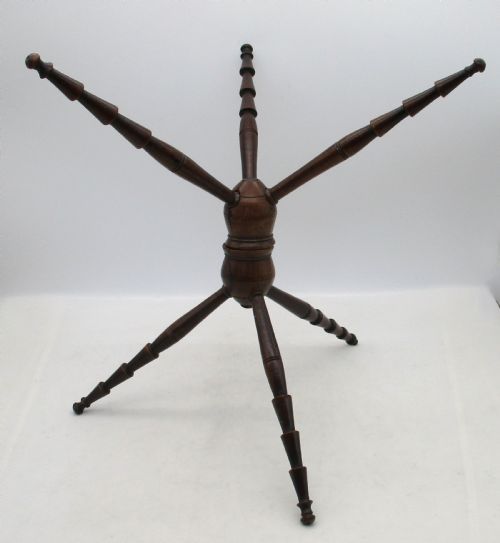
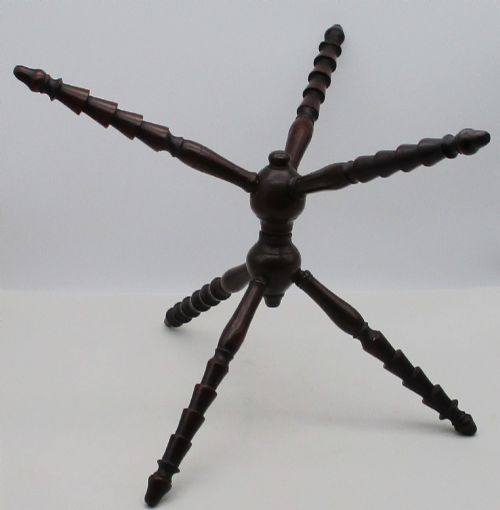
Wood constructions rely on mahogany, walnut, and pine, frequently utilised for footman frameworks, revolving fire cats, and slope-shelf book troughs. Artisans employed traditional joinery and turning to build robust stands capable of enduring hearthside heat.
Antique Fireside Stand Retail Price Guide 2026
Typical asking prices for fireside stand among the pieces listed under this phrase on Sellingantiques today, from the lower quarter to the upper quarter. They describe what is for sale here now, not the wider market.
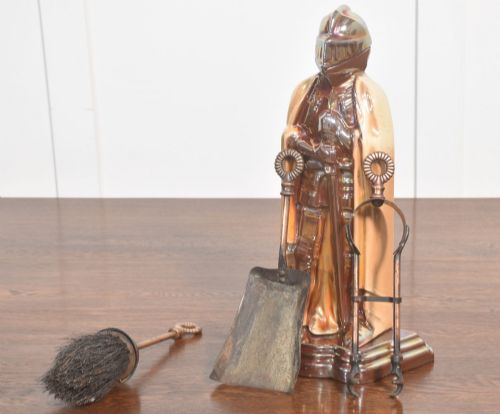
A cast metal knight and a crinoline lady stand ready to watch over the hearth.
What varies in quality
Material thickness and heft distinguish sturdier examples from lighter ones, particularly in cast brass trivets, iron tool sets, and copper buckets. Substantial gauge metals and dense hardwoods withstand daily proximity to open fire far better.
The refinement of decorative detail sets superior pieces apart, visible in hand-forged ironwork, crisp brass castings, and finely stitched needlepoint tapestries on pole screens. Well-executed joints and smooth mechanical adjustments in rotating or height-adjustable stands indicate careful workshop production.
The Birmingham Guild
The Antique Fireside Stand Glossary
- Footman
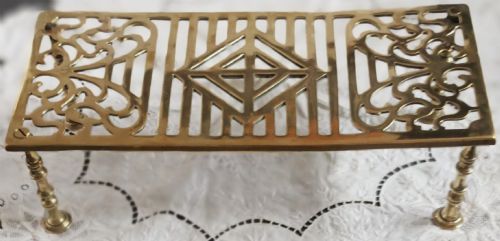
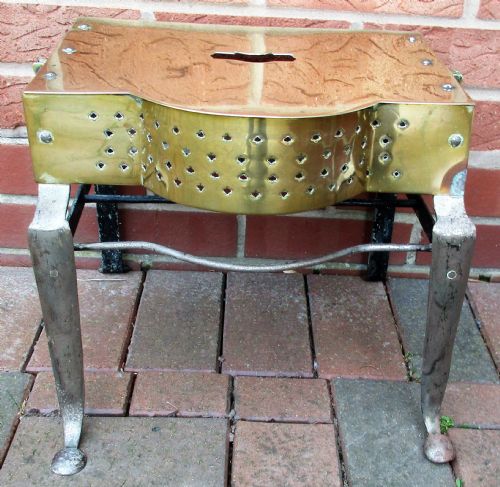
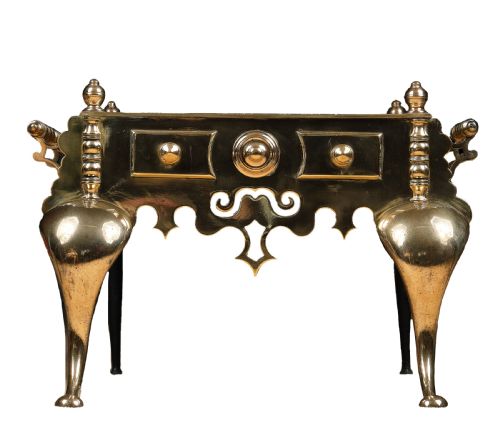
- A metal stand placed in front of a fireplace to keep dishes warm. These low tables often feature brass tops and steel legs.
- Trivet
- A small three-legged metal stand used to support kettles or pots near the fire. They appear in cast brass and iron.
- Pole screen
- An adjustable vertical screen designed to shield a person's face from the direct heat of an open fire. They usually feature needlepoint or tapestry panels.
- Fire cat
- A rotating wooden fireside stand used in Georgian rooms. These uncommon stands held items close to the hearth.
- Companion set
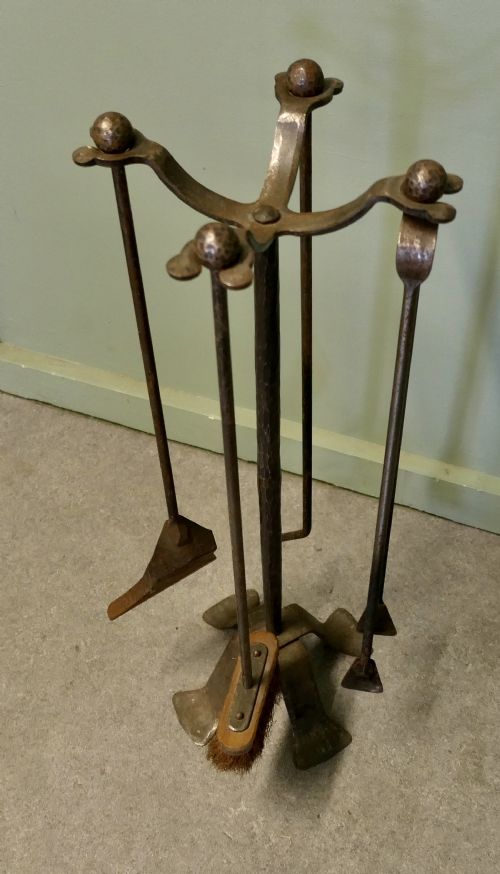
- A matched collection of fireplace tools such as pokers, tongs, and shovels held on a dedicated stand. Sets range from plain iron to ornate brass figures.
Antique Fireside Stand: Frequently Asked Questions
What is an antique fireside stand used for?
These stands served practical hearth duties, from supporting kettles and warming plates to holding companion tools and screening radiant heat.
Today, they function well as decorative period accents or functional display pieces beside modern fireplaces.
What metals were used for hearth stands?
Hearth stands utilise brass, cast iron, wrought iron, steel, and copper depending on the period and specific function.
Robust iron and steel suit heavy tool rests and frames, while polished brass and copper appear on trivets and coal buckets.
How do pole screens work?
Pole screens feature a vertical wooden shaft holding an adjustable tapestry or needlepoint shield that slides up and down.
Users positioned the shield to block the intense heat of an open fire from their faces.