
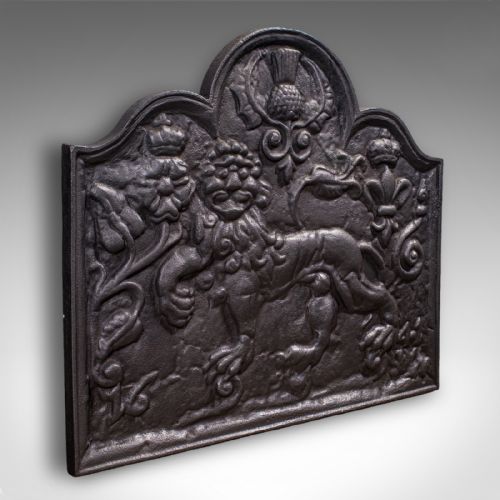


Antique Fireplace Back
An antique fireplace back gathers and radiates warmth into the room while protecting the masonry behind the hearth.
Antique Fireplace Back
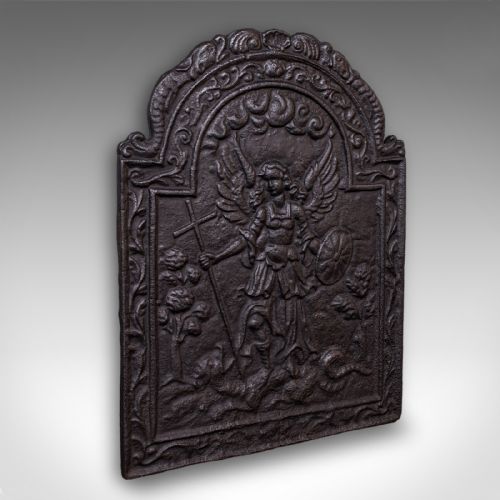
An antique fireplace back serves primarily to shield the chimney wall from intense heat and to throw warmth back into the living space. These heavy cast iron plates stand upright at the rear of the hearth, often functioning alongside grates, andirons, or baskets.
The pieces seen here span periods from the eighteenth century through to the early twentieth century, with a strong representation of Victorian examples. English casting traditions dominate the selection, alongside occasional continental pieces.
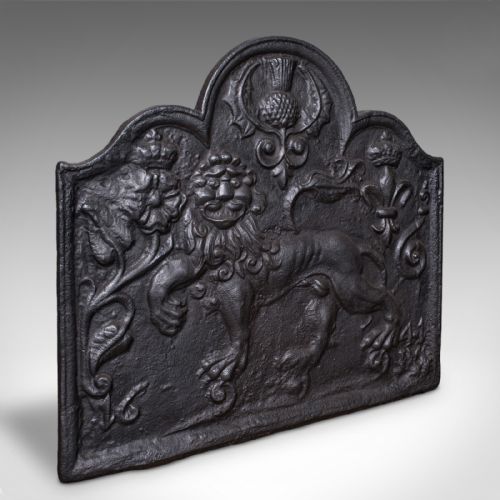
Moulded relief decoration characterises many specimens, displaying heraldic emblems, neoclassical motifs, tree of life designs, or plain architectural panels. Formats range from small plates suitable for compact hearths to massive tall castings intended for large country house chimneys.
Materials and Casting Techniques
Foundries produced these iron plates by pouring molten metal into sand moulds impressed with carved wooden patterns or relief stamps. This technique allowed makers to achieve crisp details, including coats of arms, armour, and botanical motifs.
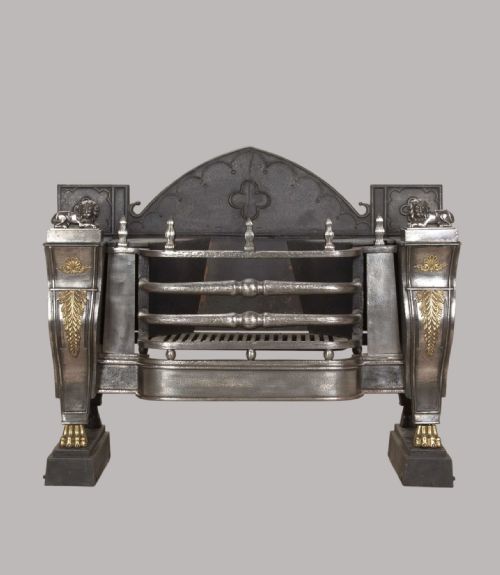
Wrought iron and cast iron appear together in associated grates and fire baskets, combining brittle strength with forged structural elements. The thickness of the metal plate determined its capacity to absorb and slowly release heat over hours.
Listings feature cast iron prominently, alongside wrought iron elements and associated materials like oak, mahogany, and ceramic.
Distinctions in Quality and Craft
Depth and crispness of the cast relief separate standard utility plates from pieces with artistic ambition. Sharply defined moulding indicates a careful founder using well-maintained patterns, whereas worn details point to repeated casting from degraded moulds.
Substance and weight govern the utility of the plate, as heavier castings endure intense thermal cycles without cracking. The integration of specific decorative themes, such as maritime scenes or heraldic crests, distinguishes bespoke foundry work from mass-produced items.
The Antique Fireplace Back Glossary
- Fireback
- A heavy metal plate placed at the back of an open hearth to reflect heat and protect the brickwork. It often bears moulded decoration.
- Fire Grate
- A metal basket or framework holding fuel above the hearth floor, frequently paired with a fireback. This setup improves airflow around the burning wood or coal.
- Reflector
- An alternative term for a fireback, highlighting its primary function of projecting radiant heat into the room. These plates redirect energy that would otherwise disappear up the chimney.
- Carolean Revival
- A nineteenth-century stylistic movement reviving seventeenth-century design elements, seen in scrolling ornamentation and robust proportions. Pieces from this revival draw heavily on restoration-era aesthetics.
- Neoclassical Revival
- A design style drawing on classical Greek and Roman motifs, featuring symmetrical urns, swags, and architectural borders. Foundries applied these restrained patterns to heavy iron plates during the Victorian era.
Antique Fireplace Back: Frequently Asked Questions
What is the purpose of a fireback?
A fireback protects the rear masonry of an open fireplace from the damaging effects of continuous high temperatures. By absorbing heat during a fire, the heavy metal plate continues to radiate warmth into the room long after the flames subside.
Historically, these plates also acted as decorative focal points within the hearth. Even when unlit, a cast iron back adds texture and historical character to the chimney opening.
How do I choose the right size?
Measure the width, height, and depth of your fireplace opening carefully before selecting a plate. Ensure the weight of the casting suits the stability of your hearth floor and the capacity of any supporting brackets.
Consider the clearance needed if you plan to use a grate or andirons in front of the plate. A proper fit leaves adequate space around the edges for safe airflow and installation.
Can I use an antique fireback today?
Most cast iron firebacks remain entirely suitable for regular use in traditional open hearths. The durable nature of thick iron allows these plates to withstand modern wood-burning fires without losing structural integrity.
Inspect the metal for deep structural fractures before installation, as thermal shock can widen existing flaws. Gentle heating during the first few uses helps temper older iron to high temperatures.
How do I date an iron fireback?
Dating relies on stylistic clues, including the decorative motifs, lettering styles, and casting techniques characteristic of specific eras. Georgian and Victorian foundries favoured distinct aesthetic traditions, ranging from classical revivalism to detailed heraldry.
Maker's marks or registration numbers, when present, provide more precise chronological markers. Comparison with dated archive examples helps narrow the period of production.