


Antique Firedogs
Antique firedogs anchor an open hearth with functional metalwork that lifts logs for better airflow.
Antique Firedogs
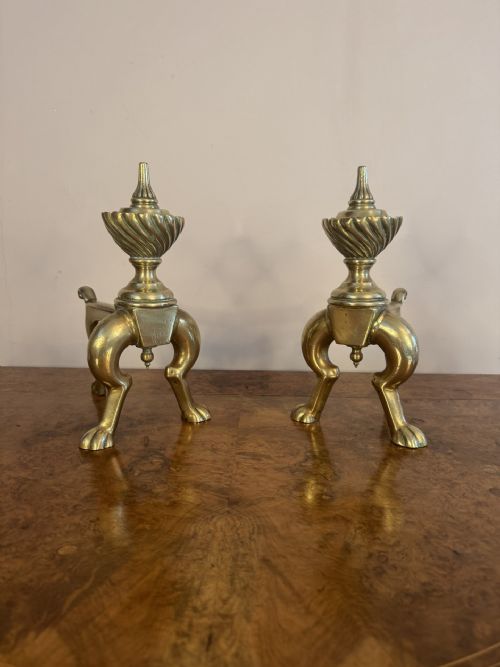
When you search for antique firedogs, you are looking at heavy metal supports designed to hold fuel logs inside an open fireplace. The pieces on this page span several centuries, with a strong presence of Victorian examples alongside earlier Georgian and 19th-century interpretations.
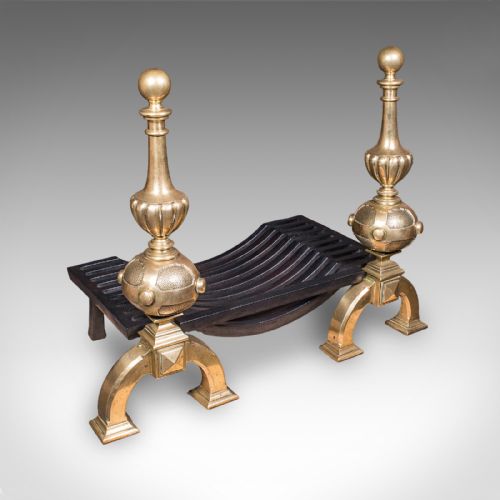
Most items appear as paired upright supports, frequently accompanied by fire baskets or grates. You will encounter English, French, and American origins, reflecting domestic hearth customs across different regions.
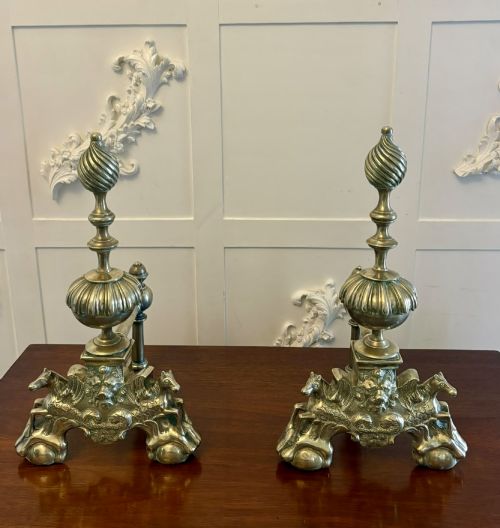
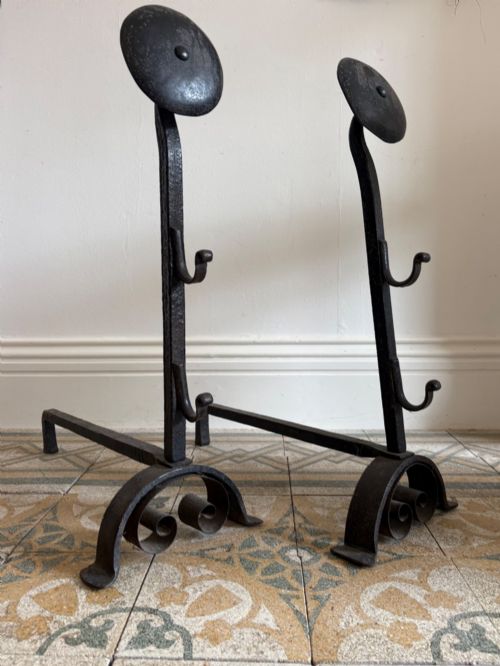
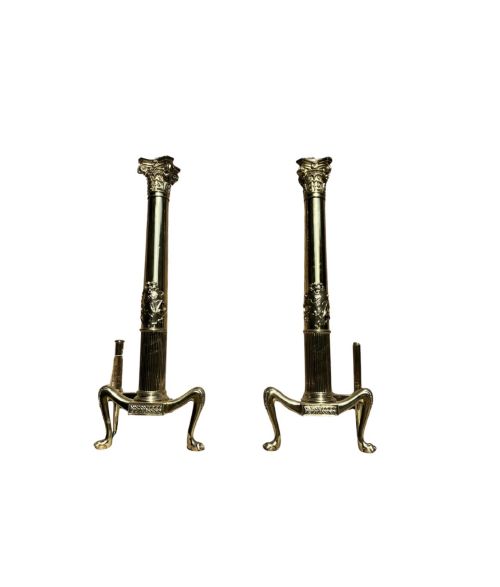
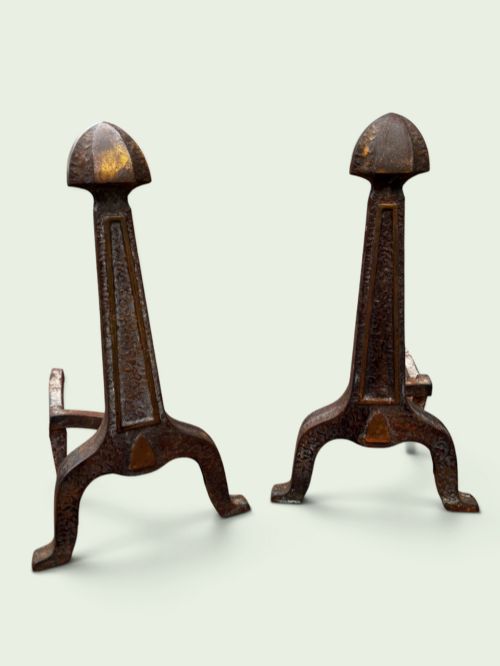
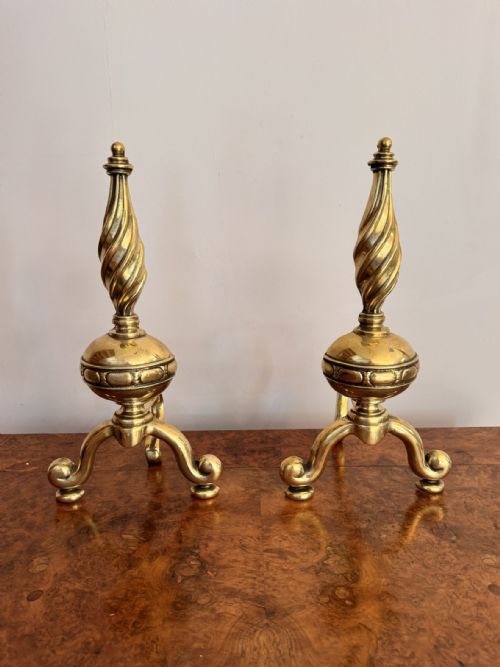
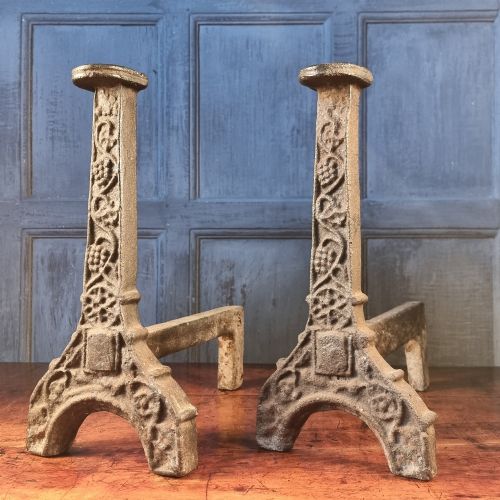
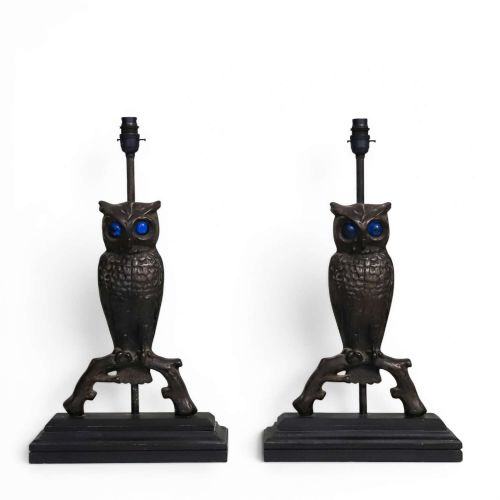
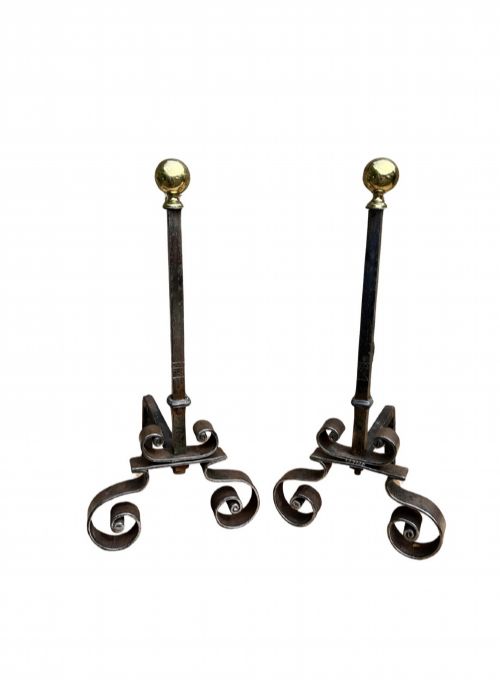
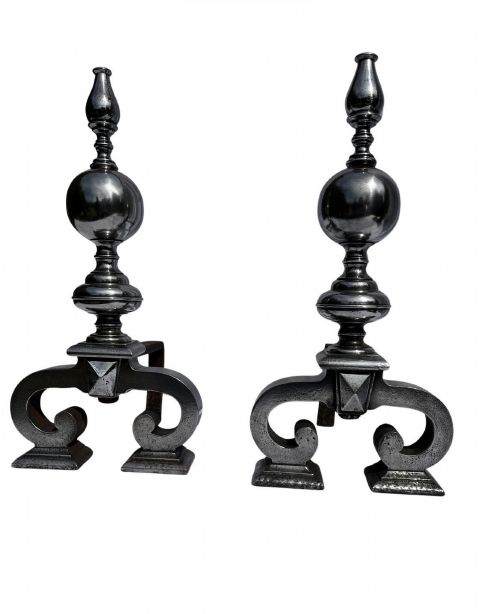
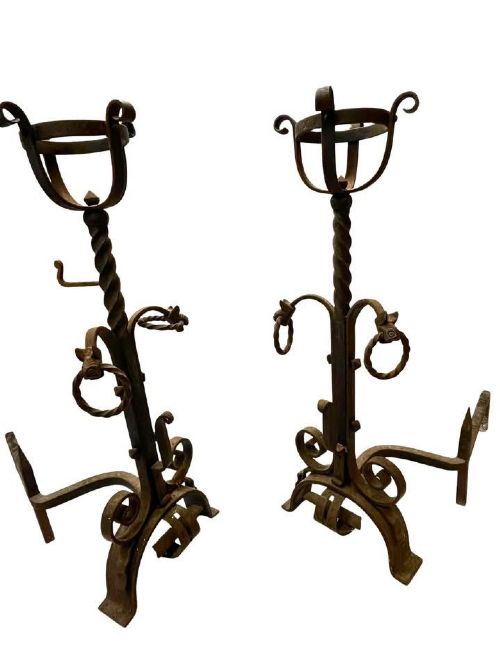
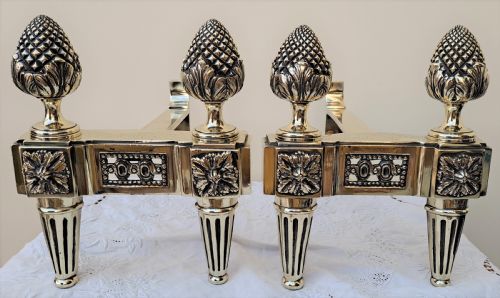
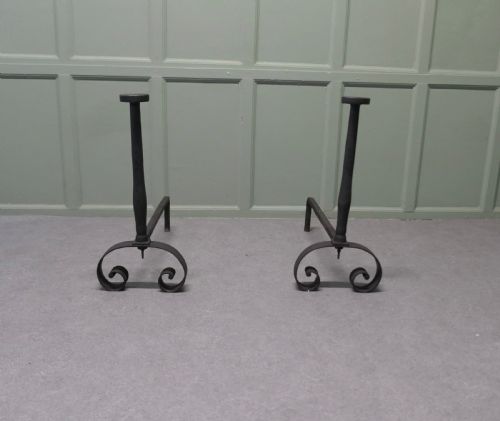
Stylistic variation runs from austere wrought-iron Arts and Crafts models to ornate cast brass pieces styled after French Rococo, Gothic Revival, and Neoclassical designs. These utilitarian hearth supports double as sculptural metalwork for the chimney breast.
Materials and Construction
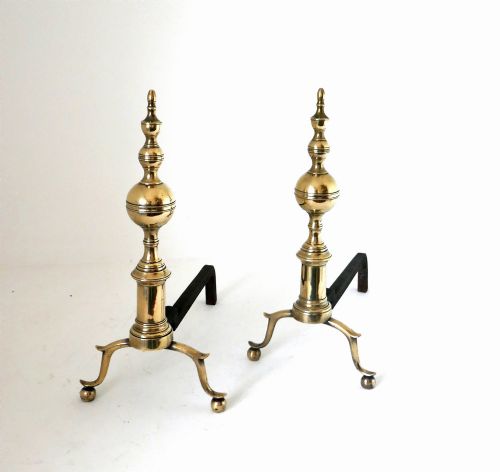
Makers shaped these objects using brass, cast iron, and wrought iron, often combining metals within a single pair. Brass brings a bright decorative surface to the front standards, while iron provides the structural strength required to bear burning timber.
Foundries cast molten iron and brass into intricate moulds for ornate Victorian and Georgian iterations, whilst blacksmiths hand-forged wrought iron into sturdy bars for Arts and Crafts and utilitarian pieces. Gilt bronze and ormolu appear on high-status French chenets, adding layered metallic finishes to the front panels.
Antique Firedogs Retail Price Guide 2026
Typical asking prices for firedogs among the pieces listed under this phrase on Sellingantiques today, from the lower quarter to the upper quarter. They describe what is for sale here now, not the wider market.
Materials span brass, wrought iron, cast iron, bronze, ormolu, and steel across periods from the 16th to the 20th century.
Assessing Craft and Metaling
Quality rests in the crispness of the casting and the weight of the metal. Heavier pairs use thicker gauge iron and substantial brass components that resist warping from intense hearth heat.
Details distinguish standard production from superior work. Finely chiselled chasing on cast brass, cleanly forged junctions on wrought iron, and securely seated vertical shafts separate workshop standards from routine foundry output.
Thomas Jeckyll·William Tonks
The Antique Firedogs Glossary
- Firedog
- A metal support for holding logs in an open fireplace. They typically consist of a horizontal billet bar and an upright decorative front.
- Andiron
- An alternative term for a firedog, commonly used interchangeably in British and American inventories. They often feature prominent upright finials.
- Chenet
- The French term for an ornamental firedog, frequently executed in gilt bronze, ormolu, or patinated metal in Louis styles. They serve a decorative function on the hearth.
- Fire Basket
- A metal grate designed to hold coal or wood inside a fireplace, sometimes incorporating integrated firedogs or andirons at the front.
- Ormolu
- Gilt bronze produced by applying a finely ground mercury and gold amalgam to a bronze base, then heated to drive off the mercury. This technique creates a rich golden finish on 19th-century French pieces.
- Billet Bar
- The horizontal iron bar extending backward from the front standard to support the burning logs.
Antique Firedogs: Frequently Asked Questions
What is the difference between firedogs and andirons?
Firedogs and andirons are two names for the exact same object. Regional preference dictates which term appears on the inventory.
Both descriptions refer to the paired metal supports that hold logs above the hearth floor.
How do I date an antique firedog?
Dating relies on material combination, manufacturing technique, and stylistic markers such as Gothic Revival or Aesthetic Movement motifs. Heavy cast brass and elaborate casting point toward Victorian production.
Simpler hand-forged wrought iron often links to Arts and Crafts or earlier vernacular periods. Examining the fastening bolts and metal texture helps confirm the era.
Can these be used in a modern fireplace?
These pieces were built for functional hearth use and can support wood fires provided the dimensions match your grate or hearth space. Solid iron and brass constructions handle heat well.
Heavier pairs require adequate depth to sit securely behind the fireplace opening.
Why do some pairs include matching fire baskets?
Many hearth arrangements combined firedogs with an integral or drop-in fire basket to burn coal alongside wood. The firedogs anchored the front assembly while the basket contained smaller fuel.
This setup provided a complete modular solution for period fireplaces.