



Antique Fire Dog Rests
These antique fire dog rests anchor the hearth, supporting logs or holding companion tools within reach while bringing period metalwork to the fireplace.
Antique Fire Dog Rests
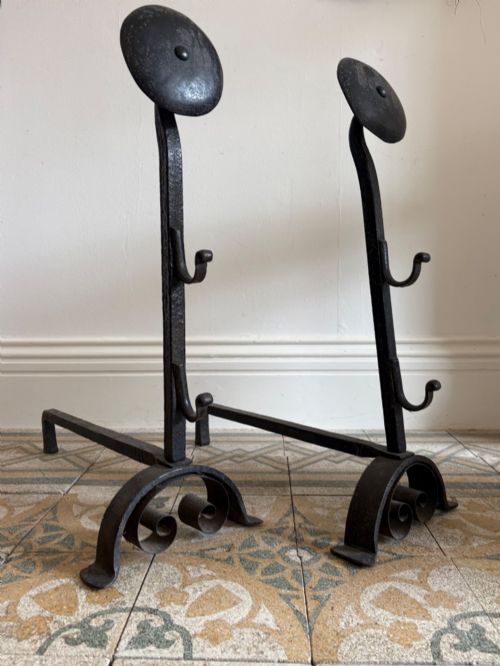
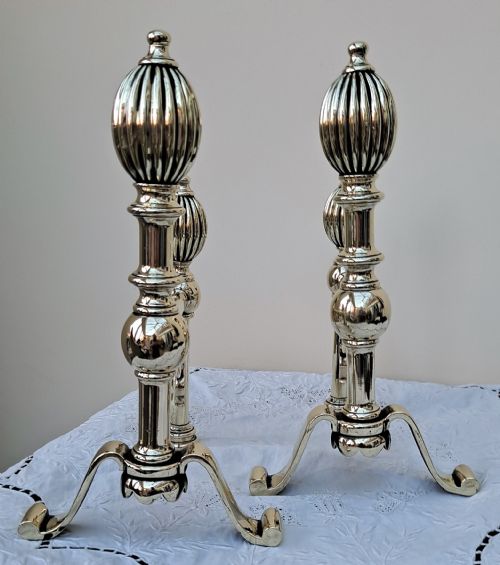
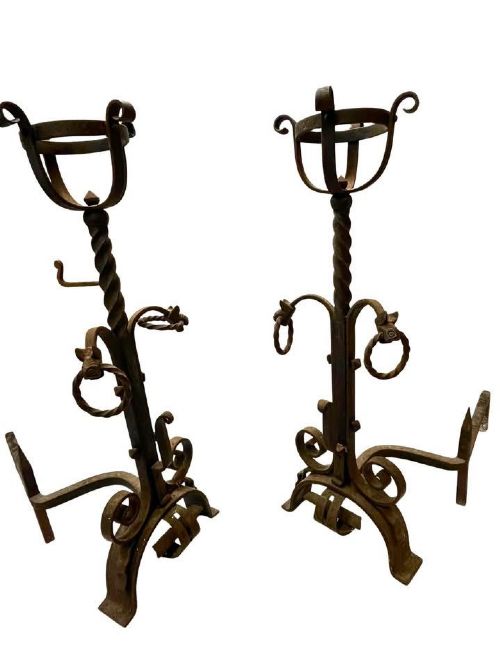
When you search for antique fire dog rests, you are looking at functional hearth furniture designed to hold firewood or keep companion tools close at hand. The pieces on this page span the nineteenth century, including Victorian, Arts and Crafts, and Aesthetic Movement designs.
Most examples appear as matched pairs, taking the form of upright iron, brass, or copper rests. You will find them associated with fire irons, baskets, and grates, originating from English workshops or French foundries.
Materials and Construction
Makers shaped these accessories from cast iron, wrought iron, and steel, often pairing them with bright brass or gilt mounts for visual contrast. Heavy iron provides the structural integrity needed near an open fire, while brass and copper components are polished and shaped to catch the room's light.
Forging techniques allowed smiths to turn utilitarian bars into decorative scrollwork, while casting permitted detailed Neoclassical and Rococo motifs. Individual parts were joined mechanically or riveted together to withstand regular hearth use.
The listings on this site combine heavy wrought iron and cast iron with polished brass and gilt finishes, spanning Victorian and Arts and Crafts styles.
Evaluating Execution
Quality in these pieces rests on the weight of the metal and the crispness of the casting or forging. Heavier gauge iron and thick-walled brass show better substance, remaining stable on the hearth floor.
Finer examples reveal careful finishing at the joints and detailed chasing on decorative mounts, distinguishing bespoke workshop production from simpler foundry output.
James Cartland & Sons
The Antique Fire Dog Rests Glossary
- Andiron
- A horizontal support raised on legs, used to hold logs in an open fireplace. Pairs of these often incorporate rests for fire irons.
- Chenet
- The French term for a fire dog or andiron, frequently applied to more ornate gilt brass or Rococo hearth pieces. They serve the same functional purpose as their English counterparts.
- Hearth Stand
- A supportive metal frame placed beside the fire to hold companion tools or keep logs elevated. These accessories coordinate with the main fire dogs.
- Fire Irons
- The set of poker, tongs, and shovel used to tend the fire. Many sets include dedicated rests to keep them organised.
Antique Fire Dog Rests: Frequently Asked Questions
What is the difference between fire dogs and andirons?
The terms are largely interchangeable, though fire dogs historically refer specifically to the upright supports at the front of the hearth. Both hold logs or support companion tools.
In practical terms, older listings use both names to describe the same heavy metal rests placed on either side of the fireplace opening.
How do I use them with modern hearths?
These rests sit directly on the hearth floor or inside the fireplace opening to hold pokers, tongs, and companion sets. They add period character even if you burn gas logs or keep the grate empty.
Ensure the metal base sits level on your hearth stone and leaves enough clearance for any surrounding fender or screen.
Are brass and iron pieces cleaned differently?
Cast iron and wrought iron typically require a light application of oil or wax to prevent oxidation and maintain a dark finish. Regular dusting keeps soot from accumulating in the textured grain.
Brass and copper components accept traditional metal polish, though many collectors prefer a mellow patina that shows the age of the nineteenth-century surface.
How do I identify Arts and Crafts rests?
Arts and Crafts pieces emphasise honest construction, featuring hand-beaten wrought iron and simple, unpretentious geometric or naturalistic lines. They reject mass-produced ornamentation in favour of visible smithing marks.
Look for sturdy iron frames that prioritize functional utility over applied decorative cast brass details.